Ministry


I was sort of delegated to attend a workshop in Participatory Learning in Port Dickson last week as everyone else had other commitments.  I admit that I went a little reluctantly given the upheaval in my ministry just now, especially once I discovered that I was to facilitate two of the sessions.  Those who know me know that I am a very reluctant public speaker. I did not learn a whole lot new about participatory methods but had a great time networking with a new organization from Cambodia.

It is however, always exciting to be reminded of the effectiveness of the CHE lessons which are designed to be learner-centered, posing a problem and allowing participants to discover the solution and develop an action plan to deal with it.  I was asked to demonstrate the Ten Seed method and opted to use an actual scenario from our pilot project.

This district is comprised of twelve communes each of which has ten villages made up of approximately 20 homes per village. In spite of the fact that there is an established Commune Council and Women’s Commune Council with representation from all the communes, the region remains very poor. Government money is often made available for projects and many NGOs have come and gone with money for various initiatives yet little progress has been seen over the years. Most people in the district feel that the main problem is lack of money and if they could just get more government or NGO assistance all of their problems would be solved.  The average family income in the district is $100 per month.

Here is the reality for people there that I presented for the demonstration.

Men

There is very little work available for you and in any case it is the responsibility of the women to maintain the home and gardens and provide for the needs of the family. From time to time you are able to make some money to support the family but in reality you spend much of the time sitting together with other men socializing and playing games. Life is a very painful reality for men and the one pleasure is to drink rice wine and beer with your friends.

You give what money you can to your wife for family needs but know that most of your own cash actually goes to alcohol and anyway your wife seems to be able to come up with enough money to get by. You know that the alcohol does affect your family as often you go home at night angry and are at times violent but it is at these times that you are able to get money from your wife, which you will spend on alcohol.

You are pretty sure that about 30% of the money available for your household is spent on alcohol.

Women

In your culture it is the responsibility of the women to keep peace in the family and ensure that the members of your household are cared for. You are able to grow your own rice and vegetables and even to sell some in the market to make a little extra cash. With the addition of some chickens, pigs and fish and your ability to sell some of your own handicrafts you could at least provide the basic needs for your children. The days are very long as you go about your work and care for the children but there is little hope in sight.

Your husband spends most of his afternoons and evenings away with his friends and often comes home very drunk and even violent. At these times he demands that you give him all the money you have and you know that you must do so as it is the responsibility of the wife to keep peace and protect the children. It is therefore impossible for you to save money to pay for necessities such as school supplies and fees. Many children in your village end up dropping out of school and going to the city to work in garment factories or restaurants in order to send money back to the village.

You are well aware that 70% of the available money for your household is spent on alcohol consumption by your husband and teenagers and even, on occasion, by yourself.

Youth

Your schooling has been limited as you quit studying at an early age to try to be of some assistance to your very poor family. There are relatively few teenagers and young adults left in your village as many have gone into the city to work in garment factories or restaurants to send money back to the village. You are able to make a small amount of money by helping out in the market or other odd jobs but see very little hope for your future.

There is very little joy in your life and not a lot to do for fun but you are able to forget about these things when you and your friends get together and drink beer, which you do on a regular basis. You do genuinely want to help your family but also know full well that 80% of the money you get is spent on alcohol.

When this community using ten seeds as a method to express their thoughts anonymously finally agreed that 50% of their income went to alcohol we were able to watch as they calculated that each year the entire community spends $126,000 US dollars on alcohol; money that could have gone to helping the community deal with family, health and education problems.

This is the kind of discussion we are seeking to promote at the community level through our Moral Values training. Not every group is able to attain the level of interaction that would lead to a community resolve to do something about the problem of alcoholism. But I have witnessed first hand how some groups get that far, and listened to others who report that such discussions have led to change and renewed hope at the community level in villages far from any missionary or gospel.

Other dicussions that have followed from Moral Values training have led to villages seeking to know the Truth behind these lessons; and the One who empowers that truth and buries it in the heart so that change becomes permanent. This is not some wealthy Westerner coming to bring riches from his goodie bag that will momentarily solve all ills. These are villagers confronting their own shortcomings in themselves, their culture and their traditions and deciding on a path of renewal. This is part of the work I am involved in.

We appreciate that many of our readers have been praying for one of our Cambodian team, Chantheng. It is my unhappy duty to report that he has now passed away. All of us who knew him are so saddened by the loss of our friend and Christian brother, who is now in the arms of his Lord. Chantheng was a very sweet and fine young man, a husband and dad and a caring nurse with a heart to change the lives of the people that he served.  He will be greatly missed by many.

In our very first training with the healthcare organization that we are working with, we met Chantheng. He was a  quiet and gentle young man and his interest was captured by the moral values lessons that form the core of our community health outreach into Cambodia. Within just a few weeks he had translated ten of the lessons and was using them at a Youth camp with five hundred Youth Peer Educators. He witnessed the effectiveness of the lessons first hand and as the Head of the Youth Program was in a position to lead their integration into the regular youth program. Perhaps even more importantly those lessons began to work their way into Chantheng’s own heart.

He showed up to visit with us at the second training session even though he was not a participant and when the organization decided to continue to explore the integration of CHE into their outreach, Chantheng volunteered to work with us.  We had a wonderful week with his team last November as we began our pilot project north of Siem Reap.  Chantheng delighted in introducing us to his four year old daughter and newborn son.  We were all quite surprised when he presented his plan to implement CHE, with God as part of the plan. The Lord was clearly at work through this man, and we rejoiced to see his enthusiasm for this project

This past December I had the real joy of chatting with him online and was able to respond to his comment during that conversation, “I want to be a son of God.” What a joy and a privilege it was to lead him through the Biblical steps toward a spiritual relationship with Christ. However our joy quickly turned to sorrow in June as we were all shocked to discover Chantheng was diagnosed with terminal cancer and was not expected to survive for long.

I am grateful that on my last trip to Cambodia I was able have one last visit with Chantheng, although it was difficult to see him so ill.  My heart went out to see him suffer so, but I was grateful to the TWR Cambodia staff who were a real support to both Chantheng and his wife through this difficult time. Please pray for Chantheng’s family as they struggle to make sense of this tremendous loss to them and their community. Pray for the workers that he has left behind that they might rise to a measure of this fine man’s enthusiam and dedication for the welfare of his country. Please continue to pray for the Lord’s witness in Cambodia; a country so desperately in need of the gospel of grace and the transforming power of Christ.

Moving house is fraught with peril in Malaysia so we are very grateful that the home that we settled into more than five years ago continues to meet our needs so well.  One of the real blessings has been the BBQ pit and  the air conditioned multi-purpose hall that we are able to take advantage of, at a very reasonable rental rate. A beautiful swimming pool is just the icing on the cake, especially for children who visit.

Over the past month we have become aware of a number of new expats who have come to teach in a newly opened learning center and to serve in campus ministry.  Last evening we had a great time hosting a BBQ for about thirty kids, young adults and a few older folks.  There was plenty of good food, opportunities to get to know new people and to worship together in music. With one guitarist from the older group and one from the younger, we had a nice mix of music.

We do love our fellowship at national churches and the many national and international believers that we have met there. It adds a whole new dimension to worship when the worship team is largely made up of our African brothers and sisters. However we have met very few western friends who share our faith and our burden for ministry.  Had some great discussions about ofthe impact missions over the years and our particular understanding of the best means of reaching out and developing communities.

We are praying that this will be the beginning of new friendships and opportunities to collaborate on ongoing ministries.

Although I live in Malaysia and do most of my ministry in Cambodia, the Asian head office of my mission, Trans World Radio, is in Singapore. Over the past several months TWR has made significant changes to the organization of their work in Asia. This week I went to the Singapore office to discuss how those changes impact my role. I had the opportunity to present my vision for ministry both verbally and in the form of a funding proposal that I prepared.

As I am not in the Singapore office on a daily or even weekly basis, there are many who do not fully understand what I do for the mission. (I dare say there are many in Canada who don’t either!) So it was entirely understandable that it took me a few days and several meetings to explain alll that I have been doing for the past five years. However, with patience and perseverence I managed to cover not only the particulars of what I do, but also my Christ-given burden and passion for the lost and desperately needy of this part of the world. Along with an increased understanding of my role, I left Singapore with a new job description as Co-ordinator of Wholistic Ministries for SE Asia.

I can understand if the title doesn’t convey much to you. It does sound like a fancy way of not saying much, doesn’t it? Perhaps I can help you put it into some kind of perspective. Last evening as I was doing some editing for the monthly report of the Community Health Project that we have been doing in Cambodia I came across a testimony from a pastor who had attended a lesson given by our TWR staff on moral issues. (I promise that in a near post I will give you an example of one of the scenarios we use in the field). His response helps to define what a ‘wholistic ministry’ seeks to achieve.

Romdoul is the pastor at Beth El Veal Rinh Church. He didn’t think that he would be able to attend the training because he was busy planning for a camping trip the following week. However, he felt compelled by God to come, and he was happy and excited that he had. He said in his letter, “I know it is not an accident but rather God who planned for me to be here. I feel so surprised and excited with all lessons I have heard because they are new and wonderful to me. Actually, I feel so sad and concerned because one of the kids in my church has died because of careless parents and an uncaring church.

“However after I learned one lesson about good health I started to realize that I am missing some part of taking care of my church. I care about the spiritual things but I never think about the physical. But this lesson motivates me to think about good health which involves spiritual, physical, social, and relationships (shalom). Good relationships is the part that I really love because it helps me to reflect about where I am right now. A good relationship is the source of good health.

“There are four parts of good relationships which are self, others, environment, and God. So, this lesson guides me to think about God’s ministry. After this training, I have a plan to train my church members to know about CHE [the program of moral lessons that we use] and develop my church and community. One village that I need to start in is named Tro Peang Ro Pove. In that village the people have no higher education and they never care about their family plan or children. I know it will be hard to develop and change their thoughts but I surely know that God is with me and I can do all things through Christ.”

This godly man has cared for the people of God for years, but never knew how to reach out into the community and begin to change the lives of the people in the broken places that they live. Alcoholism, unemployment, parental neglect and ignorance stalk the villages of South-East Asia like a plague. Simply preaching the gospel “at” these people is not enough to bring about change. Throwing money at the problem that simply disappears into the hands of the greedy and dissolute doesn’t help either. Change needs to come from the community itself.

That is what wholistic ministry seeks to do. What I seek to do is to bring many groups together using the resources of the country itself to bring about that wholistic change. It is a daunting and sometimes thankless task filled with misunderstanding and frustration. A new title is not going to change that reality. But it does give me a new place to stand. I would appreciate your prayers.

As wonderful as it is to have two months in Canada, not only to visit with family and friends but also to make some key ministry connection, this does take its toll on work here. I have not been in Cambodia since April and there is much to do to get caught up.

I had nine days here on this visit and they have filled up pretty quickly. My first task was to meet with TWR Cambodia leaders to finalize a proposal for funding for the Health Project that is growing at a phenomenal rate. It was wonderful to be back in the office and to hear reports of the work of this amazing team. We submitted the proposal to the potential funders on Wednesday and would appreciate your prayers as they consider the needs of the team here. In today’s economy, it is a relatively small amount of money but has a huge potential in the hands of committed national staff.

On Monday, I spent six hours hurtling, at high speeds through heavy traffic on patchy roads by bus to Siem Reap. I was escorted around town by Channy and Nyny Ann, the new trainers from RHAC who will be working with TWR in our CHE project. I am not sure that I will ever be comfortable on a motorbike but was grateful for the ride and pleasantly surprised at how well a motorcycle can accommodate three people. If you want to take a Cambodian out for dinner, always let them choose the restaurant. We had quite a lovely meal and the total for the three of us came to $5.00.

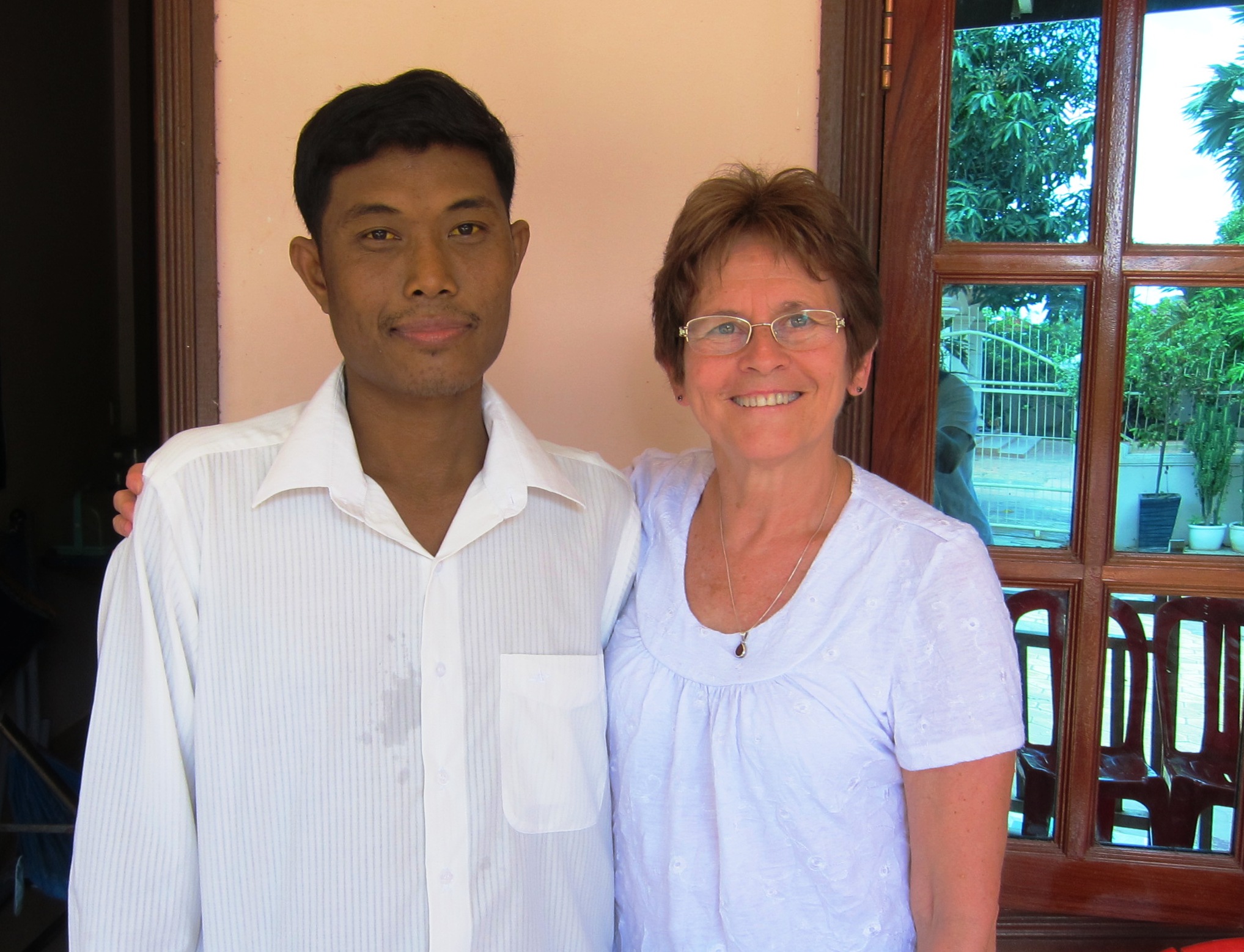
Tuesday morning I spent visiting with a dear friend, Chantheng, a RHAC staff and a new brother in Christ whom we have come to love. He is a young husband and dad with a real passion to transform the lives of his fellow Cambodians but is now facing a very serious illness. Pray for healing, peace and strength for both he and his family as they learn what it means to walk with God on this difficult journey.

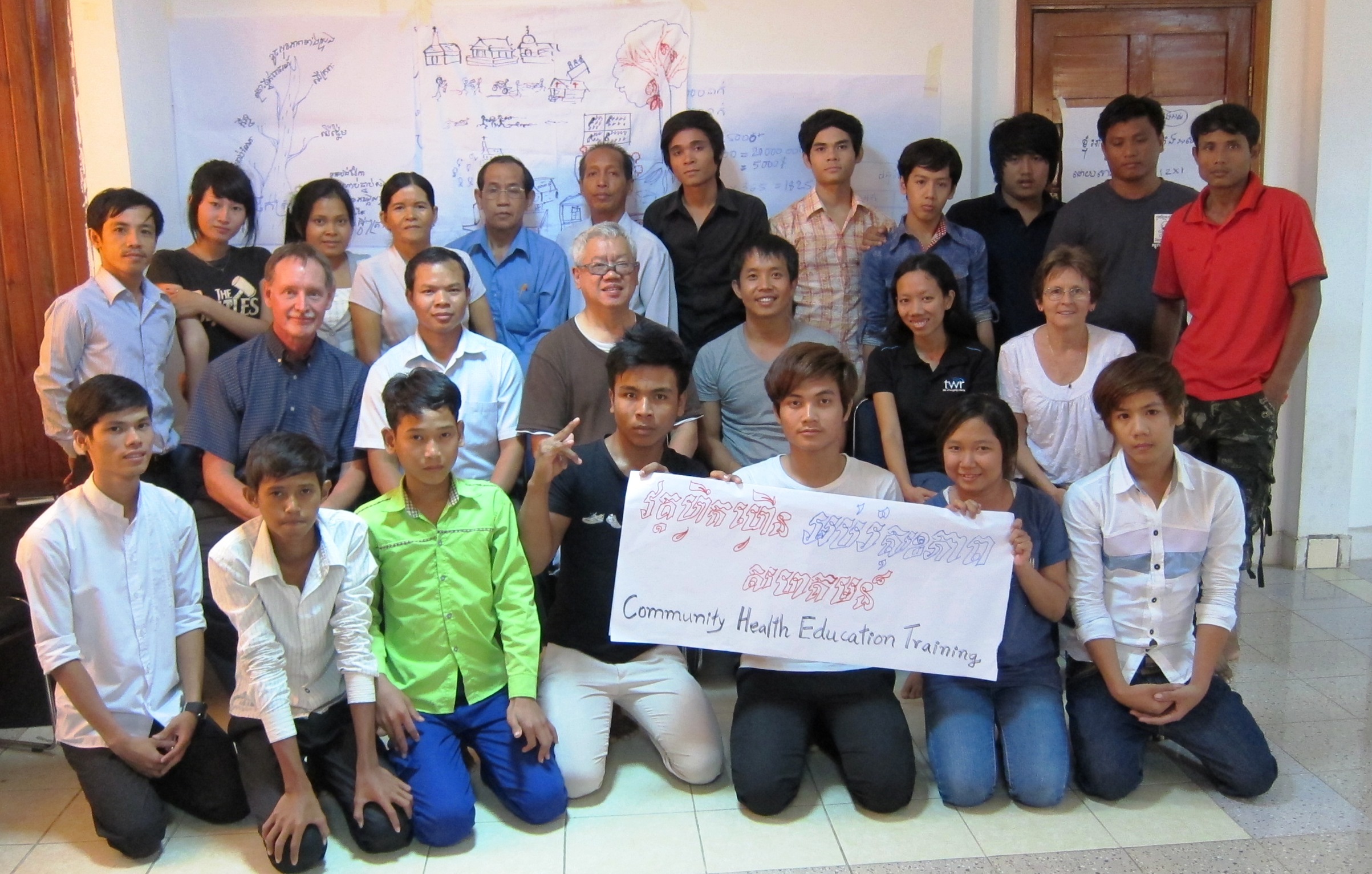
Interestingly enough, I am actually here this week because TWR is doing a week of CHE training with a Presbyterian church group but now it is completely facilitated by our Khmer speaking staff, and expats are here only for encouragement and networking opportunities. Even if I don’t understand a word, I do know the content of the lessons and always enjoy the excitement on the faces of the participants as they make new discoveries about themselves and their communities.

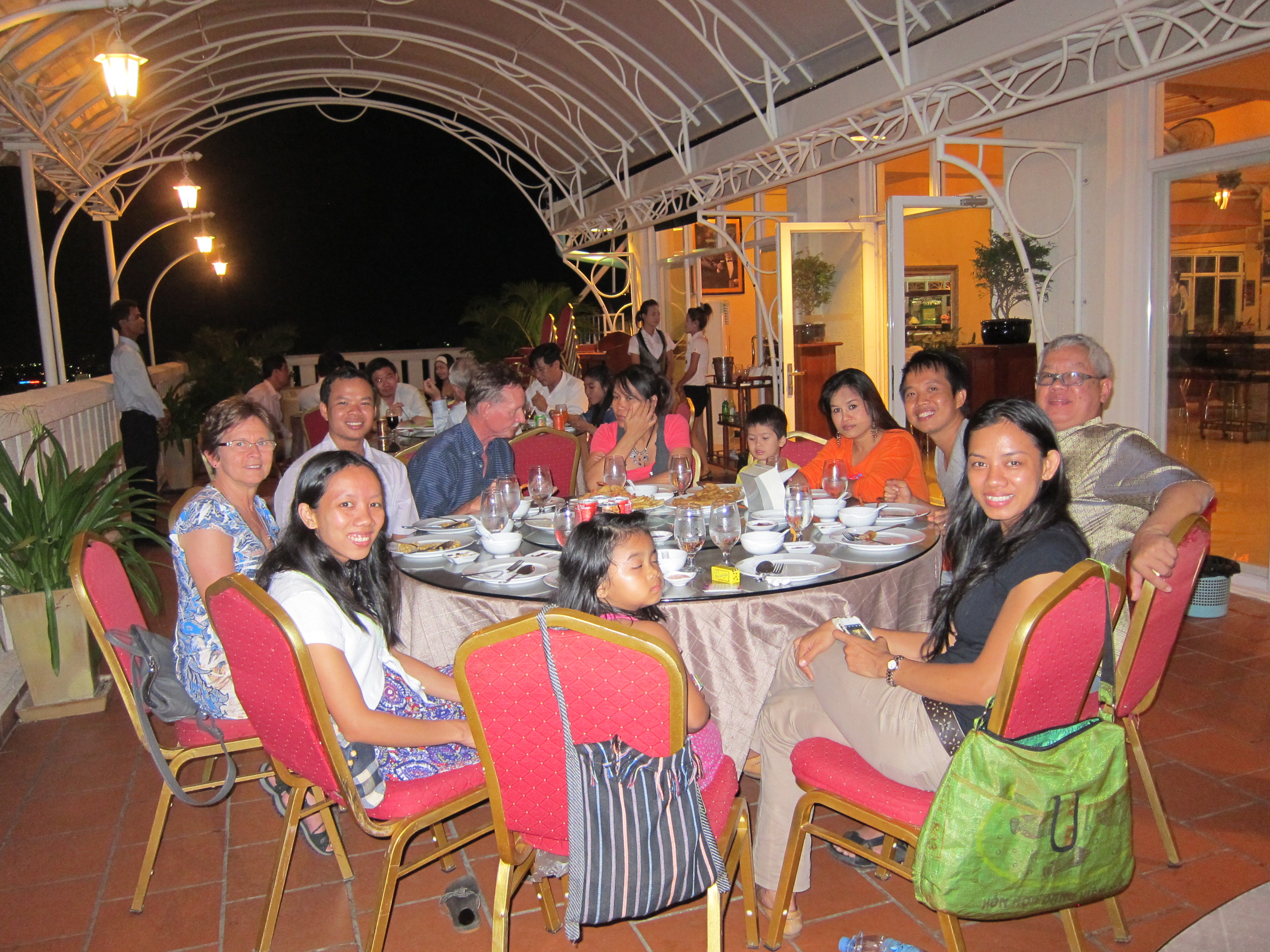
Networking is what I do and this week was no exception. I met with three other individuals from organizations who have a history with CHE to see how they are currently utilizing the strategy and met with Canadian missionaries who will be hosting a team next summer from our home church in Canada. Add to that a wonderful evening dinner with the Cambodia Leadership Team at a new restaurant with a fabulous view of the city and coffee with our friends Phearak, Socheata and their little boy Kenta and it all adds up to a full and successful visit.

It never ceases to amaze me how God has lead us each step of the way in this ministry over the past five years and what a joy it is have the privilege of being a small part of what He is doing through some amazing young Cambodian brothers and sisters.

To add to the few thoughts in my last post, I recognize that our little condo in Kuala Lumpur certainly is our home, and I am very grateful for it. It is the place to which I return to when my work in Cambodia  is over, a haven from the chaos of life in cosmopolitan KL, the place where I can find rest and refreshment, healing and the strength and courage to go out again.  It provides privacy from the intrusions of the laws and occasional lawlessness of the country, a place to read and to find quiet time alone with God.

It has been a sometimes strange and round-about journey that has led me to this place. Some of my very earliest recollections are of hours spent with every National Geographic magazine I could get my hands on.  I am not sure if I could even read at the time but I was captivated by the pictures and I knew that I greatly desired to visit all of the exotic places, see those wondrous sights, and get to know those strange and resilient women who wore bones in their earlobes.

Another thing that I learned pretty early is that I have never totally fit in anywhere. In fact I have felt like a misfit on four continents and I have learned to be okay with that.  I am enough of a conformist that I wasn’t about to go running off into the wide world without a plan, and I am incredibly grateful that God has directed me to live a life that is not driven by a need to be comfortable, but rather to live wherever the Lord determines according to His infinite wisdom.  The older I get and the more experiences I can look back on, the more I appreciate the purposefulness of each situation He has placed me in.

It seems to me now that a part of me has remained in every place I have been, and those places remain in me.  I can’t begin to imagine how much poorer I would be if we had not packed up our kids and moved them to Bangladesh, or thought that it was too much trouble to move our reluctant pre-teens to Germany for a year, or feared the hard physical labour involved in a construction of an orphanage in Burkina Faso, or the uncertainty of setting up mobile clinics in the Dominican Republic or decided on a comfortable retirement in Ontario rather than setting out for a new adventure in Asia.

One day of course we will return to our home in Canada, somewhat older and probably bit more battered-looking seeking for a place to finish out our days. But I will remain connected to the all people we have lived, worked, and worshipped with in the many places we have lived. And I will continue to be enriched by all those we grew to love for they are an integral part of the person I am today. And of course it is a real comfort to a wandering kind of person like myself to know that while I may never have the stable family home that many of our readers enjoy, someday I will live in a permanent home with the Saviour I have sought to serve my whole life.

There is much to criticize those who have “no fear of God before their eyes.” Simply put, if you have no fear of eternal consequences you are likely to do any foul thing and excuse yourself for doing so under the rubric that you were “born this way.” Jeffrey Dahmer, Joseph Stalin and Hanibal Lecter would applaud your life motto. Those who had no fear of God or consequence gave us a past century of unspeakable brutality and inhumanity. Those with no fear of God have given us thirty years of rapacious greed and monetary irresponsibility that has brought the economies of the world to the brink of collapse. There is little to admire in such people, regardless of one’s religious convictions.

But my distaste for the spiritually scornful is tempered by a sympathy for their loss, particularly in the daily communion with Christ that I find so comforting and so instructive as I make my way through these distressing times. Pam and I were discussing, as is natural for those who have returned from the bosom of their dear friends and loving family, how much longer we will stay in our present ministry. The answer for me is as clear and untroubled as the tropical sky above us: just as long as God wants us to. It is as simple as that.

So how will we know when God wants us to move on? Well, those who study these things will give you a lengthy list of useful touchstones: read the Bible and study God’s revealed will so you will better understand what He has not yet revealed, speak to those who have walked with the Lord faithfully over the years and listen to their advice, seek to understand the ‘signs’ all around you, the circumstances that speak of God working things out in one way or another, pray and ask the Lord for guidance. And all of these things are worthy and good, and all of these things I have employed in one way or another over the years.

But as I have read God’s word and prayed, as I have seen Him at work in my life and in the lives of those I love, one thing has come to mean more to me than all of those things combined: God speaking to my heart. The Bible refers to it as “God’s still, small voice.” It is my increasing conviction that God will use the ‘two-by-four’ of circumstance only when He has been unable to get our attention through speaking quietly to our hearts. Want to avoid that nasty face plant on the sidewalk, or that investment that went south the moment you threw your retirement savings at it? Learn to listen for His voice, for that is what He promised us when He gave us the Holy Spirit.

This advice comes with no guarantees, for this is one thing that you just can’t fake. Your daily walk with God has got to be imbued with His Word and His Presence in order for you to discern what is His quiet will for you is. And you can’t ask to know His will if you are not fully committed to following it – whatever it is – through whatever circumstances it takes you. His will and His way must be more important to you than anything else on earth. Given the loving nature of God and His desire that “all thing work together for good to those that love the Lord” (Romans 8: 28) this is no hardship, but rather an exciting and deeply rewarding journey.

Age and experience are wonderful teachers, but they are no substitute for the discipline of listening to God speak to the heart in the quiet moments following the reading of His word, or singing psalms of praise, or offering prayers of petition. These things are not meant to be dry and lifeless one way communications, but rather a way of opening up our own dull sensitivities to what the Lord would have us hear from Him. Don’t rush away from His Presence. Linger awhile and meditate upon His eternal nature and learn to listen with your heart, for it is in such times that God will speak. This is how you can come over time to discern His voice amidst the babble of our daily lives. For this year, and as long as He gives me strength, I will follow that “still, small voice” with which the Lord directs my path.

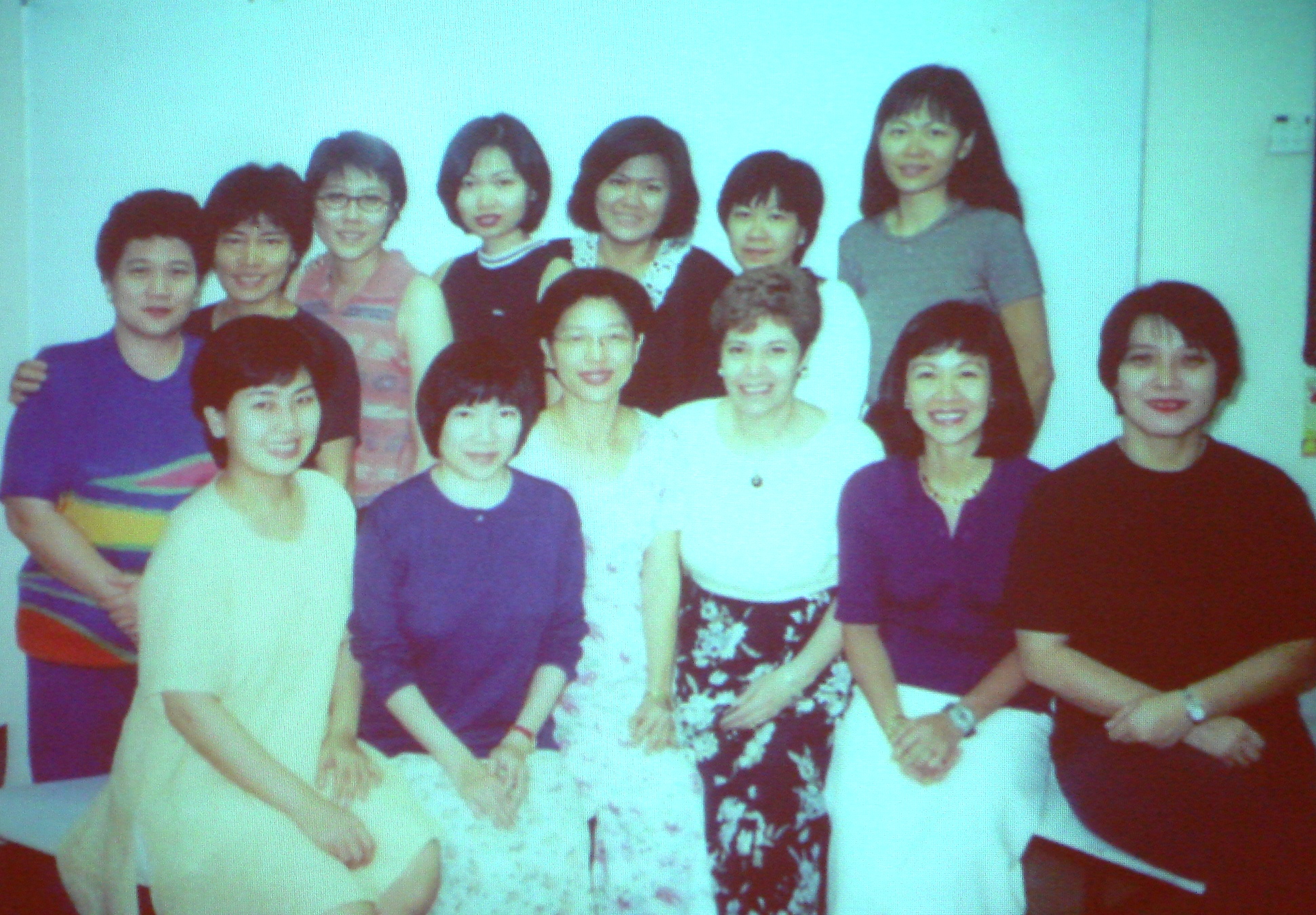
Project Hannah was launched fifteen years ago by a group of dedicated women in Singapore (pictured above) who sought to raise awareness of the plight of women worldwide and who committed to pray for those who were abused emotionally, physically or spiritually. Shortly after a radio program was introduced to encourage women in their daily struggle, and to reach out to them with a message of God’s love and the freedom that was theirs in the salvation Christ offered; to claim their God-given destiny so they could pass on a legacy of faith, wisdom and godly character to their children. It was a message that many women responded to, and its impact has been felt throughout the developing world.

This past week I was privileged to meet with some of the most amazing women in the world, from Australia, Brazil, Canada, Indonesia, the Middle East, Singapore, South Africa, Portugal, Sweden, Taiwan, Uruguay and the U.S as we met for the first time as a group to pray, share, and celebrate what is happening through Project Hannah. These women are the regional coordinators, producers and script writers for the mission, and sometimes – given the need for workers in this huge mission field – all three combined. For most of them English is not their heart language, but it was a joy to see and hear them step forward and speak from their hearts and share what God is doing through them in their own region. It was an special blessing to sing together, each in our own tongue in praise to our amazing God. I am humbled and amazingly privileged to be a part of such a group who share a burden for the hurting and needy women we long to serve.

The week began with a day of prayer and praise and an opportunity to hear from each one a small portion of their personal lives and a lot about their heart’s cry for women. It was a long week of training and listening to reports, some of which were heartbreaking to hear, but many new and enduring friendships were formed amidst the tears and laughter. We were fortunate in that we were all able to be housed together in the TWR Lodge in North Carolina, surrounded by woods and wildlife and a real sense of serenity. We met and talked and shared wonderful meals lovingly provided for us by volunteers and friends of the ministry.

At the end of the week we departed and each of us returned home encouraged and strengthened, with many new ideas and connections, eager to see what lies ahead for Project Hannah in the coming year. Thank you to many who have prayed for this meeting, and enabled us through your prayers and finances so that this could take place. God is at work in this ministry, and the year ahead looks to be filled with more opportunity and adventure for those who willing follow Christ in His plan to reach out in love to those He loves and came to save.

One of the things I look forward to when I am home each year is the opportunity to touch base with the staff and volunteers at the TWR Canada office, which is fortuitously located in our home towm.

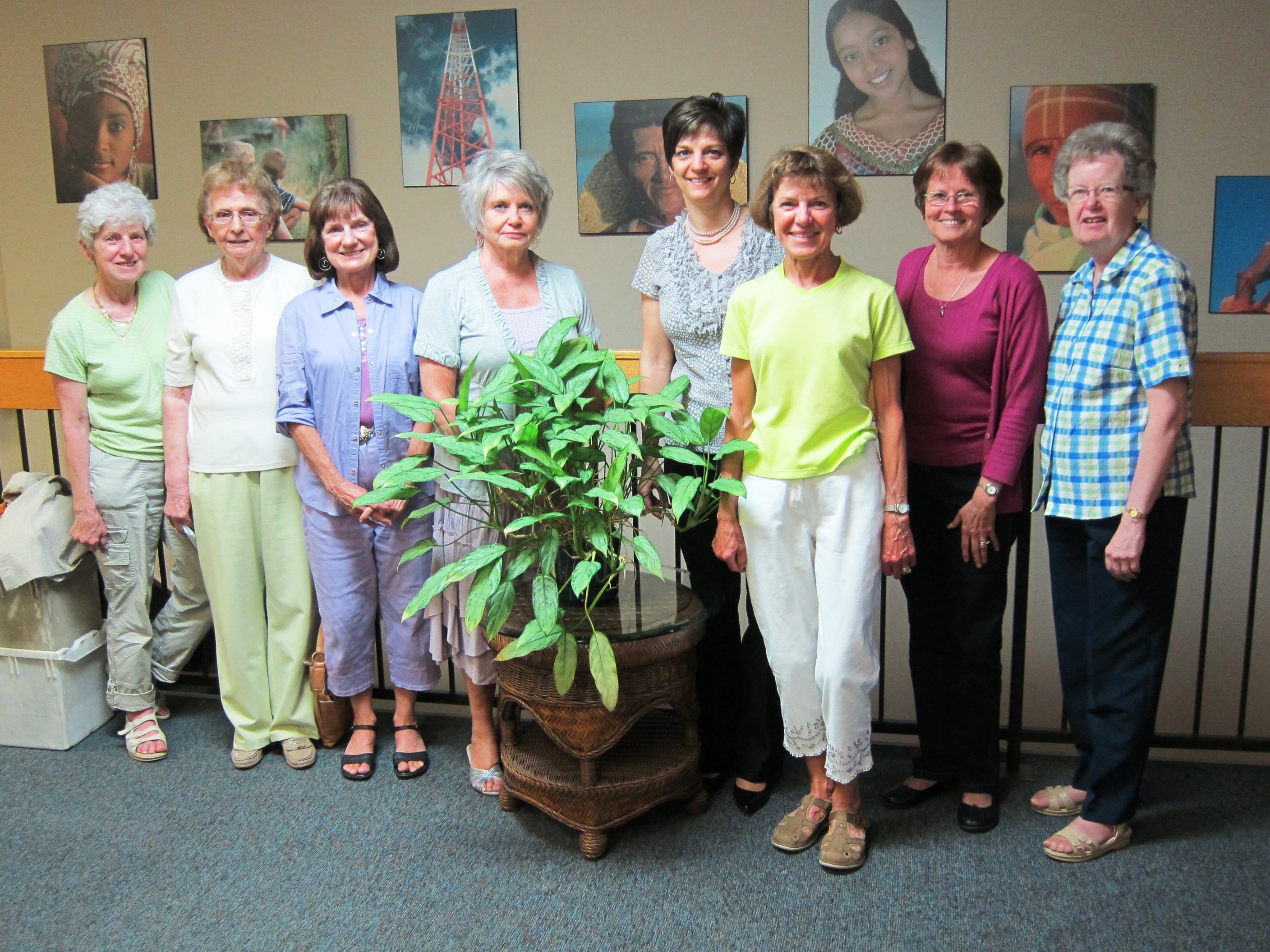
These are a very faithful group of women who volunteer one afternoon a month to come in to fold Project Hannah prayer calendars and monthly news letters and stuff about 2600 envelopes for supporters who still receive their communications by snail mail. One afternoon a month may not seen like a lot to some of you but we are so very grateful to these women who are a vital link in the world wide Project Hannah ministry.

The Lord has graciously given to Steve and I an opportunity to serve Him in a foreign field. He has also made it possible that we can do this without draining the church of badly needed financial resources at a time of shrinking budgets and unemployment. Ironically in this crazy fallen world we live in this makes us less than full-time missionaries in the eyes of some. We don’t pretend to understand the thinking behind such reasoning, for it is enough for us to know that God has called us and blesses us in our respective ministries.

How then does the world see the missionary effort of these women? Aren’t their prayers and practical support as vital a part of the work of God in reaching the lost as anything we or others do who are fortunate enough to live and work overseas? Does crossing a street or crossing an ocean make one a missionary? Surely at the end of all things when the Lord sorts through all that His people have done we will be surprised to find what He considers to be worthy of Him. And those who serve Him in humility, with whatever they have to give, will be recognized for the good they have done in His name. Thank you so much, dear ladies, for your service!

« Previous PageNext Page »