Current News


creation1

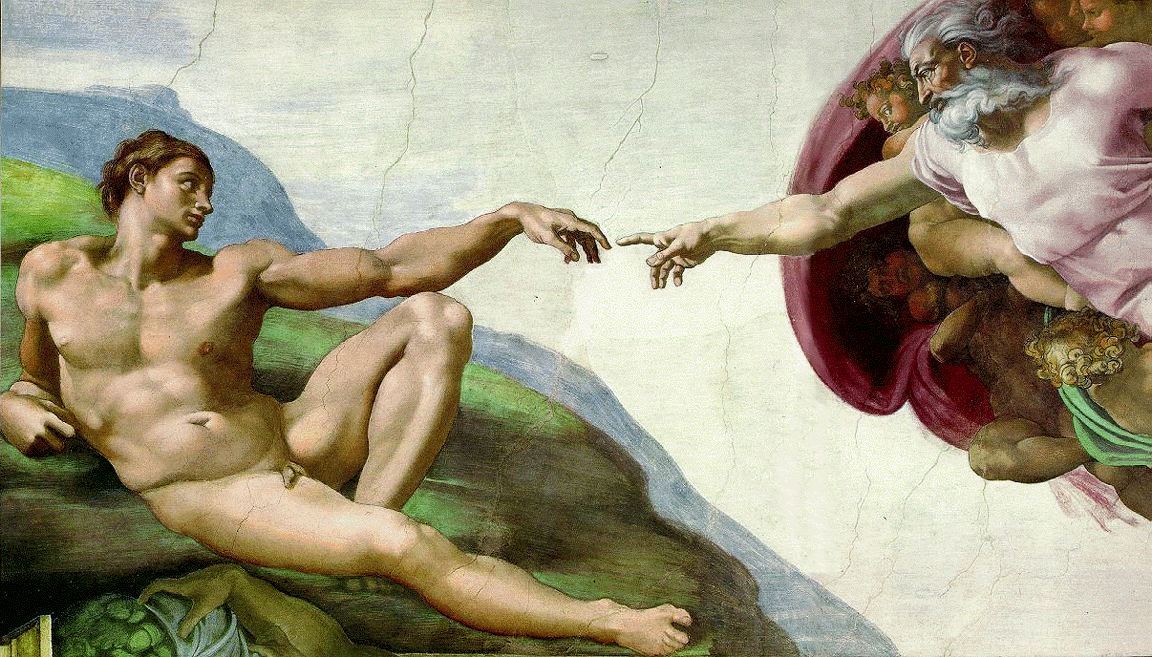
The election of Barack Obama has brought the issue of fundamental Christianity and its inabilty to interact with modern culture back into the limelight. Much has been made of Dr. Dobson’s vituperative objection to Obama, and his insistence that Obama is not a true believer because of how he interprets the Bible, especially the story of creation in Genesis. On the other side of the issue, Sarah Palin came in for her share of media ridicule for her understanding of a literal six day creation. Now that the election is over, perhaps a discussion of this issue can be held. I invite your response.

The Globe and Mail’s Robert Fulford, in an excellent series of essays entitled The Triumph of Narrative  devotes a chapter of this collection to “Master Narratives and the Patterns of History.” He states that “Each society develops a master narrative to which it frequently refers,” and goes on to point out that countries use such narratives as “the only sure source of righteousness and moral certainty available in times of national crisis.”

But it is not just countries that have such narratives. Ideas, whether political, philosophical or religious have master narratives as well. Part of the reason why Christ is able to penetrate all cultures so effectively is the power of His narrative. It is such a compelling story: that the Creator God would step into history to redeem fallen mankind and provide through his sacrifice and triumph over death a way to heaven, is electrifying in any language.

But make no mistake, Evolution has succeeded as a scientific theory not because it answers all the issues regarding the development of life, (Read Michael Behe’s excellent book Darwin’s Black Box  for an excellent summary of evolution’s clanging errors), but rather because it also is a compelling story. Evolution is a darn good ‘read’, and Christians, who know first-hand the power of narrative in their own lives, should be the first to recognize that.

However, I am by no means aligning myself with those who fail to see that the Bible oftens wraps spiritual truth in metaphor, analogy and parable, and this does not decrease its historical and empirical truth one bit. If I give Pam flowers, or bring her a cup of coffee in bed in the morning, that is just as much a way of expressing my appreciation and affection for her as saying “I love you.” Strict literalists of Bible interpretation who insist that it cannot be an expression of affection because the words ‘I love you’ weren’t imprinted on the flowers are too simple-minded to have any effective witness in the world.

Yes, of course God created the world. Even Stephen Hawking, an avowed atheist, writes in his A Brief History of Time  that the overwhelming weight of evidence points to a divine creator of the universe. But he, unlike Richard Dawkins and many other evolutionary idealogues, is transparent enough to admit that he personally finds this answer objectionable, and is searching for an alternative. However, if the overwhelming evidence is that God created the world, it is equally apparent that God can use any means within His unlimited power to do so. Nor is it deliberately deceptive of Him to tell us briefly the narrative of how this was done using metaphor and analogy. If ‘flower’ can stand as a metaphor for ‘love’, cannot ‘God made’ stand as a metaphor for ‘God used a combination of amino and deoxyribonucleaic acids in a saline/protein environment’?

Narratives have power. God recognizes that, and has wired our brains to be receptive to truths being conveyed in such a manner. After all, isn’t this how Christ conveyed truth in the story of the Prodigal Son, The Good Samaritan and The Wise Steward? To insist that the story of creation be written in technical scientific jargon or rejected as ‘untrue’ is to reject the possibility that there is in fact a God, whose master narrative includes the salvation of mankind through His own loving sacrifice.

On this day, November 19, 1976, my life changed. I had come home on Friday after a tough day of teaching and didn’t feel much like going out. I crashed out on my bed and was asleep before I hit the mattress. But an hour later I was up and showering and ready to get out and look for a little fun.

I went to the Blue Boot, on the corner of York and Ridout in London, as it often had a good Blues band on the weekends, but I was early and the place was flat. Worse, there were two drunken sods stirring up trouble. I left after a broken glass flew across my table and gashed my thumb. Not a good start to the evening.

I wandered along King St. to Kelly’s, which in those days was down towards Clarence, and got in line. Kelly’s was a little more upscale, and I didn’t want any more trouble. I got in line behind a couple of young ladies – nurses, I found out later – who were naturally curious about this guy behind them bleeding profusely into a paper napkin. One of them turned around a looked at me and I found myself staring into the most remarkable eyes I had ever seen. They were eyes that radiated a serene confidence and an unambiguous inquiry; grey eyes that spoke of kindness and wisdom; eyes that held no shadow of hurt. I stared and something inside me went ‘click’, like a light had just been switched on inside me.

I knew I just had to talk to that girl. When the group she was with were let in, I bulled my way past the bouncer by saying “I’m with her.” It took me a minute to convince him, and by the time I got in the place she was already at the bar with her friends, and I could see that there was a guy to her right that was turning in his chair to speak to her, maybe offer her a drink. I strode forward, put my elbow firmly on the bar between them and said to her,  “Can I buy you a drink.” She looked at my bleeding thumb, recognized me, and said “Sure.”

We talked for three hours that evening; about work, politics, children and religion. I found out she was a Christian. She found out that I had just accepted Christ two month ago. She agreed to go out with me later that week, and gave me her number. In that most unlikely of ways, God brought Pam and I together, and thirty two years later, we still are.

We had the rare opportunity of going into two prisons in Nepal, welcomed by the Chief District Officer, to meet with listeners.  In the Women’s Prison there were 19 regular listeners, two of whom lead a prayer group and Bible study based on the broadcasts.  The Men’s Prison was much larger and we were unable to find out how many regularly listen.

656We were able to present a water filtration system as well as portable radios to each of the prisons and each person there received a Bible, a program guide and a booklet.  Sadly, we couldn’t sit and talk with the inmates, which was distressing as many of the women were anxious to talk with us. I so badly wanted to hear their life stories and to be able to offer them some hope.

Violence against women takes many forms from verbal “teasing and emotional abuse, to physical and sexual abuse within the home, to rape and trafficking.  According to the New ERA (1997) report, one of the major causes of women leaving the household has been polygamy and subsequent abuse by co-wives.  Alcohol related violence in the family was reported high all over Nepal as well as incidents of dowry related violence.

We visited with a number of women who have been abandoned by their husbands or forced to leave for the safety of themselves and their children.  Many have found hope and strength and talked to us of the joy of having a community of friends to turn to for support.

572

This lady abandoned by her husband, is living in one room with her three daughters, two of whom are developmentally handicapped. 

Just a few weeks earlier, her house had been washed away by the floods and she pointed out to us the place where it previously stood.  None the less you can see the joy radiating from her face.  She is just so grateful for all that she has.

I really need to work on my “Attitude of Gratitude”

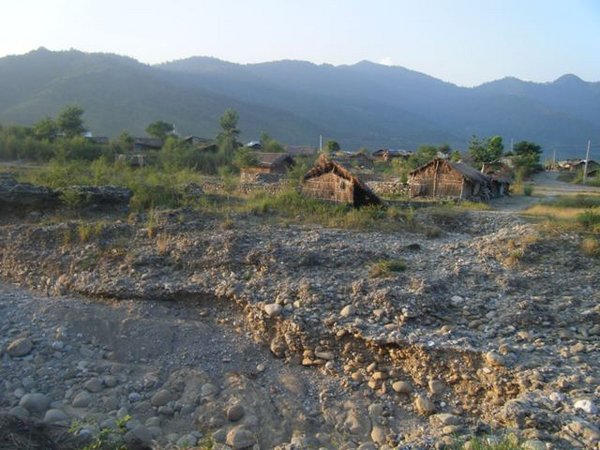
We also visited a slum area in a dried up river bed to see another initiative of the staff.  A small group have built a house for two ladies to live in and establish their own outreach ministry.  They know that the house will wash away next rainy season but in the meantime they have a home and the church will build them another when the rains stop.

nepal-16-oct-08-168 5831

One very unique experience for me was to visit with three women in a brothel who have “chosen” prostitution as a profession.  Shanti has developed a friendship with these women and the owners of the hotel so they agreed to tell us their stories.  Aged 12, 22 and 42 they each told us horrendous stories of life long abuse, poverty and illiteracy.  The owners were anxious to brag about how well they looked out for the needs of the 12 year old by limiting her to two men per night.  We each left that hotel shaken and thinking pretty ugly thoughts about the owners.  Sadly, thes women are even rejected by some helping organizations as they are seen to have chosen this lifestyle.

578

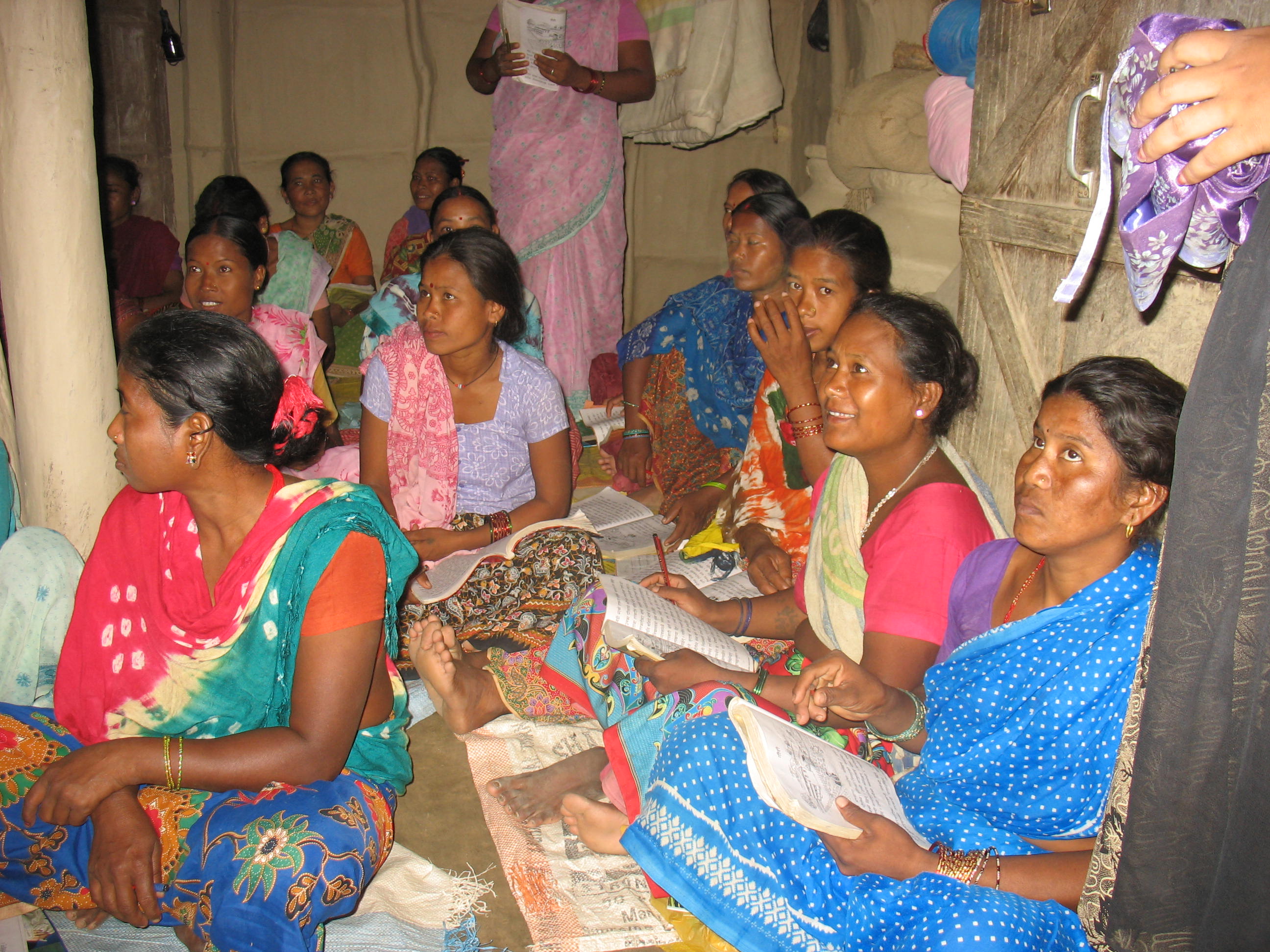
We visited several Women’s Literacy Projects that have been established by TWR staff and volunteers.  There was just no way to prepare ourselves for the shock of seeing these Nepali women so excited about learning under the most appalling of circumstances.

One women has opened a small area in her home and teaches everyday using a six month curriculum.  At the end of the six months, the women are able to read and write as well as do basic math.

533

As we approached this home, I thought it looked pretty tiny to be a Literacy Center but was shocked to see that in fact the classes are held in just one end of it.  Twenty-four women are enrolled in this session, and did I mention that it was about 32 degrees that day.5311

As it turned out, that was actually a fairly clean and comfortable learning situation,  The next one we visited was in a “barn”, too low to stand up straight in, with the goats moved to one end to create space for the women to sit on the floor.

548 551

Here is what one women wrote about the opportunity to learn to read and write:

“Now, I am altogether different mama. I am proud of myself in society and community. Now, I can read newspaper and I can read the Holy Scriptures. I can sign by myself. I am the happiest mama now because I will not have to suffer any more due to the illiteracy.”

I was fourteen when they shot John Kennedy. Stunned, shocked, like most everyone in those days, wondering what it meant, and what was happening. Five years of civil unrest followed, but there was still hope for America. Good men fought for a new vision of the world. But then in April of ’68 they shot Martin Luther King, shortly after he indicated that he would seek the nomination of the Democratic Party. I was enraged: how dare they! I didn’t burn cars like they did in Detroit and L.A., but I and many of my generation were dangerously angry. Robert Kennedy, a personal friend of MLK, calmed a furious nation by saying that he would set aside his concerns for his own personal safety, would run for president and seek to represent those who had just been disenfranchised. Two months later he laying dying, shot in the head by a disgruntled Palestinian, minutes after winning the California primary.

I, and many others, simply gave up hope. If everyone who represented a chance for change in the world was going to be shot, what was the point in hope? Hubert Humphrey and Richard Nixon fought that election, but what did it matter? We found out years later that both their campaigns were heavily financed by the same man, Howard Hughes, who wanted to keep the war in Vietnam going so he could sell his helicopters – Hughies – to the military. Both men were bought and paid for. It didn’t matter who won. That was forty years ago. Since then American politics has been a disappointing parade of the venal and ineffectual, without vision, without hope, and the nation languished.

Now, after a generation of wandering in the wilderness, hope has returned to America. A new voice is lifting the vision of a decent, caring country once again and the youth of the world, and those of us who are old enough to remember what hope looked and sounded like, are inspired. I know that are are evil men, whose hearts are filled with hatred, who even now are plotting how they might kill him, and put an end to hope. I pray that an Almighty God would frustrate those plans and preserve this fine man long enough to do the world some good.

No one man can lift a nation. But one man can inspire others to join him and many can go where one man leads. I saw it with Kennedy, I saw it with King. I hope that I can say in eight years that I saw it with Obama too.

402


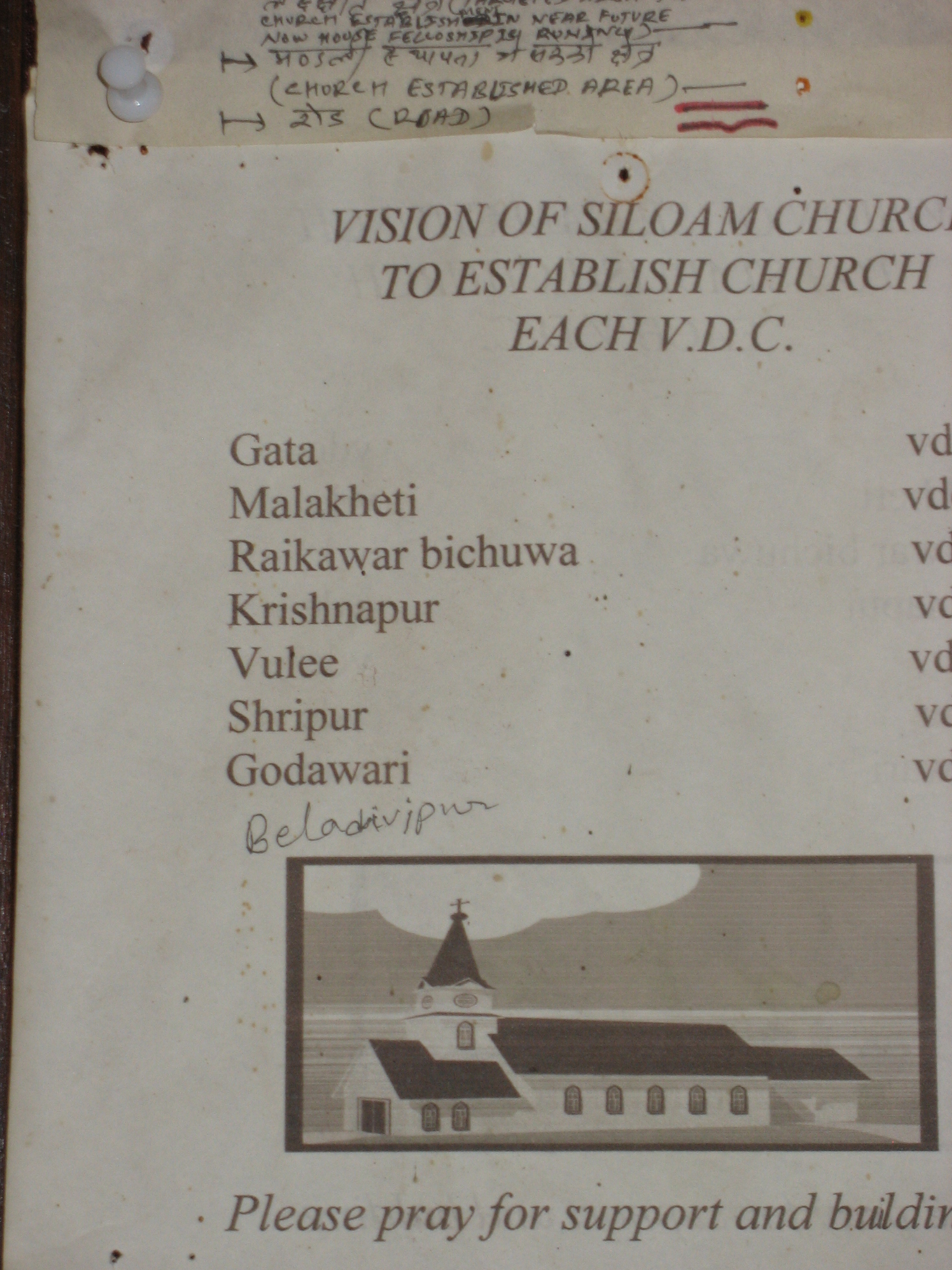
The churches that we visited were small and their buildings unimpressive but their vision certainly was not.  It was exciting to see the variety of outreach strategies that these churches are using to reach their community and the surrounding villages.

404

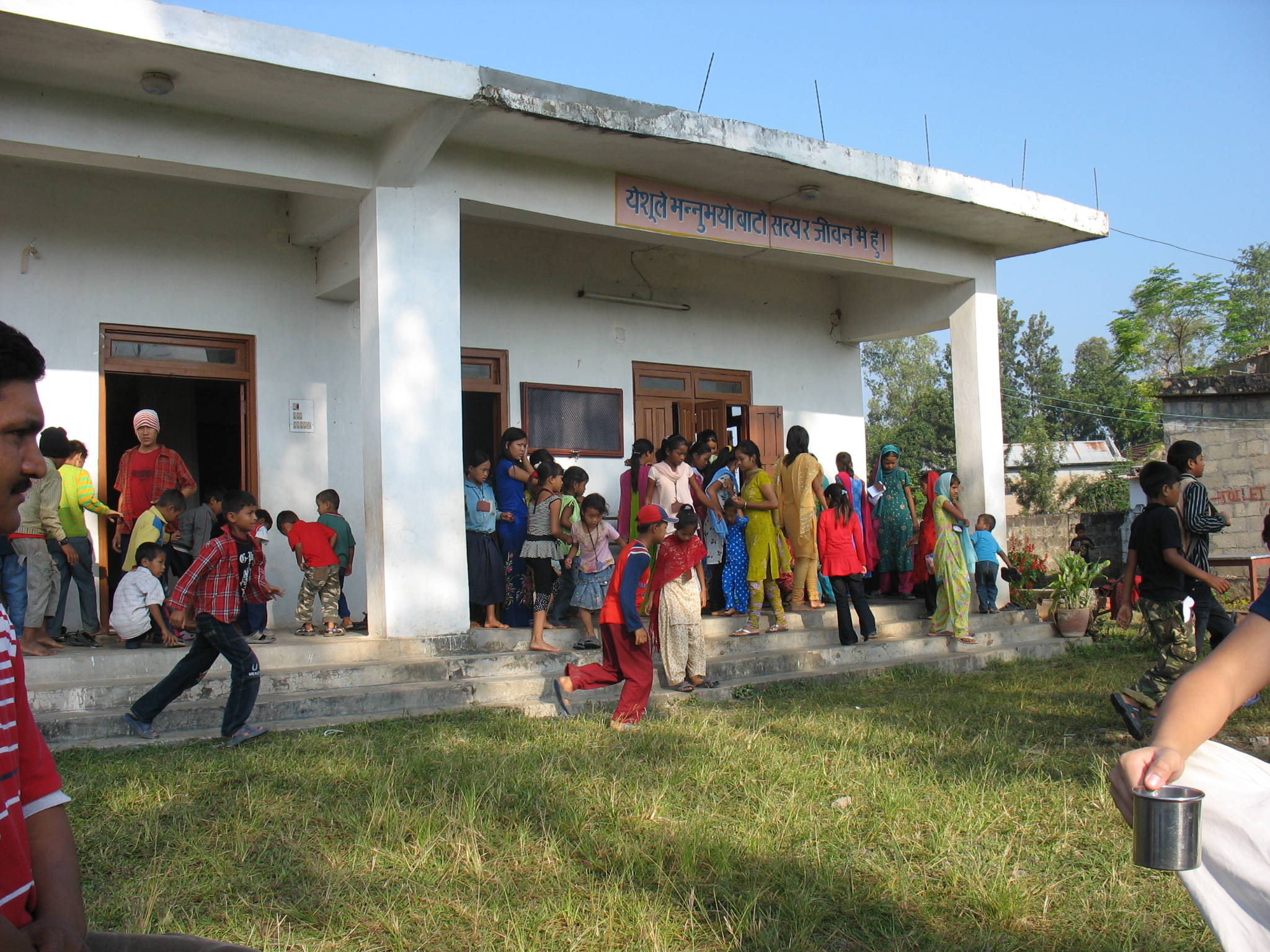
We were in Nepal during the festive season, in the week running up to Deepavali which is the major celebration for the Hindu worshippers.  One church used this oppportunity to run a week long overnight camp for village children to give them a break from some of the issues caused by the extensive use of alcohol, which is an inevitable part of every celebration.

299

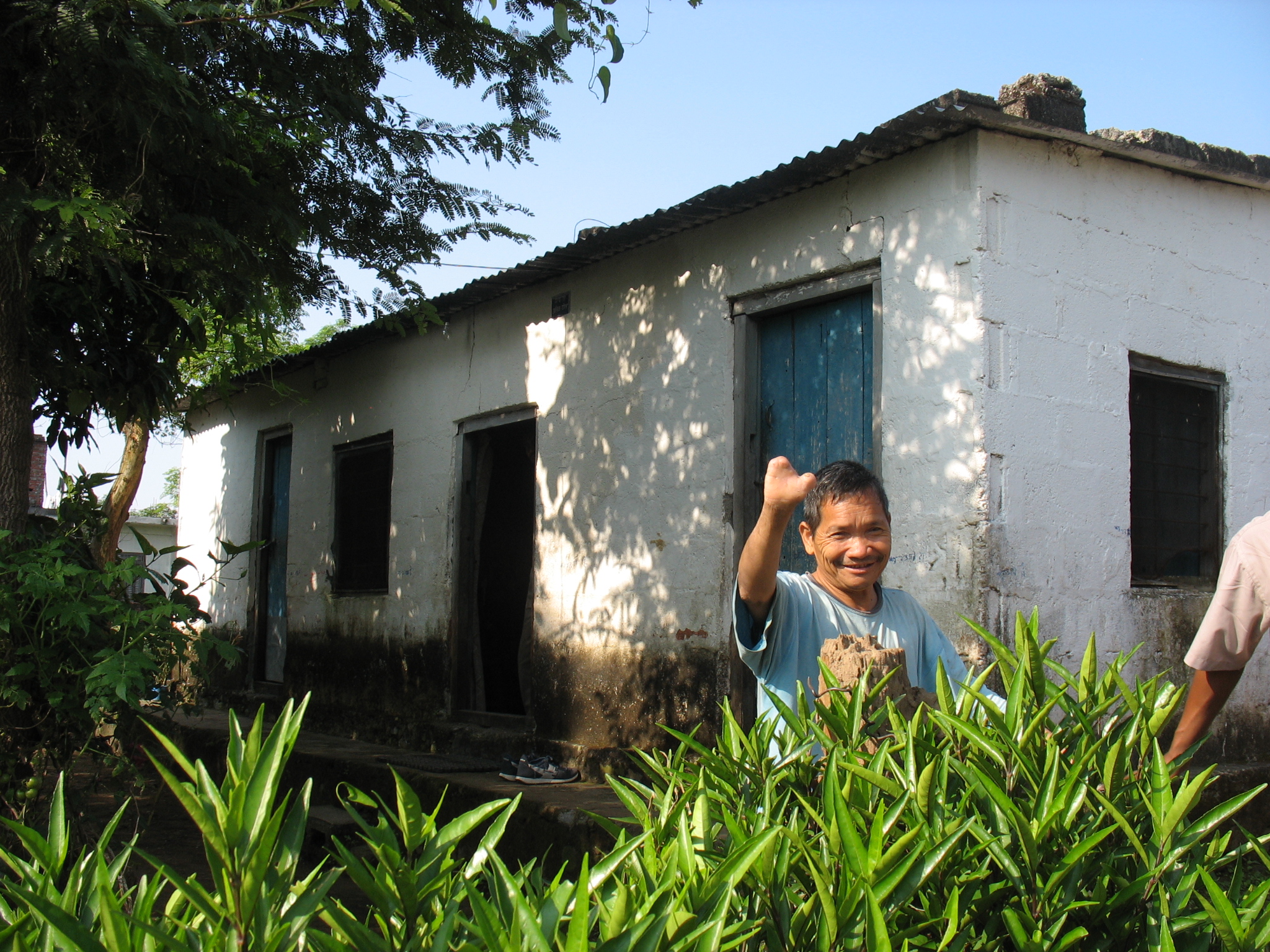
One of the highlights of the trip for me was to meet and have tea in the home of a great man of God.  Although he long ago lost most of his hands and feet to the effects of leprosy, this in no way has limited his effectiveness in ministry.  In fact he is currently pastoring three churches.311

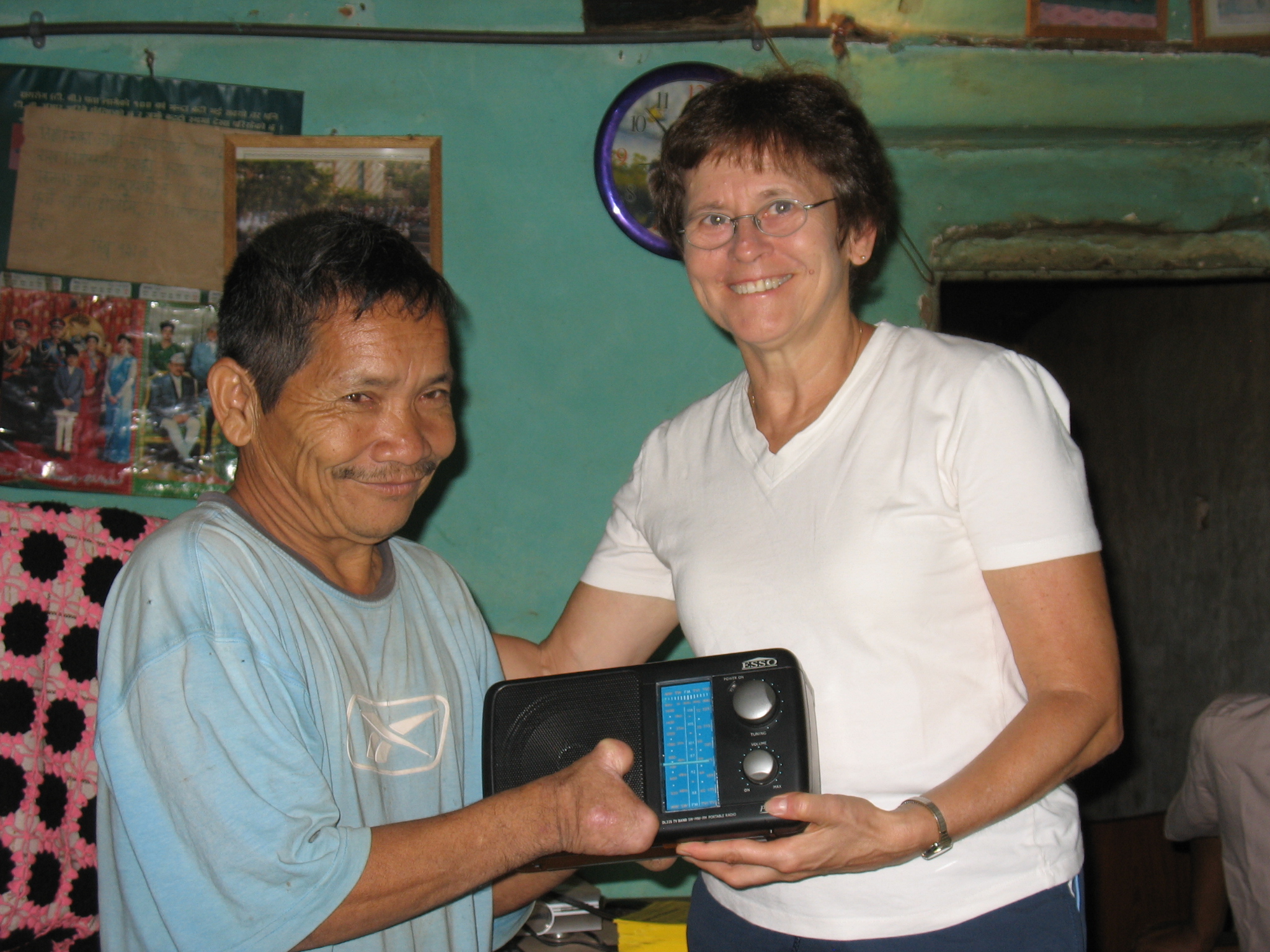
Although we were able to give him a radio, I am sure that he will shortly be giving it away to a new group of people waiting to hear the broadcasts.

309

Youth with a Passion

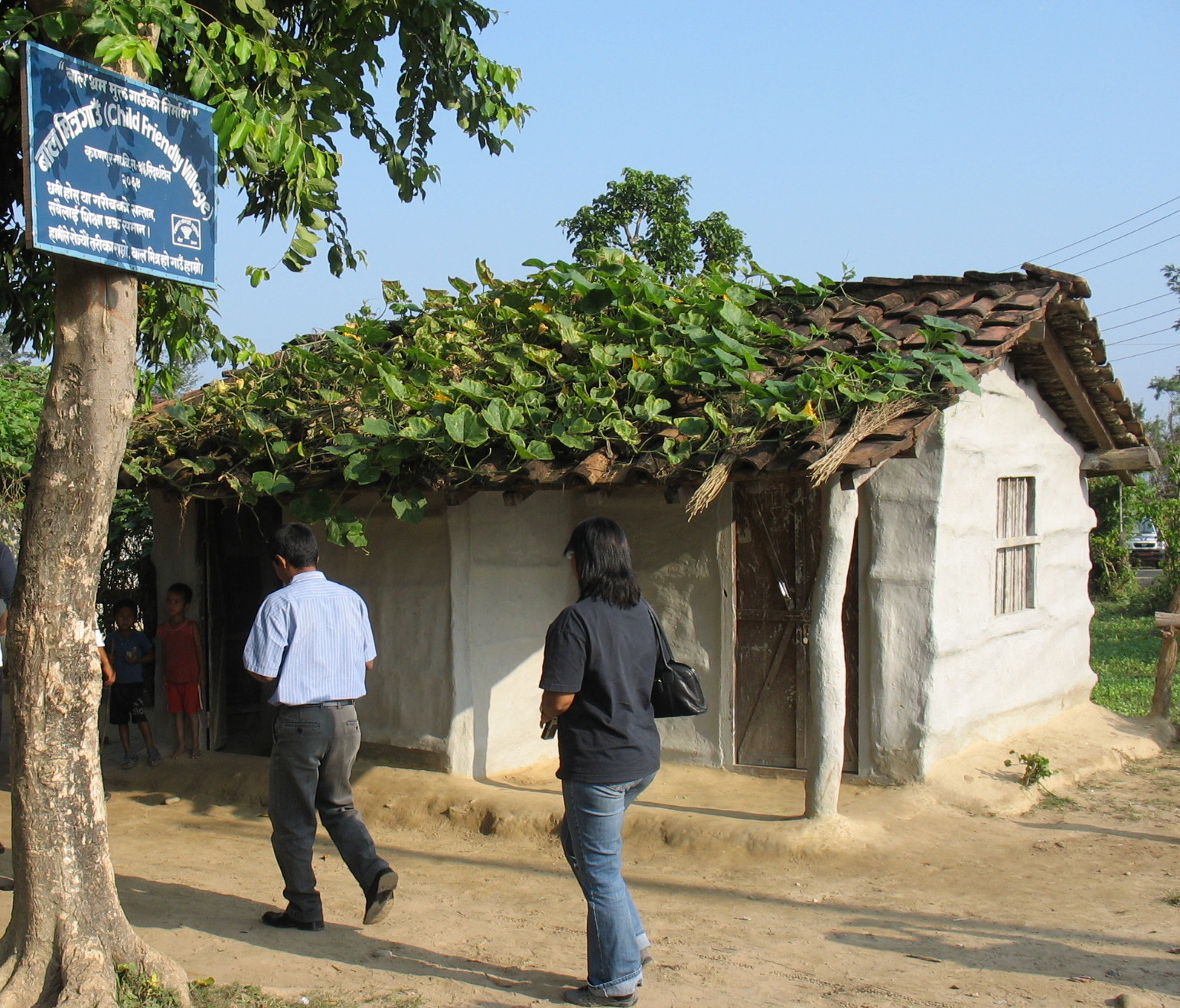
As we drove through the countryside we would often see very small buildings, identified as churches by a cross on the front. We were able to visit a number of these churches to see their work and to give a radio to some members of the congregation who had already established an outreach.

We met a lovely group of young people, some who had come as far as 45 kms, by bike.  They were anxious to show us their work through a drama presentation in which they distributed, not tracts, but radio program guides, giving us some insights into the strategies for reaching an oral society.

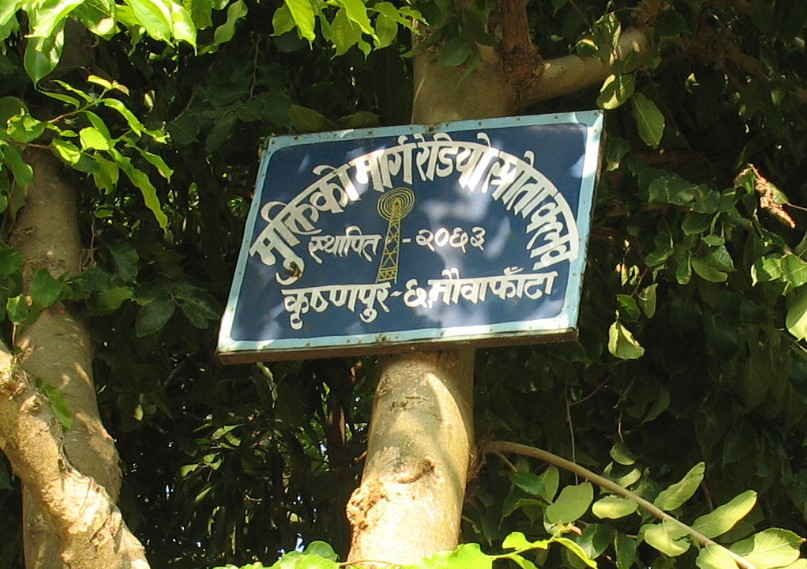
One young lady took us out to visit some “club houses” which are new, small groups of people who gather together around a single radio and form the beginnings of a learning community and a new church.  It was exciting but humbling to see these seeds planted, marked by a sign in a tree, identifying TWR and radio broadcasting as the avenue.


I have to admit that I wanted to give a radio to anyone that expressed an interest as it seems such a small thing to me.  In reality, radios are just such a valuable commodity that no one recieved one unless they had already proven that they had a goal for its use, listened to a presentation on the mission and values of TWR and signed a statement saying that it would be used only for the work.

I have waited for nearly a week to write this post, not because Pam has been busy getting caught up with her news from Singapore and Nepal. But rather because I needed to calm down, as I honestly haven’t been so angry and disappointed about an issue in a long time, and that doesn’t help coherence.

I am refering to the ‘Letter From 2012’, put out by CitizenLink, the political arm of Focus on the Family. In it the fictional letter writer makes 34 points about how things have changed, all for the worse, in an Obama-led United States, from the loss of the wars in Iraq and Afghanistan and the rise of Russia in eastern Europe, to the loss of freedom of religion and speech in America. But the first 12 points, fully one-third of this nasty, right-wing screed, are devoted to wholesale hatred of homosexuality and homosexuals.

It is true that the Bible lists homosexuality as sin. That can be found in a list of vices in 1 Corinthians 6:9-10. But the same list also condemns drunkenness and coveteousness, idolatry and adultery. Why hasn’t this ‘letter’ focused on them? Other lists (Romans 13:13; 1 Corinthians 5:11; Galatians 5:19-21;Colossians 3:8; 1Timothy 3:3) likewise condemn avarice and gluttony, anger and envy, lying and slander, but no other list mentions homosexuality. Obviously to the writers of the New Testament it wasn’t a big deal. Christ talked about the peril of materialism more than He talked about hell, yet He never mentioned homosexuality.

Dr. Dobson, my wife and I were happy to have followed your advice on raising our children for years. We thought yours was a voice of reason in a world of vain words. But you have just fouled your name and that of your ministry beyond recovery. It is not just your small-minded obsession with the denial of minority rights that is so troubling, but this ‘letter’ that you allowed to go out under your name lacks any shred of Christian charity, compassion or understanding; it borders on hate-mail.

The economy is in meltdown, America’s reputation is in shatters, the world is reaching out, desperate for world leadership and all that’s on your tiny mind is how does America continue to deny gay rights for as long as possible? Dr. Dobson, you have done the cause of Christ a great disservice, and if you are not thoroughly ashamed of yourself, then shame for you has lost all meaning.

Read at your own risk:

Click to access 10-22-08_2012letter.pdf

First Impressions

The conference officially ended after supper on Friday evening but by the time we cleaned up and de-briefed it was 11:00 p.m. before I headed up to finish packing for Nepal.  Since I needed to be at the airport at 7 :00 a.m. for my flight, it only made sense that I should do the 4:00 a.m airport run to see the first lady off on her early morning flight home.

The five and a half hour flight to Katmandu was very relaxing and as it turned, out the nap was absolutely essential given what we would face on the second leg of our journey.  On arrival we met up with Simon, our Nepal Ministry Leader, for a six hour drive west to Butwal.  There is only one road over the mountain, which snakes high above a beautiful river valley.  Barely wide enough for two vehicles to pass, it is packed with huge trucks, buses, cars. motorbikes, tractors, ox carts, bicycles, men and women carrying incredible loads, oxen, sacred cows, goats, chickens, kids heading to school,  little babies playing with rubber tires and rocks and debris from recent landslides.

After supper at Simon’s home, we finally arrive at our first hotel, Summerland Resort, well after dark. 

First impressions are funny things.  The vehicle we rode in seemed pretty decent but little did we know that it would become a torture chamber in which as many as nine people were trapped  for 6- 8 hours a day for the next week.  The road we travelled seemed narrow, rough and a little frightening given the steep drops into the valley below but it was a super highway compared to what we would later travel on.  The quaint little outdoor stall type restaurant where we ate lunch was later referred to as the “five star” restaurant.   Although the Summerland looked a little seedy and tired, with a few bugs, we soon found ourselves longing for the luxury of that accommodation.


« Previous PageNext Page »