School


God is faithful, who will not try us beyond what we can bear. It is hard to be here in Malaysia when Pam and her family are going through so much back in Canada. At such times we just want to be beside those we love and offer what comfort we can. Skype is great, but it doesn’t add up to a hug when you are feeling overwhelmed, and I’m sorry I can’t be there to give one.

Fortunately for me, I teach for a living. That means I get to be surrounded with young people who are full of smiles and good wishes. Especially now that the long semester is over and my students can look forward to the very real possibility that with another week of effort during exams, they can earn a flight to Canada and the chance for a world class education for the next four years.

It is a great honour and an undeserved privilege to be a part of that earnest ambition. To urge and encourage (and yes, sometimes scold) the best out of the fine young men and women in my classes. To require of them the best they can produce, and to see them exceed themselves and delight in what they have accomplished is unadulterated joy.

These students have earned something that will change their lives. They stand on the brink of that change with a mix of excitement and fear. So much will be different four years from now, and I had an opportunity to help bring that about. That makes me a very fortunate man.

Having taught ENG 3U twice, 4U this term was relatively easy. For one thing this crop of teachers were a whole lot less demanding. Last year the English team were all driven individuals, with a high degree of competence. There was a friendly, professional competition to outdo the other in terms of preparation and material covered. We were each producing a major slide show per week and then sharing them around the group. As a result I had a great cache of material in my computer that I simply had to retool.

I don’t think this year’s crop produced a single slide show all semester, and after an initial effort to get them going by example, I just accepted the norms of the new regime. The expectations were a lot lower, and the marking a whole lot less strenuous. I remember Natalie last year carting home three classes worth of journals every other weekend, and she had nearly ninety students! This year journals got marked four times all semester, and it was made pretty plain that others did not want you doing more and making them look bad.

We also met a lot more frequently last term, at least every two weeks for a good hour, sometimes longer, with a lot of individual conferencing going on in between. This year we were lucky to get started before 10 when we all had to go teach at 10:30. I do miss the excellence and drive of last year’s team, but I have to admit that this time around it has been a whole lot less stressful. As with any group of highly motivated individuals, my own drive to excel was simply accepted as part of the norm. In this group that drive is seen as being pushy and out of step, and I have had to take a large step backwards and simply let them go at their own pace. As a result I too have become a lot more relaxed.

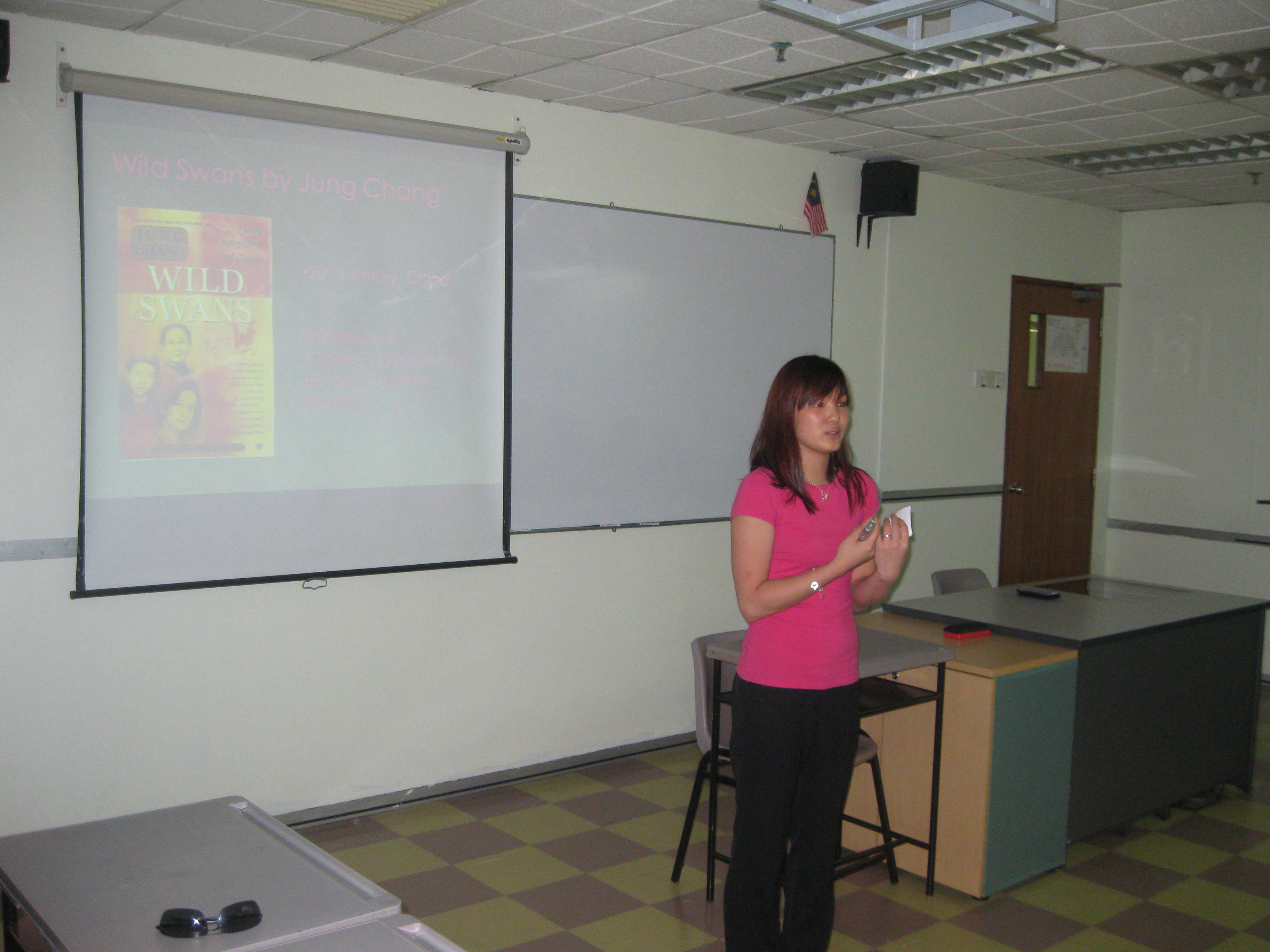
Since the students have now been in English for two terms, the ISU (independent study unit) essays and presentations are outstanding. The essays are two thousand words, although I have marked several in the 2500 word range, and they have been excellent; well researched and meticulously cited; insightful, witty and wise. Their presentations make my own look sick. Some of these kids have put weeks in collecting slides, videos, songs and games to enrich their presentations and get their thesis across. Each presentation is twenty minutes, followed by a ten minute seminar where they have to defend their thesis in discussion with their classmates.

The presentations take about three weeks worth of class time, and I have three days left to go. Our long weekend is the one coming up (Buddha’s birthday) and I hope to be done by then with all their essays and presentations marked, clearing the decks for next week’s race to the exam.

You know when the semester is coming to an end when the marking starts piling up. Tests, essays, journals all have to be cleared out before the end of the term. This semester I had Musical Theatre production responsibilities and a student teacher as well, so the backlog looked pretty daunting for a while.

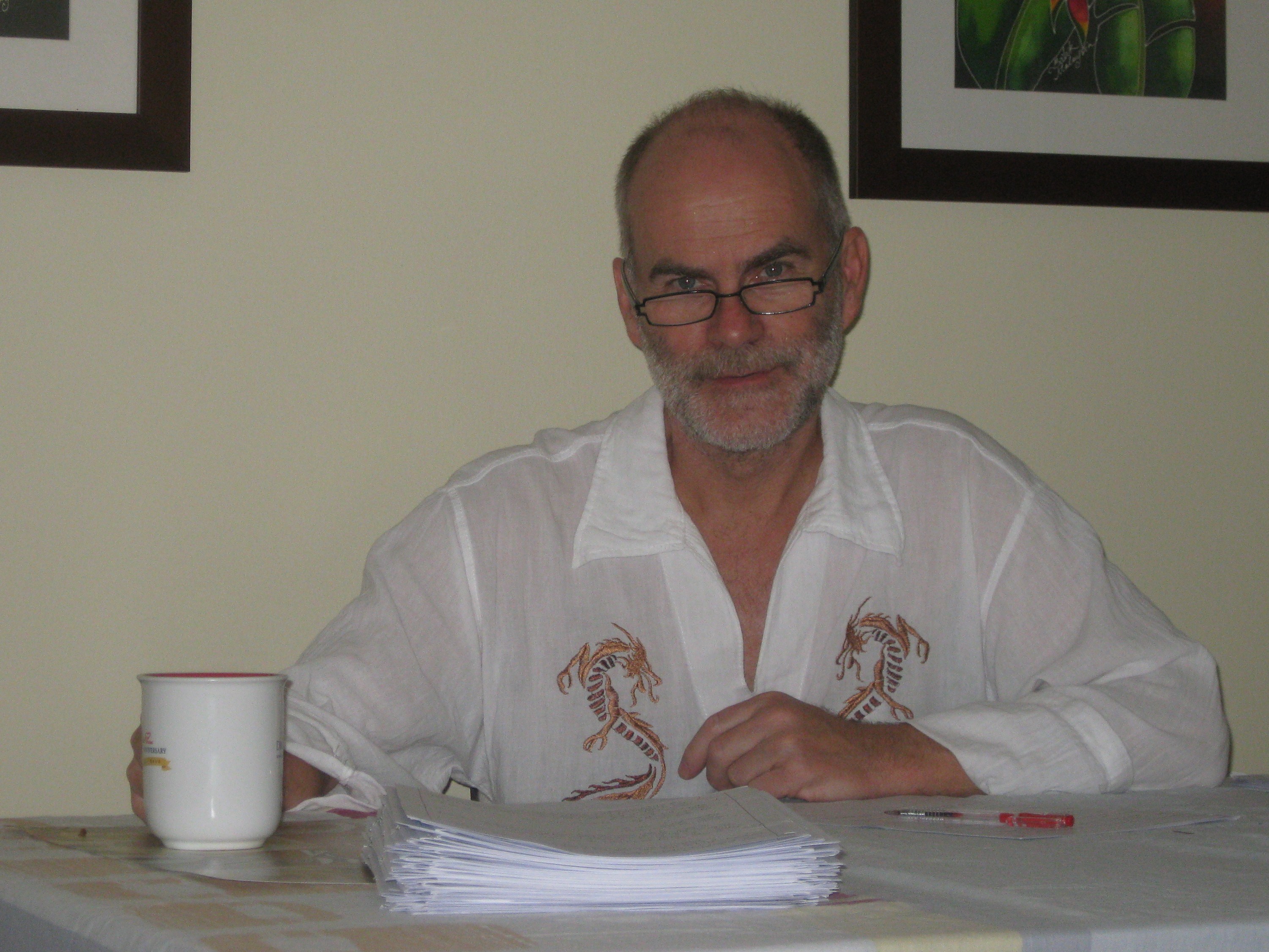
The fact that I now have enough time to blog about it means that I am whittling down the pile to a reasonable size. The stack in front of me here is the unit test on Hamlet, which I polished off on the weekend. The larger stack is the end of term essays, which is currently a work in progress.

Essays are a much higher hill to climb, as they require grammar and syntax assessment, form and citational references, organization, and of course content marks. I am so happy that the school broke down and bought some anti-plagiarism software, as that used to take a ton of time to check. Now that can be done in minutes. But all the other stuff is still pretty time consuming.

I figure at this level – final draft, having seen the essay three previous times – it takes me about 20 minutes to half an hour per paper. I try to mark six per night. That way I can keep up with the six presentations I hear each day in class. Some coffee and some classical music help get me through. That and the fact that Pam is on the other side of the world and I have nothing else to do in the evening!

Well I made it to Sunday, and not a moment too soon as I am exhausted. Yesterday we did two shows and once again I was the last to leave, finally getting home pretty close to midnight after all the equipment was packed off in vans or stored away in the tiny little space that passes for a sound booth. There were a couple of kids who came back looking for stuff they had left behind, and I will probably have to go back up later on today to have a more thorough look around to see what else has been misplaced.

But the show itself went very well; the evening better than the matinee, as is generally the case. The kids really cut loose on the final show, hamming it up for a very appreciative audience, who cheered every song like they were at a rock concert. Both shows were packed, as was the Friday show, and I’m sure if we had planned a Sunday show we could have sold that out as well.

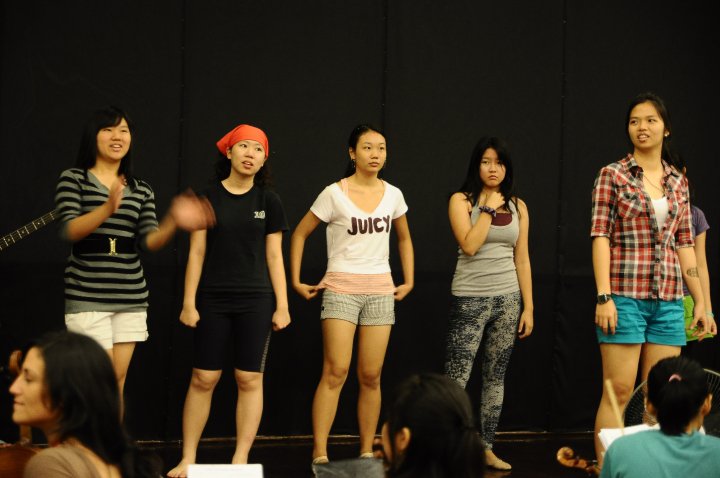
It has been nothing short of amazing what the kids pulled off in just three months. The choreography, costumes and music were are very well done. We had the sound equipment for just one day before we went to show, and had to pack three rehearsals into that time to get the kids up to speed in remote mics and tracking spots. To their credit they rose to the challenge and got it all together.

There were plenty of tears at the post-show get together. For most of them this had been their first opportunity to do a show like this, and they were so appreciative of the opportunity. As always with these things, it has been great to see the kids learn and enjoy doing new things. Very rewarding, but also exhausting. I plan to spend a week getting caught up on all the things that I have put aside for the last two months.

Not that Friday is the end of my week these days. This show has been occupying all my time, including weekends. Last night I got home sometime around 9, having left for work around 7. Another 12 hour day; I’m not sure my tired old body can take much more of this.

Fortunately it all comes to an end on Sunday, so there are only four more days. Unfortunately Pam leaves on Sunday for a week in Cambodia, so we wont get to see much of each other for another week. Last night she prepared a homemade soup, and ate it by herself at around 8 when it looked like I wasn’t going to make it again. She has been very supportive and understanding through all of this extra work, but we do miss each other’s company, and occasionaly wonder if perhaps there isn’t another way we could arrange this.

The show continues to lurch forward, always an inch or so from disaster, it seems. There are about sixty of us involved in this thing in one way or another, so there are a lot of people to keep on track. There are not a lot of prima donnas in this group, but people do get sick and have other commitments – like school work! – that need to happen.

Typically no one sees the tech stuff that happens, but it takes a huge amount of work to get all the sets built and the props made. Then there all all the sound and light cues, the equipment to get wired into place. It seems pretty much endless at this point. I have had a good crew working with me on all this, and they have been fun to work with. But at this point I just want the show to start. Compared to what I have been doing for the last month and a half, that will seem like a holiday!

Like many professionals I feel a sense of responsibility to train the next generation. This hasn’t always worked out well for me. I have had some excellent student teachers over the years, and I have had my share of losers as well. A bad student teacher can not only make your life miserable for two to four weeks; they can also force you to reteach for the next month what has been poorly covered while they had the class.

They can also be incredibly destructive. One nasty young lady went balistic on my kids at every opportunity: she not only had control issues, but she badly misunderstood her perogative to correct behaviour. Then when I confronted her she would dissolve in hysterical tears. She clearly needed more help than I could give her, but rescuing my class from her abuses took most of the next six months.

Then there was the guy that went down every rabbit trail that crossed his neural pathway: his mind was mental jumbalaya (kway teow, for my Asian readers). One fine day he was conducting an experiment – that as usual had practically nothing whatever to do with what was on the curriculum – and he set his tie on fire! There it was smouldering away under his very nose, in plain view of my fascinated students who were holding their collective breath (and snickering under it) to see how long it was going to take for this guy to realize he was on fire. Ah, me; teaching can be such a cruel gig.

Fortunately teaching in Asia builds in its own safety net. There aren’t a lot of teachers who have the moxey to do their practicums on another continent, and those that do don’t need a lot of coaching from me. Jamie has been with me for week now and she has already taken over some burdensome responsibilities in dramatic arts that were beginning to weigh pretty heavily on me. We have a musical theatre coming up at the end of the month, and this has meant that I have been wearing four or five different hats in addition to my regular teaching load. I have been happy to let Jamie take a couple of these.

She and her two colleagues have been in Singapore for the weekend, but Monday she begins in earnest on Shakespeare’s Hamlet. I am looking forward to seeing what she has in store for my students, and getting caught up on my marking while she is teaching. There are just two months to go in this term, and the remainder of this year looks like it is going to be very enjoyable indeed.

Term Five in Malaysia is now officially over. The exams are marked, the reports are completed and the kids now have their diplomas in hand. I even got in my ‘volunteer day’ at the new campus on Saturday and probably signed up six of the eight parents I talked to about enrolment. Today is the first day of the Christmas break, and I finally get to sit down at the computer and actually do some things I would like to do before heading out on vacation tomorrow.

But before I go, I would like to pause and thank the many students who read this blog for their kind words to me over the past few days. I am well aware of my limitations as a teacher and as a person. All my striving to improve daily cannot fully overcome those limitations. But despite these failings, I seem to have done some good, and that cheers my heart.

So thank you for all those gestures of kindness, the hugs and the handshakes, the requests for pictures and especially the words of encouragement regarding my teaching and the help I have been. This is not the icing on the cake for me, it is my bread and butter, the reason I teach. I no longer need to do this for the money, I do this to help students to be the person they were intended to be, the person they were created to be.

Sometimes I come home from teaching thinking I have achieved nothing, got nowhere, helped no one. Other days I feel like I have been a blessing, been useful to someone, and faithfully represented Christ. A couple of days ago I got a letter from a former student along these lines. I have asked her permission to reprint it here. She said she would be honoured.

“Mr. Wise, I hope you know that St. Thomas and all of the kids from Locke’s have not forgotten about you. Today, I can still say that you have been my most influential teacher throughout all of my years of school. I’m positive you are loving where you are at in your life, and I hope that will always continue for you. Anyways, I just thought I would write you, since you were on my mind. Hope to hear from you. Jessica.”

The term may be over, the kids all gone, but so long as I can, I will be back doing what I can to make this world a better place for all the Jessicas I can reach. I am so very grateful to God for allowing me this privilege.

The four great traditions of Western culture – logical analysis, empirical investigation, the triumph of individualism and a spirituality rooted in reason – dovetail and reinforce each other, allowing for a unity of purpose in cultural development. Western culture has triumphed, not on the strength of military power or technological invention, but rather on the strength of its ideas and ideals that are rooted in these ancient traditions. Different ages have interpreted these ideas and ideals in different ways, but their essential truths have remained unchanged in Western culture for four millennia.

It is through logical analysis that Locke’s thoughts on the Wealth of Nations arose. It is through empirical investigation that all the great advance in science and medicine of the past 500 years were derived, it is through the insistence on the importance of the individual, rather than state, the theme underlying Antigone, written in the 3rd century B.C. and pursued throughout Western literary tradition, that has formed the basis for democracy and all the human rights and privileges enjoyed by the West. It is the merger of spiritual wisdom with rational devotion that scorns ritual and superstition that has allowed Western religious traditions to have had such an impact on the morality and ethics of Western democracies.

When a teacher from the West enters the classroom, he brings with him or her all the great heritage of this vast cultural tradition. Whether that teacher is engaged in science, economics, law or literature, behind him or her stands not only the intellectual treasure of the ages, but the paradigms and intellectual constructs that permit the continued investigation, growth, and purposeful discovery of all the wealth of knowledge still unlearned. There is an excitement and a sense of adventure, a conviction of the intellectual, emotional, moral and spiritual successes of the past and a confident drive towards the future. It is my great privilege to be part of that historic cultural tradition. It is that sense of excitement, discovery and purpose that I attempt to bring to every class I teach.

Western culture is often portrayed as the brash newcomer in the rise of culture, and this interpretation is often the framework for an explanation of its impatience with established fact and its drive for innovation. But far from being the brash newcomer, Western culture is the oldest continuous cultural tradition on the planet, and has affected in significant ways every other world culture. Its cultural traditions – logical analysis, empirical investigation, the triumph of individualism and a spirituality rooted in reason – are not the recent innovations of a relative newcomer to the world stage, but the settled convictions and traditions of a culture of great antiquity.

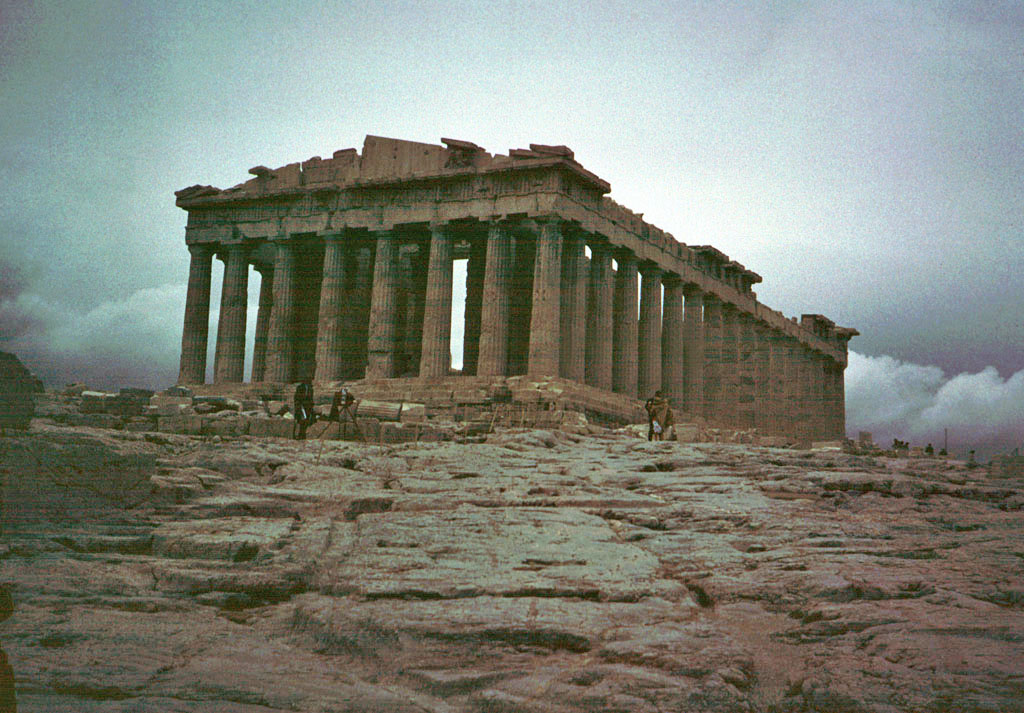
Borrowing from ancient Sumerian and Egyptian cultures, by 1250 B.C. Greek civilization was already advanced enough in the art of warfare, not to mention the associated skills of weapons manufacture and boat building to take on the reigning regional power, Troy. Whatever spin both Greek mythology and the Greek writer Homer put on the origins of the conflict, it is far more likely that Troy simply stood in the way of the expansion of the Greek sphere of influence into the Aegean and Asia Minor. The second important thread of Western culture, the Judeo-Christian heritage with its emphasis on the synthesis of divine revelation and human reason arose even earlier in around 2050 B.C.

It is the foundational marriage of the these two traditions, the Greek thought of Homer, Plato, Aristotle, Pythagoras Eratosthenes, Euripides, Sophocles, and many others, and the Biblical writings and traditions of both the Old and New Testament writers, both of which can be traced in an almost continuous line for nearly four thousand years, that forms the foundation of Western culture. Far from being the brash newcomer to the world stage, it is a culture of great antiquity, predating both Chinese and Indian culture by a millennium at least and seeding all the world’s cultures with its scientific, philosophical and theological thought.

After just five terms here I have finally got a handle on my timing and had a terrific term. I scheduled student presentations for the first two weeks in November and just took my time, giving the kids as long or as little time as they wanted. Essays were due November 2. As a result I’ve had all my marking done for two weeks now, and have been spending the last little while on a leisurely review of the term using video to spark discussion and relating that back to the course themes. While other teachers, especially the newbies, have had stacks of marking to wade through, I’ve been chilling in the staff room reading the local paper. It only took me 2 1/2 years, but I have this course humming like a little sewing machine.

This present crop of English teachers is as raw as you can get. The most experienced of them has a year under her belt. Last year’s crew was just the opposite, with scads of expertise. But this new crop are rising to the challenge and learning how to manage the curriculum and the kids. The new anti-plagiarism software has been a huge help to the English department, and has helped us to catch students who borrow essays from each other, as well as teach the students themselves the importance of citing their sources. Everybody is on board with its use, and it is becoming widely adopted in other programs as well.

A couple of months back two professors at one of Malaysia’s leading universities were caught by the Times Education Supplement of plagiarising. A candidate for her PhD had simply copied an online Harvard textbook and submitted it for her thesis. Her supervising professor simply accepted it without doing any checking. The thesis was on how to write a resume to secure employment, and it was submitted, along with other documents, to the TES in order to raise the university’s rankings in the world listings. The ironies abound! The real kicker is that while both of them were reprimanded, neither lost their position at the university and the candidate’s PhD still stands. This is the context in which we are trying to teach our students the cost of plagiarism.

This term I had one student who submitted her first essay which was 100% plagiarized from the internet, despite my prior instructions to the classs, and my warning about the new software that would detect them. I gave her a second chance, and her revision was self written, and passable. Her second essay on Lord of the Flies was 100% plagiarized as well, this time from another student, her roommate, who had left her essay on her computer and wasn’t aware it had been pilfered. I guess she figured if she plagiarized second hand she wouldn’t be caught. This time I gave the girl zero and warned her she was likely to fail the course if she tried this again on her final essay.

A month later she showed me a draft of her final essay, as I required, but didn’t upload it so it could be checked for plagiarism. However, given this girl’s past history I scanned the draft and uploaded it myself. It was 100% plagiarized. I called her in, warned her not to use any of the material from this draft, and gave her another chance. Her final draft submitted and uploaded two weeks later was 90% plagiarized and included the portion that was 100% plagiarized that I had told her she couldn’t use.

Not surprisingly, she failed the course, but you have to wonder at the sheer obstinate persistance of some of these kids. We have three students in the program, now in their second term, who have cheated on every single essay, every single assignment, every single test and are still obstinately pursuing that course leaving behind in their wake failure, mistrust and indignation from teachers and students alike. You’ve got to wonder why they don’t see how futile their course of action is.

However, these students are the exception, not the rule, and I have had a delightful term characterized by some fine writing and a genuine increase in awareness of the proper use of citation when doing research. The next step is to get them beyond what shows up on the first page of Google! But that is the challenge for the next course. This one, I am happy to say, was largely a resounding success.

« Previous PageNext Page »