Current News


Which brings me to The Shack, by William Young. What Young has written falls into the third category I mentioned: stories (and barely so) of people coming face to face with the Almighty. There has been a lot written about this book, both pro and con. As you can see from my previous post, I am not naturally inclined toward this kind of writing: the storyline is weak and the characters poorly developed. In addition there are any number of ways to get derailed from the author’s purpose along the way.

God Almighty, as presented in this book, is a happy, slightly scatological African woman, the Holy Spirit is an Asian nymph, and Jesus is a Middle Eastern Jew (true to type, at least once). They confront our protagonist in a woodsy shack where his daughter was brutally assaulted and murdered. Their response to our hero’s grief and dismay is dishearteningly facile, at least initially.

If that is as far as you got before throwing the book aside in disgust and righteous indignation (as I almost did) then you will have missed an interesting book. Putting aside the author’s obvious deficiencies as a writer – “blazing campire”,  “veritable feast of hamburgers”, and so on – there is a thoughtful man who has something to say on the nature of suffering. No, it is not Job, and clearly this is not the majestic view of God that we get in that venerable exploration of human pain. It is not even C.S. Lewis’ insightful The Problem of Pain. But there are some worthwhile thoughts, nonetheless, and it is worth seeing past the book’s peculiarities to find them.

Consider these little nuggets. “Paradigms power perceptions, and perceptions power emotions;” or, “Grace doesn’t depend on suffering to exist, but where you find suffering you will see grace in many facets;” or, “There are many people who end up locking themselves into a very small space with a monster that will ultimately betray them.”  Here is a man who has done some serious thinking on the problem of human suffering. If he has chosen to share his insights through the metaphor of an incarnate Trinity of questionable theological sanctity, then I can live with that. As for God being offended by this portrayal, let’s not go too far down that road, shall we? There is already a religion out there that specializes in being offended by distorted representations of its view of God. I don’t want my faith in that camp!
Christian allegory has a long and venerable history from Piers Plowman and Pilgrim’s Progress to the Narnia books by C.S. Lewis. I like allegory because of its narrative structure. The writer has a story to tell, and as with Lewis’ books, the story can stand by itself on its own merits. (Lewis was, incidentally, adamant that his most famous works were not allegorical but suppositional. I think he protests too much). Because the writer is Christian, allegories can be read at a deeper, spiritual level. Puddleglum, one of Lewis’ most interesting characters,  has a lot to say about our own struggles as Christians in dealing with a world of powerful inducements to doubt on the one hand, and equally powerful penalties for stubbornly adhering to faith on the other.

A second kind of Christian fiction is that exemplified by Ben Hur, which in its original publication was subtitled A Story of the Christ. There are plenty of these kinds of books on the market: David and Bathsheba, When Joseph Met Mary, and so on. They are an attempt to fill in the Biblical narrative by providing additional information gleaned either from historical sources, or the writer’s own imagination. The purpose seems to be to provide some wholesome Christian reading and give readers more evidence for their faith. I don’t find either of these reasons sufficient. The Biblical stories are briefly told and sparse because that was the Holy Spirit’s intention. He didn’t want us living these lives; He wants us to live our own lives, to write our own narrative of faith. Dwelling on the minutiae of Esther’s life won’t help us to be like her. Living our own life with similar courage will.

A third kind of Christian literature is an account of one man’s journey to heaven to meet God face to face. Again, this has a long lineage, dating back to Moses’ prayer to see God, and refered to again in the New Testament in Paul’s vision of heaven. However, these were actual events, not fiction, and they are blessedly uninformative about the personhood of God and His paradise. Even John’s account of heaven in his Revelation is clearly heavily symbolic and not meant to be taken literally. Which is how it should be. God gives us the hope of dwelling in His perfect presence, where ‘all tears will be wiped away.’ He had no intention of telling us what was for breakfast when we got there. Nor do we need to know.

Because such works have the intention of showing us a view of God and of heaven and this is the central purpose in the book, the narrative line is usually weak. It was just a way of getting the reader to the main point, which is ‘what is God actually like.’ The story has a tendency to be sentimental and superficial, which is where I struggle. I like a good story, and narrative is important to me. Books (and movies) that don’t have a strong narrative are just not that appealing to me.

Certainly there is plenty of room for spiritual imagination about the nature of heaven. But that is precisely the point. It is my imagination, not yours, that is engaged, and it is only valid because it is imbued with my hopes for the conclusion of the narrative that I have been living for the past sixty years. It is not valid for you. Sure we share some things in common, but this is uniquely my story, just as your story is uniquely yours. For me to take my view of heaven and declare in a work of fiction that it is THE view of heaven, would be wrong. God has deliberately left some things in the Bible in sketchy detail, because it is not the details that are important, it is the spiritual truths that can be drawn from what He does provide. When we try to fill in the blanks for Him, we often go astray.

Paul Auster: “We construct a narrative for ourselves, and that’s the thread we follow from one day to the next. People who disintegrate as personalities are the ones who lose that thread.”

Erik Erikson: “To be adult means to see one’s own life in continuous perspective, both in retrospect and in future prospect.”

Clifford Geertz: “A human being is an organism that cannot live in a world that it cannot understand.”

papua-new-guinea

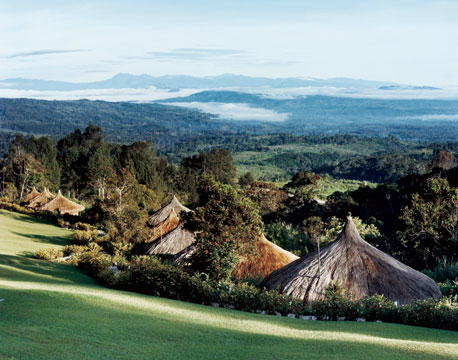
Dave and Judy Wright serve in Papua New Guinea with New Tribes. Dave was in our College and Career group, and later the MIT support group that we started for those who had missions in mind as a career option. Dave has begun a series of lessons with the Mengen tribe and could do with your prayers this week in particular as it comes down to decision time. As he faces this critical week, Dave quotes from A.W. Tozer:

“Ministers of the gospel should search their own hearts and look deep into their inner motives. No man is worthy to succeed until he is willing to fail. No man is morally worthy of success in religious activities until he is willing that the honor of succeeding should go to another if God so wills. God may allow His servant to succeed when He has disciplined him to the point where he does not need to succeed to be happy. The man who is elated by success and cast down by failure is still a carnal man. At best his fruit will have a worm in it.

God will allow His servant to succeed when he has learned that success does not make him dearer to God nor more valuable in the total scheme of things. We cannot buy God’s favor with crowds or converts or new missionaries sent out or Bibles distributed. All these things can be accomplished without the help of the Holy Spirit. Our great honor lies in being just what Jesus was and is. To be accepted by those who accept Him, rejected by all who reject Him, loved by those who love Him and hated by everyone that hates Him. What greater glory could come to any man? We can afford to follow Him to failure. Faith dares to fail.”

A.W. Tozer Born After Midnight

global-warming-predictions

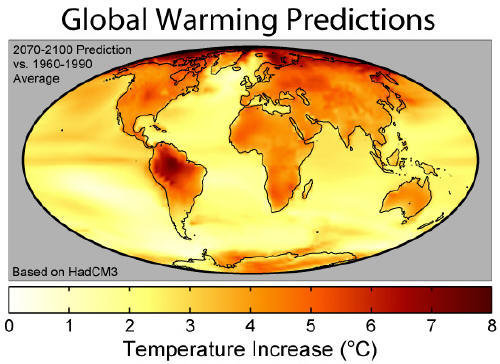
What do you think about global warming? According to Al Gore and the scientific establishment, the world is getting warmer, and we are to blame. We are using too much of the world’s carbon-based fuel resources and eating too much meat (cows not only consume much of the world’s grain, but they produce methane, four times more potent than carbon dioxide in trapping heat).  We burn far too many of the world’s dwindling forest reserves, and produce an unsustainable amount of garbage that releases methane in its decomposition.

All of this is incontestably true, and something that I have not only protested against for most of my life,  but I have incorporated into my lifestyle. I do not own a car. I owned a canoe, but never a motorboat. I have recycled long before it became popular and I live modestly in an Asian country. Although not yet strictly vegans, our diet consists largely of fruit and vegetables. It is healthier and tastier and less environmentally harmful. There are way too many cows on earth and we need to do a better job of looking after this planet.

But are we causing global warming? I don’t think so. The most potent greenhouse gas is not carbon dioxide, or even methane. It is water vapour, which makes up by far the largest percent of ‘greenhouse gases’ in the atmosphere. Carbon dioxide and methane make up an almost negligible percentage. The carbon dioxide that is there is produced primarily by the outgasing of the world’s volcanoes, not human behaviour.  This venting is a normal natural phenomenon, almost like the breathing of the mantle. And like breathing there is an ‘inhale’ as well as an ‘exhale.’ The inhale occurs when the world’s carbon dioxide is trapped in various living organisms, such as plants and crustaceans, who use carbon dioxide to produce the calcium carbonate of their shells. This calcium carbonate becomes limestone when these creatures die, and the limestone is returned to the mantle via the tectonic process described in a previous post. Completing this cycle, the carbon dioxide is then ‘exhaled’ back into the atmosphere.

This whole process, called the carbon cycle, is akin to the water cycle that we all studied back in grade school. But rather than taking a few weeks, or possibly months to complete, the carbon cycle takes about 50,000 years. As such it acts as a kind of global thermostat, regulating the earth’s temperature over long periods of time. We are presently at the start of an upswing, having reached a low point about two hundred years ago in what was called the ‘Little Ice Age.’ If the world continues to warm up – as it will – Britain may once again be able to grow grapes and produce wine, just as it did in Roman times.

There is nothing scary or alarming in all this. It is perfect natural behaviour for a living planet. What is alarming is the extent to which people are prepared to go to impose their political will on us in the name of science. Nor is mine the only voice of dissent in this growing controvery. State of Fear, a highly readable thriller by Michael Crichton, speaks to the encroachment of our civil rights engendered by this scare. Many reputable scientists – Freeman Dyson, for example – do not buy the scaremongering either. The New York Times recently ran an article on Dyson, and it is worth a read, if you have the time and the inclination. See the link below for a look at Dyson:

http://www.nytimes.com/2009/03/29/magazine/29Dyson-t.html?ref=science

See this link for Michael Crichton’s essay on why Global Warming is a dangerous theory:

http://www.crichton-official.com/essay-stateoffear-whypoliticizedscienceisdangerous.html

And of course, as always, your views are cheerfully encouraged in our Comments

Those who think that Christianity is a religion for the weak-minded know nothing about integrity. Holding scriptural values in today’s world, either in Asia where we presently live, or in the West, is not for those who cave easily under opposition or criticism. There is always going to be some aspect of Christianity that is going to offend someone: its insistence on marital fidelity and moral purity, its cheerful contempt for wealth, its balance of the championing of the rights of women while maintaining the role of men as leaders in the home and the church, all these and many other issues are offensive to many in the modern era, and those who proclaim their love for Christ better know that this is going to engender the opposition, if not outright hatred of many.

But of all the offenses of my faith, none is more offensive than the blood of Christ shed for the remission of sins. The very image of a naked Saviour dying in agony nailed to a cross is a grave offense. Putting that image up before an unbelieving world provokes cries of outrage and condemnation. “Who are you to say that I am a sinner?” they will demand. “What kind of God would require a blood sacrifice?” they contend. “What evidence do you have that this event even took place?” they protest. It is an offense, all of it. An offense to reason and sensibility. An offense to decency and decorum. An offense to the dogma that mankind is essentially good.

But mankind is not good. Mankind produced the horrors of Auschwitz, and the Killing Fields. Mankind produced Rwanda and Afghanistan. Mankind produced the Sudan and Somalia. Mankind is not only not good, we are at times demonic. So demonic, in fact, that we need only to look at the picture of Christ hanging on the cross to see what our sin did to the holiest man that ever walked on this earth. And that offends us. We turn our faces from Auschwitz and Rwanda: that wasn’t us; those men were monsters, not human beings. But they weren’t. They were human. Just like us. Not worthy of heaven, not worthy of Life.

And this is how much God loves us anyway. That God, in the flesh, allowed Himself to bear in His body the penalty of our wickedness, so that all who put their faith in His finished work – not the works of their own righteousness, for all our righteous acts amount to filthy rags that cannot cover our sin – will be resurrected, just Christ Himself, and have Eternal Life.

I accepted Christ at His word some thirty years ago now. If I am wrong, and there is no God, I will have lived a life of purpose and peace – yes, even in the midst of conflict, I have the peace of knowing that He walks beside me, and that is a great comfort – and disappear into nothing, just as you say. If you are wrong and there is indeed a God who died for your sins, and you reject His offer – your filthy sins, for His perfect righteousness – you get a life without purpose or hope, and an eternal life of torment. I’m not much of a gambler, but those strike me as rotten odds.

malaysian-grand-prix

My Dad was a bit of a scoundrel before a war, a wife and three worrisome kids wore him down. In his youth he had a number of jobs, the most interesting working as an apprentice mechanic for the pre-war racing champion Raymond Mays. It was Mays who taught my father to drive, going on one famous ocassion from Edinborough in Scotland in the late evening to the race track at Silverstone south of London in time for racing trials in the morning of the following day. This was long before the A1 motorway was built!

When we were younger Dad would take my brother Wyn and I to the track at Mossport, where I was fortunate enough to see the famous Sterling Moss win the first ever Canadian Grand Prix, a thrilling event that cemented forever my love of Formula One racing and guaranteeing that I and my male offspring would be dodging speeding tickets for the rest of our natural lives. With this background in mind, it is no wonder that I have followed the recent Malaysian Grand Prix with some interest.

Formula One is a challenge for the drivers, for whom it is a gruelling two hours at nightmarish speeds in the cockpit of what is essential a bullet on wheels. In a typical race a driver will lose 3 litres of water and 10 pounds of body weight. An F1 car can go from 185 km/hour to zero in 3.5 seconds putting almost 5G’s of force on the body. Decisions that will cost you and those around you their lives must be made in nano-seconds, repeatedly throughout the race.

But Formula One is a challenge for builders as well, as the rules governing the construction of the cars are changed each year in order to further develop automotive technology. The regulations this year allow four major changes, including how the air under the car is channelled or diffused to keep the rear wheels on the track, and the use of KERS, or kinetic energy recovery system, that redirects braking friction into stored energy that can then be accessed during passing. Kind of like the energy boost button in video games!

When you throw in team rivalry, like the historic match up between Ferrari, Renault, Mercedes and Toyota, and nationality, such as Lewis Hamilton’s restoration of British racing pride last year, and you have an exciting mix for any race. This makes the F1 decision to postpone the start of the race in Malaysia until the sleepy-headed Brits were awake all the more disappointing. It was an exciting race, with the lead changing hands frequently and great battles in the middle of the pack between Lewis and the charging Mark Webber. That is until the race was called on account of rain, and then couldn’t be restarted because of darkness.

Decisions that are made based on advertising revenue are an increasing threat to the safety of this and other sports, and it is to be hoped that the international outcry over this event will temper the greed of those who put these drivers’ lives at risk to increase their profit. However, that aside, if the last two races in Asia are any indication, this promises to be an exciting season of racing on the F1 circuit, with the field more wide open than any I can remember. Gentlemen, start your engines!

Great backrounder on KERS at http://news.bbc.co.uk/sport2/hi/motorsport/formula_one/7906290.stm

080_1

It is a privilege to be in Asia working for Christ. He is not my employer, but I consider everything I do in the light of what He would have me do. So when HR gives me grief, or I have a boatload of marking to do, I think about His larger purpose, and am satisfied.

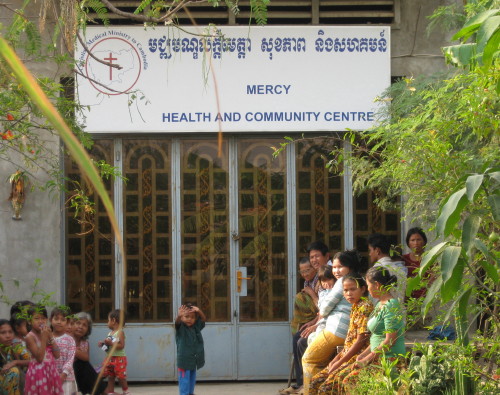
His larger purpose for now includes the two of us being in Malaysia, which in many ways is a hub for South-East Asia, the home of Pam’s present ministry. Yesterday she left for Cambodia where she will be for the entire week. Today she is manning a clinic located in Phnom Penh’s garbage dump. Then she will conduct a survey of the women’s health needs on this site over the next couple of days. For the rest of the week she has a series of meeting with some key individuals to work out a coordinated effort to reach these and similar women through health care evangelism.

Pam works selflessly on these and similar ministry assignments and she is ideally trained and qualified for this role, not just educationally, but personally, with a manner that is offensive to no one and an encouragement to many. It is my responsibility and privilege to support her while she undertakes this important ministry for the Lord. I would ask that you uphold her in prayer, for it is her desire to be a blessing.

volcano

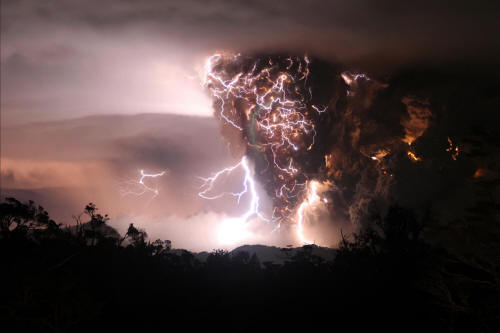
Is the earth alive? That depends on the criteria you use to determine life. Certainly not if you include criteria such as the ability to reproduce. But respond to stimuli? Respire? Those criteria are a little more difficult to determine. Certainly the earth is alive in a way that no other planet in our solar system is alive. And certainly it supports life as perhaps no other planet in the universe can. And that we owe to what happens not on the earth, but under it.

I will leave it to Ward and Brownlee, authors of Rare Earth to whom I owe this understanding of the process involved, to explain more clearly: “The final composition of the earth had several crucial structural effects. First enough metal was present in the early Earth to allow formation of an iron and nickel rich innermost region or core that is partially liquid. This enables the Earth to maintain a magnetic field, an invaluable property of a life-sustaining planet. Secondly there were enough radioactive metals, such as uranium, to make for a long period of radioactive heating of the inner regions of the planet. This endowed Earth with a long-lived inner furnace, which has made possible a long history of mountain building and plate tectonics, also necessary to maintain a suitable habitat for life. Finally the Earth was compositionally capable of producing a very thin outer crust of low density material which allows plate tectonics to operate. The thickness and stability of the Earth’s core, mantle and crust could only have come about by the most fortuitous assemblage of the correct elemental building blocks.” (Rare Earth, p. 50/1).

There’s that Anthropomorphic Principle again. It is nothing short of amazing how often it turns out that “fortuitous” circumstance lies at the core of all of the most essential ingredients of life, from the strength of gravity to our position in our galaxy (see previous posts on these topics). Can this all be circumstance or is it Design? But I digress: “The atmosphere was formed by out-gassing from the molten interior, which released volatiles originally carried to Earth in planetesimals bodies as well as by delivery from impacting comets. The composition and density of the atmosphere are influence by the amount and nature of the original accreted material of the Earth, and recycled by tectonic processes. The oceans of the Earth are a by-product of the out-gassing and formation of the atmosphere, and assist in regulating its composition.”

A self-regulating system, in other words. To this extent I agree with others who imagine that God started the Earth going and now simply watches benignly: the ‘God as Watchmaker’ view of the Creator. Certainly God has wisely and wonderfully made all things so that they could run without His having to do anything else. But that is not the God He has revealed Himself to be. He takes an active and personal interest in His creation, because He is an active and personal God. That may not be the current popular view of God, but then again, popular opinion never did count for much in the discovery of truth, did it?

It was popular opinion that the earth was flat, or perhaps sitting on the back of an elephant (Incidentally, that was never the Biblical view, anti-Christian slander notwithstanding. Three thousand years ago, long before Galileo, the Psalmist wrote that “God hung the world upon nothing”). Popular opinion now holds that the earth is an insignificant speck of dust with nothing to distinguish it. Proper scientific understanding teaches us otherwise. The earth with its remarkable sun and its amazing life-giving tectonic forces is perhaps the rarest thing in the universe, and we should certainly take better care of it.

We will be turning off our computer and lights now – not that we run much electricity anyway – and we encourage you to do the same. It won’t save much, all told, but it is a way of raising consciousness of the problems that we face as a global community.

bad-day-in-pakistan

I have a theory: the nicer your holiday, the harder your week will be when you return to work. Thanks to my mom and my sister, and the kindness of my extended family back in England that I hadn’t seen for four years, I had a really nice holiday. That explains my week back at work.

Pam was kind enough to invite a friend from Cambodia to stay with her for a week, and as a result has a very nasty bug that just won’t quit, and I have been jet-lagged, sick and exhausted all week. Of course a bad week in Malaysia is like an all-expenses paid cruise of the Caribbean: its not to hard to take at the worst of times.

All the same it is good to have that week behind me. This morning I actually woke up before the alarm (5.30am, thanks for asking. You?) and got my exercises in before I got up. Haven’t be able to do that all week, so I must be getting better. And it is the weekend, so I will be able to get caught up on a boat load of marking, so things are looking up. How’s your week been?

« Previous PageNext Page »