Life of Pi is an endearing novel, if such can be said about a book that deals with isolation, unspeakable brutality and cannibalism, among other things. I found myself being charmed and disarmed as I made my way through it over Christmas while we traveled through Australia. My purpose, as is true for nearly everything I read, was how to compass its idiosyncratic nature within the confines of a classroom study.

There are of course plenty of online resources for this kind of thing. But I have learned to my chagrin that any novel study that I take from the internet can be answered by my students in the like same manner. Tit-for-tat, as it were. Besides, online studies have a tendency to ask closed questions (‘How many animals were on the boat?’, for example) instead of open ones (‘If the hyena were a man, what would he be like?’). The objective of a closed question is to determine if the student read the chapter. The objectives of an open question are to ensure that the student not only read , but understood the chapter, encourage discussion and inquiry, and stimulate the student into writing which is going to strengthen his/her abilty in English. Like most in my profession, I cheerfully despise closed questions.

I determined on a structure that divided the text into nineteen sections of about 24 pages each, with two open questions per section. My intention was to have the students read the section aloud in their small group, discuss the two questions for that day, and write down a one page answer for each. What was not done in class would become homework. I must confess I had my doubts when none of the groups even finished the reading on the first day, but I made adjustments. I scrapped the ten minute lesson on grammar that I had used in the first unit, and kept my opening remarks to ten minutes, no more. By the end of the first week my students were meeting my objectives.

Then I had to introduce the essay topic for this unit: a fifteen hundred word research paper that had to cite at least half a dozen secondary sources. Some of the students had been through this process last term; some were brand new to this task. I booked library computer time, went through the MLA style guide in painstaking detail and met individually with dozens of students. The results were impressive. Some papers had bibliographies that ran to fifteen entries; some were absolutely letter perfect in their grammar; most pursued their thesis with consistent vigour; nearly all passed through the SafeAssign plagiarism check with flying colours.

The unit fell exactly within the time parameters I had planned. I collected their response journals in which they recorded their answers to the forty questions on the novel, and they were as impressive as the essays. We even had time for a fun day of illustrating a scene from the novel, and a day to get them prepared for a reading assignment over the March Break. On top of all that I got all of their marks for this unit uploaded to Markbook and sent off to admin in time for their mid-term report.

Those who do this for a living will understand what this feels like. For those who do different things, it’s like building a bookcase that you have planned, or writing a program that does exactly when you wanted it to do. A well planned and executed unit is a deeply satisfying experience. My students feel accomplished and well rewarded for their labours, and so do I. We part company for a week happy in how far we have come this term, and confident in our continued success. Both us deserve a week to rest and renew ourselves, and I plan to do just that.
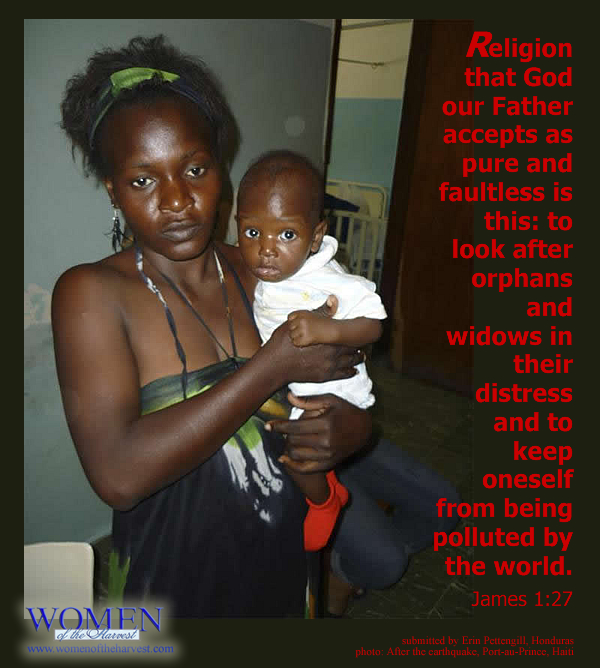

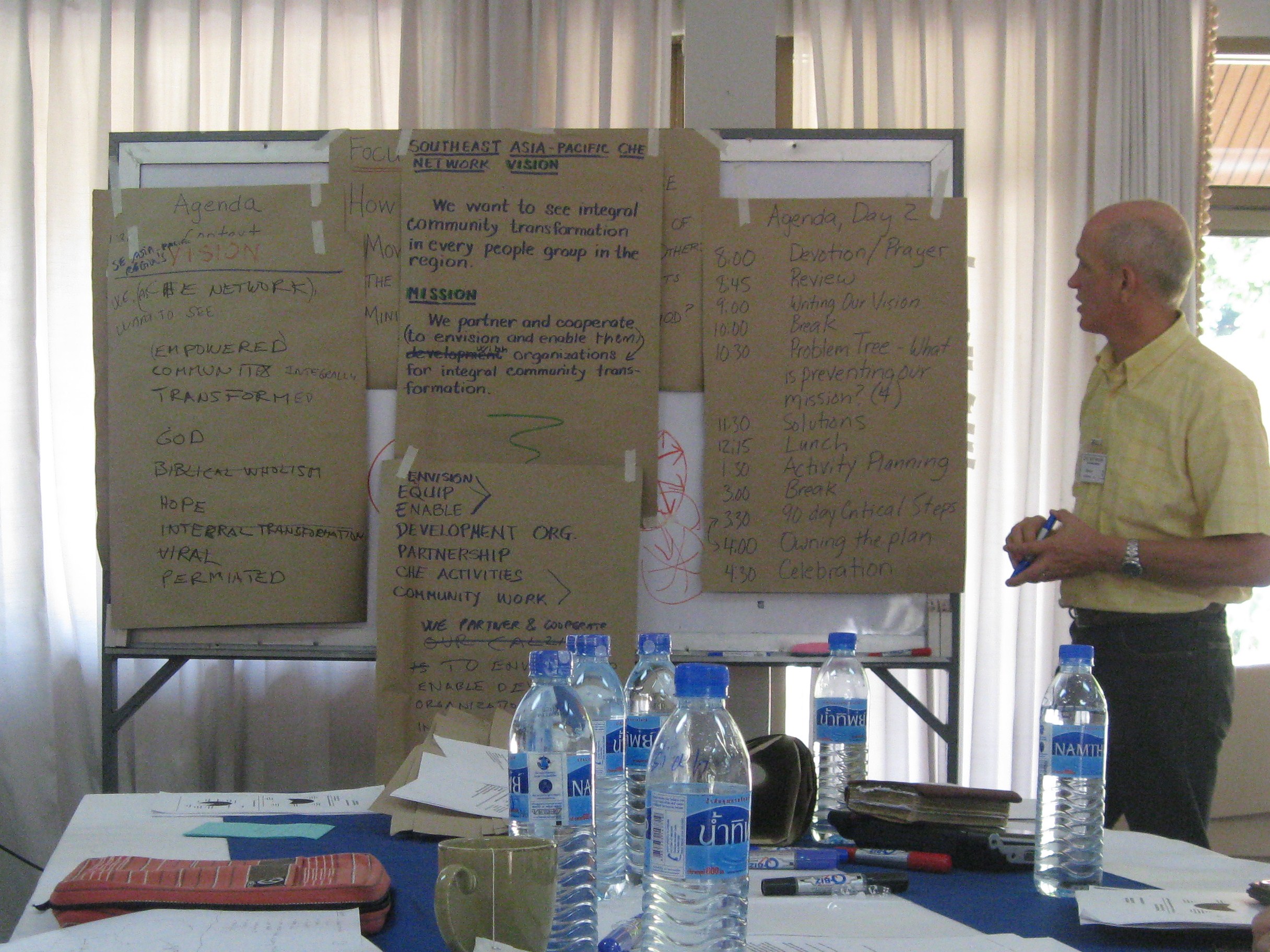
Photo by: Erin Pettengill

After the Earthquake- Port-auPrince, Haiti

Women of the Harvest Picture Praise www.womenoftheharvest.com

Pam’s Dad was admitted into hospital again this weekend, now in congestive heart failure. Following so closely after his heart attack, we are understandably concerned. Apparently there is a lot of fluid on his lungs and his breathing is very laboured. Clearly there is another obstruction, and the heart is unable to clear the lungs. This could be a valve or it could be a failure of the muscles of the heart (myopathy). We don’t know at this point if Pam will have to fly home. It depends on the results of some tests that will be done within the next twenty-four hours.

If Pam had nothing on her plate at the moment then our decision would be an easy one: she would simply fly home. But the situation is not that simple. Pam has an awful lot on her plate and her role at the moment is pivotal. Essentially the plans for a new initiative in Cambodia depend upon her connections with the various players who do not yet know each other. Pam is working to bring that meeting – or series of meetings – into being. Once those meetings have taken place, Pam can step back into a supportive role once again. But at the moment she is the lynchpin for this initiative; hence our dilemma.

Obviously if Dad takes a turn for the worse, she will have to come home immediately, there is no question of that. But if Dad is able to recover, and Pam could delay coming home until these Cambodian meetings take place, then the work here could go forward. We know that the Lord’s will and timing are perfect. But our undertanding of the Lord’s plans at present is a little uncertain. Would you undertake to offer a prayer on our behalf so that we would do what the Lord would have us do? We would ask that you undertake to pray for Pam’s Dad as well. He is a dear man, and as faithful a servant of God as one could ever hope to meet. May the Lord’s gracious will be done in his life.

Reading one of the giants of science or of literature is considerably different than reading about them. I found that out long ago by reading Cervantes’ Don Quixote. It is an immensely enjoyable book, filled with quirky humour and sly digs at the foibles of mankind, far different than the stuffy image of ‘classic’ that it is burdened with. The same is true of Darwin. His book was a great joy to read, and I took my own sweet time, savouring every tasty morsel.

He immediately destroyed one of my preconceptions about the limitations of his scientific education – he trained as a clergyman – by demonstrating his meticulous attention to detail. The man was a consummate naturalist, leaving not the tiniest stone unturned in his pursuit of gathering the minutiae of observation. If anyone was qualified to write such a book as Origin, it was Darwin, and evolutionists are quite right to place so much faith in his work and call him a giant in his field. The man had impressive scope, not only of biology, but of geology as well; he was a true Renaissance intellect.

Secondly I was impressed with the genial and generous nature of the man. In one section he deals with the objections to his theory by another naturalist in agonizing detail, pouring over what amounted to little less than slanderous accusations. And yet he had the grace and good nature to thank the man, and pour praise upon the other’s fearless questioning of Darwin’s theory, holding his adversary’s questioning up as an example to others of the thoroughness with which they must answer every criticism, and being fair-minded enough to assert that such discussion was good for science!

This attitude he extended to his friends and allies as well, being careful to give credit to Wallace, Lyell, Asa Gray and a host of others for their contributions, and acknowledging the greater expertise of some of his colleagues to whom he looked for advice and assistance. Would the Stanley Millers and Richard Dawkins of today take a look not just at the arguments of Darwin, but his approach as well. To listen or read Darwinians now is to be subject to the most infantile arrogance and insufferable intellectual conceit. Darwin displayed none of that in his book, but only the most courteous discourse and reasonable debate. I would love to have sat down and talked to the man.

I could extol further virtues, but let me conclude with this: nowhere in Origin does Darwin deny the existence of God. This one fact alone made the reading of this book valuable to my understanding of the man. He may have questioned the common interpretation of Genesis (a literal rather than a literary one than uses metaphor and symbol to convey spiritual truth, just as Christ did in His parables), but he doesn’t dethrone God. Rather, like Newton before him, he seeks to “think God’s thoughts after Him.”

For Darwin it was no less honouring to God to believe that He had created all things by the process of evolution than to believe He did it by divine fiat. Darwin writes at the conclusion of his impressive work “When I view all beings not as special creations, but as the lineal descendants of some few beings which lived long before the first bed of the Cambrian system was first deposited, they seem to me to become ennobled. To my mind it accords better with what we know of the laws impressed on matter by the Creator.”  (506 in Signet Classics, italics mine).

What evolutionists have done to Darwin’s thorough and respectful examination of the Creator’s handiwork amounts to a wholesale hijacking of the reputation of a great scientist. Darwin is not the poster boy of the anti-God brigade he is made out to be by the narrow-minded atheists in the popular press. He was a thoughtful and fair-minded naturalist who painstakingly examined the evidence regarding the way God created the inhabitants of the earth, and respected the views of those who disagreed with him.

I encourage those who have long been leery of reading Darwin because of how he is portrayed in the public media to give the man the benefit of an honest appraisal by reading him yourself. You will not agree with everything he says; I do not. Science marches on. The development of probability and information theory, the discovery of the ‘irreducible complexity’ of the cell, examined by Michael Behe in his groundbreaking book Darwin’s Black Box, and the increasing importance of the anthropic principle that underlies modern cosmology, explored in the 2002 blockbuster Rare Earth, among many others, now calls into serious question some of Darwin’s basic assumptions. But the man has suffered from unnecessary caricature, not only from evolutionists, who should know better, but also from Christians, who should behave better. Darwin deserves greater respect.

Pam and I never used cell phones much in Canada; much too expensive when land lines were so cheap. But here in Asia it is the other way around. Landlines are very expensive for expats, and require a $400 deposit to install. We did get a landline, but almost never use it. I couldn’t even tell you what our phone number is. It supports our intenet access, that’s all.

Our cell phones – they call them handphones here – are our lifeline. When Pam is in Cambodia or Nepal or Thailand, as she was last week, we text each other regularly to stay in touch. When I call my mother in England, as I do once a week, I often use my handphone, as the reception is better and she is a little deaf these days. I have a hundred names in my phone directory and I text and call throughout the day. I have over a 100 ringgit of credit on my phone and I can’t ever seem to use it up.

The cost for all this service is staggeringly cheap. When Pam went to Thailand I had 110 ringgit worth of credit on my phone. After a week of burning up the lines with text messages and the ocassional call I had 106 ringgit worth of credit. That means I spent 4 ringgit texting and calling Thailand all week; about a buck and a quarter – a medium coffee at Timmies. You remember that we live in Malaysia right? When we were home last June, Bell wanted to charge me long distance charges for calling Cambridge from London!

Oh, but don’t they get you on  the contract? What contract? We’ve never had  phone contracts; strictly pay as you go. But what about the price of the phone or the SIM card? Funny you should ask. My three year old Sony Erikson cost me $50; it does everything I need a phone to do. As for the SIMs, feature this: when Pam walked through the terminal in Chiang Mai, Thailand, she was handed a promtional package from a phone service provider that included a free SIM card and free air time. That’s right folks, in this part of the world they give those things away.

But what about dead air, weak zone coverage? No such thing. Neither of us have ever lost a call or been unable to get service anywhere in Asia. Even texting Pam in the Himalayas last year posed no problem. Face it, Canada: when it comes to cell phone service, you live in a third world country! Call your service provider. Tell them you expect them to give you a decent phone for $50 and the SIM for free and you want to pay no more than $10 a month to call and text anywhere in North America as often as you want while your credit just continues to pile up month after month. Let me know what they say.

This has been one very intense week and it seems to have been a particularly long one for both Steve and I.  It was one in which I experienced the best aspects of our current life but also some of the worst aspects of it.

I arrived in Chiang Mai last Saturday morning and spent a wonderful afternoon with a couple of women from our team.  Prior to returning to my hotel room, I decided to check my email only to receive a message that my Dad had suffered a major heart attack. While Steve tried to make contact with family in Canada, I tried to figure out the quickest way to get back to KL.  Unfortunately the next direct flight, not until Sunday morning, was fully booked, meaning I would need to fly through Bangkok.  By the time I thought these things through, I had heard back from Steve that Dad had had surgery to remove a clot and was stable. 

We made a decision that I would stay put at least long enough to get the conference underway as I had stepped in at the last minute to act as registrar due to a family emergency of another lady. Even as I was getting people checked in for the conference, I was hearing that Dad was doing very well post-op, and within days was joking and saying he had not felt so well in months. This seemed to confirm a decision to stay in Thailand.

Throughout the SE Asia and Pacific CHE Consultation, our days were booked from 7 am to 9:30 pm with exciting reports from a number of countries, opportunities to network with other organizations, and numerous learning activities. I thoroughly enjoyed spending time with people who are committed to the people in their countries of service and to the CHE strategy of community development that emphasizes the development of ongoing relationships with people in need.

Wednesday marked yet another birthday spent alone in a strange place. My birthday present was hearing that Dad had been discharged from hospital, tired but feeling well.  Also on Wednesday, I finally got to share a burden that has been growing on my heart for two years with a large group of people who not only fully understood my hopes but had the training, credentials, network and desire to meet the need.  There were four doctors in the room who were excited about the potential of taking on the challenge.  By the time I packed it in on Friday night we had a plan in place and the needed documents completed to move to the next level.

Thursday and Friday, were spent in a Founders Meeting for the International CHE Network creating vision and mission statements and developing an action plan for this coming year.  This will mean another set of responsibilities and another huge learning curve as I am leading a task group to explore the many issues involved in translating, contextualizing, cataloguing and storing lessons and materials in the many languages of south-east Asia.

In a week like this you realize not only what a privilege it is to be serving at this stage in our lives but also the cost involved. In the middle of all that happened this week Steve is alone in KL dealing with the challenges of his own work with its constantly shifting requirements, trying to provide me the information I need on my Dad, supported by a wife who only gets to communicate with him through text messages.

We are well aware that our families also share in that cost as they are left dealing with issues at home and that without their support we would not be able to continue here. We want to thank them and our many friends who have prayed for my Dad, and have sent us messages of encouragment and support during this eventful week.

The Canadian Pre-University Program where I work shares a building with two other educational programs: the Cambridge A-Level Program and the South Australian Matriculation Program. Both CAL and SAM are twice as large as our program. They are both well supported by the universities in the countries that promote them and well advertised in this growing Asian education market. Foreign language students studying in Australian universities are that country’s third largest industry.

By contrast, the Canadian program is not well-known, either in Asian, or back home in Canada. In fact the Canadian government just this month cut off funding for the small office that advises Asian students on the Canadian option. In addition, this program is expensive. In order to be licensed by the Ontario government, the school must employ Canadian teachers, which requires a salary that is high enough to recruit Canadian staff. Understandably, with a smaller per student profit margin, it doesn’t pay Taylor’s College to promote this program, despite its clear pedagogical superiority.

The CAL and SAM programs have continued to expand at this program’s expense, and in order to make room for all their new students, the Canadian program is being asked to leave. In two weeks. Yesterday we got a tour of the office building they are moving us to. It is enough to make one weep. The previous tenants have only just moved out, and the place is a disaster. Taylor’s has promised to renovate, but have set themselves no deadline for those renovations. When we were there we saw two painters working without much effort covering up the yellow stains on one wall. At the rate they were moving the  renovations should be finished in a mere forty years.

I know that change is inevitable, and heaven knows I have been through enough of them in my lifetime to get used to it. I know that change can sometimes bring renewal; but I also know that change is not always for the better. From what I saw yesterday, this is one change that I could do without.

The upside on this (and there is always an upside) is that I don’t work for Taylor’s College, anymore than I ever worked for Thames Valley District School Board, or before them Elgin County Board of Education. Since He got hold of my life some 35 years ago, I have worked for the Lord. It is He that sent me to Malaysia, and it is He that will send me home when He is done with me here. As for the circumstances of my employment, well that is for Him to decide. He knows my frame. He will at times test me and try me in order to purify my motives and keep me in line, but He will never allow me to be overwhelmed, and if this change proves to be an impossible situation, then that will be His way of telling me it is time to move on.

Canada beat the USA in overtime to take the gold medal in hockey, their most treasured sport. This gives them 14 gold at these Winter Olympics, the most ever won by any country, and a huge turnaround after the disappointments of the Montreal and CalgaryOlympics when we didn’t win a single gold. This places us at the top of the standings, four gold medals ahead of the second place Germans and five more than the Americans.

Expectations were huge for Canada this time around, and they suffered at lot of negative criticism in the media for a slow start. But to their credit the Canadian athletes showed poise and persistence, and finished off the Games with a storybook ending that will be the fuel of Olympic lore for many years to come.

But what the Canadians showed on the ice or on the slopes was only part of the story. It is what happened in the stands and right across the country that was truly amazing. These Olympics seem to have galvanized the nation, and released a tremendous amount of positive energy about the things we love about our country. Other nations have noticed this outpouring of pride in our accomplishments and have been either envious or reproachful.

There is a sense that we have entered into something new as a nation, no longer willing to settle for second best. I hope that attitude persists after the euphoria of the Games has worn off. It suits us; it seems to fit Canada in a way that it hasn’t before. Perhaps because we are overseas and living in countries that have disturbing social problems that run to the root that we feel a sense of nostalgia for our home and native land. But Canada is a great nation, and we showed that to the world over the last two weeks. I feel very proud of my country this morning. Way to go, Canada.

I don’t know if the last post made it clear, but Pam is off again this week, this time in Thailand, where she will attend a conference and deliver a presentation on the work in Cambodia. She is also going to be doing some important newtworking among missionary colleagues to keep the lines of communication open. The conferencing and the networking are vital if the work of Christ is to remain connected to the people who need the services and support that these missionaries provide. Pam and I both know this. I have plenty to keep me busy in KL this coming week, and the phones in this part of the world have fabulous coverage and cheap service costs, so we are able to stay in touch with each other.

But I definitely feel the pressure of holding the fort when a crisis develops, as it did yesterday when we heard that Pam’s Dad had been taken to hospital having suffered a heart attack. Fortunately Pam’s brother Randy was home and got Dad to the hospital quickly. The emergency surgery was effective and the clot in an artery near the heart was removed in time. Dad is now on the road to recovery, although we are still waiting to hear if there has been damage to other organs.

For a while there it was touch and go acting as liason between Pam and her sister-in-law, Sylvia, as Pam was all for trying to get a flight out of Chiang Mai back to Toronto. But thanks to sms and skype I was able to get Pam some accurate information that allowed her to make an informed decision, and she has chosen to see the conference through, provided that Dad remains stable. I would ask for your prayers for Pam’s Dad that he would have a full recovery, and for Pam that she would have the peace of God this week as she serves Him in being an encouragement to others.

Pam and I have always had a bit of an unusual relationship. Although we had a few things in common – both our fathers were orphans, for example; both of us are extremely driven individuals – there are wide differences in our backgrounds. Pam was raised in a large, raucous family with a myriad of social connections in the boonies of south-western Ontario; I was raised in a small nuclear family with almost no social connection in the heart of Canada’s largest city. She gave her heart wholly to Christ when she was six, and has always lived a life of quiet devotion to Him, I accepted Christ when I was 27 and only after I had exhausted all other options.

We both shared a conviction that having children would be the most important thing we would ever undertake, and devoted ourselves to the task. Pam gave up her profession for five years to bear and raise them when we were young. We gave up our first house in the inflation crisis of the early 80s rather than have her go back to work. We read widely on childraising, and read constantly with our own children; exposing them to everything we could to expand their knowledge base at an early age.

We insisted on a proper bedtime each night, often giving up our social activities in the evening to do so. We refused to let them go to daycare, even after Pam went back to work, though it meant sometimes she would work all night and then take care of the children all day until I got home. When they were older and went to school, Pam would work evenings and nights when I could be home with them and slept days when they were at school.

It was an exhausting and sometimes alienating schedule. Because of our insistence on tithing, because we self-financed two years of overseas missionary work, because we opted to send our children to a Christian school, because we put aside a monthly amount for our children’s post secondary education, we were a lot poorer than many of our peers. To compensate we bought older houses that I would then spend years renovating. The renovations allowed me to be near to my children and be productive in the long hours that I would be looking after them while Pam was at work. Selling these renovated houses allowed us to provide a lifestyle for our children that was in no way inferior to that of their friends.

The egalitarian nature of our relationship did not go unnoticed by others. Pam came under scrutiny and criticism from her female peers for maintaining a profession instead of retiring to raise children. I was under constant pressure to ‘go out with the boys,’ something that my modified working/househusband role would not allow. The renovations, missionary service years and childraising responsibilities also meant that I had no opportunity to pursue any positions of added responsibility in my own profession. I remain what I was when I began this career 35 years ago, a simple classroom teacher.

As our eldest son pointed out in a recent blog (http://www.jonandnic.com/topics/faith-ministry/et-ducit-mundum-per-luce), the Lord’s purpose for our lives needs no special direction to maintain. Pam and I have simply done the things that lay before us to do, asking the Lord only to bless and correct us. This is what has led us, at our age, to Malaysia. This week Pam flies to Thailand for a conference on community health evangelism. She has just completed another level of training in that field, and just finished writing a 10,000 word proposal to the Dutch government for community health funding for Cambodia. I continue to be virtually her only financial support for all of this good work. Ours is an unusual commitment to Christ, and one that many do not understand, not even in our own church.

But we remain convinced that this is the path the Lord would have us walk. We are not especially strong Christians. We fight and complain, argue and grow frustrated. We question the Lord’s compassion and doubt our own decisions. But we remain committed to each other and to the Lord, and are doing all that we can with our limited resources to serve Him where he has called us, in the way that He appears to direct. If that makes us a little bit strange, then that must be what He intended.