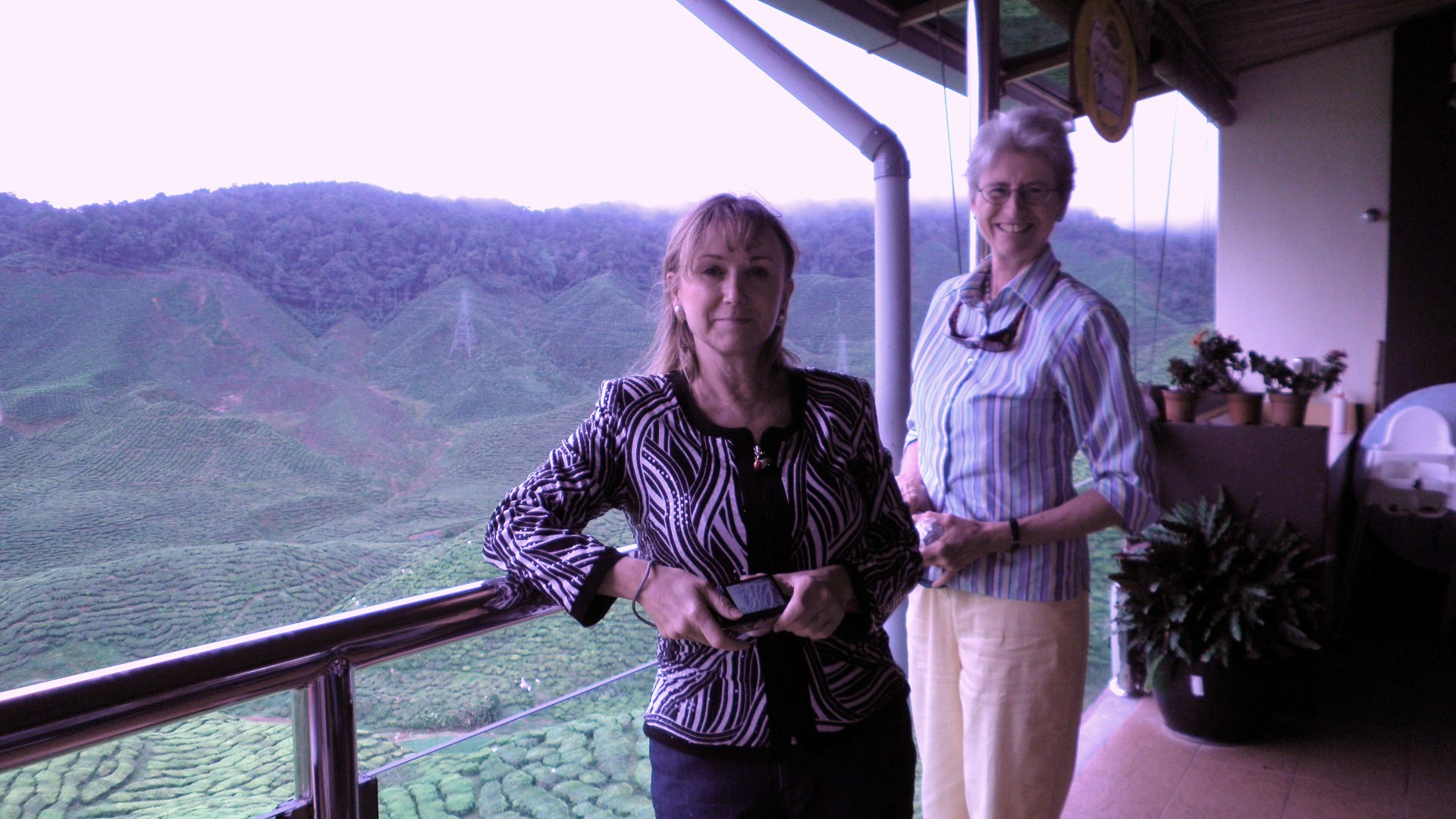
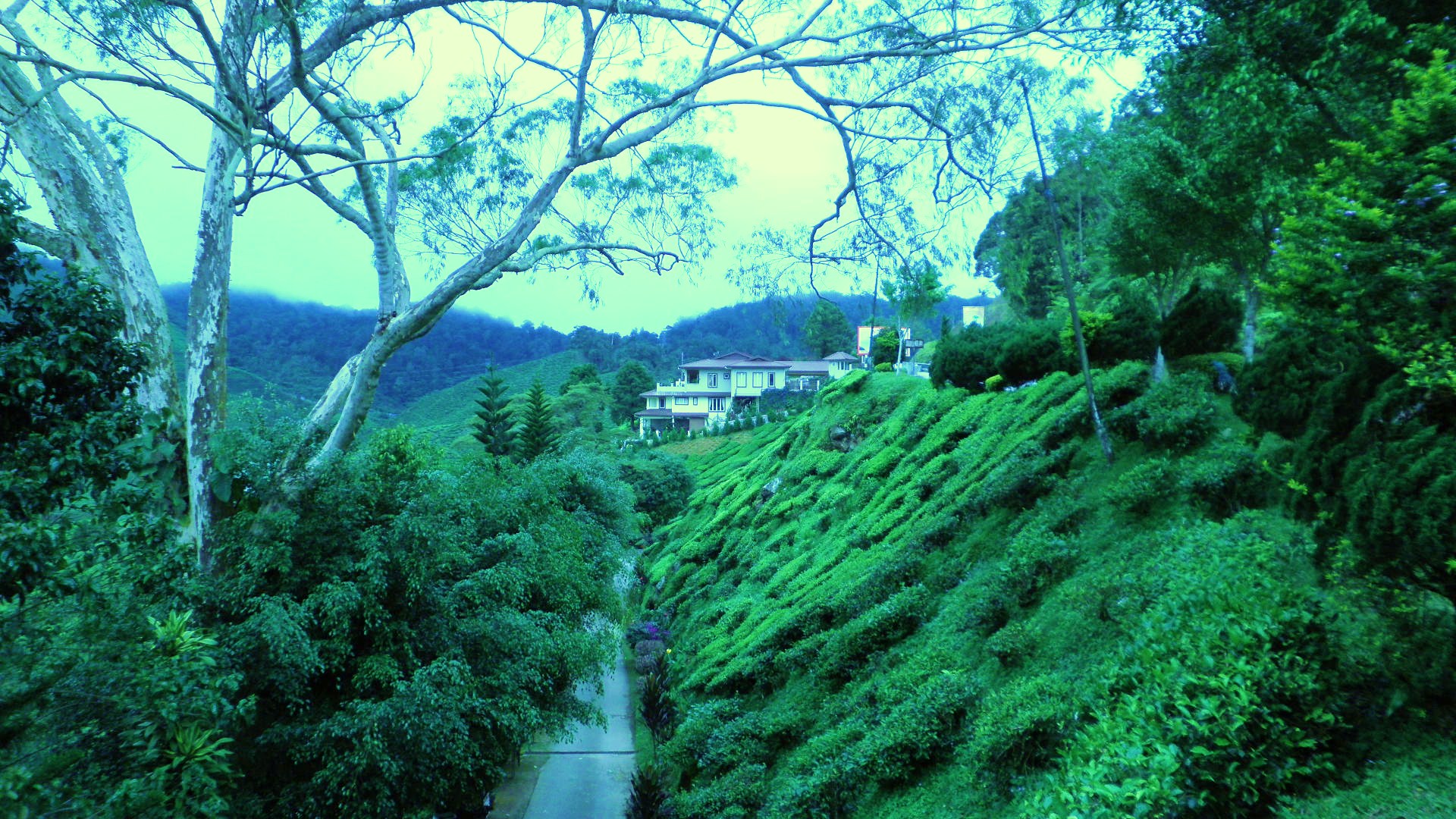
Orchard Road in Singapore is like Toronto’s Bloor Street or New York’s Fifth Avenue or London, England’s Oxford Street. It is a wall to wall shopping extravanganza, and at this time of year is all dressed up to the nines and absolutely packed with people. Pam and I went down there last night to see the lights, stoll along the avenue with the crowds and get a bite to eat.

We had spent a couple of hours at the new TWR office visiting with staff and participating in their open house and dedication service of the new space. They had a lovely potluck lunch with lasagna and scalloped potatoes, roast beef and gravy, a nice time of fellowship and a gift exchange. It was good to vist with them, share in their celebration and discuss a few plans for projects in the new year.

Orchard Road is delightful and pretty, but there is no place to have a nice meal. You’ve got to explore the little alleys and cul-de-sacs that lead away from the street to find a decent place to eat. After a couple of false starts, we found a lovely spot that offered some great Indian food – our favourite cuisine – and had a very pleasant evening under the stars with a warm breeze coming in off the Straits.

Just shy of midnight we packed it in and caught the MRT and bus back home to Blossom and McDaniel’s place and were up early this morning, Christmas Day, to get in a couple of Skype calls with our kids and grandkids. Now we are off to church at St. Andrews, Singapore’s oldest Anglican church, for their Christmas Day service. We wish all of you, family and friends, a very warm and mellow Christmas. May you all be encouraged in your heart by the love of those around you this day, and may Christ dwell in your thoughts to bless and light your way in the year ahead. Thank you for your continued friendship and your interest in our lives as we seek to serve the Lord in Asia.

We went for a walk in Singapore yesterday. We strolled to the end of our street and crossed over the road and into a park. At the end of the parking lot was a trail that we followed for about 3 kilometers through the bush. I am constantly surprised by the bush in this part of the world. I am always expecting to be assaulted by mosquitos and other flying insects. Instead, the air is invariably sweet with the smell of orchids and bug-less.

After three klicks we came to a ranger station, with decent toilets and a map of the area. After a brief rest to rehydrate, we pushed on another kilometer until we came to cable suspension bridge, the object of our journey. There was an attendant on duty to make sure that not too many people were on the bridge at one time, but there was not much traffic and we began somewhat tentatively, but with increasing confidence as we realized that this bridge, like everything in this city, was built to Singapore’s high standards.

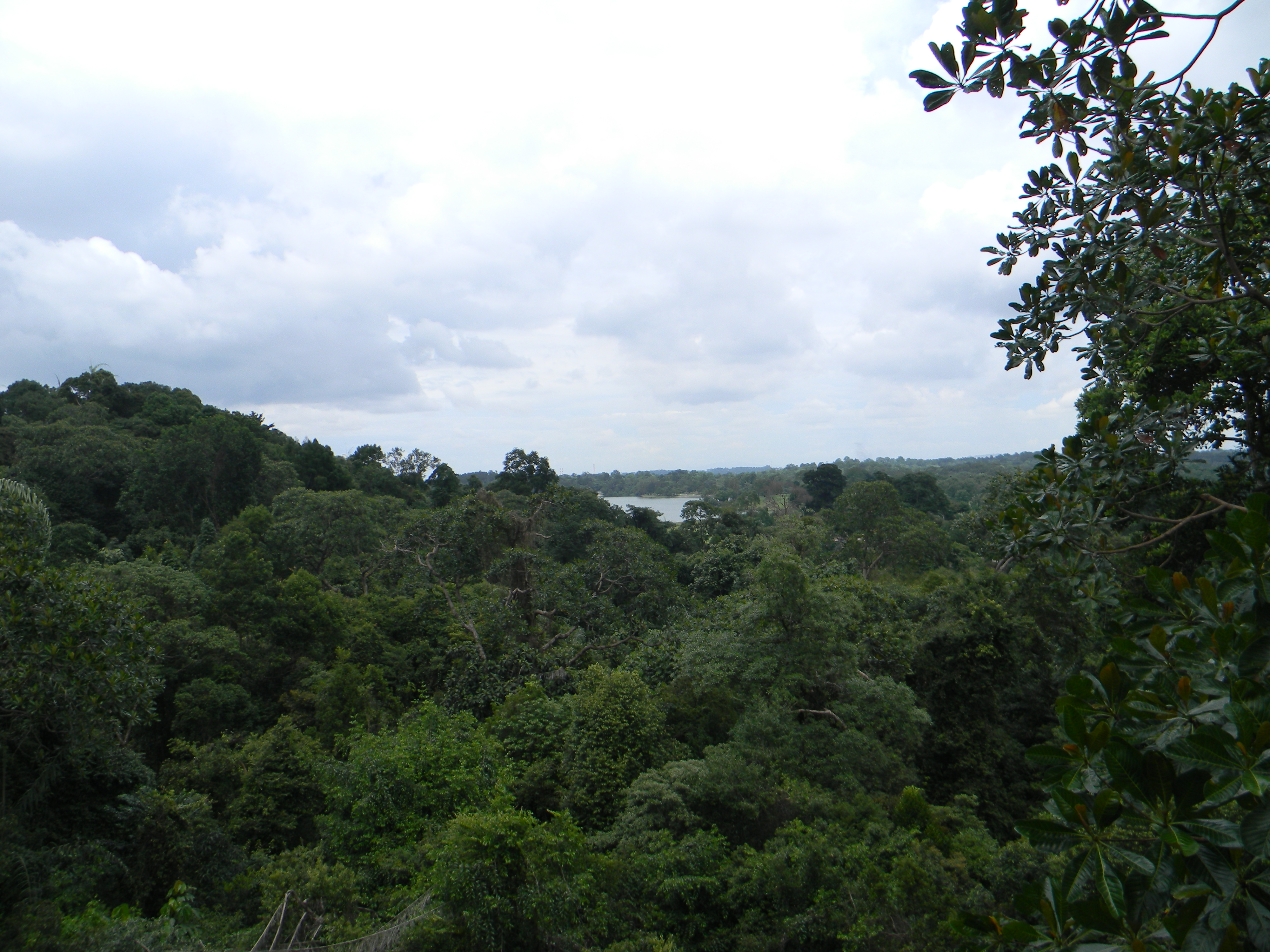
From the centre of the bridge, a hundred feet or more above the valley below, we could see miles in all directions. There wasn’t a building in sight. Here in the middle of one the most congested cities on earth was a wilderness park of quite stunning magnitude (I regret to inform our friends and family in northern latitudes, that it was all a verdant green, with a lovely warm breeze).

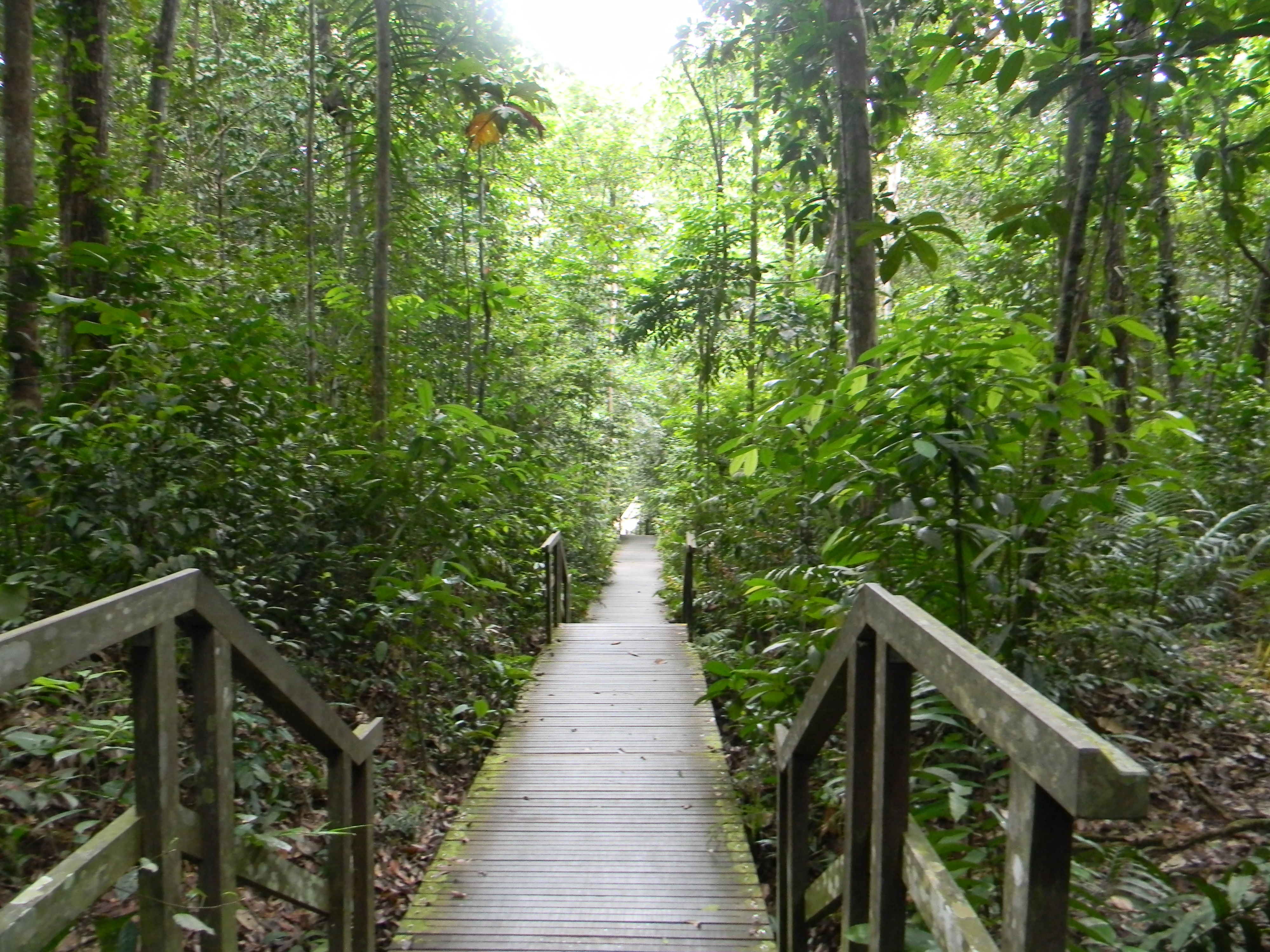
We continued our walk on the other side on steps and a boardwalk designed to preserve the fragile ecosystem. We heard some birds and saw a lizard or two and the inevitable monkeys of course, but no anteaters or aardvarks. A long circle through the bush took us back to the park and a rest at our temporary home. I hadn’t given my feet such a workout in a long time and they badly needed some ice.

Suitably refreshed, we caught the 166 bus to St. Andrews in downtown Singapore to check the time for their Christmas service, then pushed on the the Esplanade (known locally as the ‘Durians’ for their spiky appearance) for one of their courtyard concerts; a delightful chorale with excellent diction (not easy for Asians!) and pitch perfect harmonies. After the concert we went up to the roof to take in the views of Marina Bay and the sparkling new Sands Hotel, then grabbed some pub food and a bus back home. It is that eclectic mix of the pristine and the glitzy that make Singapore such a lively place. Looking forward to the next week.

The school break is finally here. In order to earn this break once exams and grad were over I had to endure another three days of enrollment promotion for Taylor’s. That is basically nine hours of non-stop talking for three days about the program to get parents to enroll their kids. There was no time for lunch. Education is a business in Asia, and there is stiff competition. Since our jobs depend upon enrollment, most of us take it pretty seriously. By the time we got on the bus Monday morning I was pretty close to exhaustion, I think I slept for about four of the five hours it took to get here.

Here is Singapore, the city state at the end of the peninsula. Singapore is everything Malaysia hopes it will be someday. At one point in their history they were part of the same country and shared the same government and the same currency. But in 1965 they went their separate ways. Both have enjoyed success, but Singapore’s dollar is now worth nearly three times what Malaysia’s ringgit is worth, and their standard of living is correspondingly higher. High enough that we could not afford to stay in a hotel here for any length of time. Fortunately, we don’t have to, since we have missionary friends in the city.

McDaniel and Blossom Phillips have been with Trans World Radio since 1984. At the time we were in the process of going to Bangladesh, they were leaving for Bonaire, and as TWR lay representatives we helped then Canadian director Carl Seyffert organize the fundraising dinner in London, Ontario on their behalf. They served for many years on Bonaire and in Cary then transferred to TWR’s Singapore office and it has been our joy to visit with them on our occasional trips south to this beautiful city. They rent a nice little apartment on the west side of town in a park-like setting that is peaceful and quiet. We like it here.

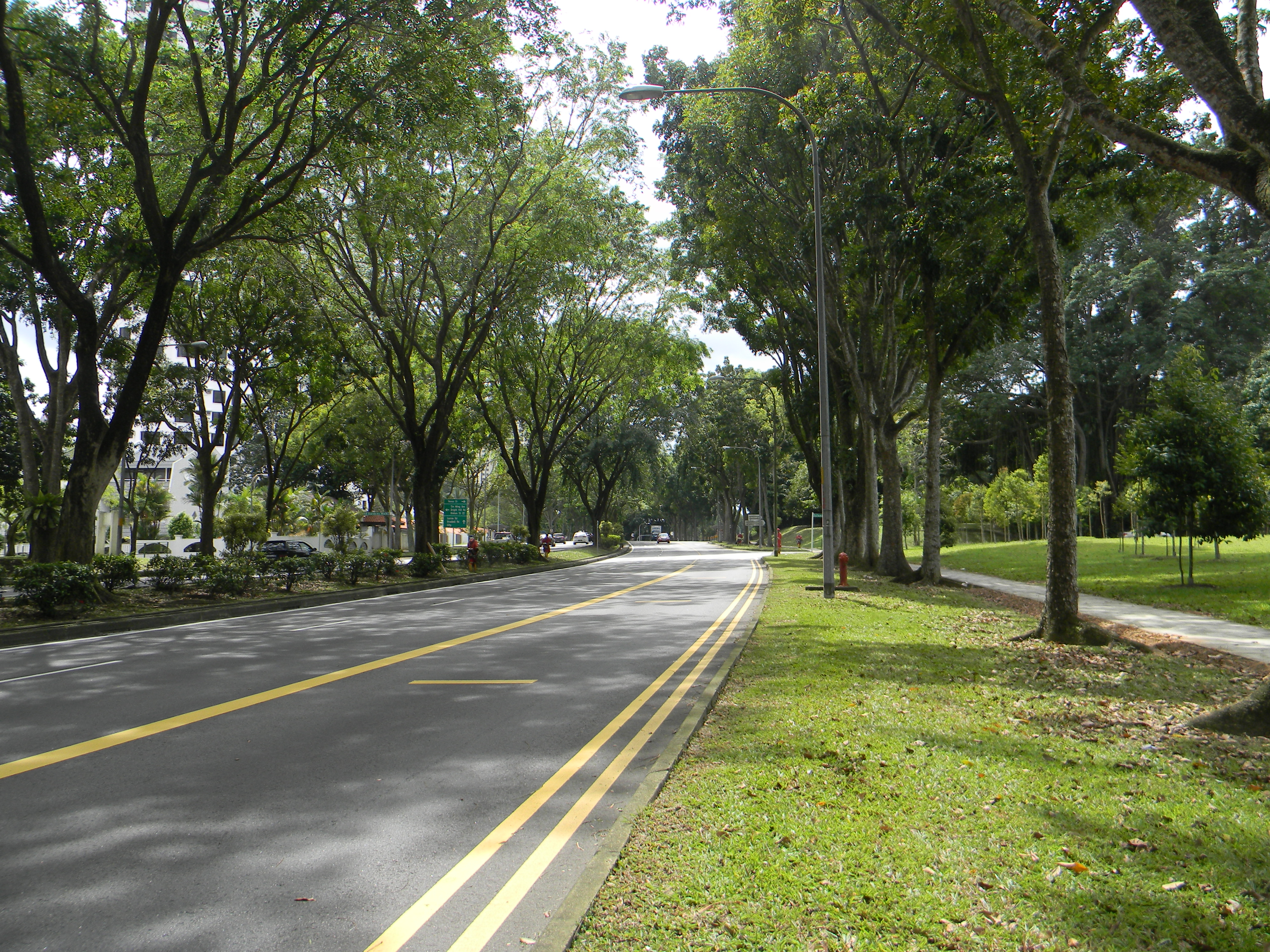
We especially like Blossom’s hospitality. She is a lovely hostess, and her place is always so nicely decorated at Christmas, with wreaths and angels everywhere. Her tree is just gorgeous! Pam and I work so darn hard that there just doesn’t seem to be much time to just relax and enjoy our surroundings. The only way we get any rest is to get away. This is a great place to get away to as Singapore is so lovely. The streets are wide and clean, parks and trees abound, buses are prompt and numerous. We can literally walk out of this apartment and within a minute or two be on a bus that will take us all the way downtown. And we won’t have to stand all the way! In KL they have instituted special pink buses and train cars for women so they don’t have to endure being groped while standing packed like sardines on the infrequent and crowded vehicles. Not sure how that is going to work.

We are not planning anything special; just do some reading and walking in the parks. Time to talk and refine our vision, time to reflect and be grateful for a life of purpose, even if that life is sometimes overwhelming in its demands. We hope that you also are taking some time for yourselves at the end of the year. We all need to step out of our busy lives once in a while. Happy reading.

Back home has been suffering in the snow. Lucan, where Pam grew up, had 154 centimeters (five feet) in three days. My sister and her family in England have had their fair share of challenges with record levels of snow fall as well.

Thames Valley where I used to teach has had three snow days in a row before Christmas. This in a board where for twenty years I went without a snow day (we don’t quit easy in our part of the country).

Of course our grandkids enjoyed playing in all this white stuff. It’s their parents and Canadian grandparents who had to shovel it and drive through it and get stuck in airports trying to get home in the middle of it.

We hope that everyone gets home safely for Christmas, and enjoys a good hug with their kids and maybe even a chance to build a snowman or two before this stuff all melts away. And don’t forget the hot chocolate when you get inside.

One of our delights has always been entertaining our friends and family. During the course of our marriage we have tried to do as much of it as our time and budget would afford. It is not cheap, and it does take a fair bit of effort. But we look on it as a ministry, enjoy it for what it is, and look at the cost as a love offering. We will never forget the times that our dear friend Carol Stagg would invite the two of us and our three children over to their house in Bangladesh. Her hospitality was like a warm hug on a cold day; it was such blessing. That is what we try to do.

Last night we had the staff over for the evening. The reason, not that we needed one, was the birthday of a colleague. But with Christmas around the corner and Grad due tomorrow, it was more of an opportunity just to share some food and some music and be surrogate family to the expats here who feel the season pretty keenly. Pam did her usual marvelous job of preparing little goodies that included salmon and shaved egg roll-ups, garbanza and eggplant dips, an assortment of fresh fruit and custard – including star fruit and papaya, dragonfruit and blueberries – and a host of other small goodies. There was more than enough food to go around.

We looked at pictures and discussed travel plans, and then we sang Christmas carols for well over an hour. I had run off some song sheets, and with another colleague to help me out on guitar, we played through just about every Christmas song we could think of. No one was in a hurry to leave, and it was a most enjoyable evening, filled with laughter and good cheer. Smiles were still in abundance today, evidence that we had accomplished our purpose in spreading a little joy around the staff. If we also spread a message about God’s love for mankind through the carols, then that would be a blessing as well, wouldn’t it!


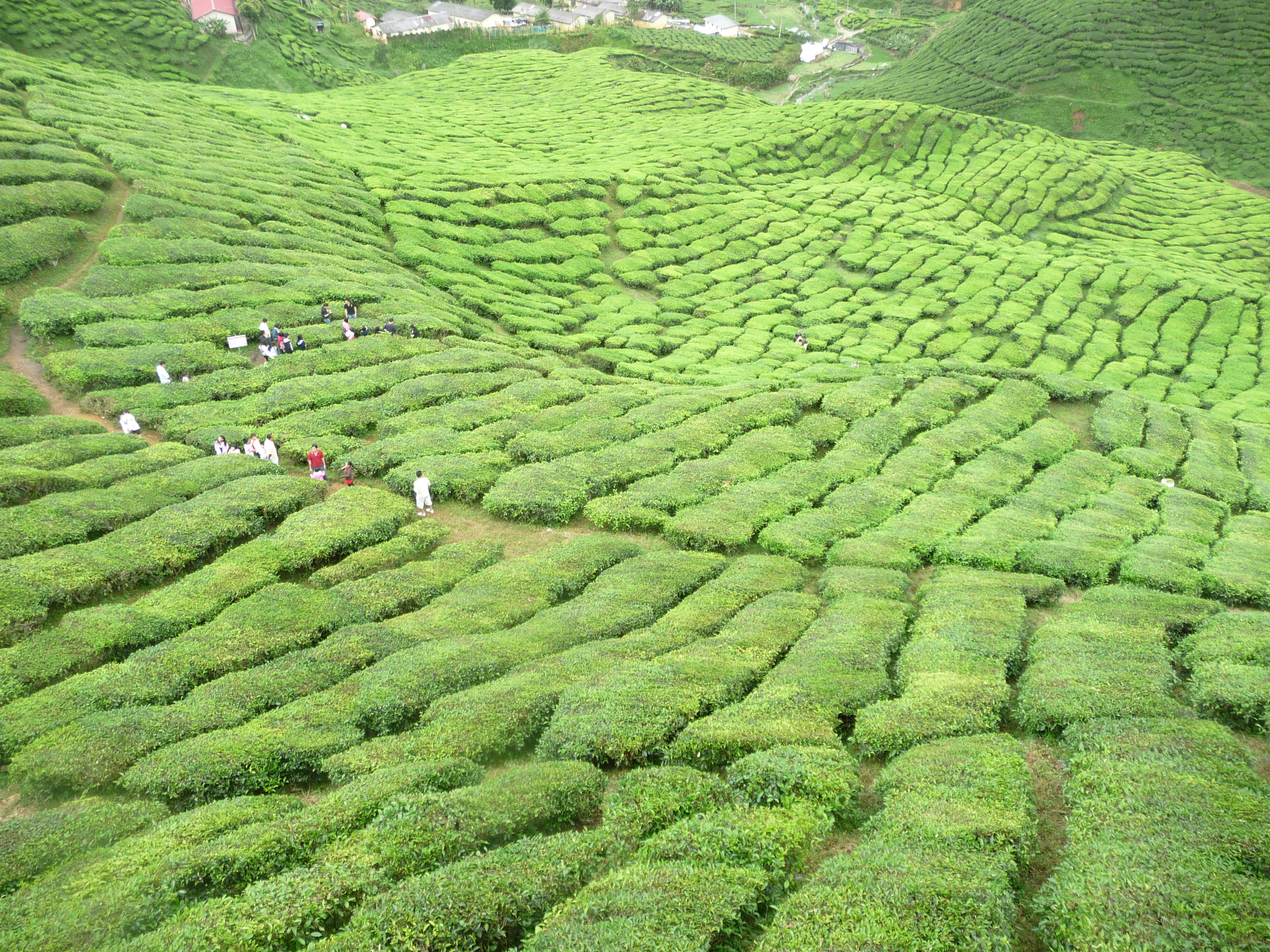
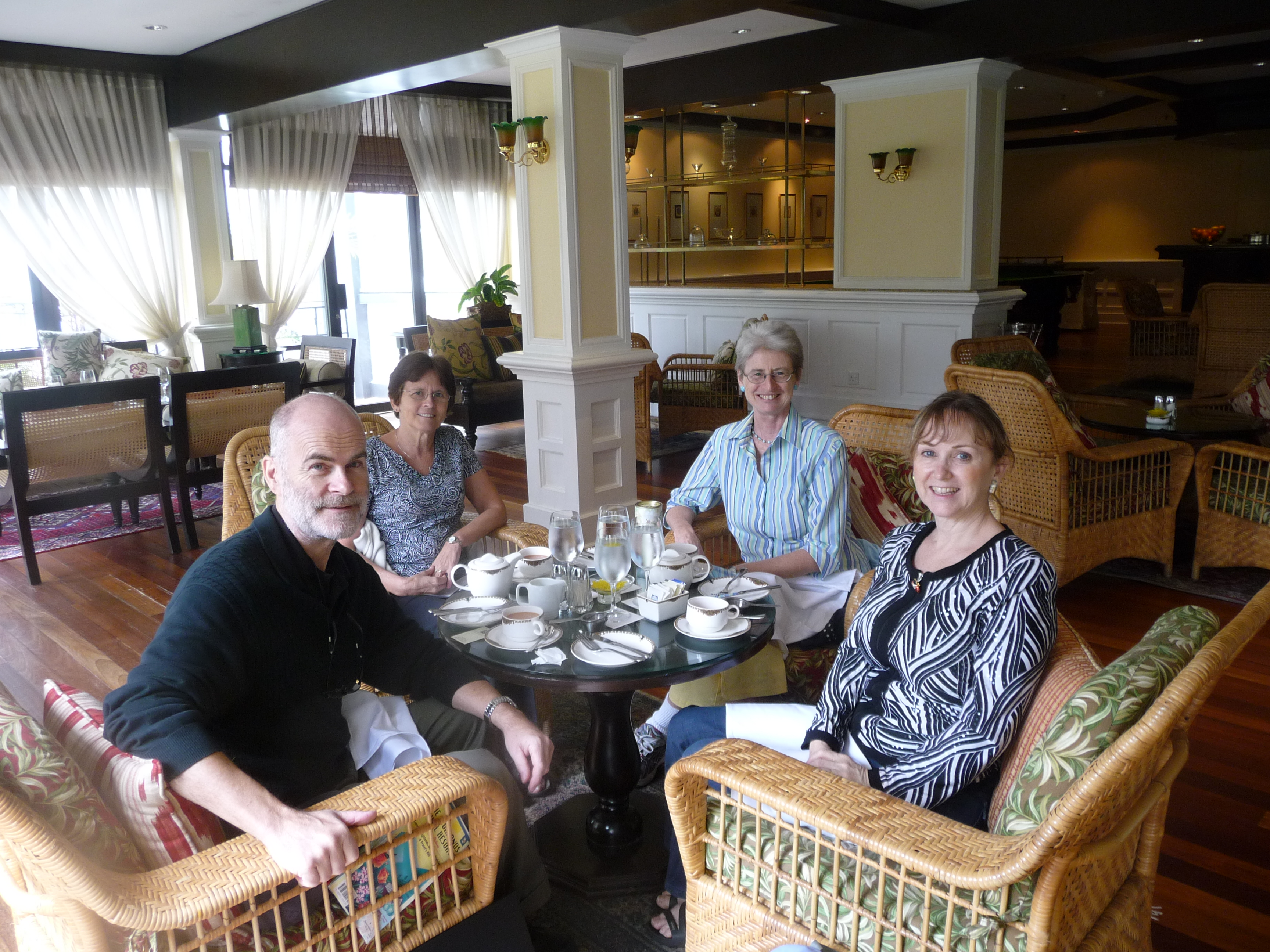
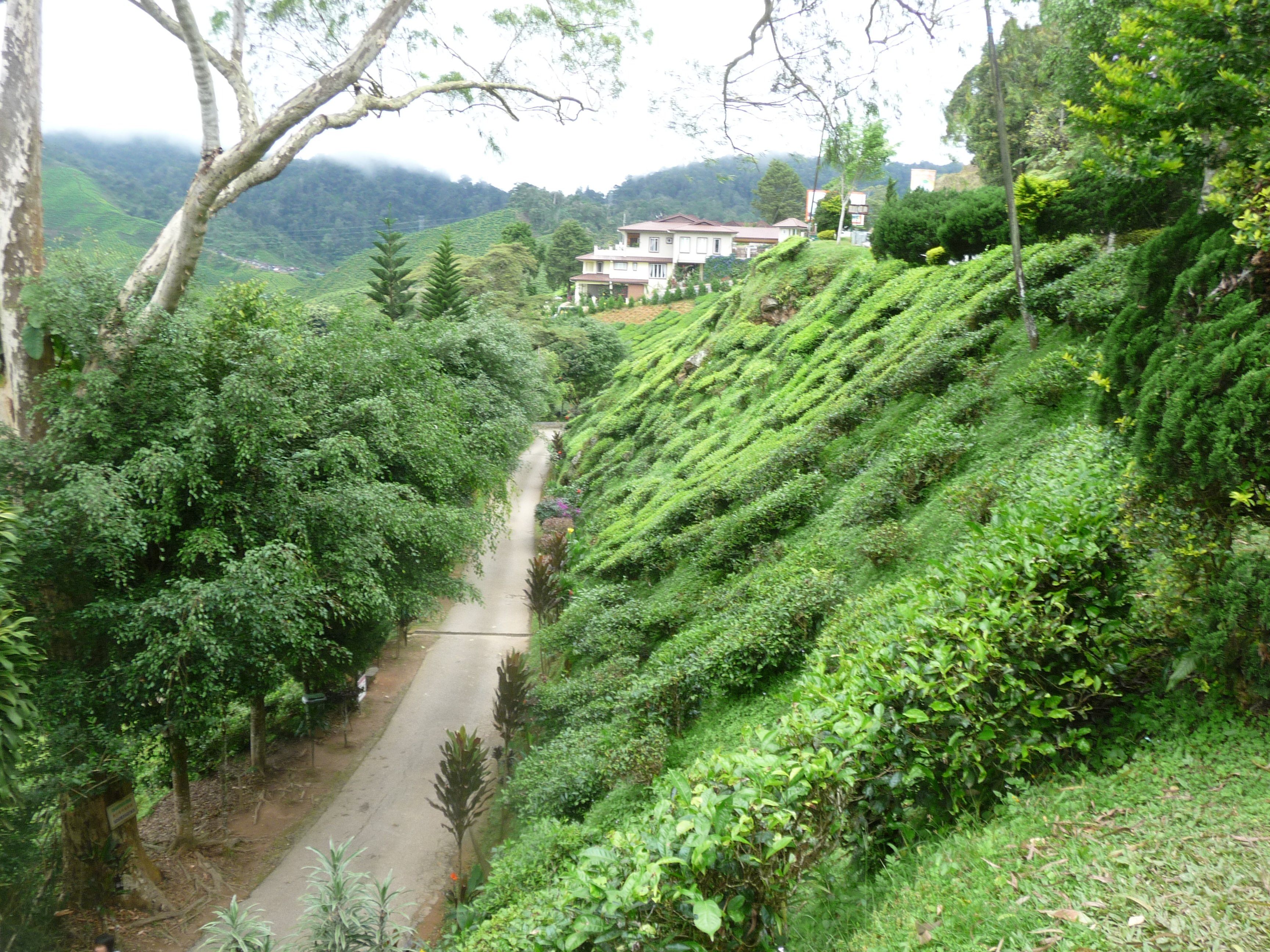
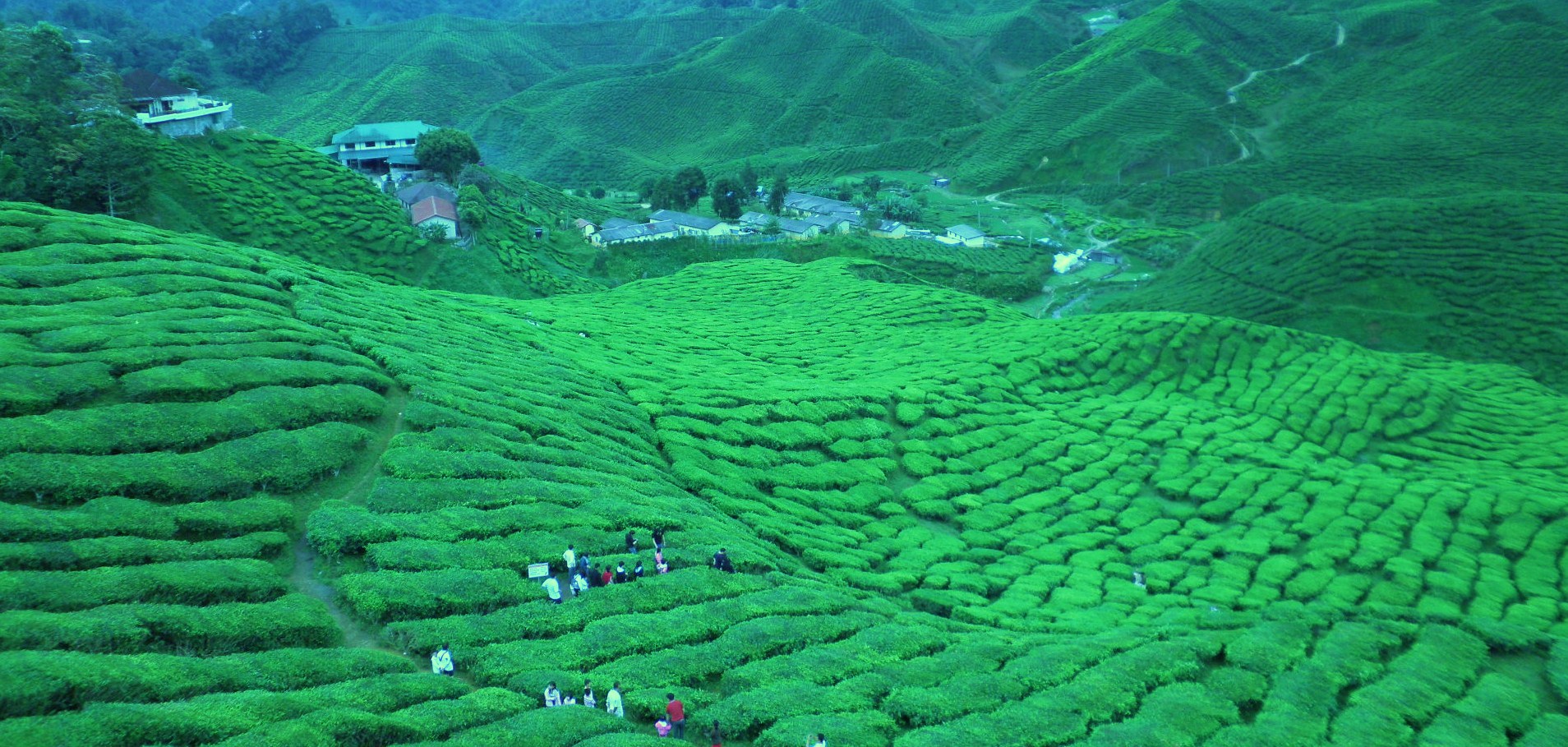
Somewhere back in the colonial days a Scot by the name of William Cameron wandered off into the boonies of central Malaysia and discovered the highlands and valleys that still bear his name. Others followed, and finding the soil and climate suitable, introduced tea plantations using cuttings and expertise from Sri Lanka and India. A commercial enterprise and a desirable resort location ensued. We took the opportunity yesterday to make another trip.

We took along a couple of friends to split the cost of the car rental and to get them out of the city to a place they hadn’t seen yet. I have mentioned in these posts before how much I enjoy driving, so you know I was looking forward to getting out myself. My Dad learned to drive from Raymond Mays (http://en.wikipedia.org/wiki/Raymond_Mays ), the leading British driver of his day, and remained an extraordinarily competent driver to the end. I don’t claim to be anywhere near as good as Dad was, but I’m no slouch either, and the Highlands are as good a workout as you can get locally.

Getting out of KL is always a bit of a trick, but through dogged determination to avoid the congestion, we have found the Guthrie Corridor, a little known and underused expressway that takes you 40 kilometres north of the city before joining the E1 that goes to Ipoh and Penang. The E1 itself is wide and pleasant with plenty of rest stops along the way, but Highway 59 that winds its way to Cameron Highlands is 60 kilometres of switchbacks along narrow tarmac with no shoulder and a sheer drop on the downhill side.

The worst problem though is the trucks that lumber up the road and the scaredy cats that dog their heels all the way up. The trucks are not that big a problem; leapfrogging six cars to then get by the truck is more so. The trick is to get an early start so there is not much traffic coming downhill. You also need to take advantage of the dogleg-left-then-right switchbacks that allow you to see the maximum distance up the road. There are no straight stretches, so this is the best place to pass. The worse possible place to remain is behind another vehicle, because then you are placing your safety in the hands of that driver’s competence, and that vehicle’s brakes! The whole exercise requires maximum focus, and I guess that is why I like it. I don’t enjoy video games; they are much too boring and repetitive. Give me a challenging drive any day.


Although my Dad was my instructor, I learned most of my competence driving cab for two years in Toronto. It was that experience that taught me that the safest and least frustrating thing to do was not to drive with the traffic, but to drive just slightly faster. This enabled you to weave in and out of the traffic much like paddling a canoe though the rapids. If your boat is going the same speed as the water around you, you cannot steer; you have to be going a little faster than water to direct the boat. The same is true for traffic. You don’t want to race through traffic; that is dangerous and stupid. But you do want to be able to steer safely through it. I could tell you all about mirror placement too, but then I would be getting tedious, wouldn’t I!

We had a very pleasant day, including tea, shopping and a fabulous lunch and then drove home in a torrential downpour with about ten feet of visibility. I had already chosen a safer route out of the Highlands knowing that I did not want to be on the downhill side of Highway 59 going home. Highway 181 is a new road to the north of the Highlands with paved shoulders, but even still it was a 1500 meter drop in the space of 40 kilometres, so there was a lot of driving to do. Once we got to the E1 things weren’t much easier. Within a short space of time we encountered an impasse: a bus had skidded in the downpour and done a 180 into one of the huge ditches that line the roads over here. The passengers were huddled in the pouring rain and although it didn’t look there were any injuries, there was a bit of tricky driving to get around the emergency vehicles and negotiate the Malaysian drivers who seem to be at a bit of a loss when the unexpected happens around them.

We found the link back to the Guthrie without any trouble and the exit off the Federal Highway to our own neighbourhood, despite the total lack of signage. I was fortunate to catch a vehicle coming out of the very rare parking spots around Taj Curry House where we intended to get a bite of supper, and pulled into the narrow spot with one swing, no mean feat with all the cars doubled parked, and edged within an inch of the curb. My passengers thanked me for a safe trip through tricky terrain and were effusive in their praise of my driving. Pam’s comment after thirteen hours of driving? “Not parked too square in that spot, are you!” Ah well, no man is a hero to his wife.

It has been almost five weeks since I was last in Cambodia, not by choice but of necessity.   Even though I was careful to get a 48 page passport when I renewed just over two years ago, my travel schedule is such that the passport had run out of pages and needed to be sent to Ottawa for replacement.  Although it was frustrating to be tied down, it did allow me the opportunity to get caught up on a number of thing s that there is usually little time for. 

I am happy to be heading back to Cambodia for a full week of meetings with contacts both old and new.  Both Steve and I strongly believe that the main purpose of our work is that of planting seeds.  Whether that is introducing new information or ideas, challenging ingrained ways of thinking or viewing the world or building networks, envisioning new ways of building relationships or simply encouraging others to plan creatively it is all essentially the same.  Whether in the context of education or healthcare, the needs are great.

However, we are not great. We are just simple people, filled with weakness and doubt, trying to do what we can to help. We definitely do not think that we are wonderful in any way. But we have both committed ourselves to a simple idea: that a God who loves us wants us to show that love in a tangible way to those whose needs are greater than our own. We have some skills that we bring to the task, but there is so much that we cannot do. We recognize that if God is not in what we do, all our effort will amount to nothing.

So once again I would ask for your prayers for me this week: that all the plans that I have made will bear fruit; that meetings will take place; that others will see the need to step into the many gaps in this project and take their part; that God would give me the physical strength that I need for this week; and that He would bless in the lives of those who are working to make Cambodia strong again.

Marx wrote over 150 years ago that the capitalist system would collapse on its own in the near future, torn apart by cycles of boom and bust that would grow in intensity until the whole facade fell in. He might have been a guilty of some overstatement, or I might be guilty of misunderstanding the nuances of his central thesis. I am no economist, and certainly not a Marxist, but the latest global downturn shows no signs of abating in the near future. Recently Ireland, formerly thought to be an economic tiger, has had to come mewling to the EU for a bailout, and Portugal and Spain look set to follow suit. The American economy still struggles with plus 10% unemployment – enough to provoke a backlash at the ballot box in November – and other Western economies are not faring much better.

Yet the very rich don’t seem to be suffering much, as a recent Canadian study shows. In fact the top 1% of the rich take a whopping 30% of our country’s wealth, squeezing the middle class lower on the economic ladder. This is not the anomaly that it seems to be, but rather a return to the historic economic picture that has characterized mankind since Babylon. Those of us who have grown up in a post war world would be advised to study human economic history. The middle class, from which democracy and civil liberty arose, is a relatively new institution, and might already be passing away as suddenly as it appeared. As many of Christian liberties are tied up with civil liberty and democracy, Christians in particular ought to pay attention. To be obsessing about gay marriage and abortion policy while quite literally the farm is being sold right under our feet, is particularly near-sighted and naive. We are being played by clever politicians – the window dressing of the rich – while the store is being robbed.

I could go on, but there is plenty of information out there about this and you don’t want this sound like a screed anymore than I do. Besides, I am more interested in what the proper Christian attitude ought to be. The first thing is to realize how this will affect your children, and seek to ameliorate the damage. Know that they are being played just as you are. The distractions of sport and entertainment, the drive to buy trinkets and squander what precious little resources they have; your children are just as much under pressure to do this as you are, and they both more susceptible and less able to help themselves.

That is where our responsibility comes in. Those of you who are middle class contemporaries with us have lived through the most egalitarian economic times in all of recorded history. We have been financial comfortable in a way that this coming generation will never know. We owe it to them to help them get established. They basically have no chance otherwise. When we were starting out a house cost about a year’s gross family income. Now it is three to five times a family’s gross income. We paid the 5% necessary in downpayment to get a first mortgage without having to borrow a cent. Now the downpayment is 20%, and the house prices are astronomical. Your children will not even so much as get a foot in the door if you are not prepared to help.

Secondly there is the propaganda angle to deal with. The rich will tell you that they have made it on their own and that if our children were strong and independent they could too. But that is a huge lie. In order to get started in business the rich lean heavily on their parents who understand that they only way to be rich is to start rich. The fiercely independent young buck fighting through odds to make it in the world is just another marketing idea of the rich to keep the poor in their place. Only the poor and middle class get no help. That is why they remain poor. We have to help our children and especially help them to see through the propaganda. The Bible teaches that parents are to lay up for their children, not the children for their parents (2 Cor. 12:14). Be a Biblical parent: help your children get started in life.

Thirdly you have to teach your children the value of money. The rich buy assets with their money, the poor buy liabilities. You have to show through your example that buying assets is the way to go. Don’t indulge in trinkets yourself; be self disciplined and instruct your children to be the same. They may not listen at first and you may have to bail them out of their nonsense before they ‘get it.’ So bail them out. Presumably they have learned their lesson and are ready to choose a more rational route through life. You don’t have to leave them in poverty as punishment. Surely ‘not provoking our children to wrath’ (Eph 6:4) means helping them financially when they need it, and most importantly, not rubbing your help in their faces either.

Finally, be patient and loving. Know when to offer to help and when to be supportive. Keep strong in yourself and keep fighting to be healthy and industrious. Yes, it turns out that life is a lot longer and harder than we imagined when we were younger. ‘Do not be weary of well doing,’ since it is not only for your children that you labour, but for the Lord (Gal 6:9). Be informed about the world and the forces that are seeking your hurt and the hurt of those that you love, and be proactive in your response. Seek to educate yourself and others around you, for these are important issues and there is something for you to do. Commit yourself to be an agent of change to as many people as you can help, and may the Lord help you.

Christ calls us to be agents of change in the world. We should be salt: preserving and adding spiritual flavour, and light: leading the way through our own example. But how are we to be agents of change for the world if we do not change ourselves?

Certainly God is involved in this process of change, for it is He that brought about the greatest change in our lives when we invited Him into our hearts and He “made us a new creature in Christ.” However, like all things with God, He is unwilling to do for us what we need to do for ourselves (He is, after all, the wisest of parents). So He leaves the rest of the changes we need to make in our hands.

Some of those changes are pretty clear-cut. I can still remember the first time I read the scripture about my body being the temple of the Holy Spirit. My immediate thought was “Then God doesn’t want me to smoke.” After a dozen years of being a one pack a day smoker, I quit that day without any further struggle. But other changes are more subtle.

When I hit fifty I began to run into all kinds of trouble with my back. I spent more time with it going out then I did with being fit. I had two choices: spending the rest of my life in some kind of pain, leading to increasing incapacitation, or getting fit. I went to a physiotherapist who laid out a program of exercises that I have been following ever since. I started a program of losing weight and went from 165 pounds down to around 140 over a period of a couple of years and have maintained it ever since. When I hit sixty I noticed that I went through another slide physiologically. My routine was no longer keeping up with my age. Time to up the ante. I bought a bike and started cycling, and recently have changed my morning routine to include a warm-up on a striding machine and thirty laps in the pool.

By no means do I intend you to think by this that change has to be all physiological. I am just using that as an example; something that is near at hand and not too personal to talk about the change process. As someone who has gone through a lot of change I would say that these are the factors to consider:

  • Willingness. In order to change there has to be a recognition that you (no one) is perfect, and that you are willing to change in order to be better.
  • Listening. Listening to your body, to God, to your spouse, to your friends, to circumstances. An ability to listen to what is going on is a fundamental necessity to change.
  • Wisdom. You need to decide what needs to be changed and what needs to be left alone. Your friends could be suggesting changes that you know would be harmful. You need to decide on a course of action for change to occur without damage to yourselves and others. Change requires planning, and planning takes wisdom.
  • Flexibility. Not everything you try is going to work. You may need to adapt your plans, tailor them to unforeseen circumstances, move your schedule around, and miss out on certain things. Your daily and weekly planner may look like a mess for while until you get it sorted out.
  • Perseverance. Change is work; in point of fact change is just about the hardest work there is. You are going to encounter resistance, not only from others, but most especially from yourself. No lasting change will ever come about without perseverance. Change is not for the weak-spirited or the lazy-minded.
  • Commitment. This is not the same as perseverance. Perseverance happens inside yourself; commitment comes from outside yourself. You will not succeed unless you are committed to a higher ideal than just yourself. It has to be for others; it has to be most particularly for God. You must get a sense of His purpose for your life and commit yourself to accomplish that purpose or you will never succeed at the change that is needed to get there.
  • Love. This may seem like an odd one, but I would hold that this one is the key. You need to see that you are the object of God’s love, that His purpose for you is kind, that His desire is to bless. Once you get a hold of that, it does in fact become easier to change. This is what worked for me all those years ago when I gave up smoking: I realized that God loved me too much to want me to be enslaved by that thing. His love made it easy.

This list is not exhaustive, and there may be other lists out there that are more useful. This is just some personal reflection on a lifetime of change. God isn’t through with me yet either, so that means that more changes are ahead. I would be disappointed if it were any other way.

I am not what anyone would call a fashion plate. Fashion costs money, so basically I’m agin’ it. Education, travel, mortgage reduction, yep, they are legitimate expenses. Fashion not so much. But with a wedding on the horizon, only a fool would stand between his wife and her need for a gown for the occasion, and my mother didn’t raise no fools.

So here we are off on just about every other weekend looking for wedding gowns. And let me tell you, it has not been easy! First off, there is no such thing as a ‘mother-of-the-bride’ dress. I don’t know what they wear, but they don’t make any dresses for them. The sweet little girls in the wedding shops all look at you with their eyes wide as if they are going to cry because they have no idea what you are talking about, and they hate to disappoint a customer over here. So we have stopped asking. Instead we ask, ‘do you have any evening gowns?’ Well of course they do, dozens of them in all sorts of colours and fabrics, from Chinese and Indian traditional outfits, to classic Western gowns; a truly dizzying array of choice in style.

However there is no choice when it comes to size. Everything we have looked at is a size 2. Now there was a time when Pam was a size 2, but that was many years and several kids ago. Pam is not overweight by any stretch, but neither is she Asian. Everyone over here is a size 2; young, old and in-between, all the women are size 2. That is how the dress shops can get away with carrying just one size. If you are no longer a size 2, then you have a seamstress to make your clothes. It is all very simple, very cut-and-dried, and impossible to get around. So we have given up looking.


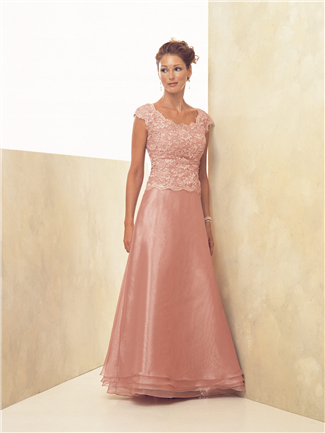
Instead we have gone looking on the internet. I don’t know why we didn’t just start there, it would have been a whole lot easier on my feet. Pam, with help from her sister-in-law Syl, found some excellent options.  So now the plan is to print off the pictures (yeah I guess you could say that is a kind of plagiarism, you got me there), buy the fabric locally and find a first-rate seamstress to make the dress to fit. Any of our local readers know of a good seamstress?  The beauty of that is that she can then chose the colour and adjust the designs as needed.

Local or not you are all invited to weigh in on your choice. No prizes for the winner, and Pam is not bound by your choice – she IS the mother-of-the-bride, after all – but it would be kind of fun to see what you think. Personally I would like to see Pam wear something Asian. It is where we now live, and there are some gorgeous saris out there, but I know I am going to lose that argument, and that is fine. What am I going to wear? I think my daughter would like me to wear something really shiny, I’m not sure why, so I am looking for that. I’ll keep you posted on my progress.