Ministry


???????????????????????????????

Sometimes there is a need and you can meet it, so you just do it.

That was the case for us this past weekend.  We were meeting with one of the “Barefoot Leaders” of Malaysia and he mentioned that they were planning a leadership planning retreat and were in need of someone to provide a program for the children of the Planning Team, so we agreed to do it. Friday after work we drove up about a half hour north of the city to the lovely campus of Malaysia Baptist Seminary.

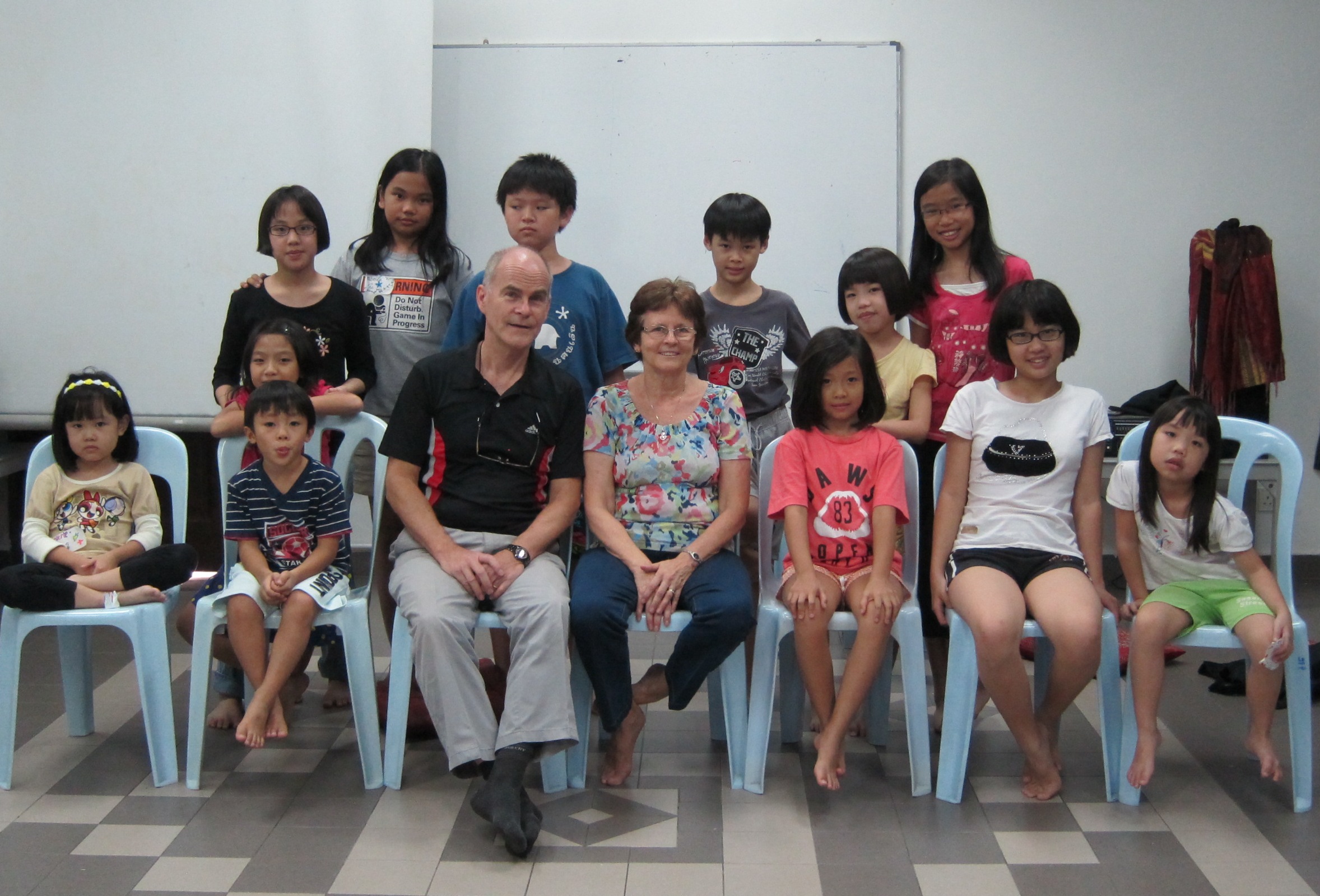
We had fourteen sweet and energetic young people aged between two and thirteen who were out for a good time. The Friday evening session went from 7- 10:30 so we were pretty exhausted by the time we made it to our hard little beds. The kids created a picture of their current world and shared their stories with the group.  We had them add “suns” to show us the happy things in their lives and then “clouds” to represent the difficult things. Even John, our little two year old was able to tell us what each scribble represented.  They totally got into the dramatization of the Joseph story, using the few props that we had taken with us

??????????????????????????????????????????????????????????????


Saturday we had the kids from 9- 4:30 straight and were very grateful for a couple of young people from Harvest Center who came to help us out.  Fortunately they all just loved drawing because in the morning we had them dream about they would like their lives to be in the future. Again they could  glue on rainbows for the easy things and clouds for the challenges ahead and again they shared their dreams with the group.  Joseph had his coat and was ready to go for the second part of the story, there is nothing like drams to get kids involved in the story.  In the afternoon the kids had cut-out ladders to join their two pictures and identify the steps they need to take to get to their dream and the challenges they would face along the way.

The biggest battle was the fact that the school has a fabulous swimming pool which the parents had promised they could use when their planning session was done at 3.  Those poor little kids had to be patient until 4:30 when the parents finally came, even as they listened the sounds of the approaching afternoon monsoon.  We don’t really consider ourselves “Children’s Ministry” kind of folks but we had fun, the kids were totally involved and we were able to be a blessing to the New Covenant Community so it was all good.

???????????????????????????????Early Sunday morning I flew to Kota Kinabalu on the island of Borneo to speak at a retreat for a group of students with an interest in holistic community development. We loaded into two vans and travelled up some pretty scary roads that twisted their way up to this very strange, but quite lovely house with an incredible view of the hills and valleys around it. Electricity and water were definitely a challenge and I slept on the floor in that brown room at the third level. However,  the students had prepared a great BBQ of fish and chicken for dinner and the fellowship was sweet.


I thoroughly enjoyed sharing with these young people the things that I have learned about holistic community development over the past five years, especially since five of these young people had recently attended a training program facilitated by our TWR Cambodia team. These are very bright, committed young people with a real passion to see transformation in the lives of the indigenous people groups in Sabah and the orang asli people of the peninsula.  It was not only a literal mountain top experience but a spiritual one as well.

Group

We arrived back in KK late Monday afternoon in time for me to speak a second time at the final class for a group of seminary students taking a course in CHE which was being co-taught and translated by a couple of the guys who had been at my earlier session.  As I began to deliver the lesson from our retreat session, my translator got so excited about what he had just learned that I was able to step back and watch him share it with the others.  How fun to see your students become the teacher right before your very eyes.

Monday

On Tuesday I had meetings with three leaders from the seminary, a missions center and a major church group who are all beginning to realize that there is a need to look at education and community and missions from a much broader perspective. In this setting the centuries old debate between the Great Commission and the Great Commandment is very real and down to earth. Do you simply preach the gospel, or do you reach out in love to the whole community in need and allow the Holy Spirit to touch whose lives He will?

I am grateful for this opportunity to reach out in a new ministry in Borneo and am willing to let the Lord stretch me through new experiences of teaching and sharing to others what He has taught me in Cambodia. It is greatly rewarding to go to a completely new field and find that the Lord is there in the lives of His servants encouraging me and giving me an opportunity to support the good work that they are doing. Please pray for open hearts as we develop new initiatives for communities in need.

???????????????????????????????

This past week we had the opportunity to demonstrate for three very amazing young medical students most of the challenges that one is likely to encounter in the process of conducting rural community development training and research. We were training in a government health center which is a forty minute tuk-tuk ride from Siem Reap, guaranteeing that before the day even started we were hot, sweaty and filthy. Our co-facilitators had minimal English but then the training was done in Khmer. We however, did not have a great understanding of what was actually happening.

We had no part in the planning for the training and were working with great facilitators but although we had met once before we had not worked together.  Their organization has a very different approach to CHE and do not use the style of facilitation that we normally do.  This was a bit of a problem since the medical students were hoping to see a typical TOT1 as part of the research they were there to carry out. Thanks to Dr Su Min’s creativity, our TWR staff’s willingness to step in and the gracious attitude of our facilitators they did see a few typical lessons and even managed to help facilitate a few. Amit got to see how something that looks pretty straightforward on paper can actually be quite challenging to facilitate.

Group

It goes without saying that there was no air conditioning.  It was blistering hot and the electricity was spotty so often the ceiling vans were not even working. At one point we moved outside where there was a bit of breeze. The participants came from varied backgrounds and education levels; villagers, RHAC trainers and nurses from the government clinic, making the training even more challenging. Lots of distractions as children wandered in to see there moms, patients strolled by with their IVs held above their head and patients arrived by all sorts of transport.

Fortunately, we did have the assistance of Kimsong from TWR to assist with the translation for the research Focus Group Discussions and surveys, so hopefully the students will be able to get the information they need for their report. A fourth medical student was unable to come as she couldn’t get excused from a classroom based course on conducting research in a community setting. I hope that she learned as much as Ravi, Amit and Wesley did.

???????????????????????????????

Pam and I are both pretty busy on our Master’s at the moment. Much is going on, but not much time to write about it. Here is a recent essay on the book I have just finished.

Paul Gordon Hiebert (1932-2007) was born in India to second generation Mennonite Brethren missionaries, and passed away in at the age of 74. Dr. Hiebert combined rigorous anthropological and theological scholarship with a passion for God’s global missionary work and was a vigorous researcher who authored twelve books, of which Transforming Worldview is his most widely admired.

Hiebert’s thesis grows from the understanding that “when we seek to win people to Christ, we look for some evidence of conversion” in behavior. However, he notes: “people could adapt their behavior to get jobs, win status, and gain power without abandoning their old beliefs.” He reasons that, “transforming explicit beliefs is not enough to plant churches that are faithful to the gospel,” and posits that, “conversion may include a change in beliefs and behavior, but if the worldview is not transformed, in the long run the gospel is subverted and the result is a syncretistic Christo-paganism, which has the form of Christianity but not its essence.” Hiebert argues that transforming world view must be the central task of the church in the twenty-first century.

Hiebert supports his contention by first looking at the concept and characteristics of worldview. He defines worldview as, “the assumptions people make about the nature of reality which they use to order their lives.” This includes myth and other meta-narratives that cultures use to explain eternal truths that lie outside the bounds of empirical measurement and analysis. Such worldviews are resistant to change as they help to shape and integrate entire cultures. Hiebert then examines how worldviews are contested, citing the work of Michel Foucault, Lewis Mumford and Neil Postman.

Hiebert then directs his attention to an examination of spiritual systems, noting that, “Satan seeks to blind people by keeping them bound by false ideologies,” and that “concern for this life rather than eternity has led to a stress on physical comfort and material abundance.” Later chapters explore other impediments, such as “the myth of evolution” and “the myth of redemptive violence,” which Hiebert sees as rampant in Western ideology, brilliantly tracing its roots to gnostic dualism.

Hiebert then traces the decline of modernism, noting that over the past one hundred years, “this presumably enlightened century has loosed more rivers of blood and piled up more mountains of corpses than any century in history” and that as far as the present age is concerned, “the vision of utopia provided by modernity has been lost.” In its place post-modernity holds out a fractured view of humanity that focuses on individual, rather than community values, and has little room for the grand meta-narratives of religion.

Hiebert’s scope is breathtaking. In this relatively short book, Hiebert exposes all the shortcomings of the missionary enterprise of the past 500 years. For our current missionary understanding, this book is foundational. The man is fearless, wise and insightful. He spares neither secular empiricism, nor theological/missiological syncretism. I particularly appreciated his analysis of the intellectual paucity of scientific reductionism, whose superficial understanding of the complexities of reality is matched only by its didactic arrogance.

My own exploration of culture since my conversion, largely as a result of the writings of C.S. Lewis, has been limited to Neil Postman, Noam Chomsky, Herbert Marcuse, Edward T. Hall and John Pilger, secular writers who alone it seemed were willing to take on the intellectual hegemony that has characterized the last fifty years of thought in the West. Christian writers seem largely concerned with padding their pews and their wallets and were little inclined to gore their own gilded ox. Reading Hiebert was like watching Muhammed Ali thoughtfully and remorselessly reducing his opponent to physical incoherence. A very impressive work.

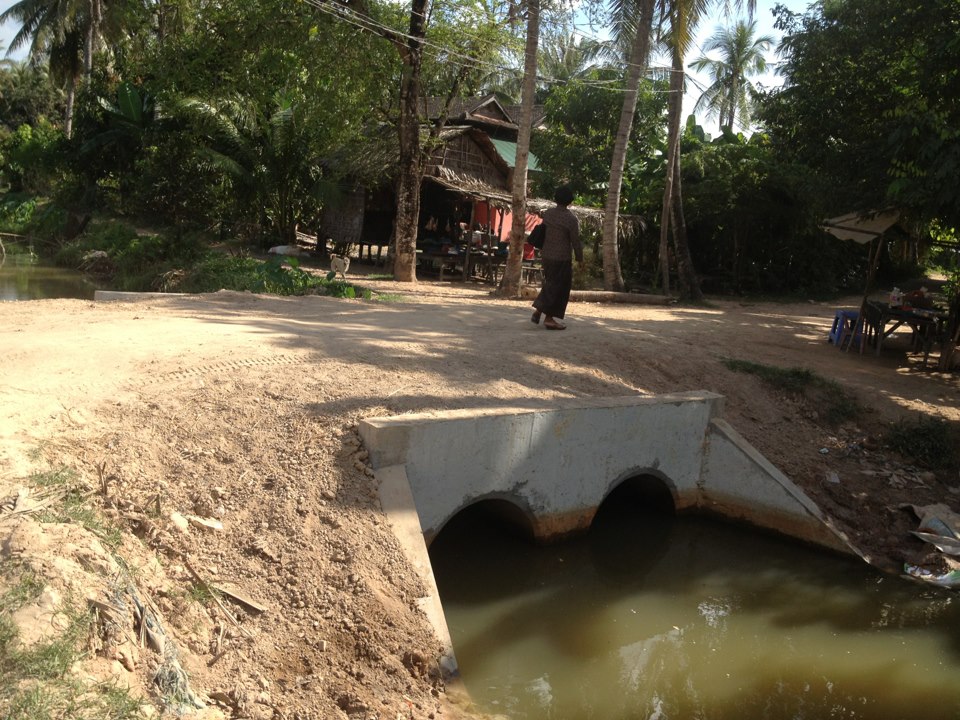
One of the chief goals of CHE is to help people move from dependence on outside resources, to understand their own potential and give them the tools they need to articulate their own needs and goals and to develop a plan to move forward.  I would like to share an excerpt from this months’ health initiative report in Cambodia that demonstrates how this works.  Road access to villages is essential for villagers to have access to outside services, work, schools, and markets and is often viewed as the responsibility of others such as government or ngos and often does not happen.

These three villages are not yet part of a formal CHE project but have participated in a few CHE lessons facilitated by our TWR staff.  They each were able to identify the need for a road as a key issue and to come up with a strategy to meet their own need.

prey khmengIn  Prey Khmeng village outsiders had previuosly built a road wwithout full knowledge of the area and when the rainy season came, it was washed away and no one ever came repair it.  The villager leadership developed a plan to gather the money together to repair it and lift it above the flood levels and now use it happily. It brings a sense of ownership to them and pride in their work.

beung knarThis a road in Beung Knar village which used to have many big holes and it was terrible to get into this village. Now it is so nice to travel here because those holes were filled and people there travel joyfully. There was no help from the government, but the people there were able to save the money and fix their own road and now know how to keep it under repair so their village will no longer be isolated.

knart

In Knart, the villagers collected some of there own money to repair the road but also learned that they could access money that they were entitled to through a government assistance program. It is amazing to see that they have started to identify their needs and take ownership for repairing and taking care of their own community.

As people are dependent on outside help, over time they begin to see themselves as incapable and somehow deficient and helpless, leading to all sorts of problems including illness, alcohol abuse and violence. Building and maintaining a road in your own village may not seem like a big thing to us but to these people it is a first step in regaining their self respect, some joy in their own accomplishments and a hope for the future.

CDC Team

I would not normally be able to attend a medical conference of the calibre I have been enjoying for the past two weeks but this is a unique circumstance. Our team was invited by the organizers of the conference to present the project we are undertaking in Cambodia as it is a very unique approach to health care and community development. The addition of a media component provided by my mission organization, TWR, is a completely new appproach as well.

We were fortunate to have the research aspect of our project on view this week as well. Due to Dr. Wilder-Smith’s very demanding schedule, she could not arrive until the evening before our presentation. As there was much new material to integrate into our presentation, we had to work late into the night completely revamping the script and powerpoint.  We divided the talk up so that Dr. Bieber covered the Community Health Education segments, I talked about the impetous for the project and progress thus far and Dr. Wilder-Smith closed with the research criteria and strategy we will be utilizing.  We were all pretty pleased with the way the presentation came off and the very productive discussions that followed.

Unfortunately Dr Su Min was not able to be here with but we were able to introduce him in a photo.  As always Sharon was invaluable with her input into the writing and timing of the presentation and keeping us all focused on the task at hand.

It is a very amazing privilege to be a part of the ground breaking discussion and the education and training that is offered here but I must admit that I am looking forward to heading home for a bit of rest and some upcoming celebrations.

IMG_3275

My schedule is completely booked, the CHE manual is developed, revised and bound, the certificates are printed, and – with the help of our TWR Philippines team – the logistics are all in place.  Early tomorrow morning Steve will drive me to the airport to catch a plane to Manila where I will meet up the the rest of the training team for some last minute planning for ministry training. All of us are so looking forward to doing a week long Community Health Evangelism Training of Trainers  (TOT1) for which we have been planning since November.

CHE training is not new to the Philippines.  It has been used there very successfuly for more than twenty years and Carlos and Rebecca, our lead facilitators are very experienced Philippino CHE practitioners.  Dr Su Min will  be there as well to bring his unique creativity, experience and knowledge to the team.  A TOT1 is a pretty intense week but the participatory style of learning makes it lots of fun and keeps participants actively involved.  We are grateful for dedicated and supportive friends from our home church who are funding this training for the TWR Philippines team and would appreciate your prayers for the relationships that will be built and the potential for ongoing partnerships that would connect our team with people who are actively involved at a community level.

After a week of training I will make my way back to Manila to catch the next plane; not back to Malaysia, but rather on to Cambodia for the annual Regional CHE Working Group meetings.  Although the timing is going to be a stretch coming right after an intense week of ministry, it is always encouraging and stimulating to hear reports of the CHE activities in the Asia- Pacific region.  The focus this year is on Women’s and Children’s issues and projects so the meetings will be followed by two days of workshops looking at utilizing CHE with these groups.

As soon as this meeting is done in mid-February I will make a quick three day weekend trip back to KL to connect with things here and then head out again, this time to Thailand for the Christian Medical Dental Association Continuing Education Conference.  This is a great oppportuntiy not only to attend some very educational seminars but to network with others who are ministring in the medical field in the region. Our Cambodia project will be presented at this conference as a potential model for medical missions and as a way to encourage a holistic approach to medical  initiatives.

I arrive home on March first after all of these meetings and by then I will need a time of rest and opportunity spend some time with the partner that God blessed me with on our journey. In spite of the activity and excitement, it is always difficult for us to be apart as we both meet the challenges of our work without the support of the other.  God has been gracious in blessing us with both a ministry and a ministry partner, but we do not wish to take this for granted. Our ministry is only as strong as our marriage; that is the ground on which God is able to work through us in the lives of others. As always, we covet your prayers.

I will never grow tired of seeing the impact of CHE on the lives of families when their community recognizes their own potential, break their dependence on outside resources,  and take ownership of their own development.

Yesterday we visited a small village of about 120 families in which 60% of the homes are involved in CHE. Certainly they are still poor by our standards but now they are learning how to protect their families from illness, how to fully utilize their land to feed their families, the importance of education and how to plan and work together as a community.  As we arrived at this small church, a group of youth were beginning to add an outdoor platform for their upcoming community Christmas program.

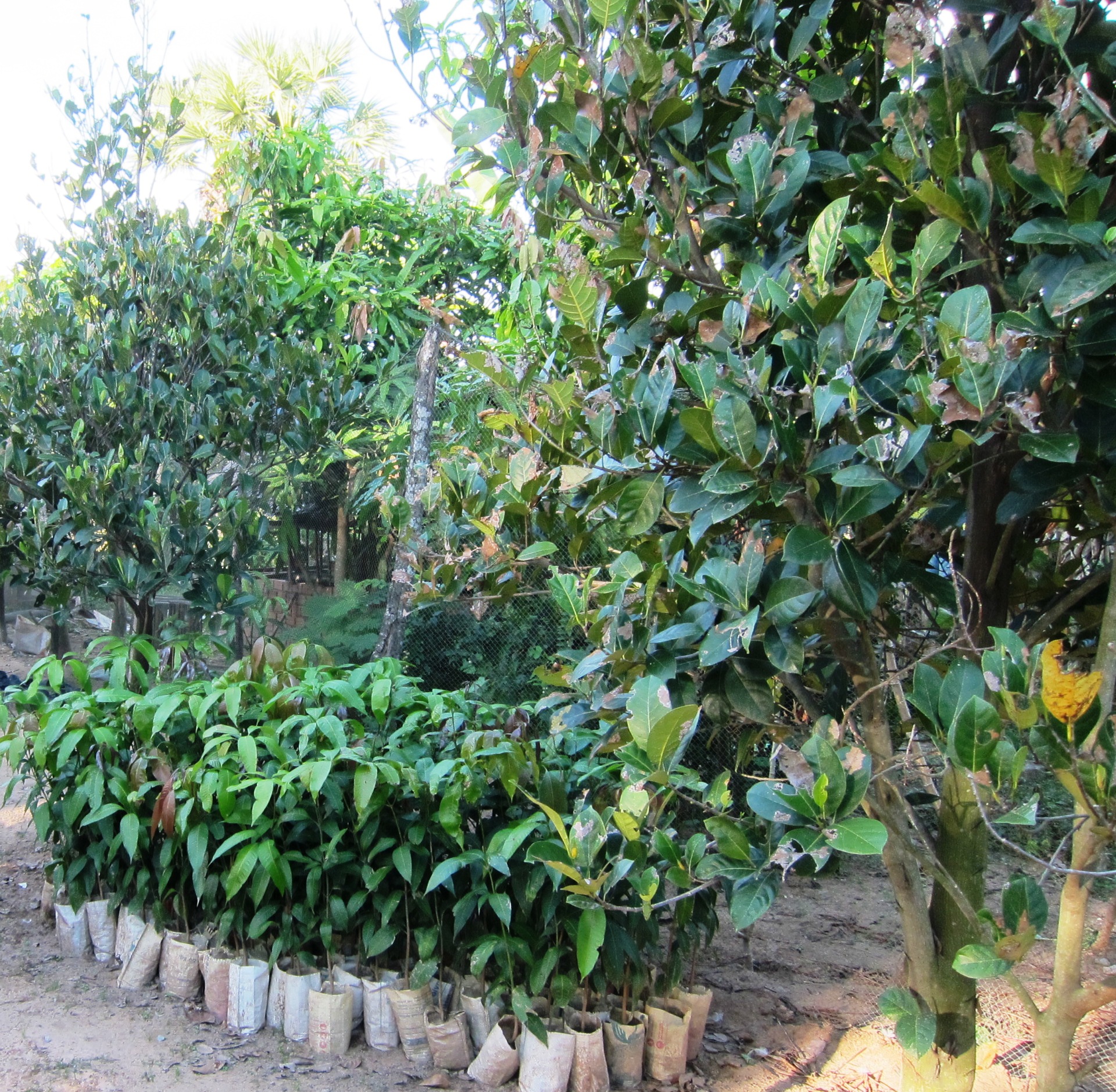
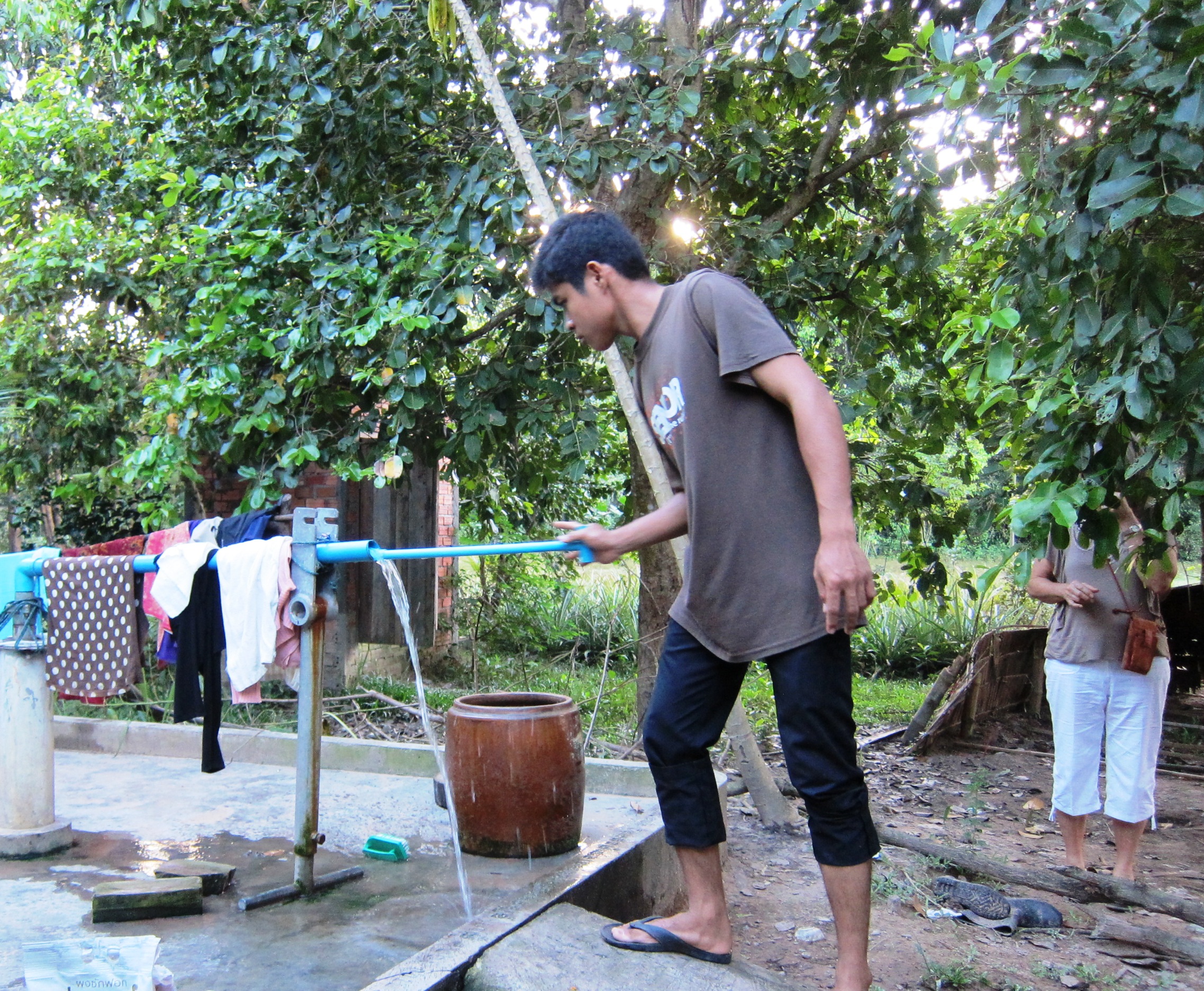
They were very proud to show us their demonstration garden, meringa plants, fruits, vegetables the mango seedlings they are raising for the community, and even a lovely little garden surrounding the falg pole created simply for its beauty and peace.  They also have built their own Kindergarten where about 30 of the community children begin their education.  In this village the homes have a clean water supply, a brick outhouse, composting areas, a separate cooking area and receive regular visits and education from their CHE volunteers.


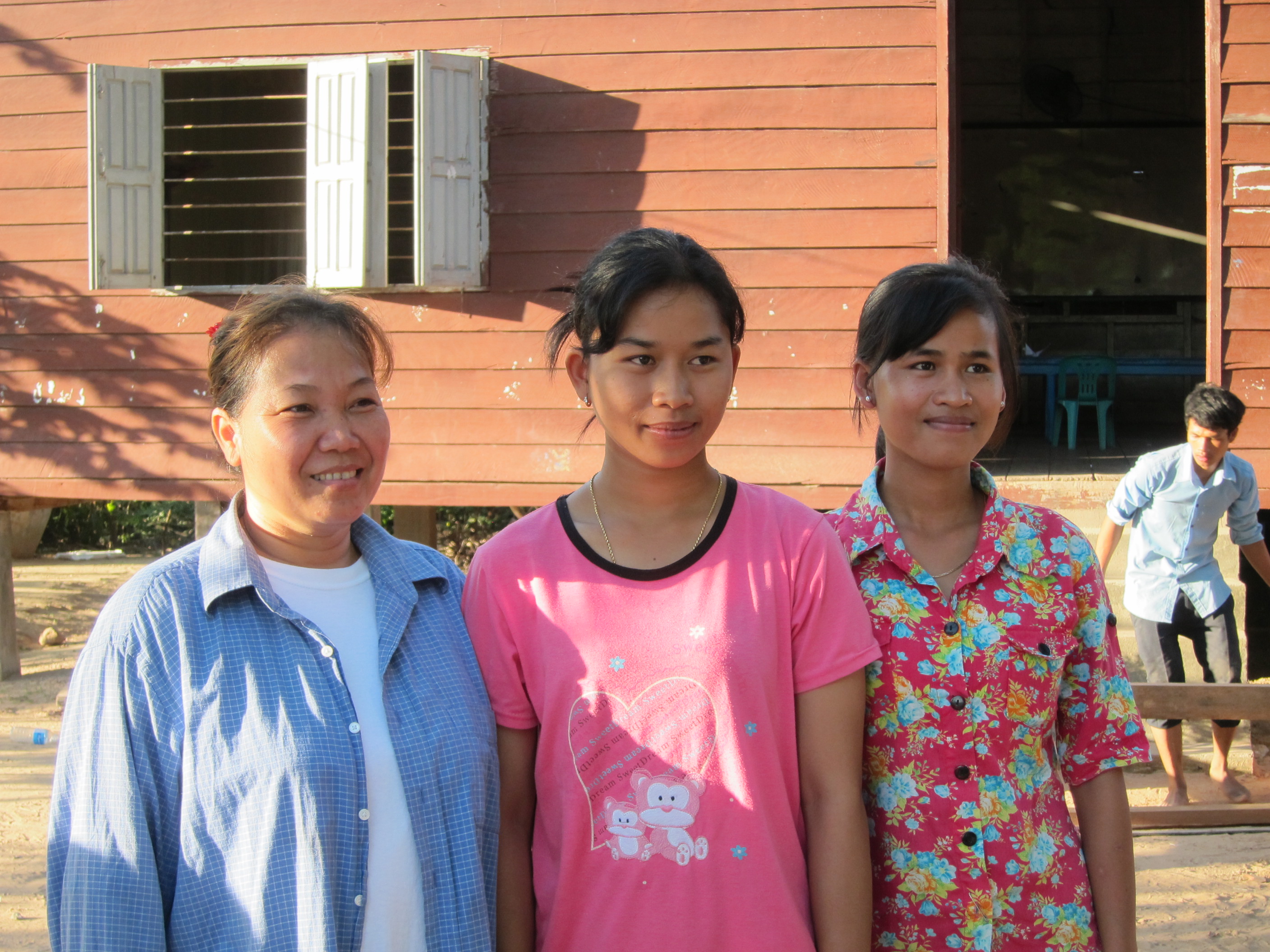
We chatted with these three amazing ladies, the Pastor of the church who along with her husband, lead the CHE program, a young RHAC volunteer who is a teacher in the Kindergarten and provides regular health education to the youth and a CHE volunteer who supports her community.  By the time we were ready to leave, the youth were very delighted to show us their completed platform. This village is clearly well on the way to becoming happy, healthy individuals enjoying the life the God intended for them in a community with the capacity to share their knowledge with other villages around them and making a difference in their country.


The last two weeks have been pretty intense to say the least.  The week before last Steve was off school for the Deepavali Holiday and I had some meetings set up in Singapore so we went down together hoping to fit some relaxation into a busy week.  On Thursday and Friday we were graciously hosted at the home of Annelies, who is Director of Teaching at the Institute of Public Health, University of Heidelberg, Germany and we are so blessed to have her on our team for the Cambodia project.  Bill and Sharon and Su Min were all in town as well and we had a very productive time reviewing the progress and just rejoicing in what God has done thus far.  Steve carefully documented all of our discussions and by the end both he and Annelies were up to speed.

Then came the difficult part, that of planning for the future.  Our hope is that we can move the work forward to the point that it will be ready for pre-intervention research by May.  Annelies has two students from the University of Heidelberg who are willing do the research as part of their Masters program.  One will focus on evaluating the impact of the training we have completed while the other will carry out a baseline community survey prior to the formal implementation of the program.  It will be a real advantage to have this type of academic credibility applied to the evaluation of the pilot area. By the time we parted on Friday evening we had agreed on a timeline for the Cambodian staff to follow in order to ensure that we will be ready for the researchers who will arrive late May.  With our team members spread around the world and all very mobile, it is not often that we can all be together for this type of planning and it was great.  Su Min and Sing Yu hosted us at the Black Angus for a very lovely lunch on Friday before they headed off for New Zealand.

Our friends Blossom and McDaniel are in the process of returning to Canada and we were looking forward to Friday evening dinner together to thank them for all their support and encouragement during our time here.  While waiting for them to arrive, Steve received the sad news of his mom’s passing and later that evening we learned that Aunt Lil was also gone.  With very little we could actually do until plans were in place for the funeral, we opted for some down time on Saturday just wandering and riding along the East Coast Park.

After a very quick weekend at home in KL, Steve returned to school to get his year wrapped up before going to England and I returned to Singapore.  Blossom and I began the daunting task of sorting, distributing and packing up their treasures and belongings collected over twenty eight years on various mission fields.  Clearly yet another visit will be required before we are even near completion of that task.

Ray Alary, President of TWR Canada was passing through on his way from India so we had a great opportunity to compare notes on the similar challenges and effective strategies in Africa and Cambodia and I look forward to ongoing opportunities to work together.  I got some meeting time in at the office around my new role with Holistic Ministry which was also most pleasant and productive.  This weekend we found ourselves very tired and yet so grateful for the amazing opportunities God continues to give us.

The quiet, secluded and beautiful Pulai Springs Resort in Johor Baru provided a wonderful venue for the Partnership Conference this year. Sadly, as one often finds in this country though, the place was underutilized and suffers somewhat from poor maintenance.

There were sixteen countries represented and we had a great time hearing the reports of the ministry throughout South Asia. As always, I most enjoyed the opportunity to get together with old friends and to make new ones and to do some planning for the upcoming year. Had a super roommate in my friend Blossom and enjoyed the chance to get caught up on their plans to return to Ontario in the near future. I know that I will miss having them with us here but am grateful that we will continue to work together through the Canadian office.

Enabled, Empowered and Encouraged was the theme for the conference and each morning started with a time of worship and a message by one of the country coordinators on each of these topics. There were some pretty practical workshops brought to us by some of the global staff who helped us prepare for the new strategic directions that the ministry is heading into. I never get tired of hearing the stories of individuals who happen to come across the broadcasts and how their lives were changed forever.
A big thanks to the organizing committee who did an amazing job of all the little but important details that came together to ensure a very fruitful time together. Lots of good food, fun and matching T-shirts helped to strengthen the bonds between ministry teams and we all headed back to Singapore together feeling enabled, empowered and encouraged by our time together.

« Previous PageNext Page »