Current News


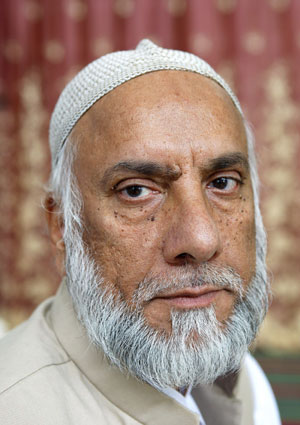
A group of imams from across Canada issued a fatwa Friday to label attacks by extremists against Canada or the United States as attacks against the 10 million Muslims living in North America.  In a joint statement issued by the Islamic Supreme Council of Canada, the imams state: “We, the undersigned Imams, are issuing the following Fatwa in order to guide the Muslims of North America regarding the attacks on Canada and the United States by the terrorists and the extremists. In our view, these attacks are evil and Islam requires Muslims to stand up against this evil.” 

The fatwa, a non-binding religious edict that is given to guide Muslims in their daily lives, is a response to the attempted Christmas Day bombing of a U.S.-bound plane by a Nigerian with ties to Islamic militants in Yemen.  In their statement, the imams cite quotes from the Qur’an that call on followers to “enjoin what is right and forbid what is wrong,” and to “protect our friends.”

Iman Syed Soharwardy, who is organizing support across North America for this fatwa, goes on to say that “We have an obligation to inform Muslims around the world that North American Muslims practice their religion, pray five times daily and attend mosques and celebrate religious festivals in complete freedom. In many cases, Muslims have more freedom to practice Islam here in Canada and the United States than many Muslim countries.”

 The imams say that the Canadian and American constitutions are similar to the principles of Islam that protect human rights and justice. “Therefore, any attack on Canada and the United States is an attack on the freedom of Canadian and American Muslims. Any attack on Canada and the United States is an attack on thousands of mosques across North America.”

Many Muslims we have met during our time in Malaysia share the imans’ view that these acts of terrorism show contempt not only for the values of those they attack, but complete contempt for Islam as well. I am very much encouraged by this initiative, and I would be delighted to see Canadians leading the way in this world to a more moderate understanding of what it means to be Muslim.
There were a few more minor incidents at churches on Sunday; more vandalism, but no more buildings were gutted. In fact the incidents seem to have served as a bit of a wake up call for the nation, as many newspapers began asking “Is this the road we want our nation to be on?” Representative of the desire to re-establish civility in this issue is this article from Kuala Lumpur’s daily, The Sun:

In the wake of Molotov cocktail attacks against several churches since Friday, there has been an outpouring of goodwill and offers of assistance to the Christian community. Admirably, in the face of the attacks, one message which resonated in many churches during services over the weekend was the call for calm and forgiveness, and resisting any urge for revenge and retaliation.

Metro Tabernacle church senior pastor Rev Ong Sek Leang, whose church in Taman Melawati was torched on Friday, told a press conference after Sunday services in a rented building,“What happened was caused by only a small segment of the people. It was great to see people of all communities, faiths and social levels reaching out to help. It really reflects what Malaysians are about. It is a clear message to our nation that we are a well-integrated and connected family,” he said, visibly happy with the outpouring of goodwill and assistance offered to the church in its hour of distress.

On Saturday, Prime Minister Datuk Seri Najib Abdul Razak announced that the government will give the church RM500,000 for its new building near Batu Caves. Yesterday, Ong also received a RM100,000 donation from CIMB Group CEO Datuk Nazir Razak, towards Metro Tabernacle’s new building which is expected to cost RM1.5 million. Nazir said the CIMB Group was happy to provide assistance for the restoration of the church. “I speak for all at the CIMB Group that we condemn acts of violence, especially those that desecrate places of worship and dishonour the bonds of respect and tolerance upon which our nation is based,” said Nazir, the brother of Najib.

Elsewhere, Christians attended Sunday service as usual, unbowed by the incidents as at least three more churches were targeted in Taiping, Miri and Malacca. About 1,000 worshippers at the Catholic Church of Assumption in Petaling Jaya, which was targeted by the arsonists, were briefed by parish priest Phillips Muthu on the incident. “I told them we don’t want to blame any people, any quarter, any religion. We are peaceful and we are here to offer our prayer for the nation,” he said at the church, where a firebomb damaged part of the grounds. “Of course we are afraid after the incident, but life has to go on.”

Meanwhile, six Muslim NGOs yesterday offered their assistance and support to their “Christian brothers and sisters”. Executive secretary Datuk Nadzim Johan said the NGOs, were prepared to give a hand to their Christian counterparts should they need assistance. “Looking at the current situation, we are taking proactive and pre-emptive measures to offer our services to the public and also help the government to ensure peace in the country,” he told a press conference. He also invited Christian leaders to sit together with them and discuss ways they can collectively avoid divisive issues so that all Malaysians can continue to live in peace and harmony.

We would ask our regular readers to pray for peace in Malaysia, that the work of God may go on unimpeded, and that Christians would continue to follow Christ’s admonition to “Love your enemies.”

I’m sure many of you have been reading the recent string of articles about Christian churches being firebombed in KL, and are wondering what the ruckus is all about. Well it’s complicated. I can do no better than quote from Gwynne Dyer’s recent article on the subject. Once again, it is a Canadian journalist that seems to be able to take the longer and more balanced view.

In the late ’80s, when I was in the Eastern Province of Saudi Arabia, a friend suggested that I drive out into the desert near Jubail to see the oldest extant Christian church in the world. Its existence embarrassed the Saudi government, which prefers to believe that Arabia went straight from paganism to Islam. It confirms the assumption of most historians that Christianity was flourishing in the Arabian Peninsula in the centuries before the rise of Islam. So what did these Arabic-speaking Christians call God? Allah, of course.

I mention this because last week the Malaysian High Court struck down a three-year old ban on non-Muslims using the word Allah when they speak of God in the Malay language. The court’s decision was followed by firebomb attacks on three Christian churches in Kuala Lumpur on Thursday night. On Friday, protesters at mosques in Kuala Lumpur carried placards reading “Allah is only for us.”

Prime Minister Najib Razak condemned the attacks on the churches, but he supports the ban on Christians using the word “Allah” in Malay and is appealing the High Court decision. Parliamentary Opposition leader Lim Kit Siang simply observed, “The term ‘Allah’ was used to refer to God by Arabic-speaking Christians before Arabic-speaking Muslims existed.” Of course it was. Arabic-speaking Christians predate the rise of Islam by 300 years, and what else were they going to call God? The word “Allah” is a contraction of the Arabic definite article al- and the noun ‘ilah, which means god.

This Arabic word was imported into the Malay language by converts to Islam, which arrived in the region several centuries before Christianity. All ethnic Malays are considered to be Muslim under Malaysian law, and are legally forbidden to convert by criminal sanction, but there are numerous Malay speakers, especially in northern Borneo, who are Christian and not ethnically Malay. They also use the word Allah for God.

What’s the harm in that? Why are Malaysia’s Muslims so paranoid? The real paranoia, alas, is ethnic. Malaysia is an ethnic time bomb that has turned itself into a peaceful and prosperous country by a huge effort of will. The original population was mostly Malay, but under British rule huge numbers of Indian and Chinese immigrants were imported to work the mines and plantations.

By independence, Malays were only 60 percent of the population, and much poorer than the more recent arrivals. They resented the past, the present, and the probable future. After several bouts of anti-Chinese and anti-Indian rioting, the country arrived at its current, highly successful compromise. The Malays dominate politics, but the Chinese and the Indians thrive in trade and commerce–and most people understand that they are ultimately in the same boat, which is called Malaysia.

The state spends a lot of money to raise the living standards of the Malays, and gives them preference for housing, university placement and government jobs. They haven’t done badly out of this deal, but nevertheless they feel perpetually insecure. Since they are all Muslims, while few other Malaysians are, they also feel their religion is under threat. Some respond by being aggressively intolerant of minorities.

Not all Malays behave this way. Major Muslim organisations, including the Islamic political party, PAS, have agreed that the other “Abrahamic religions”–Christians and Jews– may call their God Allah in Malay. But it’s getting ugly, and it’s high time for the Malaysian government to stop playing along with the extremists. The Christians, Hindus, animists, and others who make up 40 percent of Malaysia subsidize the poorer Malay-Muslim majority. Few of them will ever convert to Islam, but they are not its enemy either. Malaysia has achieved a fragile but workable compromise that gives its people a good life. It should not endanger it so frivolously.

Geraldton proved to be a nicer stop than we had bargained on. The ocean was close, and as wild as it has been up north, with a wicked rip tide that scared us off an evening dip. The chairs were a nice addition to our evening meal, and we had another early night and got up early and we out of the campsite by eight. The drive to Perth was increasingly pleasant, the scrub of the north giving way to wheat fields and trees. Traffic was still light, and we drove through Perth without any trouble, thanks to Pam’s unerring navigation. I don’t think we have made a single wrong turn for over a week.

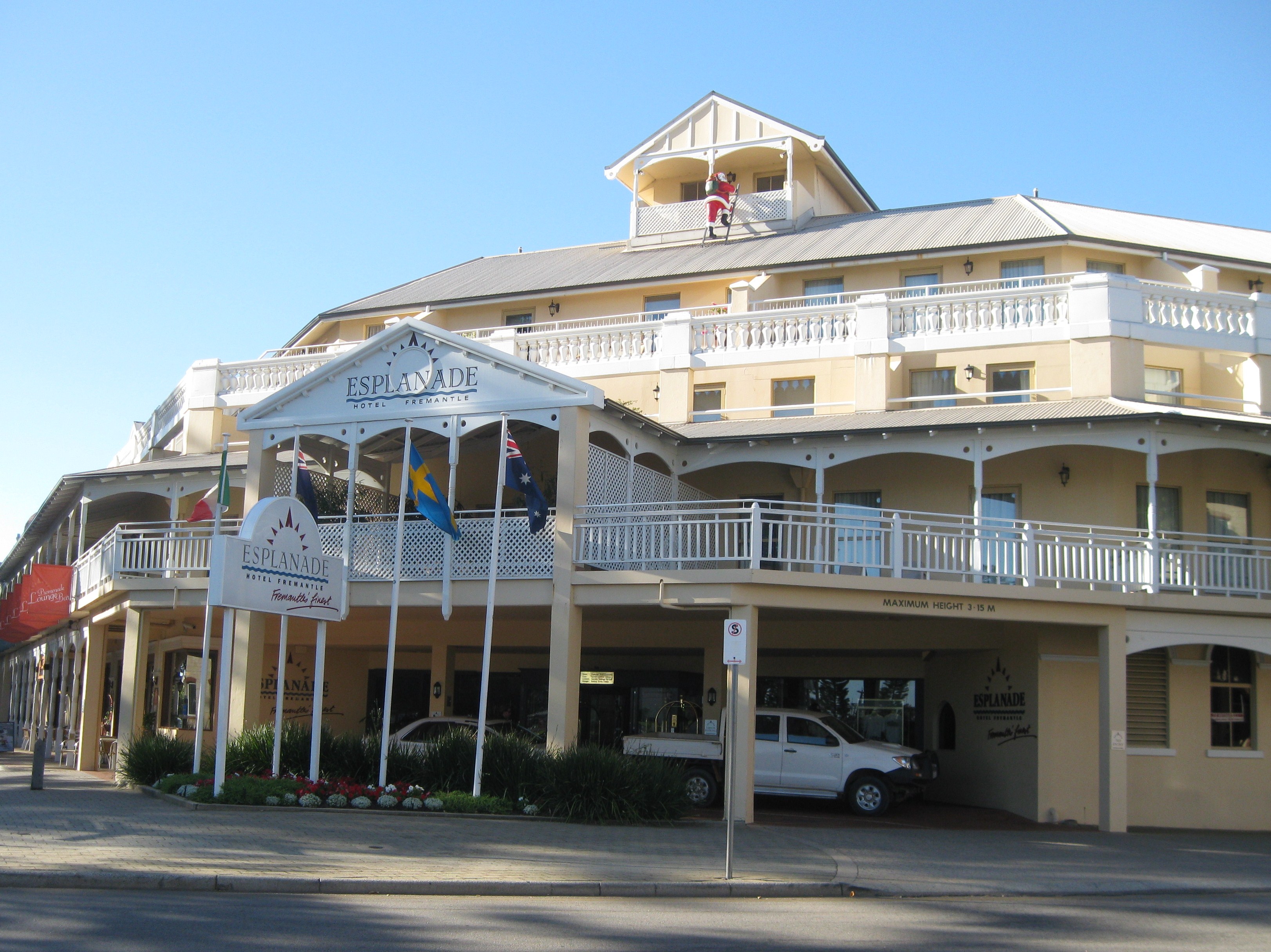
Perth is a very nice town, sun-washed and clean, and Freemantle was even nicer, with older buildings well-preserved and narrow streets that discourage traffic and invite pedestrians. We stayed at the Esplanade, a poor choice as there were plenty of B&B’s with more character in the neighbourhood, and the staff at our hotel were snooty. But the town itself was charming and we went out for the evening and quite enjoyed ourselves. We had eggplant pakora at the Maya and olive/salami pizza at Mad Max’s. We met a couple from Malaysia at the first place and a lady from Denmark at the other and had a pleasant evening.

The lattes at the Dome were a bust, far too sweet and much too small. Worse yet the internet, the only reason we went there in the first place, was patchy and we spent a frustrating half hour trying to call Canada and England. We finally gave up and retired for the night.

We tried again to see the dolphins, but again they didn’t show. We had a nice coffee in the shade and headed back along the highway, this time up to see the Ningaloo Reef. Driving through the Australian Outback is truly a frightening thing. Not because it is so barren – there are plenty of stretches of northern Ontario that are just as barren in their own way – but rather because it is so dry and featureless. If you were to land one kilometre from the highway, just out of sight of it, you could walk in circles for the rest of your life and not find it. The sun is directly overhead, there is no way to tell north from south and there is not a single landmark, not a rock or a tree to orient yourself. It is what I imagine the surface of Mars looks like.

We passed riverbeds that were just a mockery of rain, completely dry with the sand blowing dust up the gulch. We saw road signs for places 100 kilometres away in the desert with nothing but a dirt track through the dirt to get you there. The only wildlife was road kill, that and the ubitquous beer bottles littered the shoulders of the road. We were grateful for the occasional roadhouse that sold gas and bottled water.
Coral Bay, our destination for the day, lies on the coast, powered by three wind turbines – the offshore winds are a feature of the hot land and the cooler water – that provide power for this village of ‘two thousand’ people. Two hundred is closer to the truth, but Australia likes to inflate these things, I think to deal with the isolation they face. The campsite was right on the water, and was clean and well equipped.

One look at the Indian Ocean crashing over the barrier reef offshore was enough to get our blood moving. We have been snorkelling enough to get excited just about the prospect. The reef was an east boat ride away, not ten minutes, and the coral stretched right into the bay itself. We booked a snorkelling cruise for the next day and retired to the van and a movie.

This morning I was up before the alarm and did a few stretches to limber up my back and gently wake Pam. We had time for a leisurely breakfast of tea and toast, but the water here is proving to be a problem, and the first batch of tea and coffee we had to discard. It actually curdled the powdered milk in the coffee mix! If water will be to the 21th century what oil was to the 20th, Australia is going to be among the world’s poorest nations. The bottled water is passable, but the tap water is so saline – either through limestone content or chlorination or both – as to be practically unusable. Even showering in it is quite literally a distasteful experience.

But the big expectation of the day way going to be the dolphins. That is why we are in Monkey Mia. Apparently the dolphins – not trained, but live, ocean-going animals – have been coming in to Shark Bay and cavorting in the waters off Monkey Mia for some 30 years; long enough that the area has now been set aside as a nature preserve. They were due to arrive around 7:30 and we didn’t want to miss them. Unfortunately they didn’t show. Yesterday one of the young calves had beached itself, and the dolphins gave the place a pass today. We were disappointed, but not dismayed.

We booked the second of our two cruises and headed out for dolphin territory out in the bay. This time we saw plenty, along with loggerhead turtles, manta rays and dugongs (or manatees, if you prefer), who like the dolphins and the turtles come to the surface to breath before flashing their flukes and diving for more sea grass on which they feed. Apparently these creatures are both shy and rare, but we saw plenty today.
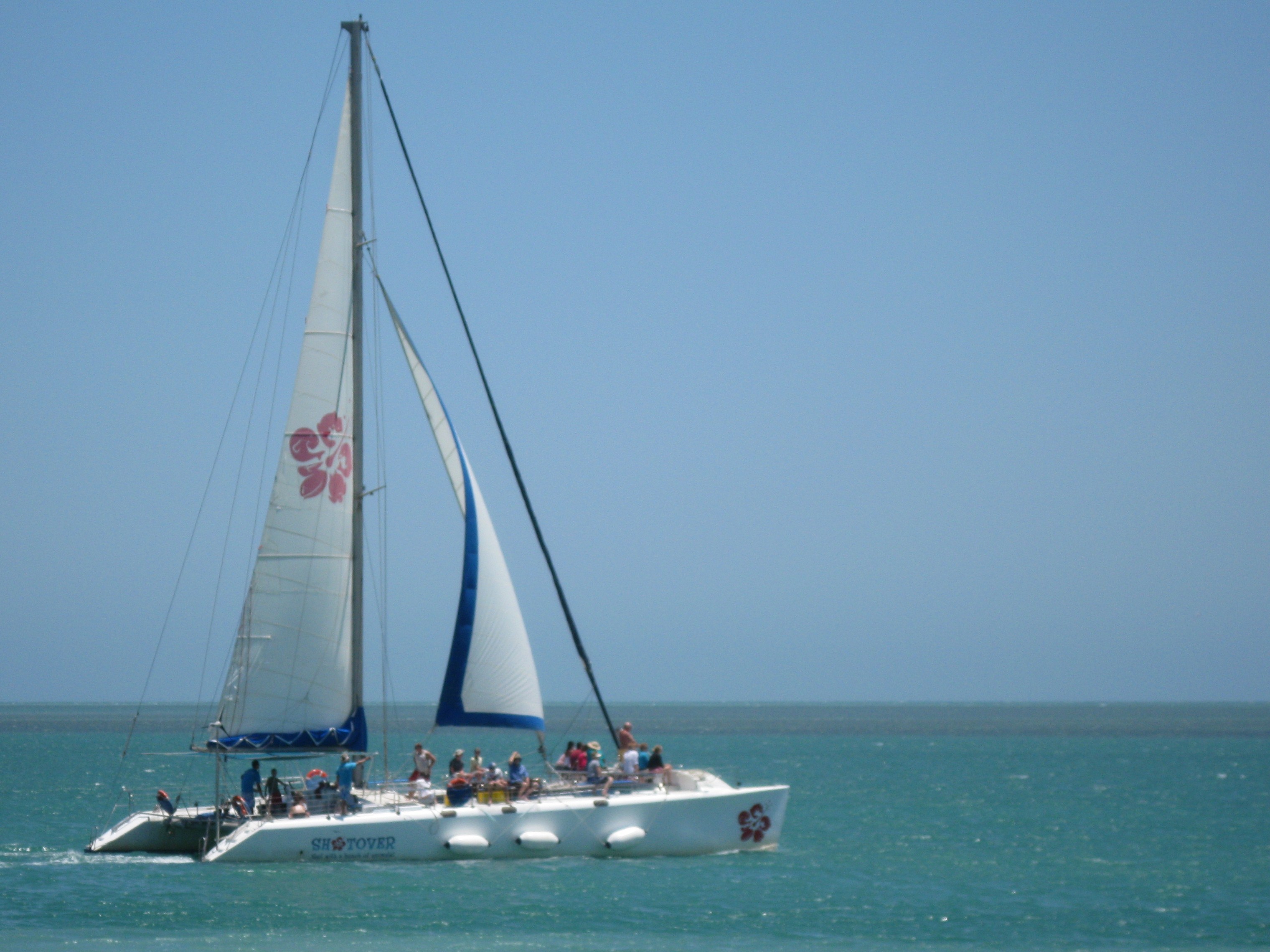
Once again the catamaran was smooth and steady and worst thing we had to deal with was how to stay out of as much sun as much we could. A canopy and loads of sunscreen were helpful, but the sights were difficult to ignore and we both probably got more sun today than is good for us. A quiet evening and day of driving tomorrow up to Coral Bay should take care of us.

We count ourselves among the more fortunate people on the planet not only to be able to do this, but to do this while we are both working very hard to serve the Lord in this part of the world. He is so gracious in allowing us this privilege, and then allowing us to see the beauty of His creation. The creatures we saw today, each unique, and uniquely adapted to their environment, show and honour His wonderful creation.

Kalbari was lovely, but like most of this coast so deserted it is almost eerie. We had to drive for almost an hour to get back to the main road, which explains the frequency of tourists in that lovely little town. We stopped at the Murchison River Gorge, nearly empty in the dry season and took some pictures. There were mountain goat across the gorge, and a huge termite mound, but aside from that no sign of animal life. We keep seeing signs warning us of kangaroos crossing, but as yet no live jumpers.

The drive up the highway was uneventful. The scrub land here is incredible: just a hair this side of utter barren wasteland, the soil so parched and rocky that only a few fitful bushes, no higher than your knee can survive. We hoped that the next ‘outback’ station had gas. They did, and we paid the $1.53 per litre without complaint. On the way up the road we passed two cyclists with shock. It must have been 45 Celsius on the tarmac and not a cloud in the sky; by bike probably three hours to the next station in that killer heat.

The road into Monkey Mia was just as barren. We took a turn at the first sign of life a tea house run by a garrulous old Aussie with three yellow teeth and a long scraggly grey beard that looked liked it housed some family friends. Lunch was edible, just, and we did pick up enough local information to formulate a plan.
We drove into Denham and picked up a few supplies, then headed across the peninsula to Monkey Mia. We arrived early enough to get a powered site for the night and hustled down to the dock to book an evening cruise on the Shotover, a catamaran with a reputation for seamanship. The cruise was gorgeous; smooth and without incident into an Indian Ocean in the evening air with a romantic sunset to finish the day.
We uploaded some pictures and tried watching a movie on the laptop, but didn’t last too long. The day had been too long and we were too tired. Besides, we had an early appointment.

We had heard that it was going to be hot in Australia. Apparently not first thing in the morning! I have my hoodie and my jacket on and I am still cold. It could be that we are tired. Sleep was hard to come by on the overnight flight from KL to Perth. The cabin light above our head was stuck on, much to the consternation of the Aussie behind us who had to let everyone know just how shoddy the whole operation was because of this particular light.

We have got a little time to kill before we can pick up the camper. We arrived at 6 am and the rental place down the road doesn’t open until 8. We had a couple of very expensive – $4.50! – coffees and a couple of granola bars I snuck in across the border. They scruntinize foodstuffs pretty carefully in Oz, for good reason, but the granola bars got in under the radar.

We will post when we can, but I’m not thinking that once we leave Perth there are going to be too many places in the Outback that we will have access to the internet. We are headed north initially, with the end point being Coral Bay, the land point closest to the Little Barrier Reef where we hope to do some snorkelling

Our son Jon has a new job out of Seattle that requires him to do a lot of travel from his home base in Ontario. The new job also comes with new responsibilities, like presenting developing products in public forums. This is not entirely new, as Jon has often had to make presentations for products in the past. But those products were always software programs that he and his team were developing, and the target audience was pretty small.

This new job requires that he presents his company’s products in much larger venues. To my way of thinking this is a natural development of his native gifts. He has quick mind and a facility with words and ideas that makes him a persuasive speaker. He also has a strongly independent character that allows him to approach each new situation with integrity, allowing him to speak with authority. I know this as one who has often had to go toe-to-toe with him on a number of issues as he was maturing. If I won the lion’s share of those debates it was only because in grace he conceded to my authority, not because I had the winning argument.

My wife and former students will tell you that when I am passionate about something that I am teaching, I am a force to be reckoned with. Pam’s friends and colleagues know that there are few who can so winningly put together a team and get them working together toward a common goal as she can. Jon seems to have a happy combination of her networking skills and my verbal ability. Put that together with Jon’s gift for computers and his drive for excellence and the results speak for themselves. Yeah, we are pretty proud of the kid.

Each teacher in the school where I work is assigned a group of students to counsel. I find it kind of artificial, as I am more likely to counsel whoever needs my counsel anyway. I just always figured that was part of the job. In fact I will counsel kids who don’t ask for counsel if I think they need it. That too is just what any caring adult would do if they saw a young person struggling and thought they could help.

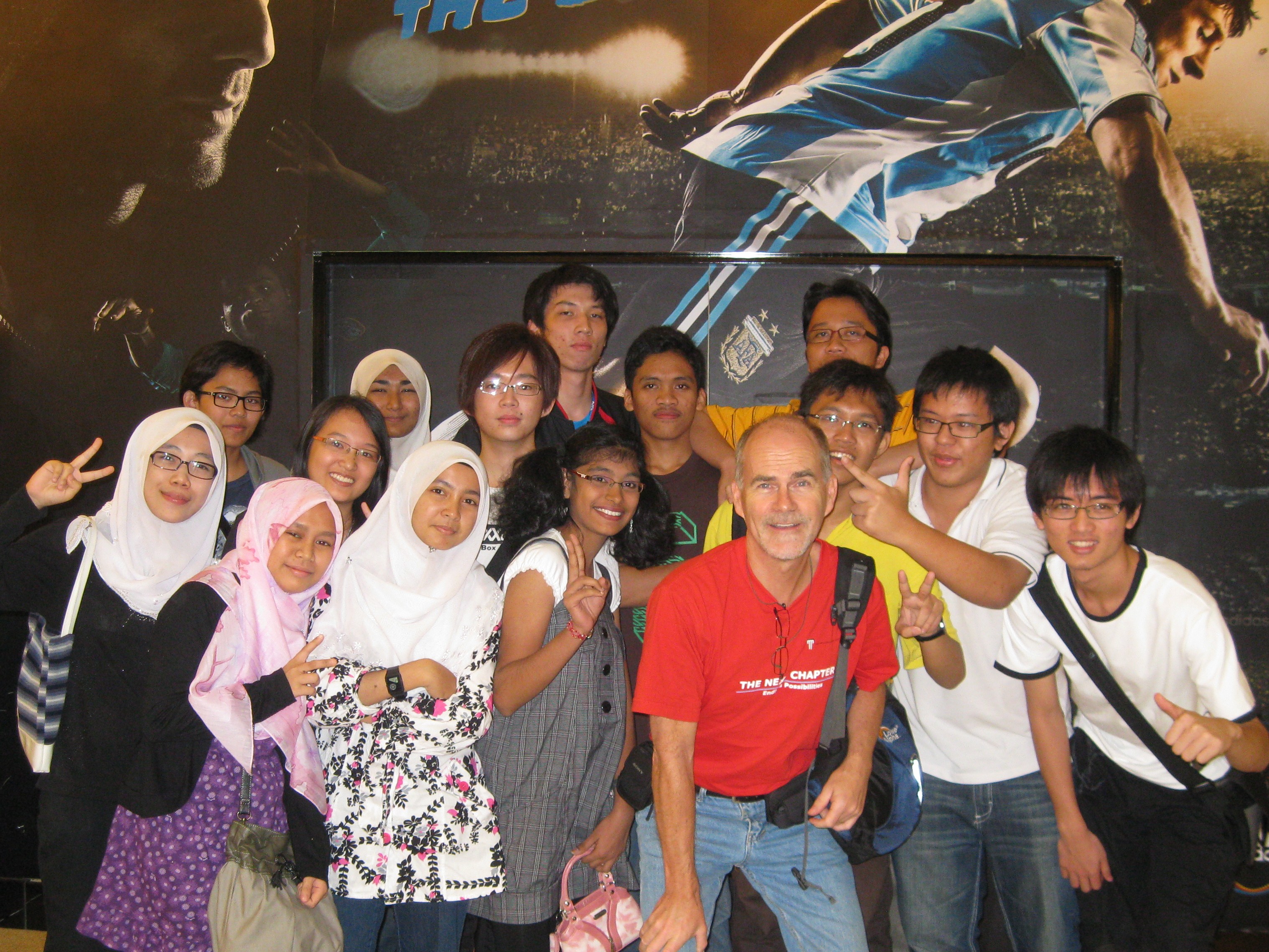
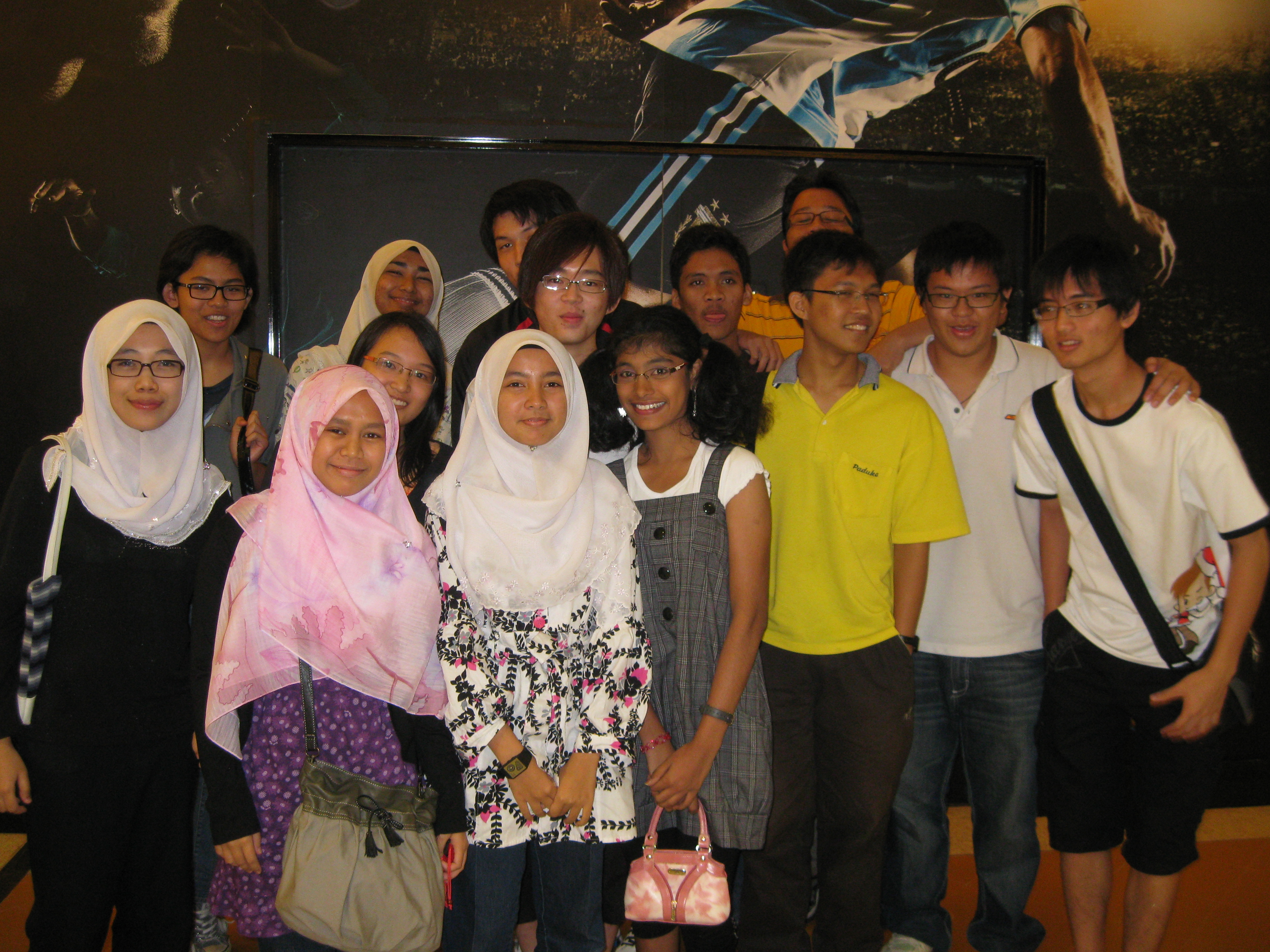
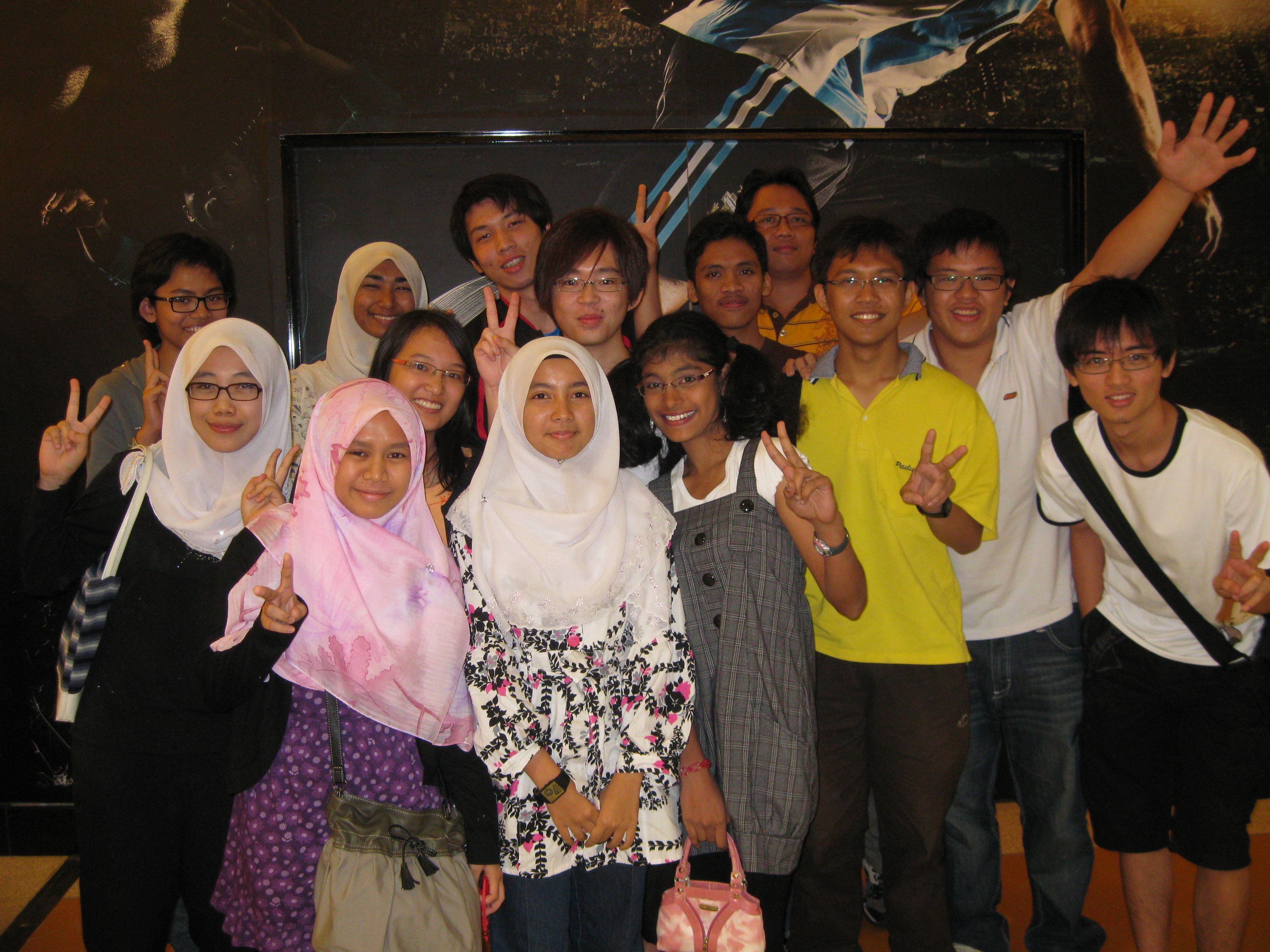
But this particular crop of students is in my ‘mentor group’ and we are getting near the end of the school year and I thought I would treat them to a movie and help them to try and relax before we head into exams for the next two weeks. 2012 just hit the theatres here and most of my students hadn’t seen it yet, so I took them out as a treat.

I’m sure many of you have seen it by now, so I won’t provide a review. You already know that despite an attempt to place this picture in the future, it is essentially the story of Noah and the Arc retold with high tech gadgets. You just can’t get away from the fact that some of the greatest stories on the planet are in the Bible. The science starts out on a fairly solid footing. Yes, there is a neutrino collection facility in Sudbury, Ontario and one planned for Tamil Nadu in India. Yes, the sun does erupt in solar flares and that activity will hit the peak of its eleven year cycle in 2012, but from there on out the science gets increasingly dodgy. By the time the tsunamis have flooded all of India and are cresting over the seven kilometer high Himalayas you are ready to give up. Even the most die hard literalists of Biblical interpretation are willing to concede that the Himalayas must have risen as a result of whatever cataclysm struck the world in Noah’s day, as there is not enough water on the planet to cover it to that depth.

But I’m nit-picking. Nobody goes to a show like that looking for good science, you go looking for special effects, and there are some dandies. My particular favourite was watching California slide ever so gently into the Pacific Plate, although I must admit that watching the Yellowstone caldera erupt was a close second. It was good entertainment and very pleasant way to spend a Sunday afternoon. Tomorrow it is back to work for another two weeks, and then a well earned holiday before the new semester. I wish all of my students good luck as they write their final exams.

« Previous PageNext Page »