Current News


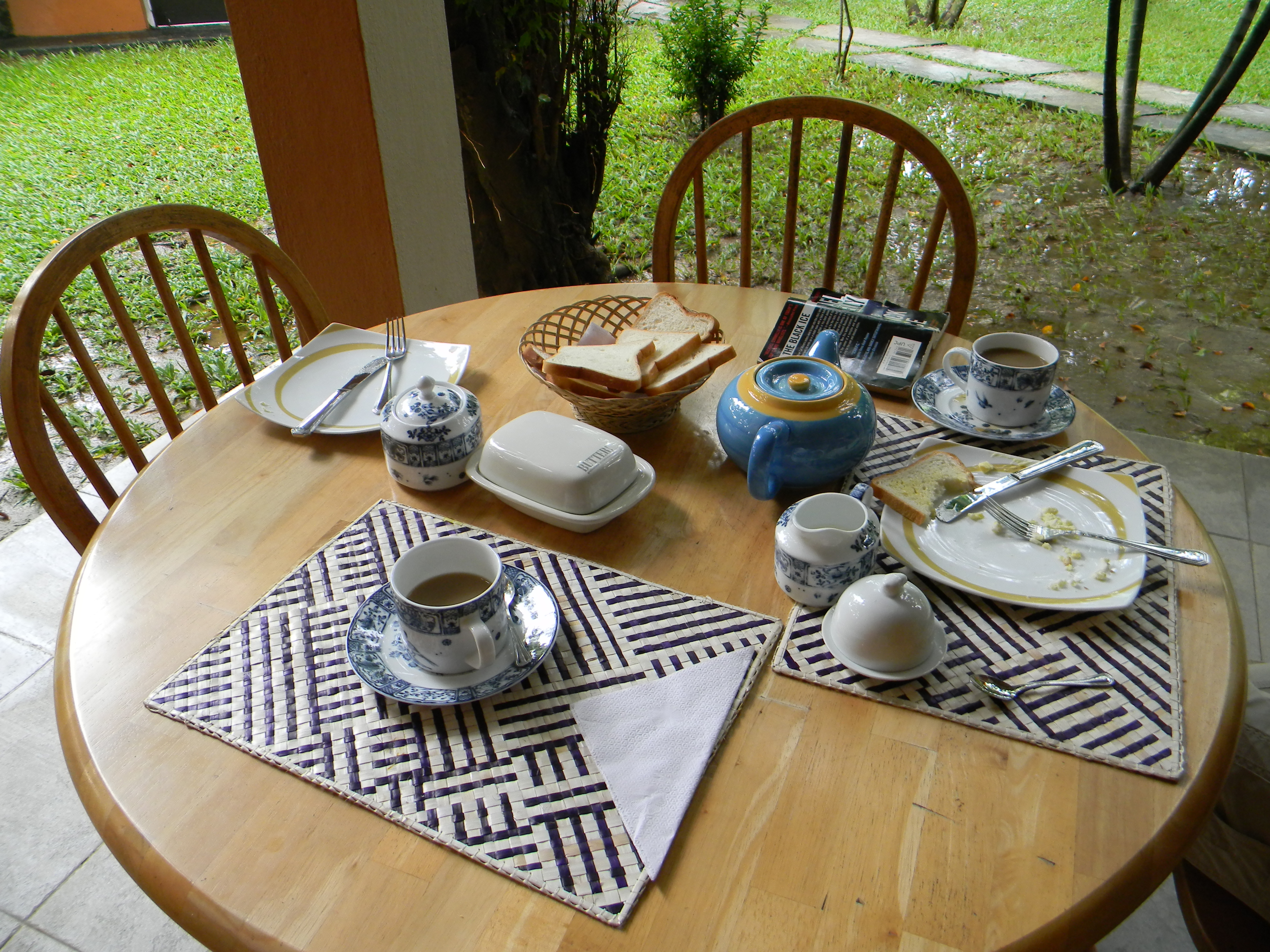
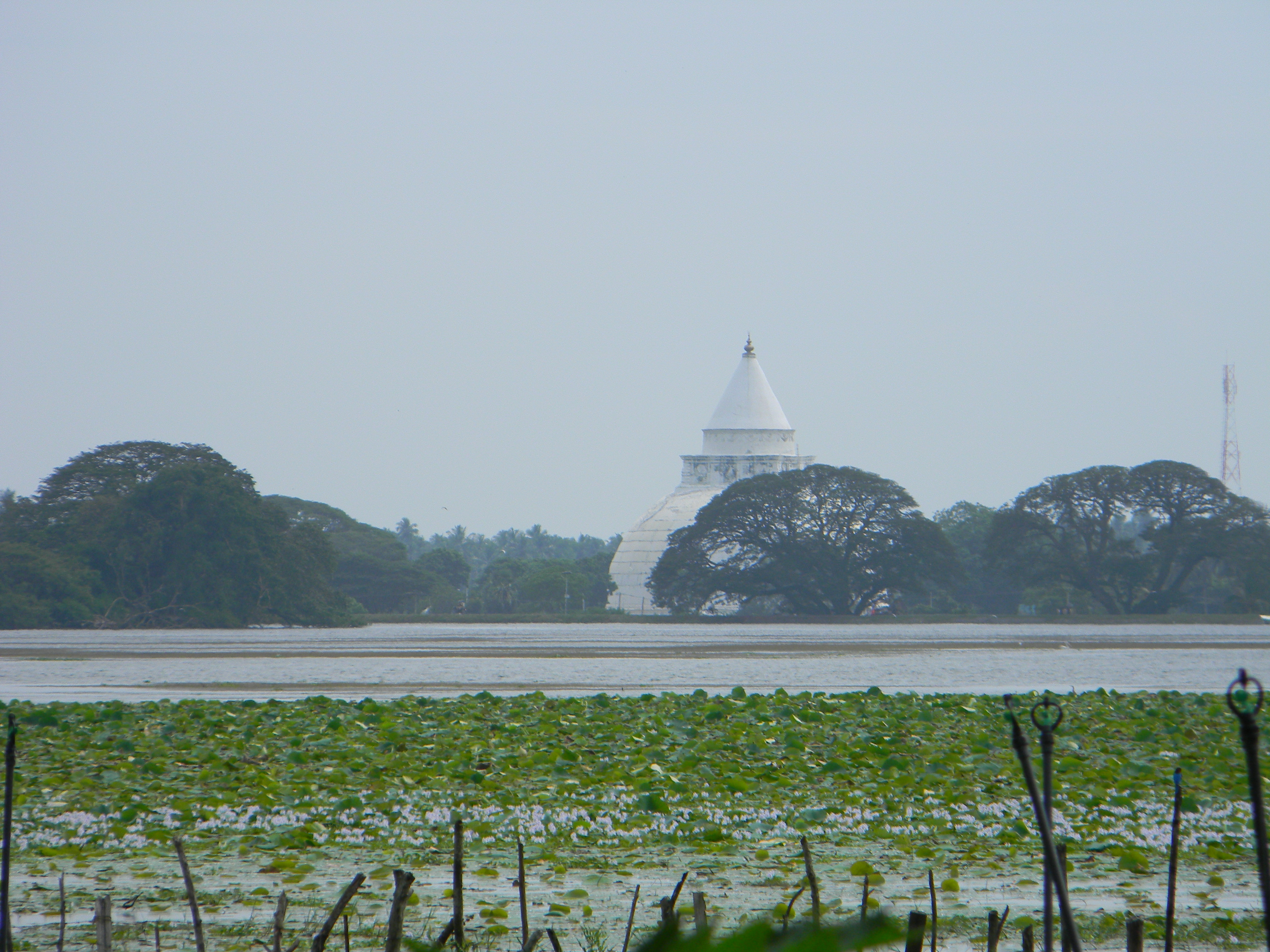
My Village Guest House is a funky little place tucked away on the outskirts of Tissa overlooking the Bird Park. Its owner has designed something unique and very restful, and we had a nice breakfast on the patio outside our room and then I went out looking for a tuk. On the way I met a young Singhalese boy with who ran out from his yard and greeted me shyly hugging an English primer to his small chest. I asked him if he could read for me and traced the words with my fingers. It didn’t take me long to see that he was having trouble with his past tense endings. As any ESL teacher will tell you ‘ed’ only says ‘ed’ when it follows ‘d’ and ‘t’. For most other consonants it says ‘d’, except for ‘k’ and ‘p’ when it says ‘t’. A lot of English teachers over here don’t know that (and a host of other small hiccups) and improperly educate their students, who then end up in our program struggling with their English by the time they get to our program.

This young lad was a quick study and so had it right without much repeating. Of course his teacher will beat it out of him on Monday, but he will still remember the right way and use it someday. He gave me a wide happy grin for my efforts and I felt well paid. Those who do not teach and think that this profession has something to do with lording it over others must have met some nasty teachers on their way. Or maybe they were nasty students and never understood that others were trying to help them. There are some people who simply cannot humble themselves long enough to take something from someone else. It is much easier to paint all teachers black than admit their stubborn sense of god-given superiority has hindered their ability to learn. But for those of us who have been blessed with this gift, the learner’s gasp of delight in recognition of something they had struggled with and now understood, and their gift of a smile of appreciation is worth all the gold the rich man in his greed and ignorance strives to accumulate.

My next contact was with a tuk-tuk owner, or more specifically his wife. His tuk was parked outside his house, which also served as the local grocery store. I asked if the owner of the tuk could give us a ride to the bus depot and she said she would call him. Her daughter immediately protested – in voluble Singhalese! I don’t speak the language, but I did read the tone. She was dressed very nicely, obviously on her way out, and her father, who then showed up, had obviously promised her a ride. “Yes, yes, I will take you to the bus depot,” he said. “No, no, you will not,” I replied, “your daughter is waiting for you to take her to school, and that is more important.”
“It is not school she is going to, but church.” And then in case I didn’t understand he added Hallelujah! Correcting myself – it is hard to keep track of the days of the week when you are travelling – I replied, “Well that is even more reason for you to give her a ride, and I will not get in your tuk.” I shook his hand and waved a greeting at the woman and her daughter who were both giving me big smiles. A short walk down the road brought me to the dam where many tuks were being given their morning bath. I flagged one, caught a ride back to the guest house and loaded up the luggage. Then we were on our way to the bus depot.

The station was relatively clean and orderly, and there was a bus to Tangalla just loading. We got on, found an empty seat and settled in. The fare cost $1.50 for both of us and took just under three hours. The roads were pretty good for the most part, but there is a lot of road reconstruction going on in the country right now, so patches of it can be pretty rugged. We never felt hassled and we didn’t feel unsafe. The hardest thing we had to endure was three hours without a rest stop. At our age that is trial enough! We caught a tuk in Tangalla to the resort and got ourselves checked in and were on the beach by 1 pm.

Paradise Palms Cabanas is a nice little resort, with 15 to 20 little cabanas scattered over the property. Only one has an unimpeded view of the beach, but none are more than 100 paces away. As I am blogging this I can hear the sounds of the waves and the music of Bob Marley drifting in from the beach. We read and rode the waves all afternoon, ate some fresh lobster out of the sea – Pam’s first – and spent some part of the evening checking our email and uploading previous blogs.
Three of those emails are of special concern. Thomas Froese, a long time friend and missionary/journalist in Uganda has been ill with malaria. Although he is one the mend now, he would appreciate the prayers of those who know him. Joannie Wiley, wife of Terry, serving the Lord in Pakistan is also ill with malaria, but hers is cerebral and she has been delirious for many days now. With the ongoing relief work from the devastating floods that Terry has been spearheading in his area and the refusal to grant visa to much needed coworkers, Terry is feeling more than a little overwhelmed. He certainly could use your prayers at the moment, and Joannie too that there will not be any ongoing damage. Dave Wright is also facing some difficulty with the young church he has founded among the Mengen people in Papua New Guinea. There has been both illness and death among the believers who in their naïve faith thought that Christ would heal them of all those diseases. Dave is struggling to get Romans translated and ready for teaching, as his little flock are being attacked and need spiritual meat for their souls.

Pam and I are “wondering where the lions are.” We go on our merry little way, enjoying God’s rich blessing and others who like us are serving in foreign places seem to get nothing but challenge while we sit on the beach. Perhaps our challenge is ahead for us this year. If so, may the Lord find us ready to bear any burden, and do whatever it takes to see His love, truth and healing power bring comfort to those who have suffered for so long under war, poverty and disease in this part of the world. So then maybe you should pray for us as well, that we would be ready for the challenge when it comes. A holiday is nice, and even the Lord called His disciples aside to rest. But there is much work left to be done, and we want to stand with our friends who are putting much on the line to do their share of good while it is still day.

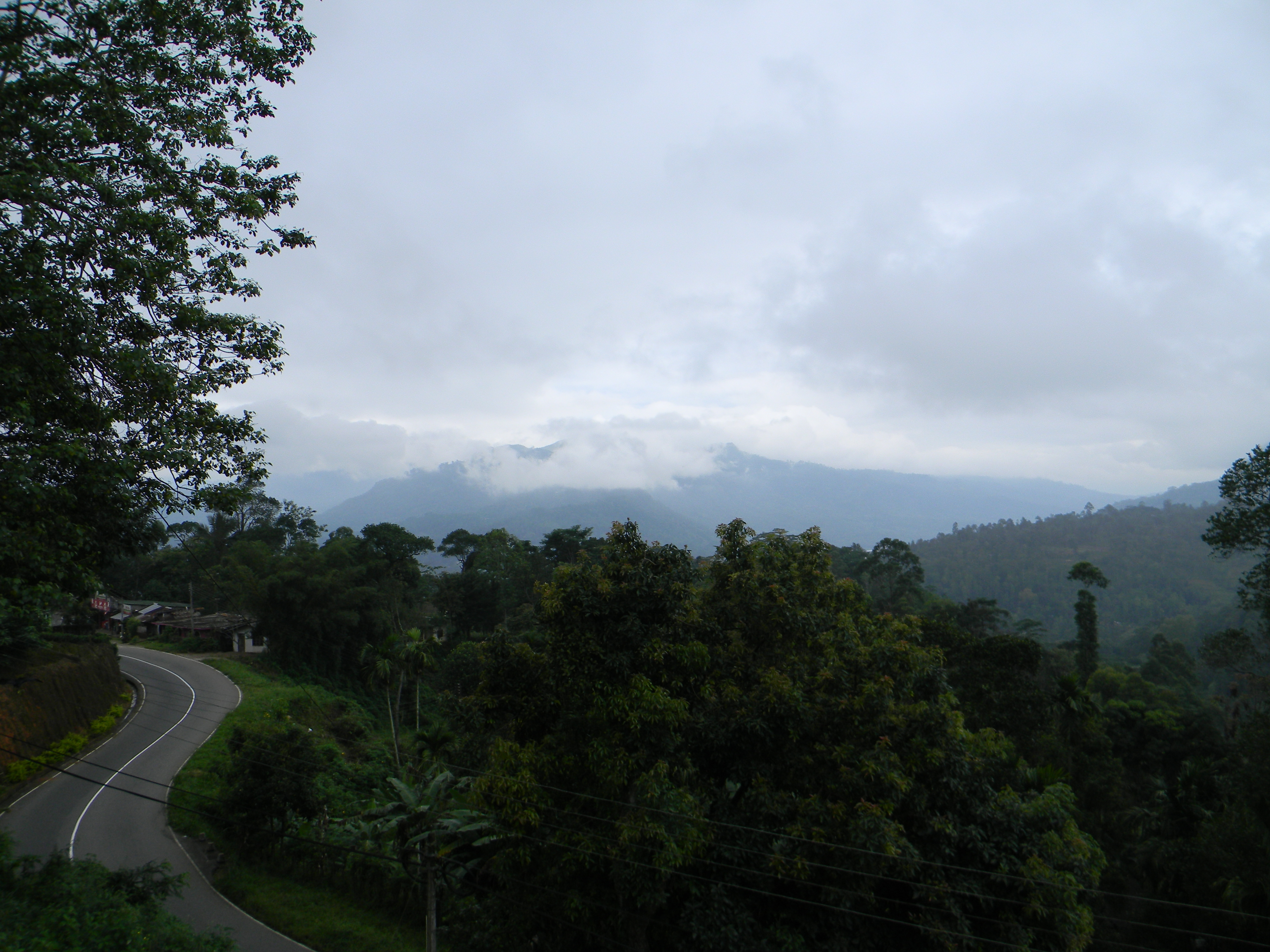
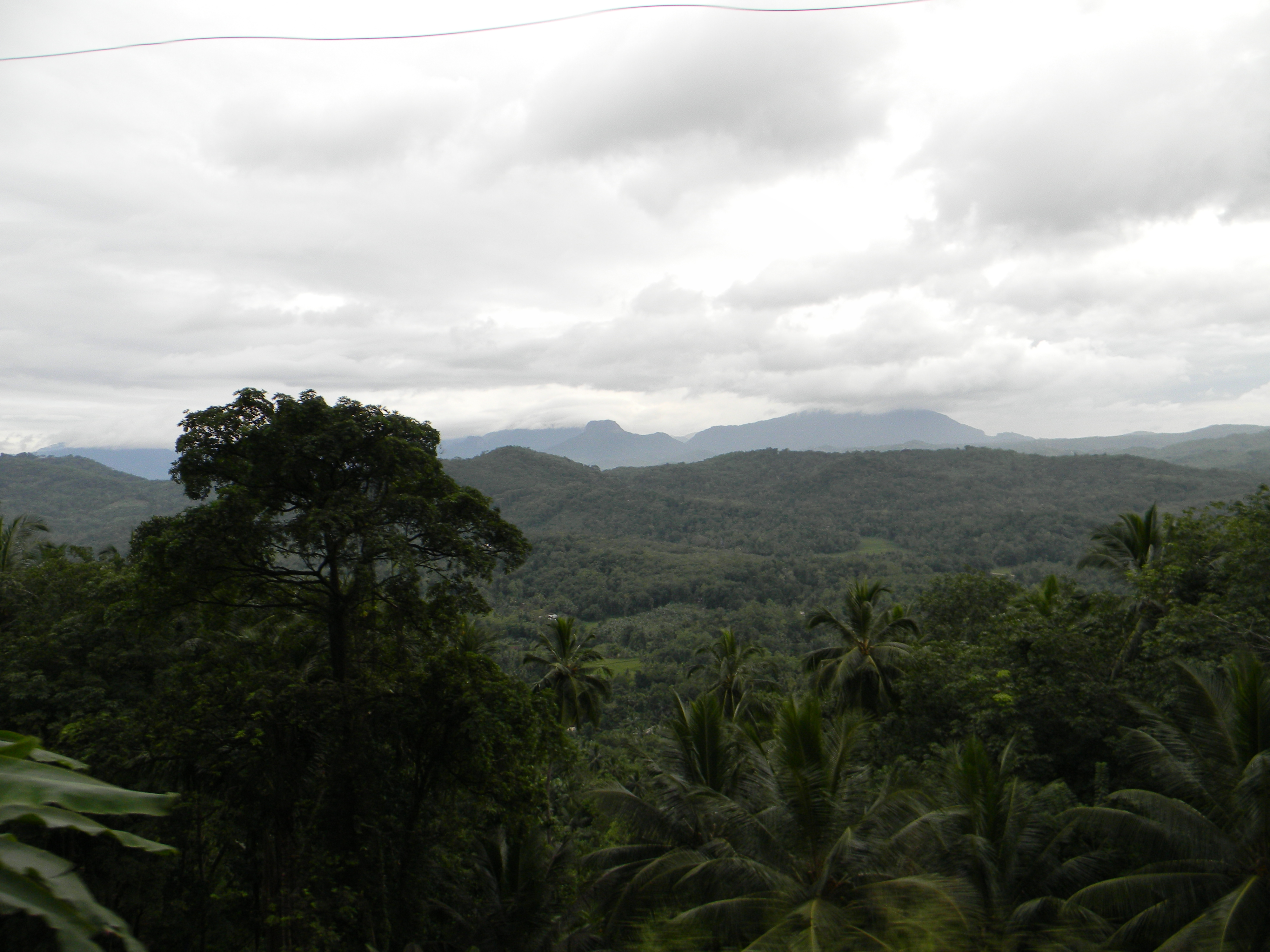
We are sitting here this morning in our jammies watching the sun come up, and praising God for the beauty of His creation. Sights such as the view out our window are part of the treasure of a lifetime of travel. This particular view is right up there with the Cape Breton coastline and the view from the balcony at Palau Redang. We feel fortunate to be here, even if we had to get up at 5:45 to see the sun rise on Adam’s Peak. That’s it over there on the right. You can’t see up to the top in this view, but if you listen closely perhaps you can hear the spectacular waterfall cascading down its slopes.

When the kitchen opened we ordered coffee, showered and warmed up in the window overlooking the valley. After a passable breakfast we hit the road, stopping as little as possible as we wanted to hit Tissa before noon. We overshot our mark and got there by 11, paid and tipped the driver and checked into to a very nice little guesthouse on the side of Tissa Lake. Not knowing quite how to set about exploring the town, we settled on the guest bicycles, and started down the dirt track that wound around the lake. Along the way we saw all kinds of waterfowl .

About half-way around the lake we were hailed by a friendly fellow who insisted we check out the view from his place. We acceded (sometimes it pays to be gracious, as you will shortly see) and allowed him to pick some papaya and blend it into a juice for us. While we sat sipping and watching the waterfowl, a Safari Jeep pulled into the compound to drop of a load of smiling tourists. Now we knew that Yala National Park was nearby, and had in fact chosen Tissa as a destination for that reason. We knew too that Yala was very highly rated, both for its diversity of wildlife and the management of its plants and animals. We also knew, because we had checked before we left Malaysia, that it was prohibitively expensive to do a safari there. But since the Jeep was right there, and the guy was right there, we had to ask. To our delight it was only going to be 5500 rupees, about $50 Canadian, for both of us and wouldn’t you know it the next five hour safari started in about twenty minutes! We were in!

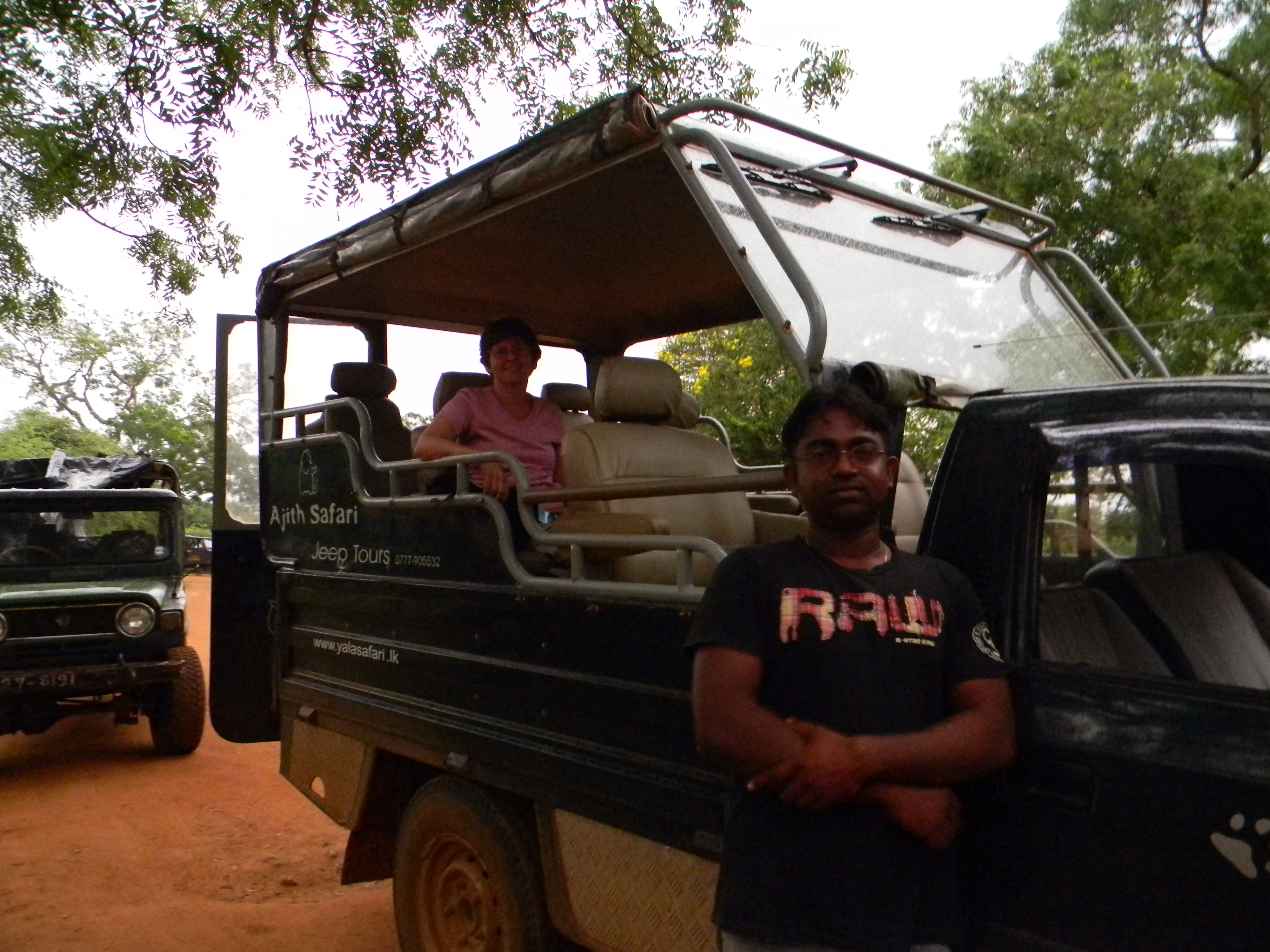
We quickly scooted back to the guesthouse and loaded up on water and bug repellant, made arrangements for supper and packed our cameras and the binoculars. I always travel with binoculars, but today I would be wishing I had two pair, for it was hard to share when the sights were so engrossing. Right on time the driver showed up, and we drove through some very pleasant scenery for about an hour to get to the park entrance. The park wanted another $50 bucks and our passports, so if you are going – and if you come to Sri Lanka you should – then be prepared. We haven’t seen any room safes on this trip, so we have carried our passports in a waist pouch since we landed. Lucky for us, as no one had told us they would be needed. We also took on a ‘tracker’, who turned out to be worth his weight in gold.

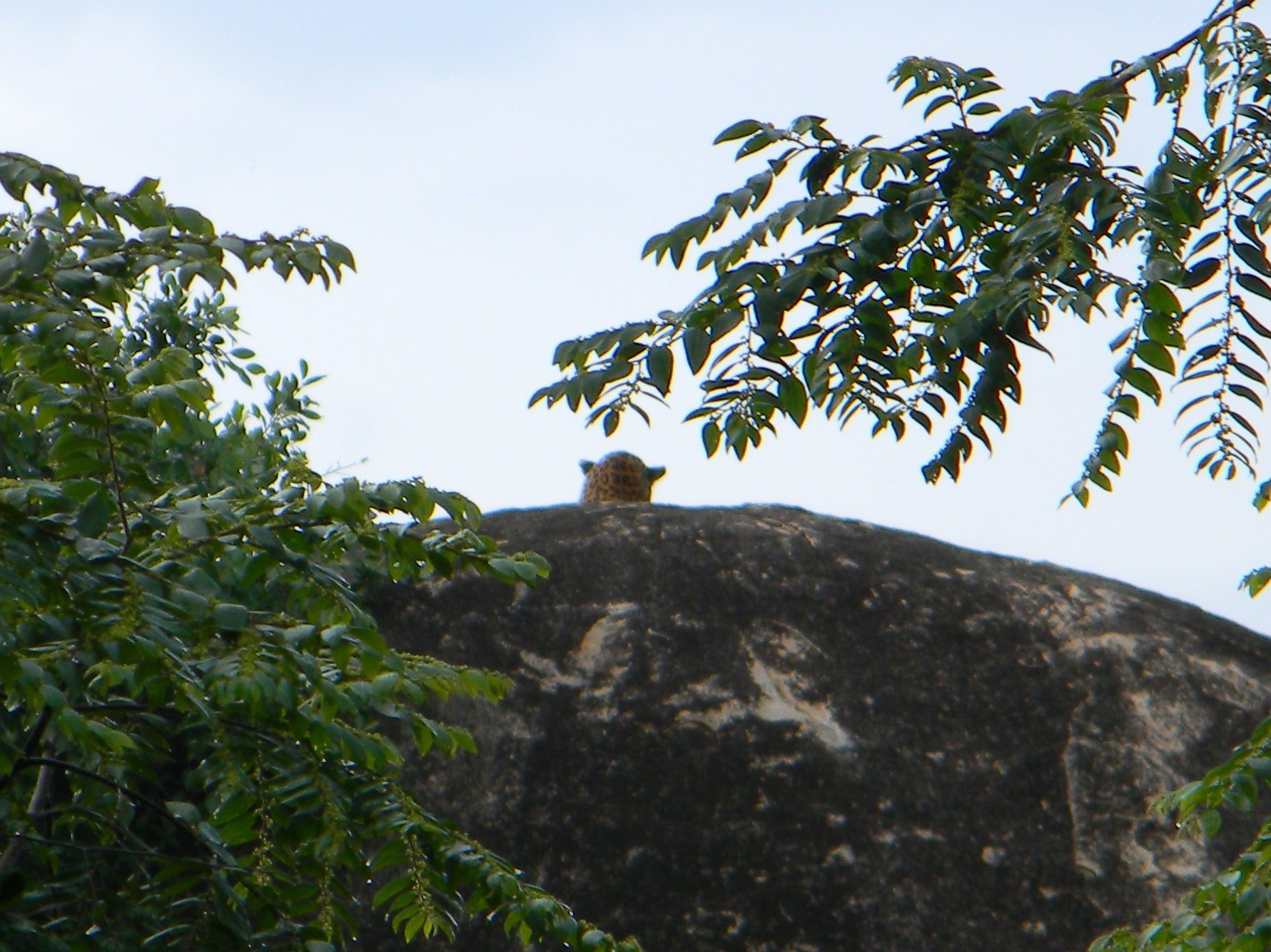
Pam spotted our first sight within minutes, a large bull elephant grazing on some trees right beside the road. Our tracker figured him to be about 40; he had no tusks, unlike his African counterparts. His appearance seemed to set the tone for the next three hours; one sighting after another in rapid succession. The highlight was undoubtedly the large Sri Lankan leopard, a huge male with golden fur and white spots resplendent on his rock outcropping. After that we saw sambar, which are elk-sized deer, spotted deer, golden jackal, wild pig, all manner of water buffalo, three more elephants, a black-napped hare, black-faced hanuman languor with their grey fur blending perfectly into the grey bark of the tree, and a lone crocodile patiently tracking its prey through the water lilies.

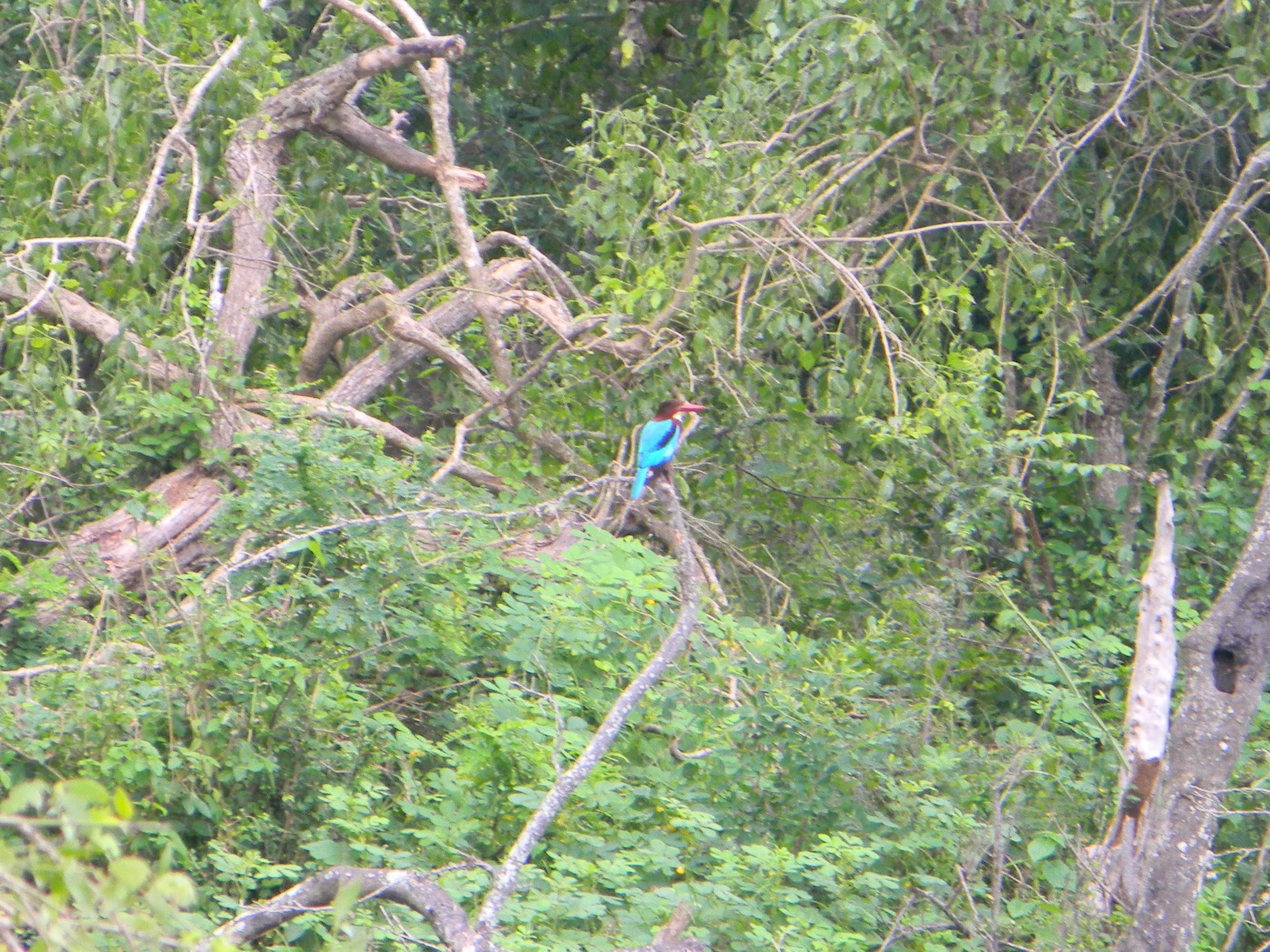
With over two hundred species, the birds in the park were almost too numerous to catalogue. There were snipes and shrikes, egrets and spoonbills, stilts, stints, crakes and cranes. We saw jacanas and hoopoes, bee-eaters and flycatchers, both very lovely birds by the way, peacocks and pelicans, whistling teals and night herons. We saw an Indian roller, a beautiful bird with blue feathers a green back and an orange breast, and an Indian darter, much like a cormorant, but more colourful. We saw the national bird of Sri Lanka, the Ceylon spurfowl, a shy rooster-like bird and lots of white ibis, with their black curved bills. We saw a magnificent crested hawk-eagle, and the flamingo-like painted stork. My personal favourite was the totally inappropriately named common kingfisher. He was a gorgeous fellow with his electric blue back and wings and pumpkin orange breast. I don’t think I named them all, but you surely get the picture; it was a banquet for the eyes!

Our last view of the park was the massive back of the Sri Lankan leopard as we drove reluctantly away to make the 6 o’clock closure time. The guidebook will tell you that this is Asia’s premier wildlife preserve. What it won’t tell you is what kind of effect that has on you. After dropping and profusely thanking our trekker whose eagle eyes has spotted so much wildlife, we drove the hour back to the guesthouse in semi-stunned silence. We had another lovely meal and went to bed exhausted not from the effort, but from processing so much sensory information in such a short period of time. It was just fourteen hours from the dizzying heights of Adams Peak to the almost spiritual experience of Yala National Park. Our guest house neighbours summed it up by saying Sri Lanka is like a shrink-wrapped India. Everything you can find on the mainland is here, it is just condensed. It can be a little overwhelming.

Thursday morning we woke early in Kandy to get a start of what promised to be a long day’s drive. The room was cold, despite the extra blanket, and we both took a pass on the shower. Sometimes you gotta do what you gotta do. We packed up and checked our mail in time to find Jon and Nic negotiating with a buyer for their house. It didn’t pan out, but they are clearly not going to be stampeded into giving their house away, and we applaud them for that. We said our goodbyes to Sirath, the very sweet guesthouse owner, and loaded our stuff into our driver’s car. Ominously it was a Proton Wira, a Malaysian product notorious for its poor quality.

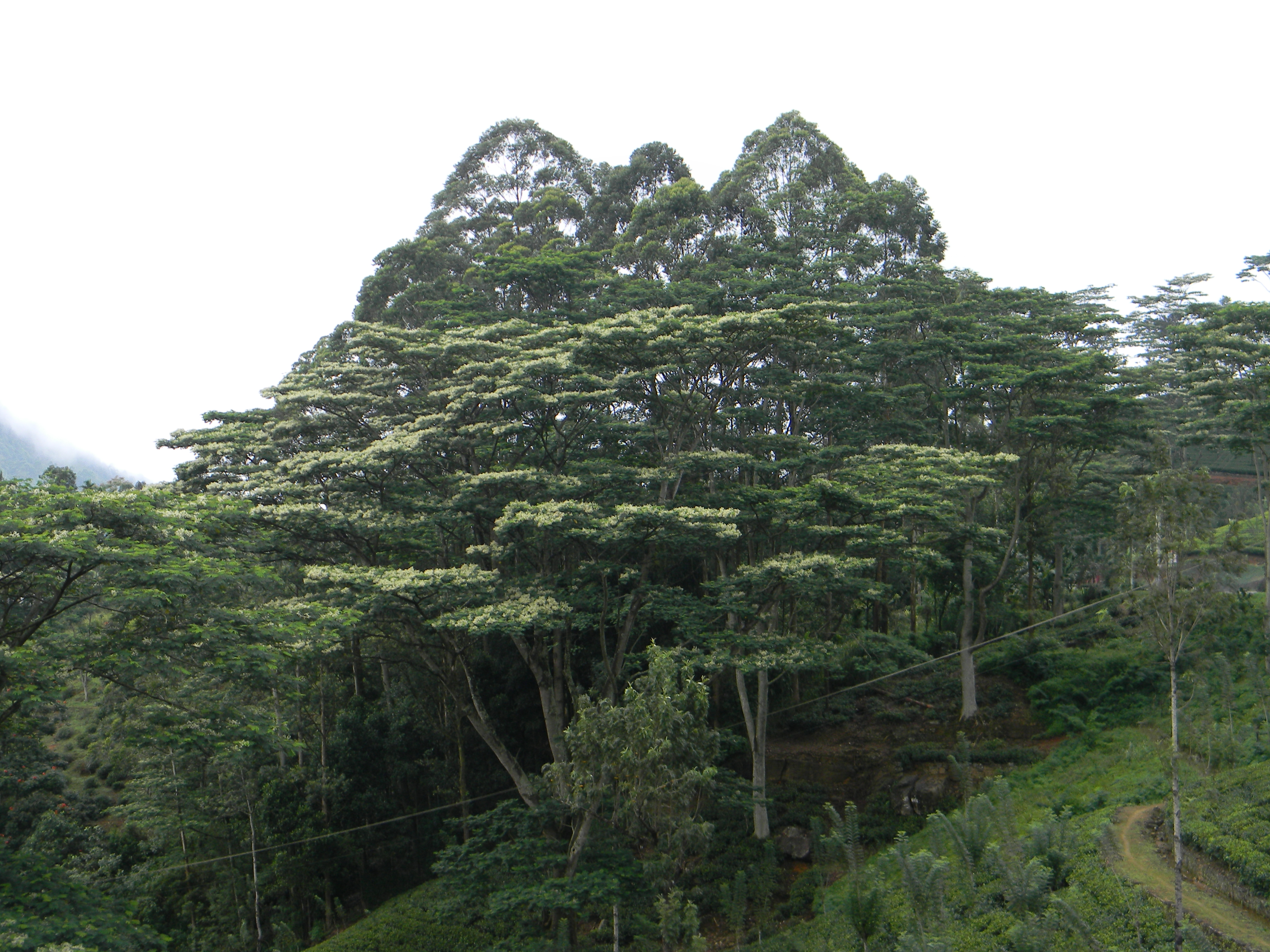
The ride out of town was uneventful, and the traffic sparse. The talk about Sri Lanka’s poor and dangerous roads seemed hysterical and overwrought; a product of its proximity to the pampered West, rather than Asian realities. We wound our way ever higher into the hills, now dotted with tea plantations and cut by waterfalls. We stopped for pictures beside hills carpeted with manicured rows of emerald green tea, and did a brief tour of a tea factory, notable for its antique machines, still functioning rhythmically.

Our destination for lunch was Nuwara Elia, a British colonial town high in the hills. The road was now becoming quite steep, with multiple switchbacks and precipitous drops. It was as rugged or more so than Luzon, the northern island of the Philippines. Leveling off we came into town, some two kilometers above sea level and had the driver pull in at the Grand Hotel, a lovely old monument to the finer qualities of this country’s genteel British heritage. We bought some children’s books from a group of business students to give them an opportunity to practice their English, and then promptly gave them away to the first child we met. Despite its regal elegance, lunch would have been a mere 10 dollars for both of us, served on the finest china with heavy silver cutlery.

But I had promised the driver that he could chose us a place for lunch, knowing full well that by doing so he would get a kickback for bringing his clients. Sometimes this works, this time it did not. The place he took us to was shabby and deserted, the curry was mediocre, and we got hosed 20 bucks for a meal we had bought in town the previous night for $4. To add insult to injury the driver ignored my request to drive into town to have a look around and get some money out, and immediately got back on the road again, which was under construction for the next thirty miles, making it impossible to turn around. The fellow clearly had in mind to drop us at his earliest convenience; I was becoming more than a trifle miffed.

I insisted that he stop at the first possible opportunity, Bandarella, and got out to find an ATM. What we found was a nice German couple outside the ATM with whom we struck up a conversation. Finding they were also headed to Ella, we offered them a lift – there has to be some advantage of having a driver! – and ended up having a lovely conversation at a little café in Ella while the driver gave me sullen and angry looks at a nearby table. She was a researcher at an environmental institute in Berlin, studying the effects of global warming. He was waiting to hear if his application for doctoral thesis was going to be accepted. We exchanged travel tips and parted company.

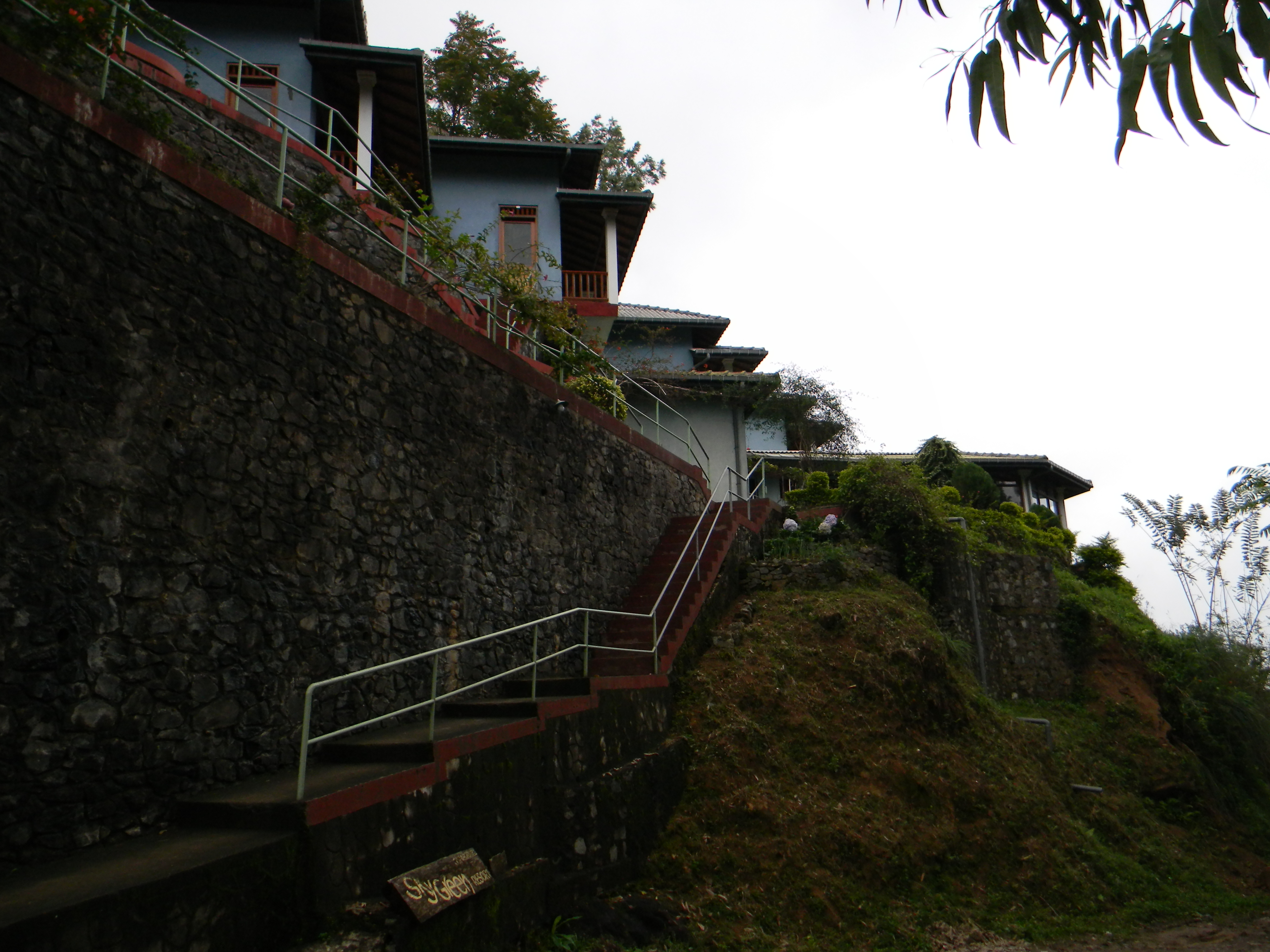
The final leg to the hotel was not for the fainthearted. Skyview Hotel was in fact SkyGreen Hotel, and it took some finding. The fellow who booked it for us assured us that it had the best view in Ella, and he wasn’t kidding; but getting to the best view in town meant climbing a road fit for goats. We opted to walk the last 100 meters rather than trust our lives to our driver’s rickety Waja. But the climb was worth it as we arrived in our room and opened our window to a stunning view of the hills. Really, the pictures do not do it justice. We had a lovely supper with an unimaginative couple who had been going to the same resort for twenty years and thought this time they would try something new. They got awfully lucky with the second thing they tried!

We had originally planned to stay in Kandy for three nights and make it our base for exploring what in Sri Lanka is called the Golden Triangle, a roughly triangular area of cultural and historical sites that lie north of here. However the haul from Colombo to Kandy was enough to convince us that the one day we had allowed ourselves to travel the 300 kilometers to Tissa was not going to be enough. So our first priority in the morning was to check the train and bus routes south. It was worse than we feared. The buses made the transportation in Cambodia look advanced – no mean feat! – and the train would simply issue as many tickets as people showed up; and continue to do so for the fourteen stops it was going to make on the next six hours to Ella. Even then we would only be halfway to our destination. We loved the train ride from Colombo, but clearly it was not going to work on the next leg.

So we bit the bullet and hired a driver. The standard rate here is $70 bucks a day, which includes his gas and accommodation. We had to cover two days worth, as Ella is in the middle of nowhere, and we got accommodation for ourselves in the package at a place called Skyview Hotel. On a lot of this stuff you have to rely on your gut instinct regarding the guy who is selling you the package. Be friendly, try not to look or act too gullible, and always break it down one piece at a time. We try to book as much of this stuff online in advance, but sometimes you have to adapt on the fly. It always costs more to correct your mistakes, and we should have researched the roads more thoroughly.

That settled we set off to explore Kandy. We started in the Queen’s Hotel, the doughty old lady of a bygone era, with its gleaming wooden patina of floorboards and staircases. Then we moved on to the flower market beside the temple, awash in its vibrant lotus and lily colours and jasmine scents. We strolled the grounds of the temple dedicated to one of Buddha’s teeth – a highly venerated shrine in this predominantly Buddhist country, but opted not to part with the twenty bucks they wanted from us to explore inside. A short walk further down the lake brought us to the cultural centre where we bought tickets to the traditional dance show for the evening.

Seeing no advantage in going further around the lake, we caught a three-wheeler back into town to tour the local markets. It was pretty grungy stuff, but fascinating all the same. Handicrafts were a rarity, but fabrics were beautiful, abundant and cheap. As in Bangladesh you could get your clothing made from the fabric on the spot by a willing tailor on a foot-pedal Singer. Once again we encountered the welcoming smiles and approving nods at being some of the few white faces in these markets for quite some time. We stopped for a late lunch at a local curry house where we both ate our fill for five bucks. Then it was off to a tea shop to work on some documents for Pam’s workshop in Phnom Penh next month, and then took a leisurely stroll back to the cultural center.

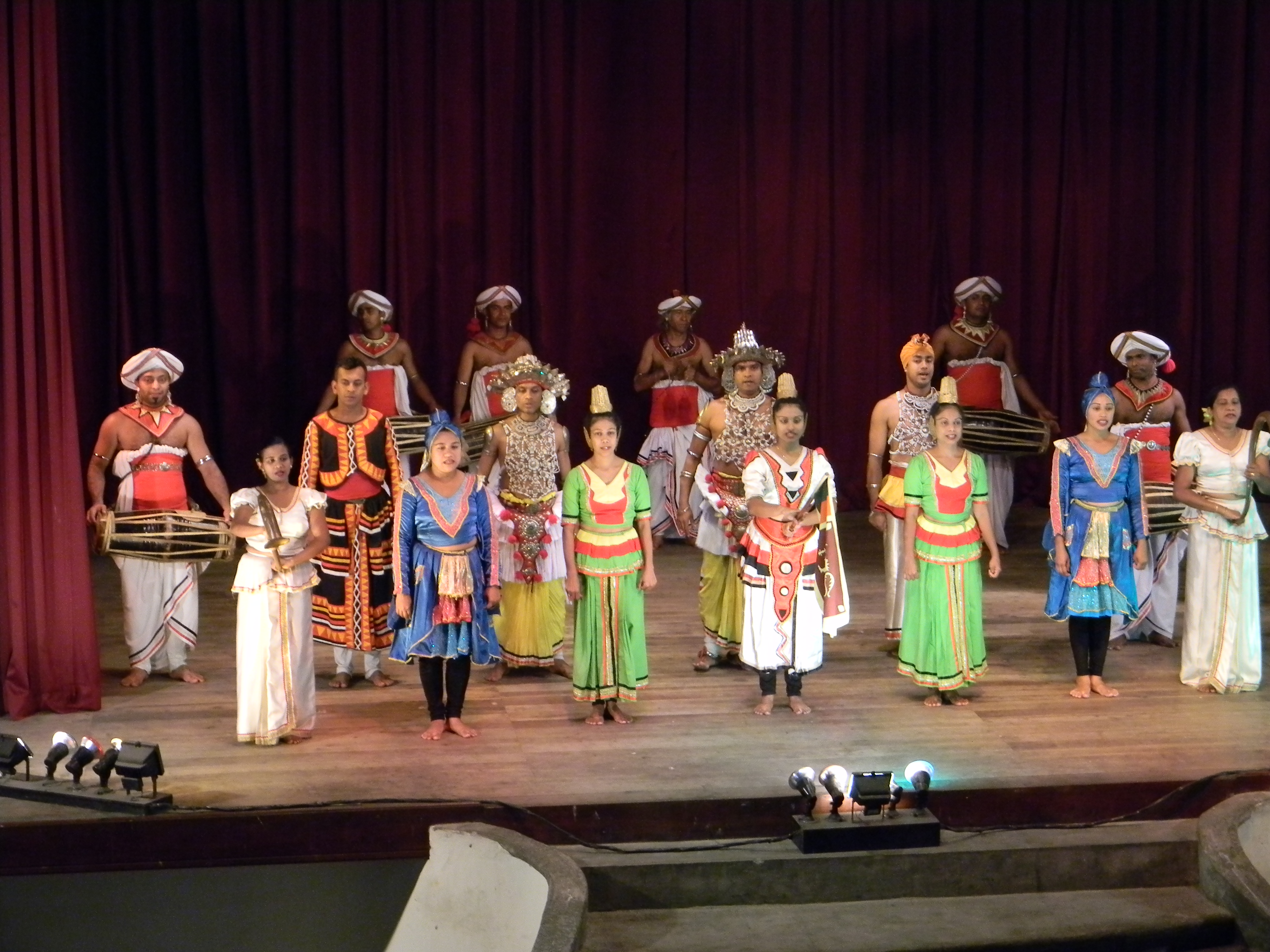
The place was dark, and needed paint, some handrails on the staircase and decent chairs, but it was serviceable and our seats afforded an excellent view. The dance steps were complex and creative, but clearly this was an artform in recovery. The dancers were often unsure of their movements and rudimentary in skill compared to their counterparts in Laos, Malaysia or Bali. But the hall was packed and the audience receptive, and certainly with time stronger dancers and teachers will emerge to develop what has had to be set aside for almost an entire generation. The finale was a fire dance, culminating in walking on a bed of coals. I have seen this on travelogues as often as you have, but I had never witnessed it in person. These guys didn’t walk, they ambled, they strolled, they showed no evidence of pain or even discomfort. And these coals were not only hot; they were constantly fanned to flame!

Not yet ready to call it a night, and not willing to endure the crowds massing back at the Tooth Temple for the evening display, we caught a Tuk to the Swiss Hotel to sit in the lounge with a quiet drink. Seeing a single woman beginning to play solitaire at a nearby table, Pam invited her to join us. It turns out she wasn’t single, but waiting for her husband, Dave, who turned out to be a most interesting character. A graphic artist by training, he had led a t-shirt campaign to save a tract of virgin forest from being logged near Nelson, B.C. and had not only succeeded, but had managed to get it designated as provincial parkland. Although relatively small in size, the new park cut off the only access to logging for a huge tract of land further inland, which was then sold back to the province by the German consortium that owned it. The guy had ended up saving a massive amount of old growth forest in the heart of British Columbia.

Our little guest house was only a few steps from the hotel, but the roads were dark and wet, and without sidewalks we would be putting ourselves in unnecessary danger. The first three-wheeler stopped for us rather uncertainly – it was pitch dark after all – and he didn’t seem to have a clue about where we wanted to go. We were just going to give up and walk but he insisted on taking us if we showed him the way. We got in and I gave him some directions, mumbling under my breath about tuk-tuk drivers that didn’t know their way around town. Then Pam noticed, and commented, on the bags of goods he was carrying. “Yes, yes,” he explained, “I am a business man, a graduate of a local college and I am just returning home from work. I saw you walking in dangerous part of town and just wanted to help you out of trouble.” Chagrined and deeply humbled by my ungracious attitude in the face of such kindness, I offered him more than the ride was worth, but he wouldn’t accept it, taking only a dollar for his troubles, and giving me a beatific smile. Sometimes I am just such an ass I can’t stand it.

This morning we planned to sleep in, but I was up at 6:45 anyway and snuck out to have a cup of tea and watch the waves roll in from the balcony overlooking the sea. I’ve slept in plenty in my life. I haven’t sipped a morning cup of tea reading the Sri Lankan Daily News with the Indian Ocean at my feet that often. Pam joined me for breakfast, and what with the view and the near endless buffet, it was nearly 10:30 before we felt inclined to move on.

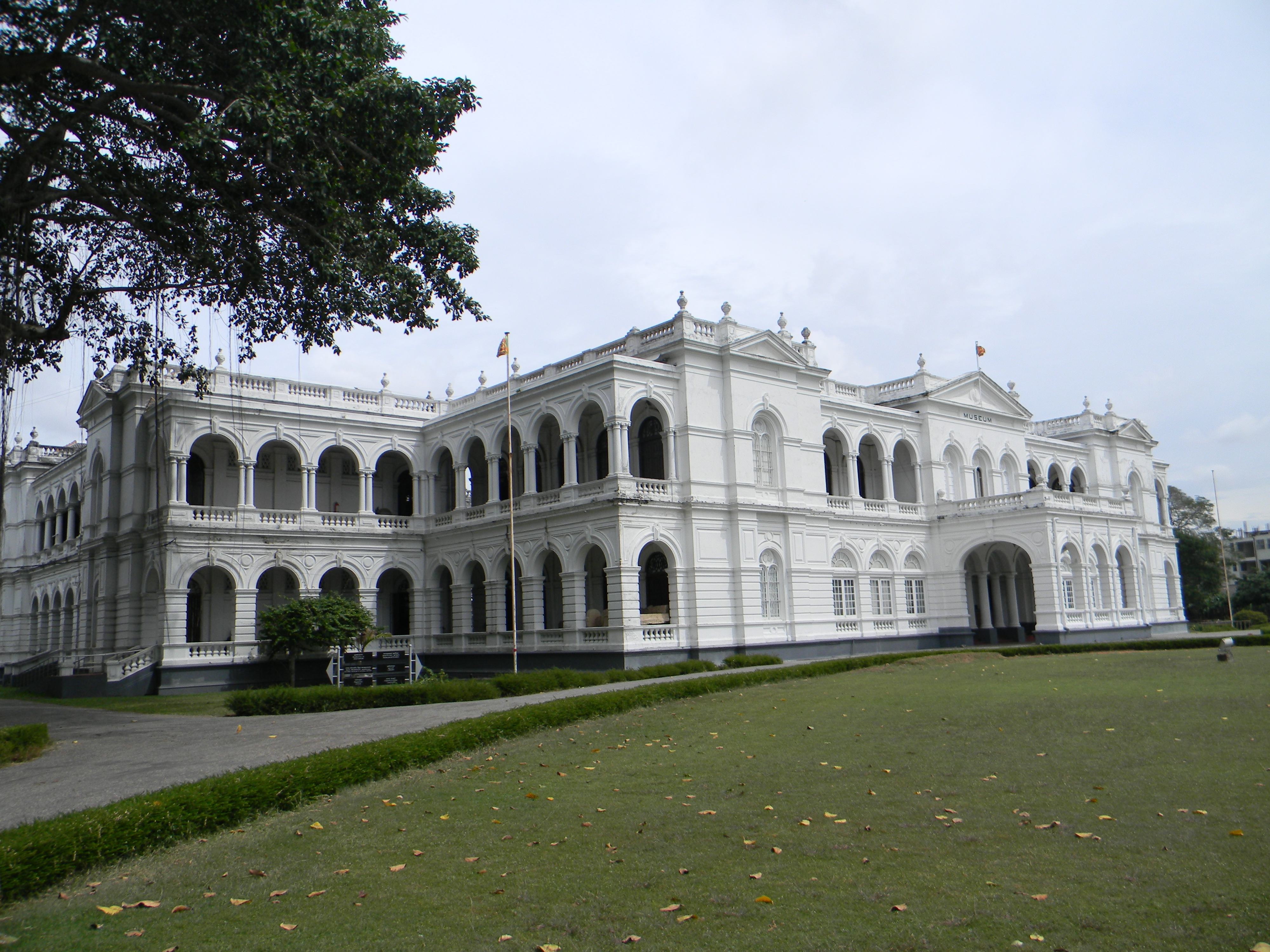
First on the list was the National History Museum, a sprawling colonial structure that once housed the British governor. Now it is stocked with the relics of Sri Lanka’s pre-colonial past, a civilization that spans fifteen centuries and is filled with the peaceful development of trade and agriculture. Much emphasis was given to religion, with a particular fondness for female deities that seemed to be unusually well and firmly endowed. Apparently gravity has no effect on celestial physique.

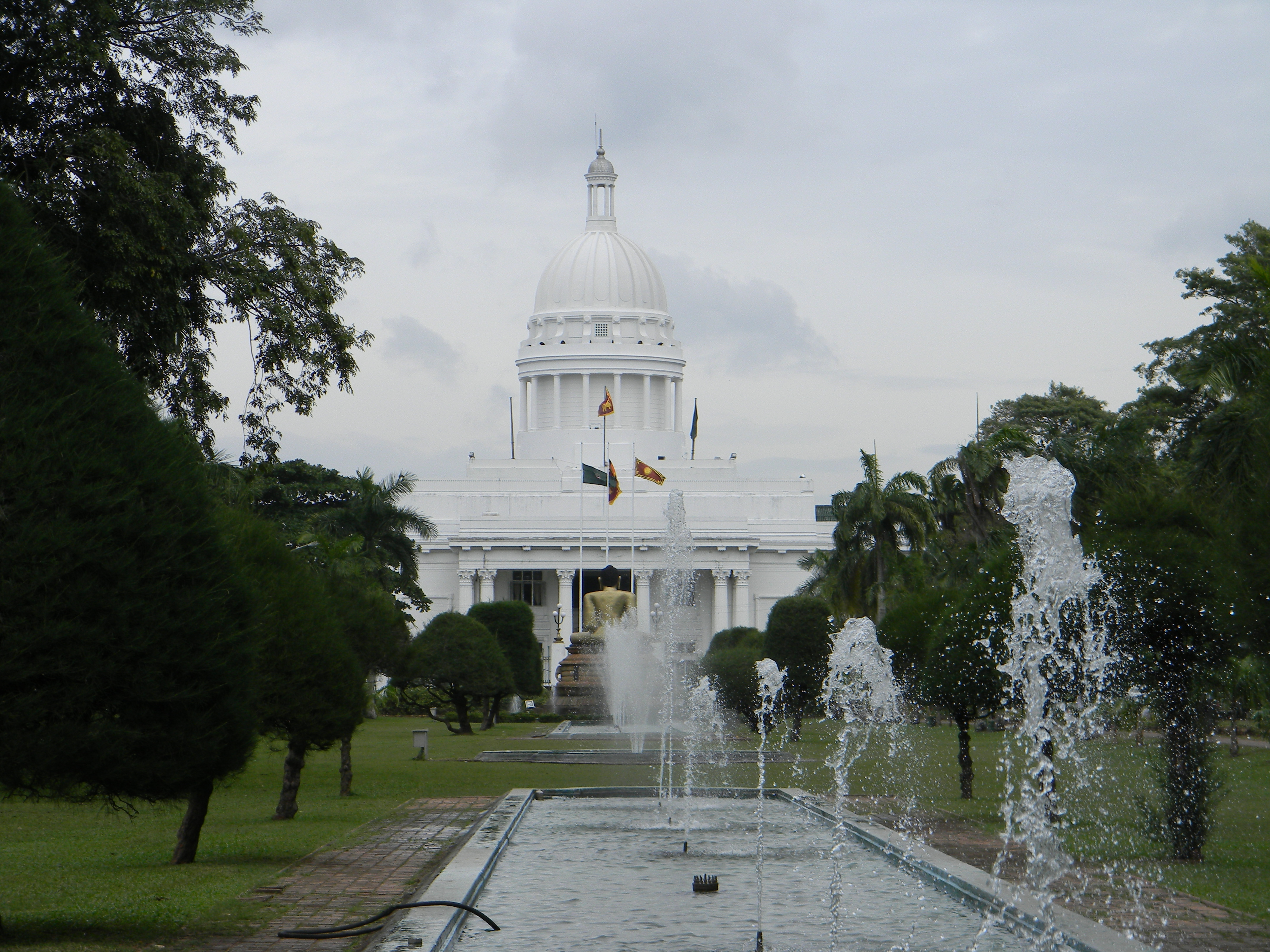
After a good look around we went for a stroll in the neighbouring park that featured numerous couples sporting with their consorts. Apparently the attraction for the female form endures to the present. Both the park and the museum show evidence of the war in the shabby deterioration of façade and grounds. But renovations are underway to restore what obviously was once quite pleasant and attractive. Our presence as tourists was noted and welcomed.

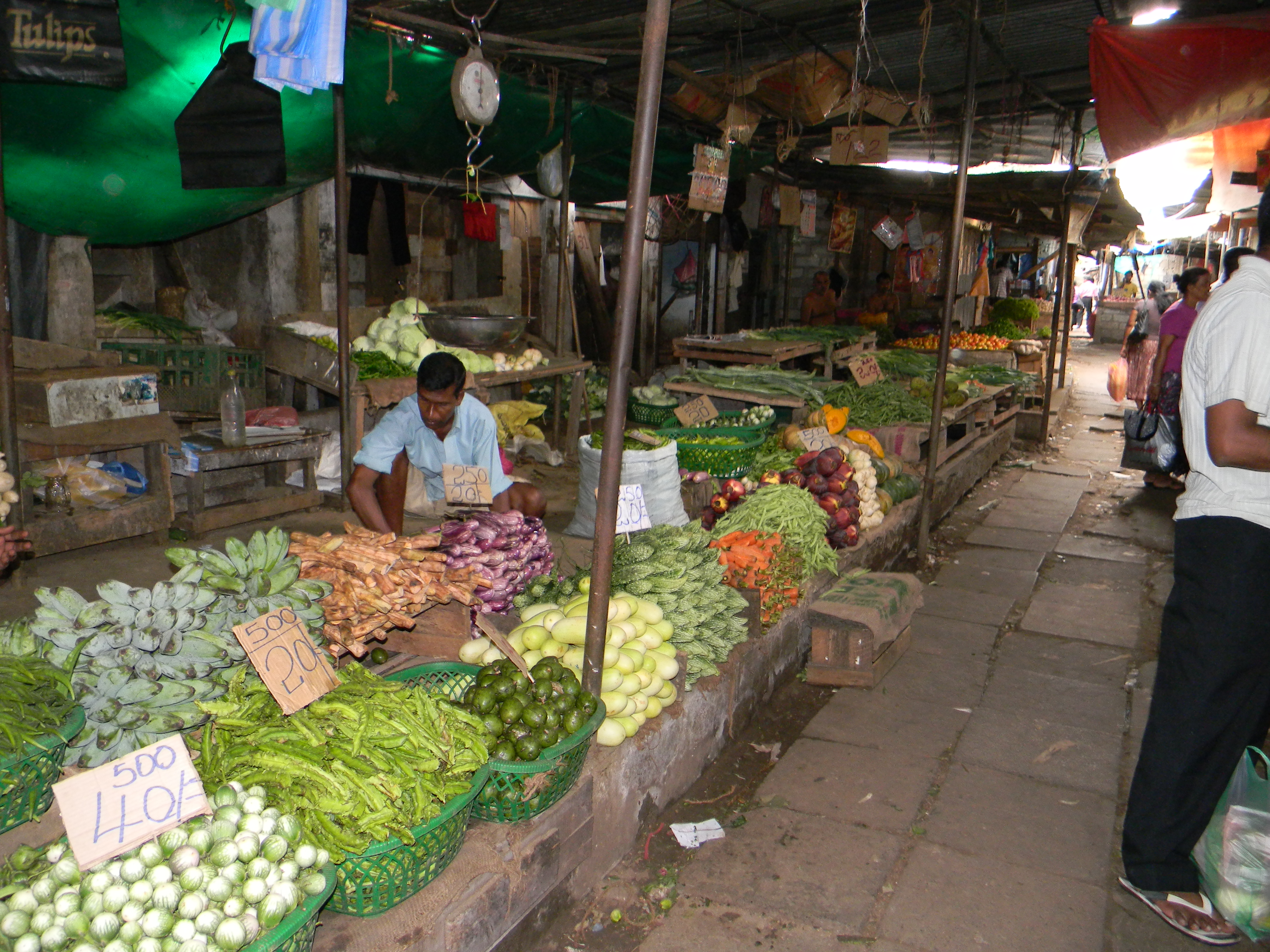
We went on to Pettah Market, a veritable warren of narrow, dank alleys crammed with vegetables and spices. Here we were greeted as curiosities, many simply wanting to say hello and ask where we were from. Clearly tourism is still a novelty in some parts of the city. We progressed to the craft and trinket part of the market where we bought a much needed electrical adaptor for the computer. They use the same three prong arrangement familiar in South-East Asia, but in this part of the world the prongs are all round, unlike the rectangular ones we are used to.

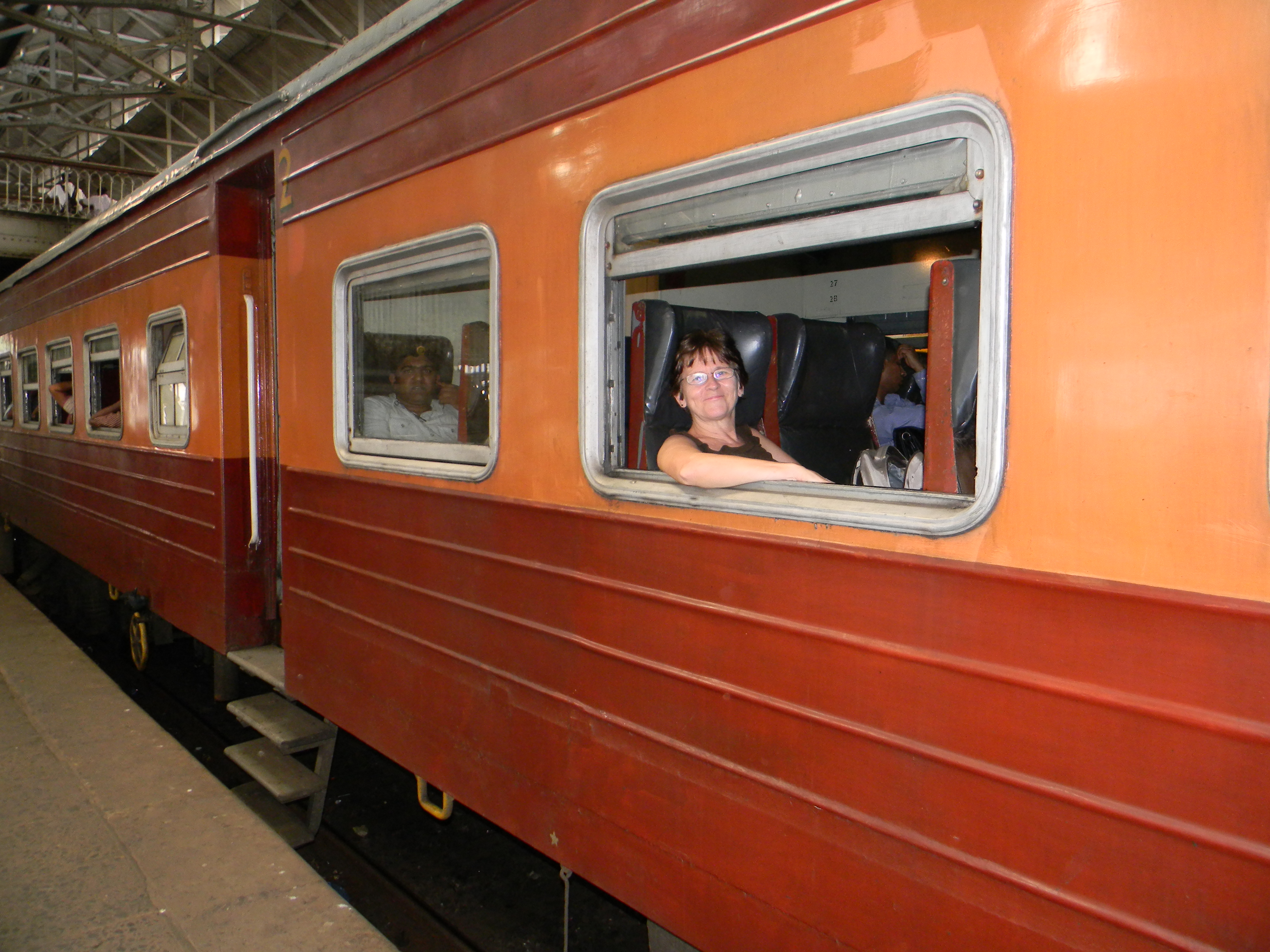
With the rain threatening to turn the dirt pavement into mud, we caught a Baby Taxi back to the hotel where we had parked our luggage. A final goodbye to the ancient hotel greeter, something of an iconic figure in Colombo, and we were on our way to the train station. We had read much about the fabled rail passage to Kandy, and were not disappointed. The train was old and decrepit, but we never doubted its reliability. It pulled its way steadily up the ascending hills, rocking gently past rice paddies of emerald green and hills wreathed in smoky clouds. The views were stunning, terraced slopes and swooping valleys around every corner.

We pulled into Kandy at dusk, and were met by the owner of the lodge where we will stay for the next three days. He and his wife run Freedom Lodge, just on the edge of town. We were too late for dinner at the lodge, but a short Tuk-Tuk ride took us into town for a lovely meal overlooking the main street. We are looking forward to exploring the city in the morning.

After a shaky 3 a.m. start that involved a breakdown on a freeway in the middle of nowhere, we did make it to the airport in plenty of time to catch our flight to Colombo, Sri Lanka. Formerly known as Ceylon, Sri Lanka is a beautiful island in the Indian Ocean just off the southern tip of India. The people are a very lovely blend of Singhalese and Tamil who love their bright colours and spicy foods. Although the locals complain of the traffic and the congestion, it is relatively serene compared the bustle of Kuala Lumpur or the congestion of Bali.

We took ten thousand rupees out of the ATM – sounds excessive unless you know that this is only 100 dollars – and caught a taxi into town, stopping to buy a SIM card for our travel phone on the way. SIMs are relatively expensive here, nine dollars, as the economy has yet to fully recover from 26 years of civil war. The driver was sweet, with excellent English and wonderful credentials, judging from his guest book, but we opted against keeping a driver for the duration. The fifty dollars a day was pretty reasonable, but paying for his accommodation was added expense and hassle. We decided to go ahead with Plan A, which was to take the train to Kandy.

The driver dropped us off at Galle Face Hotel, a building that predates Canadian Confederation by three years (snap quiz!) and was the choice of authors such as Anton Chekov in 1890. It owns a gorgeous piece of real estate overlooking the Indian Ocean, and with its sprawling colonnades and spacious winding staircases is a testimony to the faded elegance of the British Raj in its heyday. Our room is cavernous, with what must be twelve foot ceilings, and the wide wooden plank floor large enough for ballroom dancing.

A quick phone call put us in touch with cousin Ros’ friend Becky who lives just outside of town. She and her daughter Annalee were good enough to meet us at the hotel and take us for a bit of a tour of the city, ending up at a restaurant/craft centre called Barefoot. I was disappointed that the Chicken Tikka Masala was only moderately spicy, as I had read that Sri Lankan curry was famous for its heat. Becky thought the recipe had been tamed for tourists. The fabrics and the art at Barefoot were fabulous, but I rarely buy the crafts and settled for a book on the Buddha to help me to clarify some lessons I am writing for an upcoming workshop. A short hop brought us back to the hotel for a wee kip.

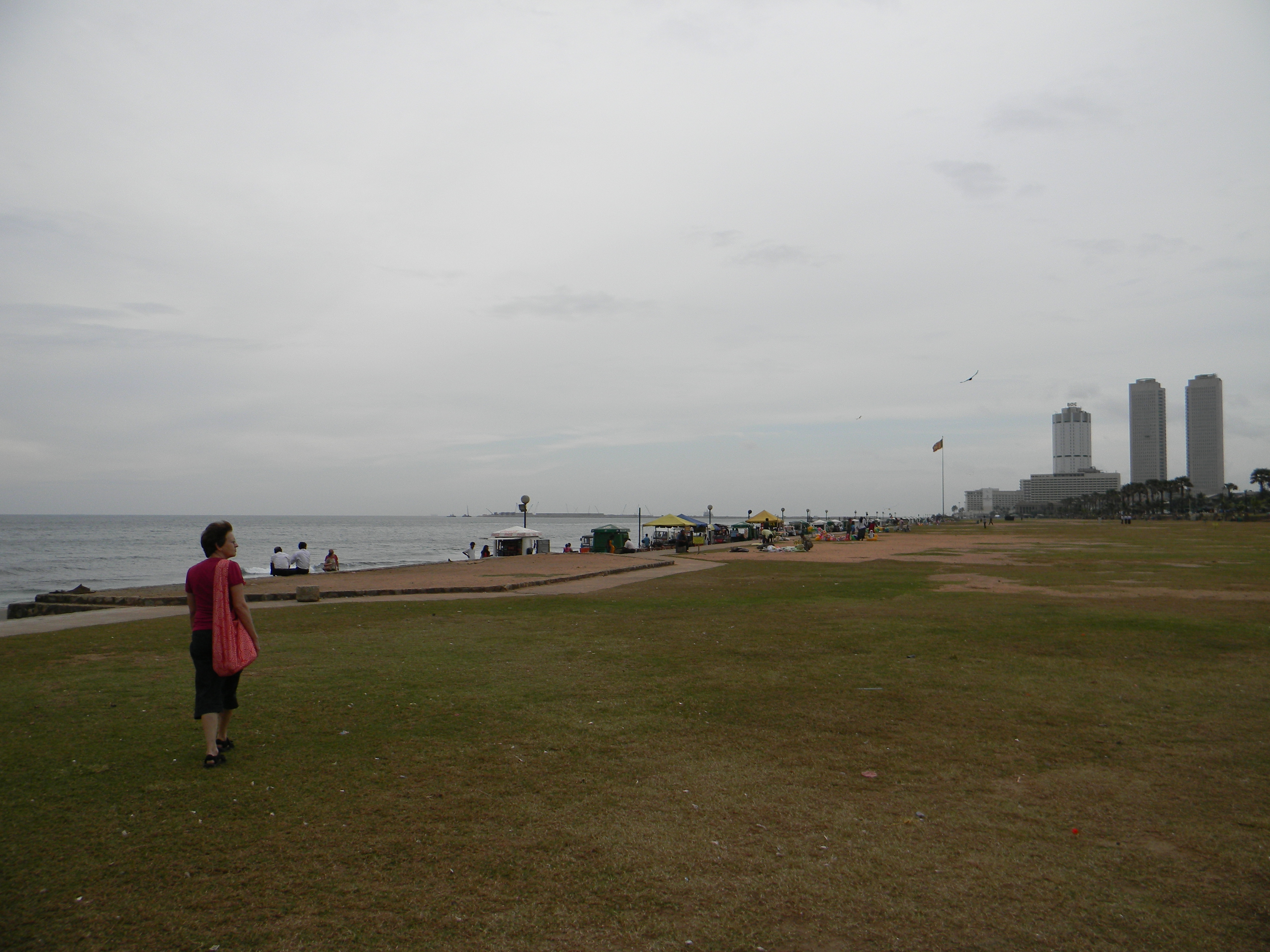
In the late afternoon we ambled along the waterfront outside the hotel. This area features a large tract of undeveloped land, first cleared by the Dutch in order to provide an unimpeded line of sight for their cannons in the adjacent fort that once defended the city. These days the land serves as a parade ground for the Sri Lankan military, although I read in this morning’s paper that the area has just been sold for 125 million U.S. to Shangri La, a Japanese hotelier, who plans on putting a seven star resort on the site. The locals will miss it, as the land is a popular spot for kite-flying and picnic suppers. We finished our stroll back to the hotel where we watched the sun gently subside into the ocean from a waterside table. It was a nearly perfect first day.

We went downtown yesterday looking to find the boat in the sky, the new Marina Sands hotel. It is a very unique looking structure, and given its placement at the south end of the city overlooking the harbour, impossible to miss. Getting to it is a little tricky at the moment, which is very unSingaporean. Everything in this city is easy to get to. But the new MRT station is underway, so by the time you get here, it should be just fine.

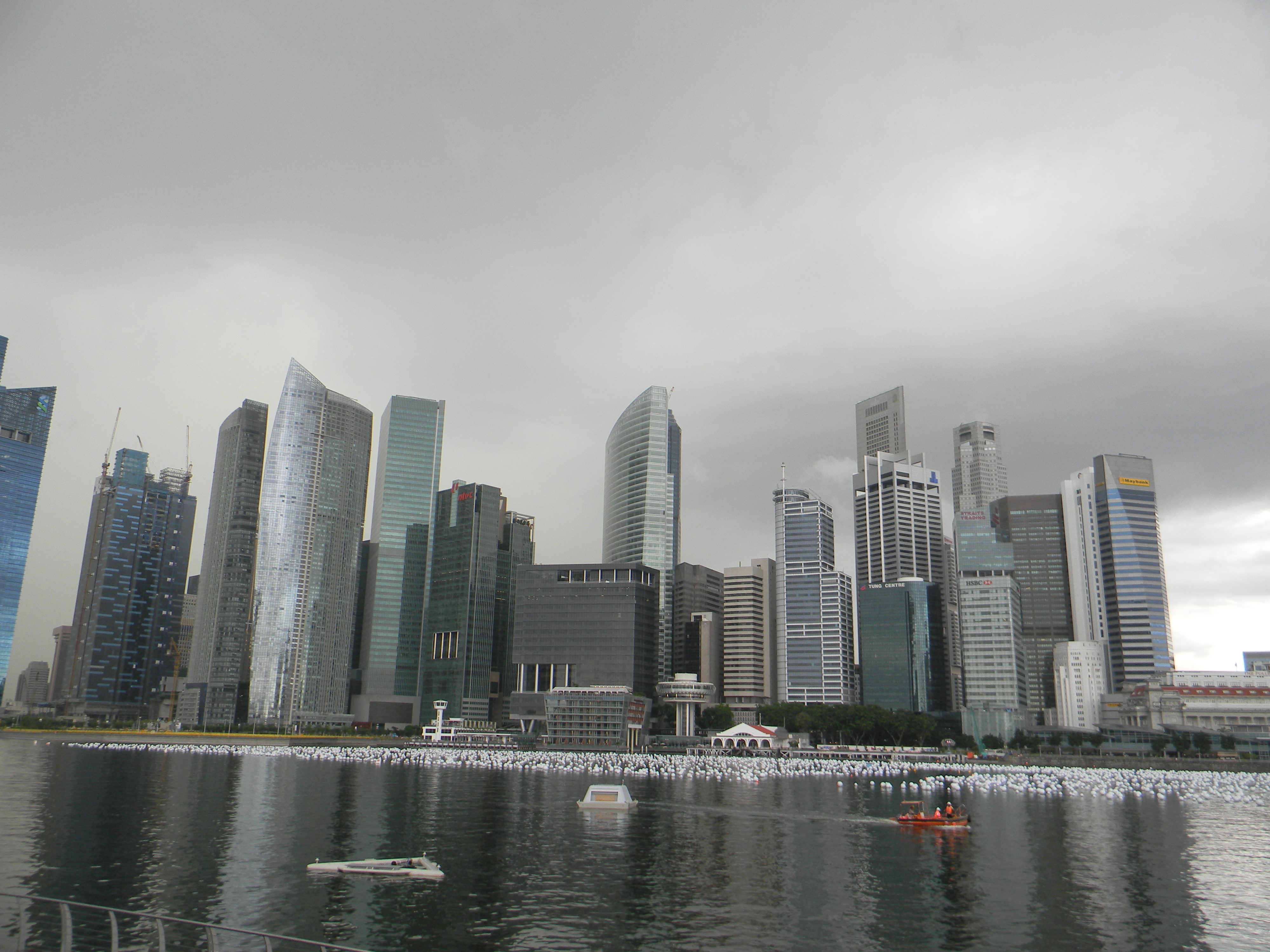
Before we went to the top we took a look at the city from the harbour side. Like many places in this very people-centered city, there was plenty of room on the deck for a nice look around. The bay is filled with balloons that are due to be launched tomorrow night and become part of the light show. It is hard to get in the panorama in a single shot, each aspect of the view has its own particular highlight, but the city planners are taking a great deal of care to preserve the old while developing the new. The overall impression is very pleasing.

The tour of the top was expensive, so we rode up to the skybar instead and tried to book a table. That was a no go as well, but we did get a chance to have free look around and snap a couple of pics. The view of the city is spectacular, the view of the harbour less so as that side is still under construction. The casino was also a bust as you need a passport to get in. For Singaporeans it costs 100 bucks an entry and 12 thousand for a year.

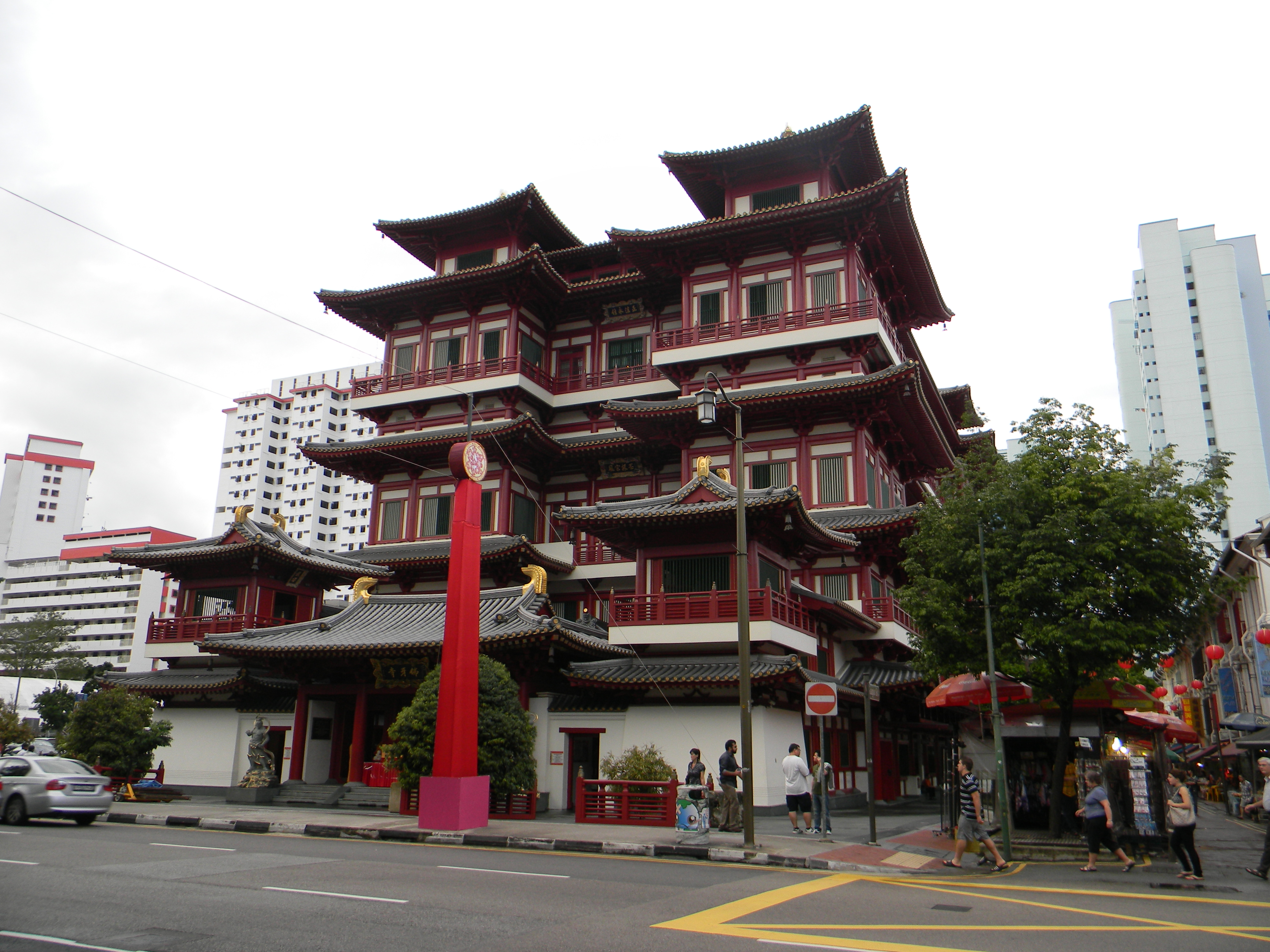
We took a bus and a walk and ended up back in Chinatown for suppertime. We opted for Thai food and a marketstall seat. The place was hard by the temple where songs were being offered for the dead. The square outside was filled with men playing checkers, seriously intent on the outcome. The stalls were filled with silk and batik, enamelware and incense. It was a feast for all the senses. After a short tour we caught the MRT, about three minutes away. Tomorrow is our last full day in this wonderful city. If you have not had a chance to have a look, do put it on your bucket list.

Ben is lot like his Dad: he likes his toys, he is curious about the world, and he loves his sister. With any luck (not that luck has much to do with it) he will turn out as well as his Dad did. His Dad had the great good fortune to have as his Mom an astoundingly good mother.

I was – and am still – in awe how how thoroughly and how naturally Pam cared for our kids when they were young. She seems to have been especially gifted and blessed in that role. She was so comfortable and so competent; it seemed like nothing our kids ever did surprised or dismayed her. As a result our kids grew up without pretense or artifice, naturally caring, naturally kind.

Nicole is a lot like that. She thoroughly enjoys being a mom, and she is natural and comfortable in that role. We are delighted that she is pregnant and look forward to the birth of this new baby in May. That’s fantastic news, because she is great Mom. Jon is no slouch in the parenting department either, so both of their children are fortunate.

Ben is a lucky boy to be growing up in such a loving family. He doesn’t know that now, of course. He just takes as a given the wonderful world that he sees around him and thinks that the whole is like that. I have taught for 35 years to some desperately poor and neglected children. The world is not like that. Ben is a lucky little boy, although given his parent’s faith, blessed would be a more appropriate word. We wish him all the best on his birthday and hope that he likes the little gifts we sent him.

We seem to have found a Chinese emphasis today. Not hard to do in this predominantly Chinese city. We started off at the Chinese Garden, had a late lunch at a Chinese food court and finished off with a tour of the Chinatown district. No, we are not going to round off the evening with a Chinese movie; that would be altogether too much boxing on Boxing Day.

Chinese Garden is just one of the many gardens in Singapore, and one that we hadn’t had a chance to see before. It was not hard to get to on the new Circle Line, and we went the long way around through the north of the city, as the subway runs almost entirely outdoors through that end of the loop. A short walk brought us to the entrance, and despite it being both Sunday and a holiday, it was not crowded. We walked past, but not up the many pagodas, and past the garden of heroes, featuring statutes of Confucius, Melan and Zheng He, who commanded the largest fleet ever put to sea, which was utterly destroyed at his death, putting an end to China’s brief flirtation with world trade, mere decades before the Portuguese rounded the Cape of Good Hope.

Our favourite corner was the Bonsai Garden, a delightful arrangement of the small ornamental trees that was a delight to the senses, both visual and aural. Asians have a highly defined sense of both the beautiful and the peaceful and their land- and soundscapes are refreshing to the spirit. We counted ourselves fortunate to be caught in a brief rainshower so that we were forced to linger and be still in the shelter of their graceful colonnades while we soaked in the serenity of those gardens.

We had started late, so it was three by the time we left and much past lunch. But foregoing the local stalls, we caught the MRT to Chinatown and a foodstall that we knew of for some decent street food. We were not disappointed with the massive portions of yummy Asian dishes for less than three bucks each. Thus fortified we began a long overdue exploration of the area. Chinatown in a Chinese town may seem like overkill, but the name simply designates the original portion of this Chinese population in this once British colony. The crooked little houses on the crooked little streets haven’t changed much since the days of Joseph Conrad and Sir Stamford Raffles, but they have become fashionable and trendy, and are now the clubs and pubs of this upscale part of town.

The area, like everything Singaporean, was clean and well signposted, with parks, temples and public spaces all thoughtfully mixed with local shops. Having had a good look around and marking out a couple of spots for a later, more extended visit, we caught the local MRT back to our neck of the woods to rest our weary feet – okay my weary feet – and relax in front of the telly for the evening.

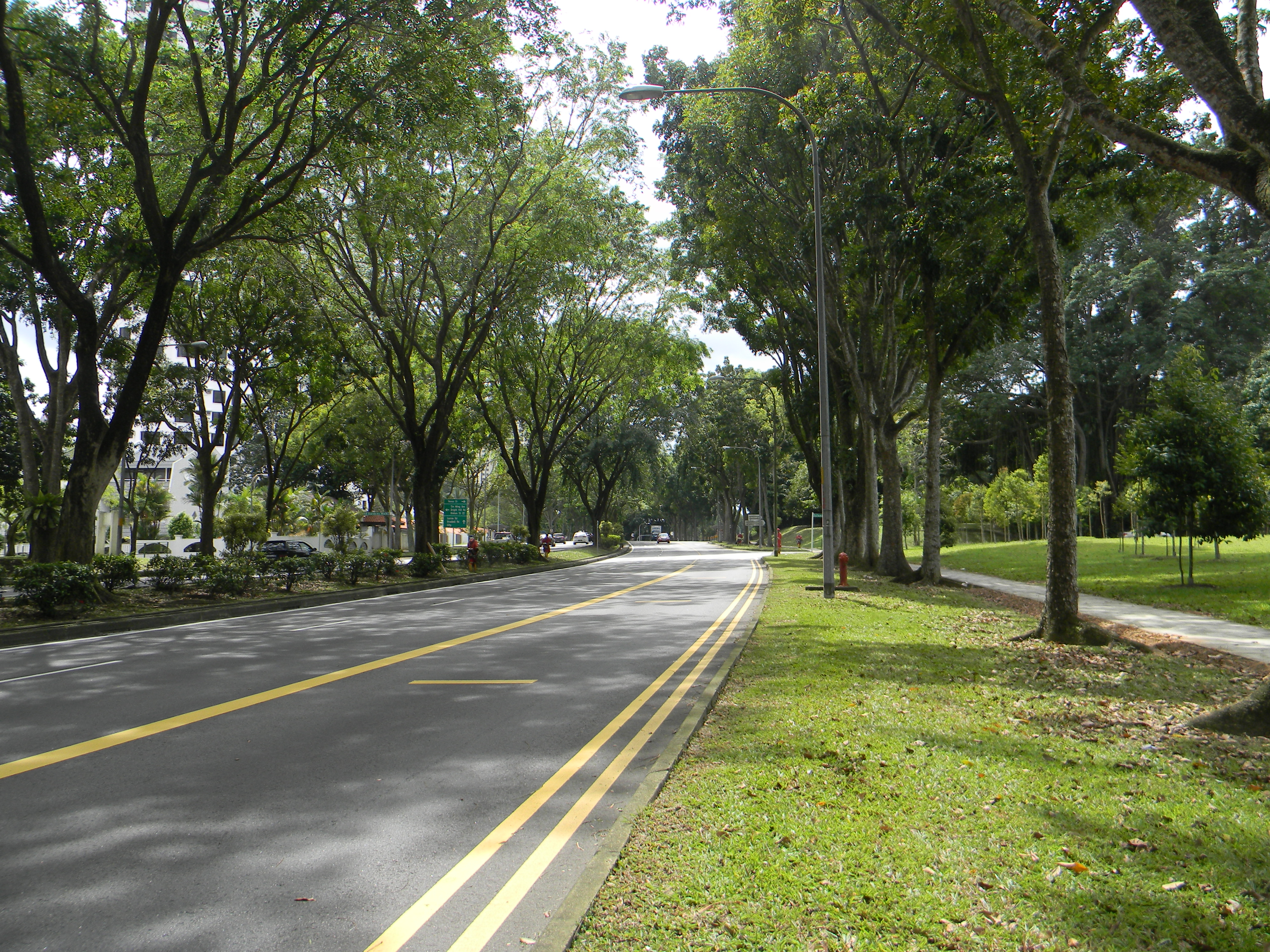
We went for a walk in Singapore yesterday. We strolled to the end of our street and crossed over the road and into a park. At the end of the parking lot was a trail that we followed for about 3 kilometers through the bush. I am constantly surprised by the bush in this part of the world. I am always expecting to be assaulted by mosquitos and other flying insects. Instead, the air is invariably sweet with the smell of orchids and bug-less.

After three klicks we came to a ranger station, with decent toilets and a map of the area. After a brief rest to rehydrate, we pushed on another kilometer until we came to cable suspension bridge, the object of our journey. There was an attendant on duty to make sure that not too many people were on the bridge at one time, but there was not much traffic and we began somewhat tentatively, but with increasing confidence as we realized that this bridge, like everything in this city, was built to Singapore’s high standards.

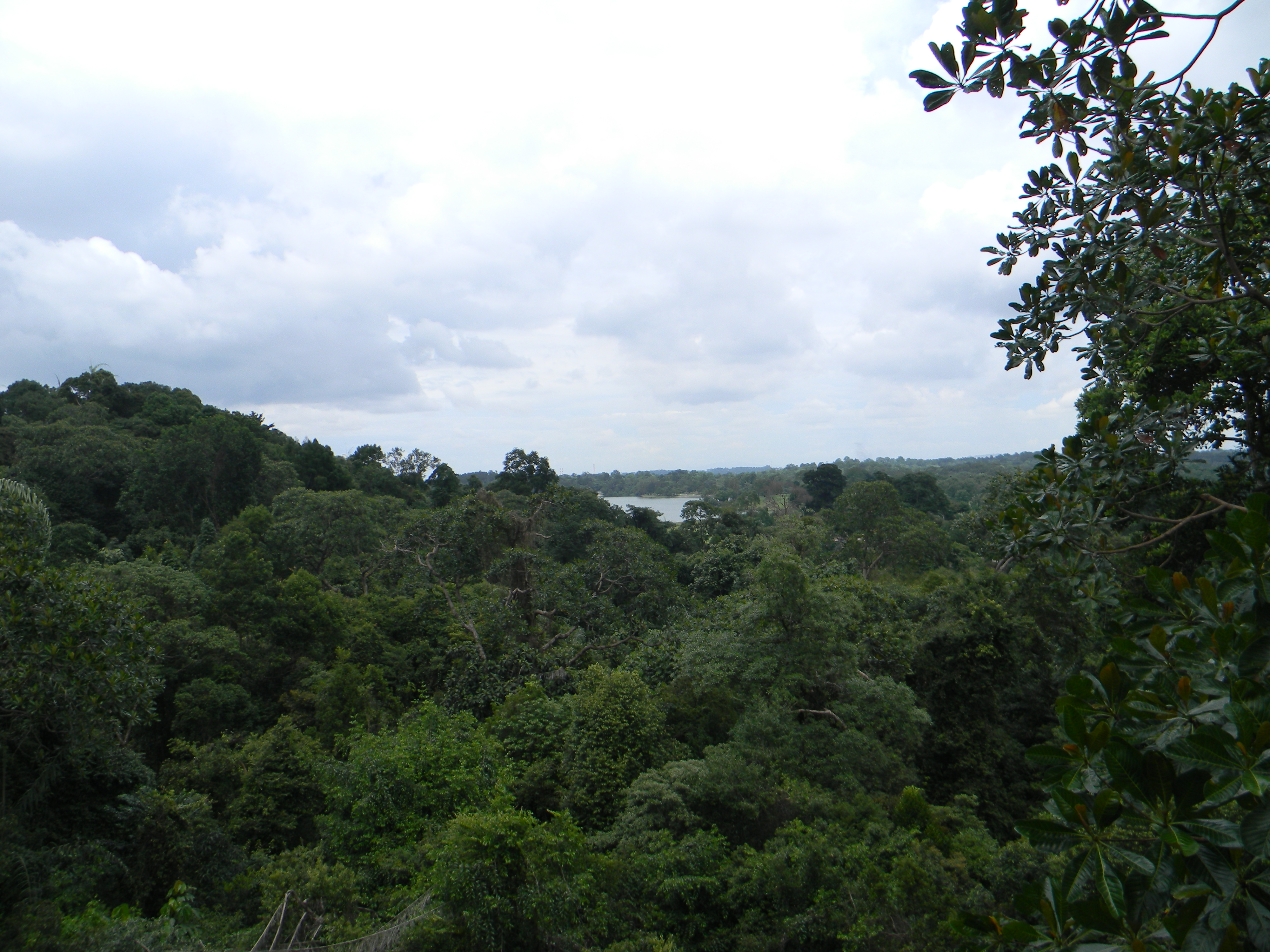
From the centre of the bridge, a hundred feet or more above the valley below, we could see miles in all directions. There wasn’t a building in sight. Here in the middle of one the most congested cities on earth was a wilderness park of quite stunning magnitude (I regret to inform our friends and family in northern latitudes, that it was all a verdant green, with a lovely warm breeze).

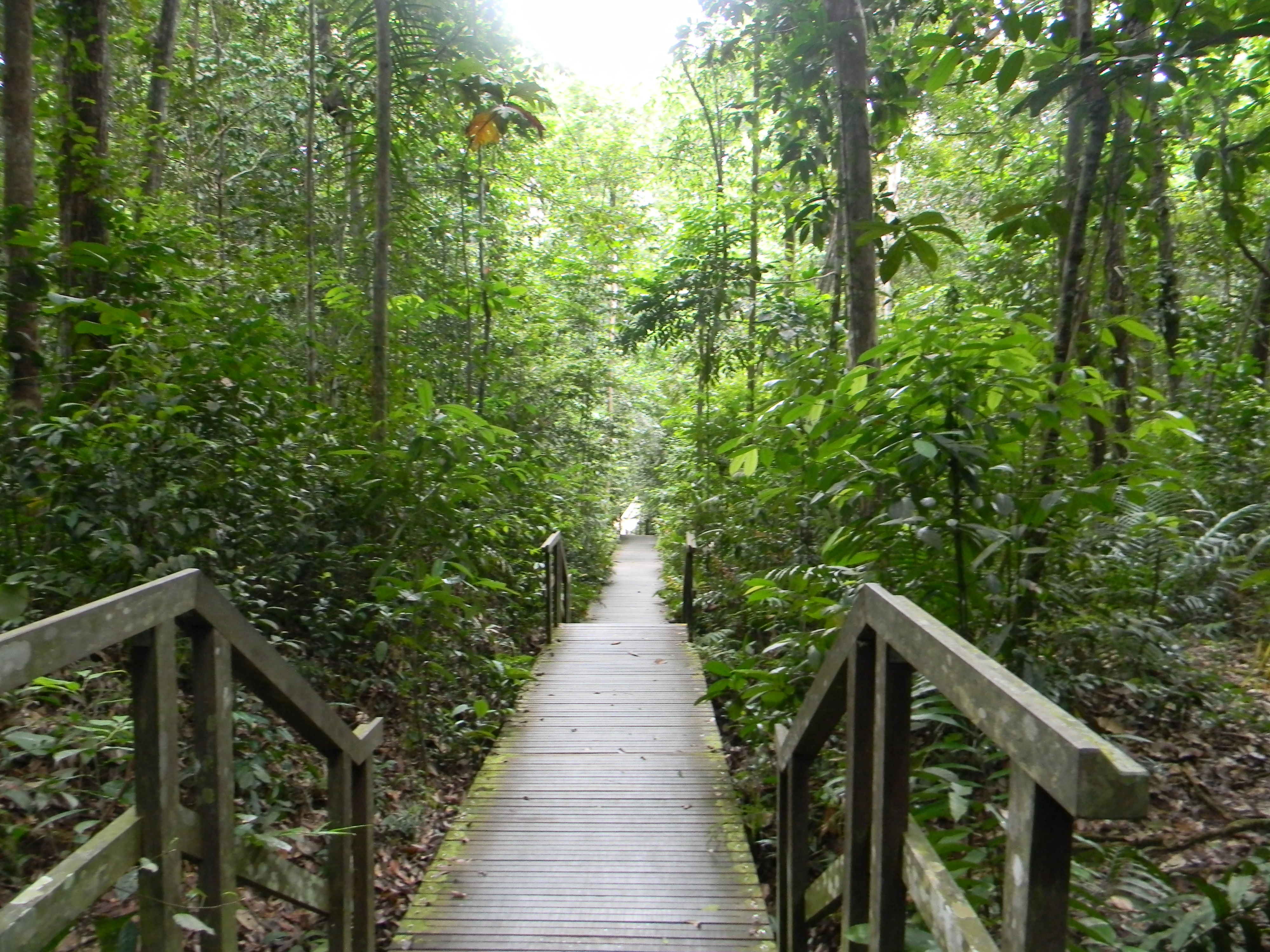
We continued our walk on the other side on steps and a boardwalk designed to preserve the fragile ecosystem. We heard some birds and saw a lizard or two and the inevitable monkeys of course, but no anteaters or aardvarks. A long circle through the bush took us back to the park and a rest at our temporary home. I hadn’t given my feet such a workout in a long time and they badly needed some ice.

Suitably refreshed, we caught the 166 bus to St. Andrews in downtown Singapore to check the time for their Christmas service, then pushed on the the Esplanade (known locally as the ‘Durians’ for their spiky appearance) for one of their courtyard concerts; a delightful chorale with excellent diction (not easy for Asians!) and pitch perfect harmonies. After the concert we went up to the roof to take in the views of Marina Bay and the sparkling new Sands Hotel, then grabbed some pub food and a bus back home. It is that eclectic mix of the pristine and the glitzy that make Singapore such a lively place. Looking forward to the next week.

« Previous PageNext Page »