Current News


Tremendous events have been happening in North Africa and the Middle East. On December 17 a young Tunisian street vendor by the name of Mohammed Bouazizi set himself on fire to protest the ongoing harassment by local officials of his vegetable cart by which he supported his mother, uncle and younger siblings, including one who was at university. He couldn’t afford the weekly bribes the police and others extracted, and after his final arrest and subsequent humiliation, took his own life.

His death sparked a protest that led to the overthrow of the Tunisian president Zine El Abidine. Inspired by the events in Tunisia protests broke out across the region, resulting in the overthrow of Egyptian President Hosni Mubarak and the imminent demise of Libya’s long reigning strongman Moammar Gadhafi. From Algeria to Iran, formerly submissive Muslims are calling their leaders to account for generations of corruption and despotism. What on earth is going on?

The roots of this unrest go back to the roots of Islam itself. The word Islam is loosely translated “submission” and a Muslim is “one who submits.” Unlike Christianity, which calls for an intelligent consideration of the options and an ongoing dialogue with the Almighty, Muslims have always had to face the strictures of a doctrine that has called them to what for all intents and purposes amounts to volitional slavery. That doesn’t make for good citizenship, and historically there has not been much accountability built into Islamic rule. Of course the ruler should himself submit to Allah, but if he doesn’t, only Allah can do anything about it. The only legitimate justification for the overthrow of a ruler is if the ruler does not follow Islamic teaching. Even secularists like Mubarak and Gadhafi are wily enough to cloak themselves in the robes of Islam when it suits them to do so.

The Shah of Iran was not so clever. His secular lifestyle sparked a revolution that did not seek to replace him with someone that was more open to dialogue with the people he ruled, but only someone who adhered more closely to Islamic teachings. The lessons of this kind of “revolution” have been exposed to the world’s just censure for more than thirty years. The possibility of the countries of the North Africa and the Middle East following this pattern is still an open question.

But perhaps we are witnessing something else. I am reminded of the words of American President Barack Obama’s speech in Cairo on June 3, 2009. He said at that time, “No matter where it takes hold, government of the people and by the people sets a single standard for all who hold power: you must maintain your power through consent, not coercion; you must respect the rights of minorities, and participate with a spirit of tolerance and compromise; you must place the interests of your people and the legitimate workings of the political process above your party.”

Unlike many presidents before him, Obama actual set about to anticipate, plan for and welcome that change when it came. In August 2010, after months of planning in various committees he issued Presidential Study Directive 11. This document cited “evidence of growing citizen discontent with the region’s regimes” and warned that “the region is entering a critical period of transition.” The president asked his advisers to “manage these risks by demonstrating to the people of the Middle East and North Africa the gradual but real prospect of greater political openness and improved governance.”

The reaction to Obama’s handling of the events of the past few months have been mixed, with some commentators claiming that he has been indecisive. On the contrary, he has actively promoted the changes we see unfolding, and has prepared his government for them. He is managing the situation with a combination of carrot and stick that so far has not cost a single American life, yet has done more to change the governments of the region than Bush’s Iraq extravaganza has done in eight years (4.7 million refugees, 2.7 million internally displaced people, an estimated 600,000 deaths, a cost approaching 3 trillion dollars). I have been watching these events unfold for months, and have not heard a single negative comment directed towards America by the people (the deposed rulers have been less than pleased), nor a single American flag being burned.

Of course not all the credit goes to Obama; other factors have been at work. The proliferation of social media and the plurality of views available on the internet have had a part. There is also the ticking time bomb of governments who have encouraged large families and even paid considerable sums of money to ensure that outcome only now to be faced with millions of unemployed youths with plenty of expectations and not many prospects. Nor as Christian am I oblivious to the fact that particularly since 9/11 millions of Christians have been praying and encouraging a genuine dialogue with moderate Muslims who deplore the violence that has come to characterize their faith. Surely as God lives, those prayers have been having an effect as well. The strictures of my faith encourage me to hope for the best.
I have challenged my students to write a poem or a song and told them I would post it on my blog if they did. Here is one by Kamilah Kamil:

I’ve had too much good medicine.
It sounds rehearsed;
words lose meaning,
become authority weaning.

A change of sheets is needed
in thoughts, if not in deed
Renewal is not in repetition,
but rather, in reevaluation.

My new friend’s a devil’s advocate.
He solidifies my faith of late
Few can comprehend
why his words I contemplate.

For Kurt Cobain, poet, songwriter, social critic, who was born this day in 1967. Some musings about the superficial world he saw, and ultimately despaired of.

It is artful, but is it art?
Does it touch the soul and stir the heart?
Does it evoke a yearning for what’s real,
Or is it merely clever artifice
Without feeling or sense?

Such nonsense clogs the airways
Of our collective consciousness.
Our radios whine with doggerel
That sniffs the shores, but fails to find
A continent of meaning or intent.

Visuals and images set our retinas reeling,
And as they fade pale ghosts appear
And gesture, discontent, inarticulate,
Pointing to some vague and indefinable reality
We once knew and can no longer see.

Our sense is trivialized
As we embrace what is endlessly facile.
“Here we are, now entertain us,”
We demand. Then kill the poet
With his own hand.

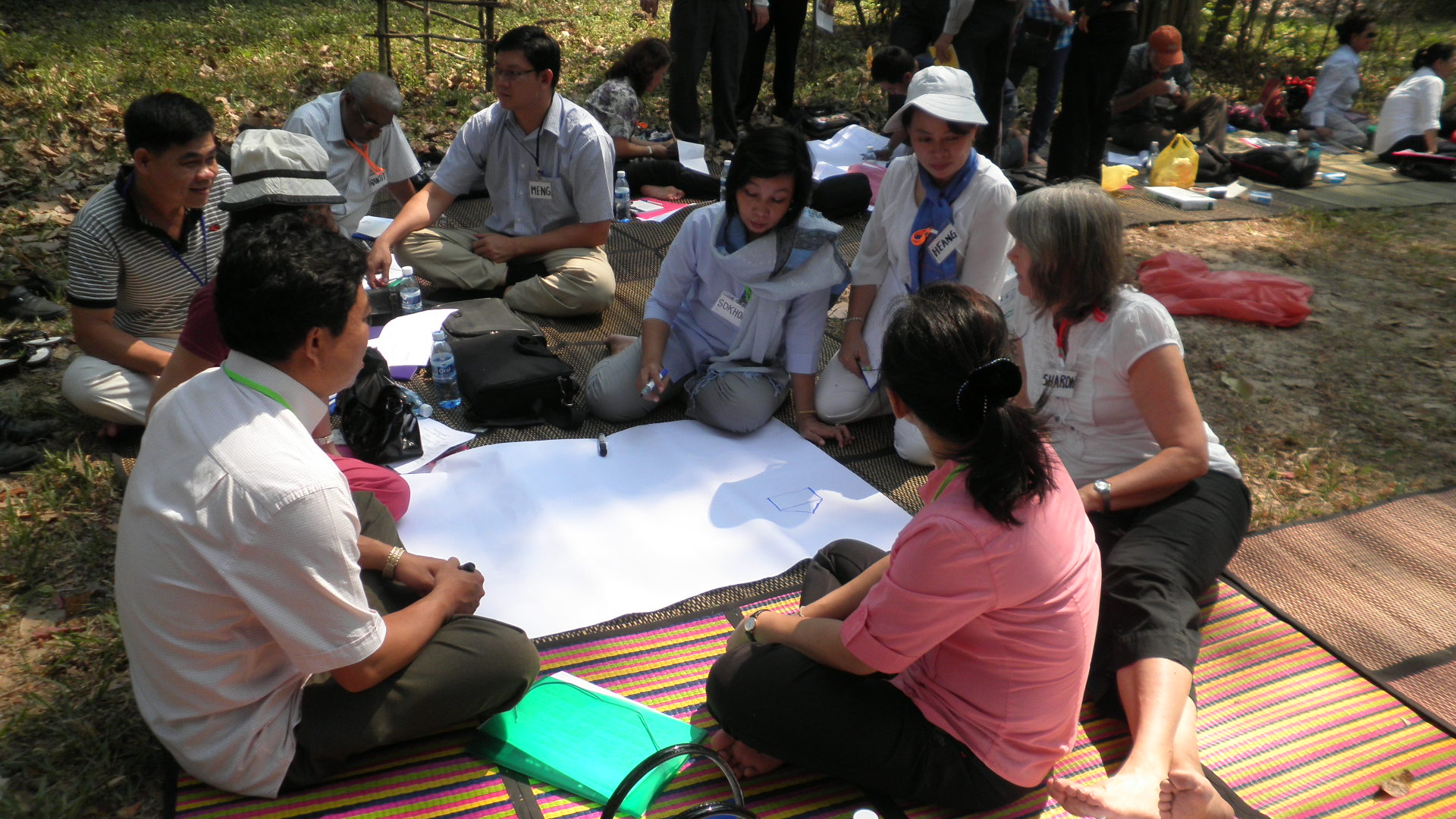
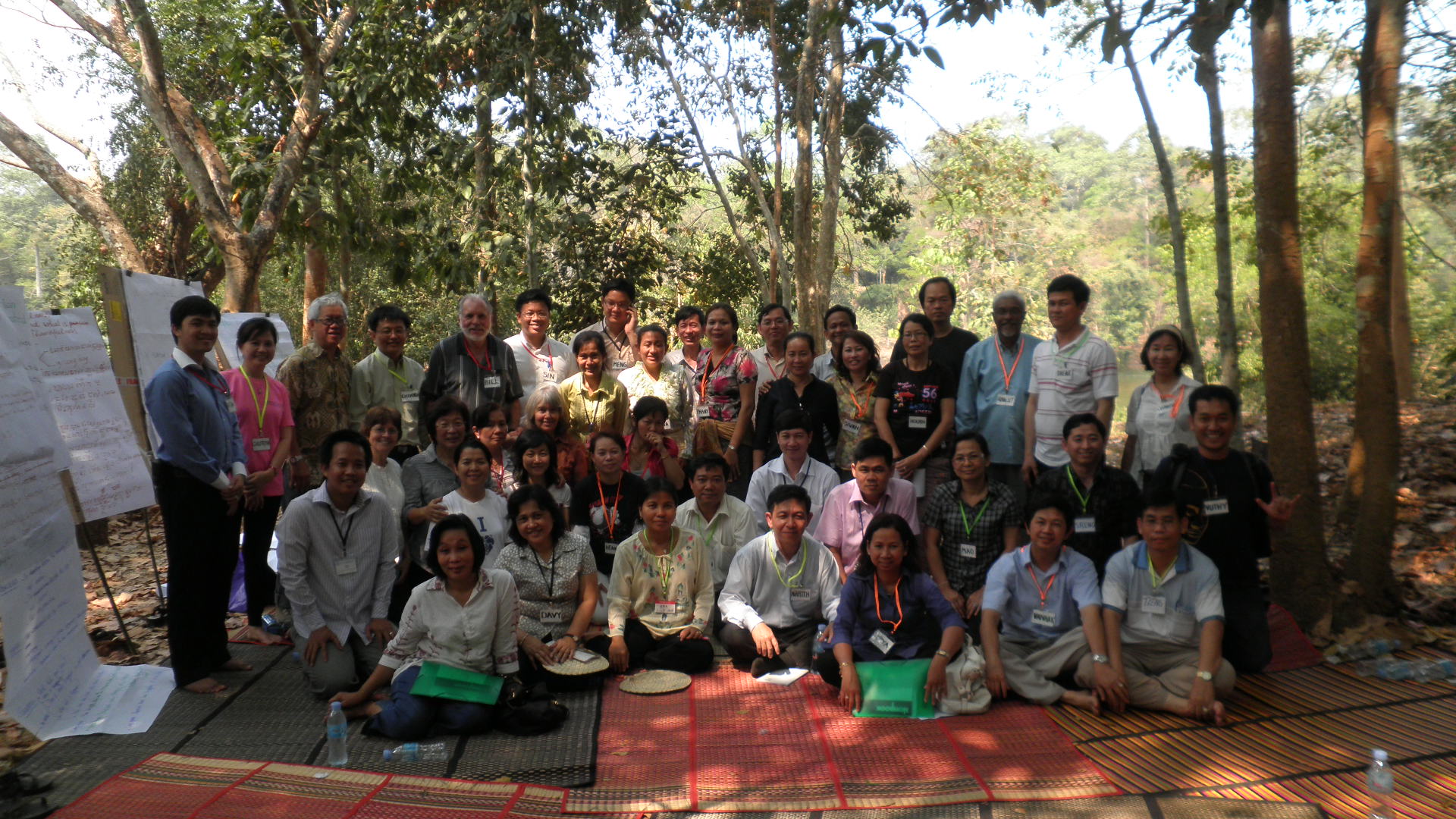
We have both just come back from Cambodia where we helped to conduct a Moral Values workshop in Siem Reap. This workshop, which has been in the planning stages for months, far exceeded our wildest expectations. With a forest in the Apsara Gardens of Angkor Wat as our classroom, the ground for our chairs and desk, and with no amenities nearby, the 36 participants – 24 doctors and 12 senior managers – were confronted with the moral truths of the Bible. This was the second week of training with the leadership of this huge health care organization that has a presence in virtually every village in Cambodia in one form or another. Much preparation, prayer and planning had gone into this week.

A number of times throughout the week the participants confronted the fact that these truths were unlike anything they had encountered before. This moral barrier can best be seen through the language barrier. The understanding of English amongst the participants varied so greatly that we needed to work through a translator to try to ensure the concepts were understood. We found it interesting that the translators never translated the key words but relied on the English word instead. It was explained to us that if they tried to use Khmer for words like love, compassion, caring, kindness and respect it would lose all meaning because there is only one word in Khmer, a very general term that doesn’t begin to describe these various parts of the moral landscape. One of the women said, “We have heard about these things but we have no words to describe them, even to ourselves.”

We were able to establish an agreement for a pilot project in Pourk, a village near Siem Reap were RHAC already has strong volunteers and a youth program. The governor of the district is very open and committed to community transformation and TWR’s children’s, youth and women’s teams are already functioning. TWR Cambodia have also developed a topic list for their broadcasts of the children, youth and women’s programs for the remainder of 2011 which will ensure that these topics are broadcast on the air.

Next week our whole team will be attending a CHE Regional Working Group Meeting in Chiang Mai, Thailand along with many others who are doing CHE in SE Asia. It was at this annual meeting just a year ago that I was first able to present the project we have been working on. We stand amazed at what God has done in just one year. This year we need to mobilize some other trainers to assist with this huge project. We hope to begin in May with the training of TWR staff and a group of master trainers from RHAC. One of the principles of CHE is that unless the village owns the project it will not be effective or sustainable so it must begin with the training of these leaders.

This is an unprecedented opportunity to reach into 19 of the 24 provinces of Cambodia through existing, mandated and funded structures through over 20,00 committed people who already have a role in villages, youth organizations, schools and amongst vulnerable groups. It is a model that can also be used in most countries in the region, even where it is necessary to use a creative approach, such as we have employed over the last year in Cambodia.

Oral societies have differents ways of transmitting information than literate ones. In a literate society information is transmitted through the written word. In an oral society like Cambodia, information is transmitted through stories and dramas. If the villages of Cambodia are going to receive and process information, it has to be through a medium they understand.

This is primarily the method that CHE uses to teach its health and moral education. Trans World Radio also uses the spoken, rather than the written word. In partnership they are joined together in getting the message out to the villages of Cambodia how good physical, mental and spiritual health are interconnected. This week the second in a series of CHE workshops are being conducted in the shadow of the ruins of Angkor Wat by these partners working through an indigenous organization called RHAC (the Reproductive Health Association of Cambodia). Despite its name, RHAC’s focus is inclusive and represents the only health care provider that most village Cambodias will ever use.

The participants in this week’s workshop of the professional elite of this country. Nearly all of them are doctors – women included – who work sacrificially long hours in smaller urban centres with huge responsibilities and little government support. Yet they have come to Siem Reap to learn how to be even more effective at what they do, and especially learn teaching techniques that the workers they are responsible for can carry into the more remote villages that dot this largely rural country.

It has been my privilege this week to teach among them during the Chinese New Year break. Now I must fly back to Malaysia and my regular job that supports Pam’s portion of this valuable work. The two of us are amazed that this is now happening here in Cambodia. A year ago it was just a prayerful dream that these three organizations could work together to bring this about. A year ago they barely knew of the existence of each other. But through Pam’s vision and effort this dream has now become a reality. We praise God for what He has done through us and commit to His care the outcome in furthering His kingdom among the ruins of this ancient country.

The historical markers couldn’t be more symbolic. Here we were in the shadow of Angkor Wat conducting lessons in moral values that were largely derived from Christian theology to the descendants of that ancient Buddhist Empire. The park surrounding Angkor Wat was deliberately chosen, not by us, but by the recipients of our training who wished to break away from the barren and demoralising teaching of the past to give their communities new hope for the future.

And hope was what this training was all about. Hope that the communities of Cambodia would be able to meet not only the health challenges that they face, but the social and psychological and more importantly the spiritual changes that lie ahead. Those who work on the front lines of community work know that this holistic approach to community development is needed. We know as Christians that only cultural transformation can bring this about. And this has to happen at the personal level first.

Today’s lesson’s focused on developing this personal relationship with our ‘students’, most of whom are doctors, running clinics in various parts of the country. They have given up a week in their very busy schedules, not to have a vacation in the countryside, or at the beach, but to spend it listening to us teach them things that they hope will be useful as they try to meet the health needs of Cambodia. We have been encouraged by their response to what we have said and are praying that these series of lessons are going to be mulitplied in the near future.

While Pam goes to Phnom Penh to plan for the upcoming moral values workshop, I am in Chiang Mai, Thailand doing a cram course in CHE teaching technique. CHE stands for Community Health Evangelism, and it is a loosely based organization that was originally developed by Medical Ambassadors International for use in the rural villages of Africa. However, it has long outgrown its parent organization, and to use internet-speak, has gone ‘viral’, being dessiminated now in 90 countries by many who add to its lesson database in much the same way that Wikipedia grows through its contributors.

Its lesson structure would be familiar to anyone practicing modern pedagogy: the teacher is a facilitator; there is no heirachy but rather a collection of colleagues; everyone sits in a circle, no one stands; the emphasis is on relationship; and empowerment of the learner is a priority. Lessons rely on small group interaction and are developed through role-play, stories, and discussions that rely on the knowledge latent in each learner. Learning materials are deliberately restricted to what you would be able to use in a village with no electricity and few resources other than shelter.

My trainers for these two days have been David, Leslie and Andrew, who have graciously adapted their week-long training model to just the few hours that I have had available before I have to teach next week. I am grateful for their expertise and their flexibility. Lessons and discussions have been lively and productive, and the setting – one of Thailand’s more historic and lovely cities – has been an added bonus. I only regret that my compressed timetable has not allowed me to see more of the city and the surrounding countryside.

Tomorrow I will fly to Phnom Penh to join up with Pam, Bill and Sharon to put the final touches on the material that Sharon has prepared for the coming week. I am looking to putting into practice what I have been learning and making a positive impact in the lives of ordinary Cambodians.

We arrived home from Sri Lanka two weeks ago and are finally beginning to feel that we are somewhat organized, at least briefly. Steve has his classes for the semester well underway and is finishing up the first unit on Poetry.

The new folks are settling in well and we organized a Karaoke night with a dual purpose. It was a fun night to break in the newbies with good food and great music, after all teachers tend to be a pretty gifted lot. Sadly though, it was also time to say farewell to John and Lindsay who are heading back to Canada to establish their careers and home there. They were a real asset to Taylor’s especially with the musical productions that they organized and will be missed by staff and students alike.

I managed to get in a few days in Cambodia to move plans forward for the next set of moral values training and to spend some time with the TWR team developing a plan for annual evaluation and reporting on the health program. Once home, I had one more major document to complete and send off before I began the final preparations for training.

With some repair work done in the apartment, lunch with Gary and Kveta to get caught up on their news and material purchased to have a dress made for the wedding, we are now, once again tripping over suitcases in preparation to hit the road, or skies once again. Please stay posted as we go our separate ways for a while and then meet up again in Phnom Penh.

Well it is has been a lovely little trip, but now it is time to return to our regularly scheduled lives. We ended up taking a taxi to Negombo, our last stop in Sri Lanka,and we glad that we did for otherwise we wouldn’t have been able to stop and see the whale, beached on the southern coast. Negombo, was underwhelming to say the least. The Brits, of whom we encountered plenty on this trip, would say that the beach here was “scruffy.” They are being far too kind. We wouldn’t go anywhere near that filthy water, nor did we care to fight our way through the packs of dogs that roamed the debris- and garbage-encrusted stretch of beach between the hotel and the water. It is a shame, because the beaches along the southern coast are absolutely gorgeous.

Unfortunately the town of Negombo wasn’t much better, offering nothing in the way of beauty or interest, save oddly a number (seven at least) of large and offensively ornate Catholic churches. I say offensive, for such a gaudy show of wealth among such poverty, which demonstrated such callous indifference to the needs of the people the church pretended to serve, must be offensive to any Christian of good conscience, to say nothing of the Lord whose name is being so maligned. Oddly there seemed to be very few restaurants or food stalls in town either. There were a few bakeshops, with the occasional table, but sticky buns were not what we were looking for. Living in a country where every third shop cooks some kind of tasty cuisine, we were perplexed to say the least. We finally found a coffee shop that had a limited menu, and got something that called itself goulash that consisted of potatoes boiled to near mush and a semi-meat topping. Get me back to Malaysia!

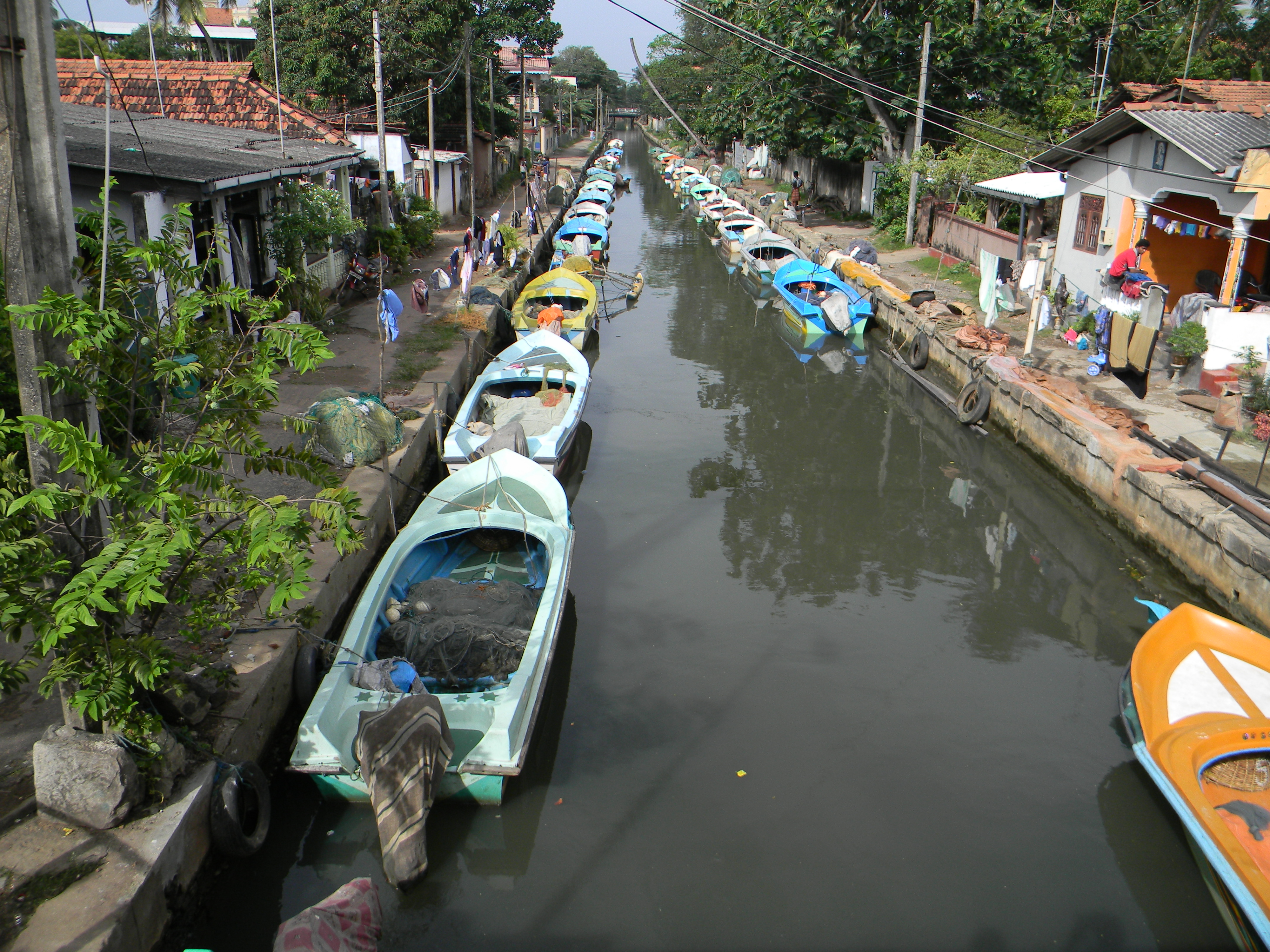
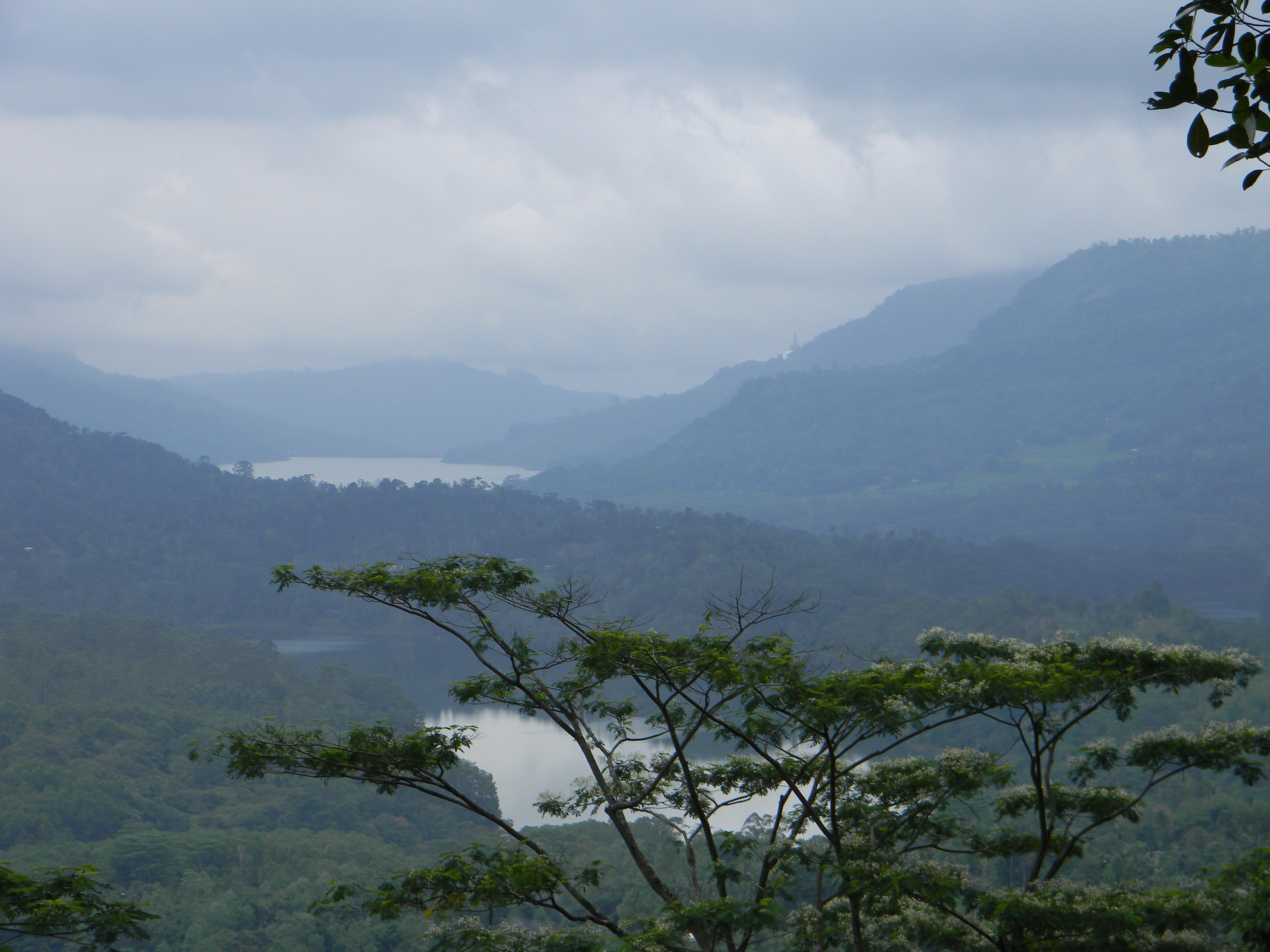
Sri Lanka itself is gorgeous: beautiful beaches, stunning hills with their cascading waterfalls and slopes of emerald green tea, a wildlife park that is extensive and varied in both fauna and flora; there is a lot to like. And the people are lovely and considerate. But the place is sadly lacking in cleanliness even by Asian standards. To make matters worse its infrastructure – rail, roads, buildings, sewers, and so on – is either rotting or crumbling. And unlike Cambodia, which is undergoing reconstruction daily, nothing much seems to be happening to repair the damage. A ring road is badly needed around Colombo to get to the airport from the south without having to go through the heart of the city. We did that yesterday and it took pretty close to three hours. A road has been promised, and contracts have been paid for, yet nothing has been done for over twenty years and the money just seems to disappear.

The civil war against the north has taken much of the country’s wealth and poured it into the men and machinery of war. Everywhere you see evidence of the militarization of the country, and it is disturbing. The army is the tail that wags this particular dog, and it may well take a generation before the young men of this country are reabsorbed into more peaceful and productive pursuits. Now, with nothing more useful to do, they impede the progress of the nation toward normality. Army personnel are everywhere. Checkpoints are everywhere; most of them totally senseless.

When we arrived at the airport, for example, there was a baggage check at the front door. Fair enough. But the traffic congestion outside the front door was enormous. Once through that blockade there was a guard standing at the entrance to the departure hall and ticket counters. The crowd around him was dense and growing larger by the minute. There was no sign or other information regarding what he was doing, but I found out that he was only allowing one flight’s passengers through to the ticket counter at a time. Who would know that? Why would they do that? Once we got our bags checked the departure hall itself was lovely; spanking new and well serviced. But there was nobody there because they were all still back in the bottleneck at the entrance!

This country has a long way to go before it is back on track to becoming the prosperous jewel in the Indian Ocean that it once promised to be. It is at present ill-equipped to meet the natural changes in seismic activity, like the tsunami of 2004, or the floods that are presently taking place in the north of the country that have displaced a million people. War, greed and corruption. What a mess we humans make of things when we fail to acknowledge that we will one day be held to account for our behaviour. How poorly we treat a world that He has made so beautifully.

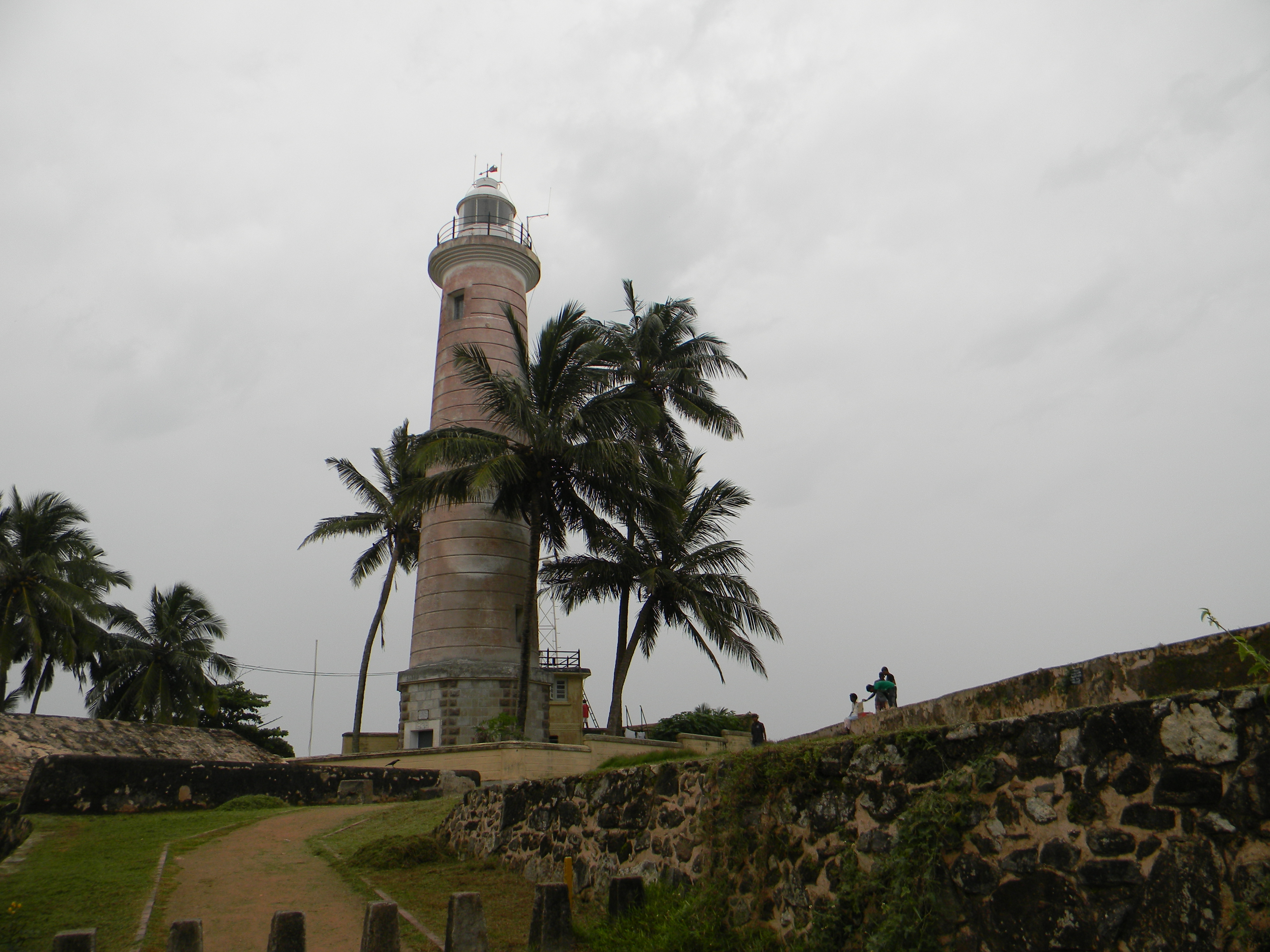
Because the Portuguese sailor Vasco da Gama was the first European to round the Cape of Africa and sail into the Indian Ocean, many of the first European settlements along the coast of India, Sri Lanka and even as far as Malacca in Malaysia were Portuguese colonies. His name is still remembered along this coast in places like Welligama. In Malacca the Portuguese displaced the Muslims, who had been there for less than a hundred years. In Galle, Sri Lanka, where we are at present, they were themselves displaced by the Dutch, whose East India Company was a powerful player in the 17th century. The Dutch built a fort on this southernmost tip of what was then called Serendip, and like all things Dutch, it was solidly built; so solid in fact that when the tsunami hit Sri Lanka in 2004, the waves did not breach these walls. It was the only town along the southern coast so protected.

We got to Galle around noon yesterday, once again putting our lives into the maniacal hands of those who seek to terrorize their innocent passengers by driving through these narrow roads in a homicidal rage. There are no set times for bus routes in Sri Lanka. They leave when there are no more passengers to load, and then they race to get to the next stop to get the next set of passengers before the other buses. And the words ‘bus stop’ don’t convey quite the same meaning either. The conductor who sold you your ticket knows when you get off. Two kilometers before your stop he will usher you to the door, the bus will pause momentarily – it will not actually stop – and you will be ‘assisted’ off the bus in the most expeditious manner possible.

However, looking on the cheery side, it did get us here in good time, and here is a nice place to be. The owners of the Beach Haven Guest House, where we were booked, could not, in their gentle Asian way, convince their previous guests to vacate the room we had booked. We have lived in the East long enough to understand their reticence, and given the beauty of this spot, also understood their guests’ reluctance to leave. However, it did leave us in a bit of a pickle in that we had no place to stay. Once again Asian courtesy and civility meant that these kind people had booked another (and even nicer!) room for us at the end of the fort overlooking the sea. In order to hold this room they had promised to pay for it if we failed to show up.

Galle Fort is a warren of little houses and winding streets filled with craft and jewelry shops, guest houses and tea shops, churches, mosques and temples all peacefully co-existing beside each other with a magnificent view of the sea cascading in over the rocks and into these sturdy walls. All around the fort is a walkway where in the evening and early morning the residents stroll or stride, according to their tendency in the clean warm air that comes in over the ocean. We are sitting on our balcony eating a lovely Sri Lankan breakfast consisting of egg hoppers, an egg and thosai conconction that actually goes very nicely with the curried potatoes, and strong Ceylonese tea, watching the breakers and the walkers and wishing that we could stay here for a lot longer. But our next night’s accommodation is booked, and we must shortly catch a train to Colombo, a journey of 117 kilometers, which will take 3 ½ hours. After the terror of the buses the last few days, I am looking forward to the more leisurely pace!

« Previous PageNext Page »