Current News


My co-worker, Sharon wrote an update on our community visits for their prayer supporters that captures our experience very well so I will share it here.

“The theme of the conference in Manila was, ‘Challenges of the City and the Urban Poor’ and the use of Asset Based Community Development, which is based on looking first at the assets rather than the needs. All 50 of us went into the slums where CHE is actively making an impact, even in the community living on the garbage dump. We found resourceful, resilient people able to salvage and make incomes and build homes from anything (even make them “cute” as one woman described the shack she lives in!).

“We met and were welcomed into the homes of CHE trainers dedicated to teaching lessons faithfully every week, and Christians living joyfully and reaching out to their neighbours. A pastor living next to his church in the dump site told us how he managed to put two kids through university on proceeds from picking through garbage. We observed people living simply but using their skills to provide for their families, and mothers learning how to care for children in very unhygienic conditions through the CHE process.

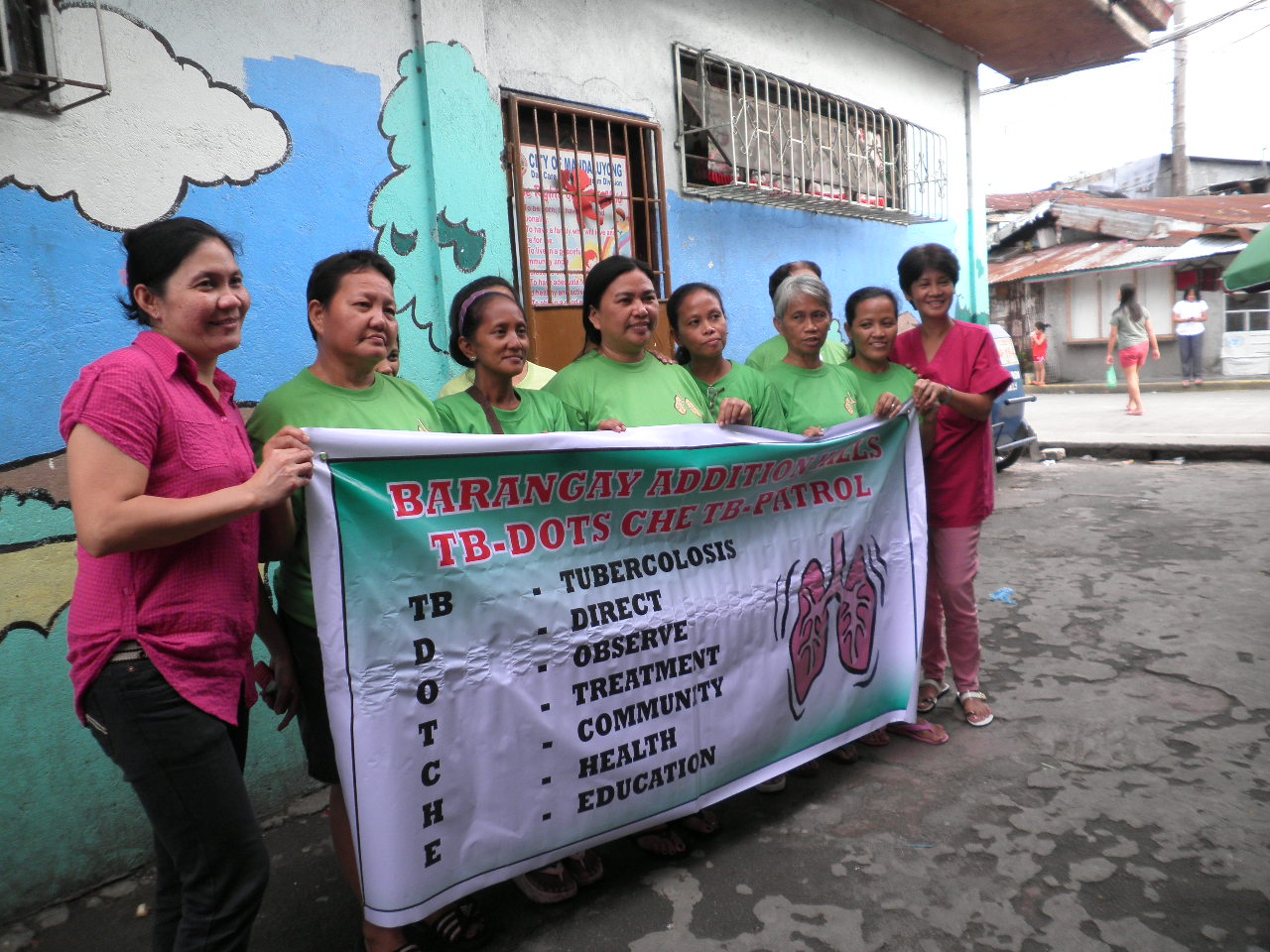
“I was particularly fascinated by CHE volunteers working with TB-DOTS (Direct Observation and Treatment Strategy). They visit with their neighbours and watch for people exhibiting TB symptoms, accompany them to the clinic for testing and if positive, the volunteer functions as the TB treatment partner to get them to take their full course of treatment. In order to do this, the CHE delivers the medication to the home each day and accompanies the patient for follow-up testing for at least six months. Now that is a volunteer commitment to speak about.”

From my own perspective what we saw in these poor communities helped us to better understand our morning Bible study from Isaiah 61 and to put our own work into perspective. Isaiah states that those whom the Lord liberates will re-build the broken cities, not us. In Manilla we observed glimpses of that possibility, enough for all of us to leave with a different perspective on the “poor”!


The Lord has always provided us with good friends in Malaysia during our time here. None of them have stayed very long, as most of them have commitments elsewhere, and that is entirely understandable. But we have treasured each of their unique qualities and tried our best to keep up with their interests. Our friends for the last year have been Pete and Joan from out West. They knew each other as teenagers growing up in Tanzania as the children of expats there, met again in later life and not all that long ago got married. They are a neat couple who share with us a love of travel and adventure. They are also serious hikers, and Pete has even worked as a guide in the Rockies, so they know their way around the bush.

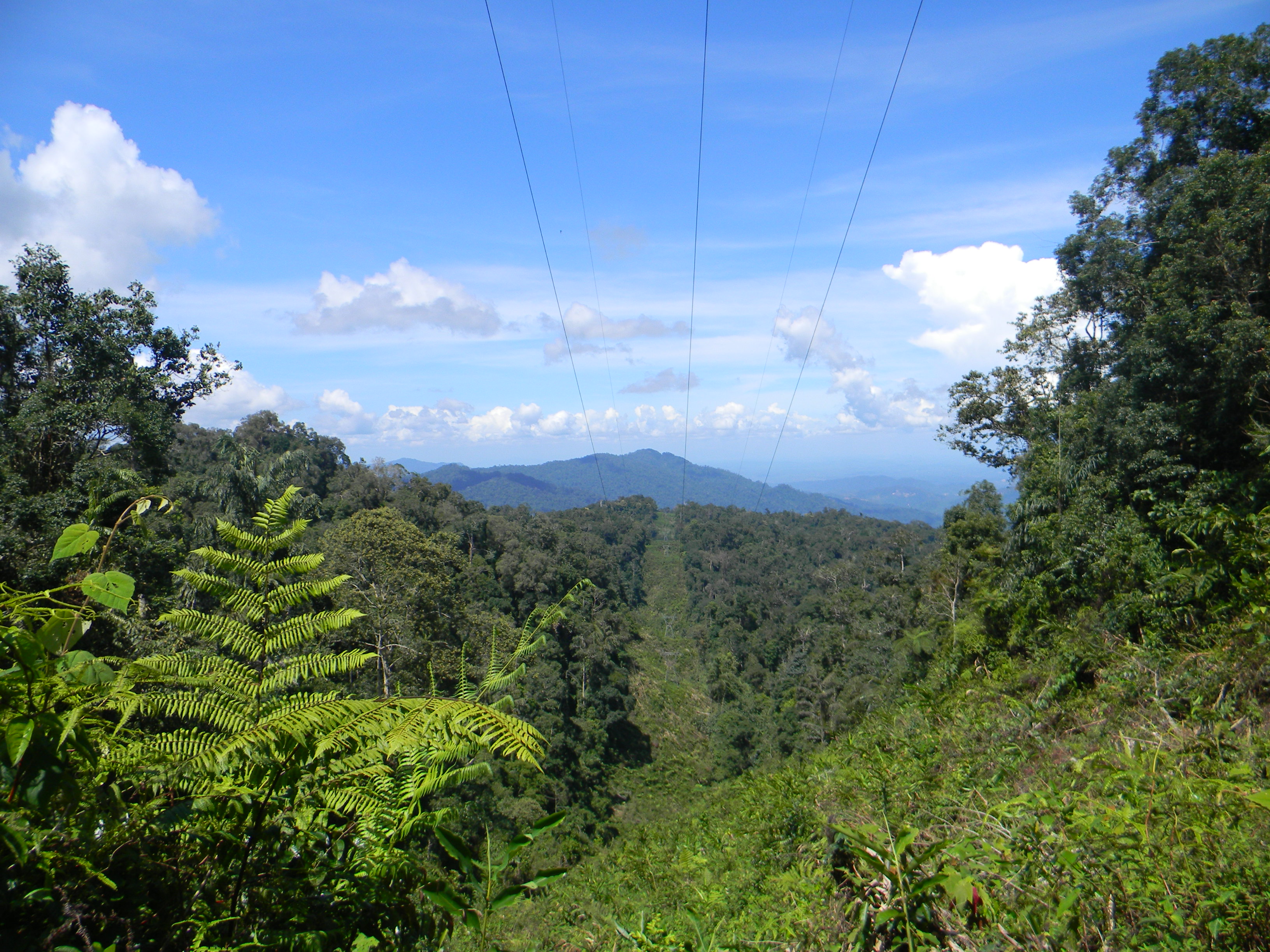
A month or so ago we drove up into the Cameron Highlands and spent a day hiking through the hills. Yesterday we went again, this time up to Fraser Hill, another outpost on the rocky row of hills that forms the spine of peninsular Malaysia. Fraser is a lot closer than Cameron, and a lot less crowded. We were there in just over two hours and found the place practically deserted. Despite our early start, we were too late to take on the big trek up to Pine Tree, but we got the phone number of a local guide to book for our next excursion and had a nice pot of tea while we plotted out how we were going to tackle that day’s hike.

We started out just south of town, and must confess that the first couple of trails were a little too tame for our liking; too close to town with little wildlife and less adventure. The next two trails were a little more demanding, taking us through some wilder parts of the area with steep gorges just off the trail and plenty of vantage points from which to observe the variety of birds, butterflies and majestic trees with their garlands of lianas. With two decent pairs of binoculars we were able to see dozens of birds: long-tailed drongos and silly wagtails, beautiful blue niltavas, and tiny red flycatchers, but no hornbills, much to my disappointment. After three hours of pretty well-maintained trails we came to a final two kilometre stretch that hadn’t been looked after for some time. Rather than cut back to the road, we forged ahead and were treated to some spectacular views and some really dense jungle. Pete lead the way through this stretch clearing bush as he went and picking out the safest route along the sometimes totally obscured trail. We were all grateful for his careful expertise.

We arrived back at our starting point after about six hours of steady walking to find that two of us had picked up leeches; not an uncommon occurrence for this part of the world. We cleaned ourselves off and clambered back in the car for a leisurely drive through a Malaysian sunset back to KL. Once again we are grateful to the Lord for allowing us the luxury of a vehicle this year, and the opportunities it affords us to see a little more of this lovely country. We are also grateful for active friends that push us out of our comfort zone into interesting adventures that expand our knowledge and appreciation for the beauty of God’s creation. We readily confess that we are a little stiff this morning, but that will pass. The pleasure of all that we were able to do yesterday will linger for some time.

In our very first round of training with the RHAC leadership team in October of 2010 we had the privilege of getting to know two young men who have left a real mark on our lives.


Real Theng was a big, funny and enthusiastic young man who thoroughly embraced each lesson and had many probing questions about the concepts of the moral values lessons. He was so taken with the Joseph story that Bill ended up adjusting two later lessons to complete the story. With a genuine desire to learn more, he requested a copy of the source of these lessons to read on his own. He very rapidly began integrating these lessons and teaching style in to his work with youth in the schools.

Chan Theng had joined the organization later then Real Theng, and quickly got the nickname “Fake” Theng. He was very gentle, quiet and thoughtful, taking each discussion in and seriously looking at how these truths impacted his own life. He too, immediately began taking the lessons to the youth and within several weeks was teaching them at a camp with over 500 youth in attendance. Just a few weeks ago, ChanTheng made a decision that he needed to enter into a relationship with the author of these wonderful truths. He is now the key leader in our project and is thoroughly convinced that this is the only way to fully impact the lives of Cambodians.

Yesterday we heard the very sad news that Real Theng had lost his life in a drowning accident in the Mekong River. For our praying friends, we would ask for prayers for strength for this very close knit  leadership team as they come to grips with the loss of a promising young co-worker and friend. I know that many of these sweet people are honestly seeking to find the source of the dignity, compassion, peace and hope that we have been talking about and that is our prayer for them.

I have had a lot of comments on my Hanoi post of a few days ago; some disagreeing strongly with my analysis, some more understanding of our perspective. One of those comments recently submitted deserves highlighting as a post of its own. So with many thanks for his courtesy and insight, here is the unedited comment:

Dear Steve, dear Pam,

Your opinion of Vietnam is shared by many, including Asians who move to Vietnam for some time. The usual comment is “Vietnamese people are so uneducated”. I think it’s true. Vietnamese education is based on being obedient and following the rules, rather than being creative and thinking by themselves; hence some aggressive behaviour, heavy use of lies and some tendency to swindle everyone -and not only foreigners. It often creates a love/hate relationship between expats and Vietnam, since they meet every day an equal amount of nice educated people and lousy bastards.

I think that foreigners who visit Vietnam are eager to spend money, eager to help the locals. Some (like me) don’t even mind the double pricing. After all, I don’t mind paying my meal 50.000 VND instead of 30.000: it’s still 5 times cheaper than in Europe, 10 times tastier and then I help someone earning a bit more than they’re allowed to. But their annoying lies and pushy attitude make many foreigners keeping their money in their pocket, tired of being taken for fools. Why sellers still don’t understand that being pushy make customers run away, it’s a mystery. Or just the consequence of the bad education system? Have you been to a shop where there’s a queue? No one respects it, they cut the line as if there would be a nuclear war the day after.

I remember a foreigner who arrived in HN and finally reached the bus stop near the airport (quite far away and hard to find). He climbs in the bus and the driver grumpily asks him to step out because he has a big luggage. The bus was not crowded; the driver could have asked to pay an extra fee for the luggage. But no, he just chased the poor guy without any explanation.

Hanoi is also the place where customers have the greatest trouble with hotels. Some staff are extremely rude and stupid. On the other hand, I happened to stay in a nice cheap hotel where the staff was nice and helpful. And I’ve met horribly grumpy restaurant owners there. On the other hand, Hanoi is the only place in Vietnam where a staff girl kindly refused my tip. And her restaurant was small and poor. So you see, love/hate is what I felt there.

I agree with your strong disappointment. I’ve also been to some parts of Asia and never ever felt such an annoying attitude. And to end my loooong comment, there’s a place in Vietnam where people are really nice, smiling and eager to talk with foreigners without trying to sell anything, although they live more poorly than in Hanoi: Buon Ma Thuot, in the Highlands. There’s a Coffee Fair in March and it’s really worth visiting.

Glad to know of your blog.

Cheers

Gilles


Hanoi has to be one of the saddest places we have ever visited; sad and drab. The contrast between Hanoi, which won the war, and Saigon, which lost, couldn’t be more clear. Ho Chi Minh City, which even the residents continue to call Saigon, is bright, lively and fun; bustling with life and booming with development. You would never know that it was a conquered town, for it has shaken off that defeat and is looking ahead to a bright future as investment dollars pour into this lovely, scenic city. Hanoi may have won the war, but you would never know it from the attitude of its people, who seem sunk in spiritual despair; faces lined with a hard life of toil and sacrifice that seems to have produce very few tangible results from three generations of war.

Perhaps that is the fuel behind the cultic devotion to the memory of Ho Chi Minh, the man that led North Vietnam to victory over the Americans in a war that both marked and scarred my generation. We went to see the tomb of old Uncle Ho yesterday and it was one of the weirdest experiences of my life. We were hustled and herded like so many cattle in robotic rows up to this enormous monolithic mausoleum that would have done the ancient pharaohs proud. We had to surrender our cameras and silence our phones and then there we were filing past the embalmed body of Ho Chi Minh lit up with a ghostly light like some Halloween ghoul inside his glass coffin. The slightest deviation from the robotic shuffle – hands in pockets, hands behind the back, hats on – was met with physical correction from the two dozen uniformed and armed guards. Pam’s phone, which she had forgotten to put on silent mode, rang shrilly just as we exited and I confess that we both burst into hysterical and nervous laughter. What if that had gone off in the tomb?

Ironically, just half a kilometer away was the little wooden two room house on stilts where Ho studied, met with advisers, and fed his carp. Following the defeat of the French, Ho refused to live in the French-built presidential palace, and left explicit instructions that after his death his body be cremated and the ashes be buried in hills in the north, south and middle of the country. Those who came after Ho clearly had other ideas for his legacy, and without any other religion, since all were banned under Communism, it is not surprising that the legacy of Ho be remembered with godlike reverence.

But it is not just the shadow of their dead god that hovers over this city. It seems to be haunted with other dead ghosts as well: the dreams of a glorious communist future lie in ruins everywhere. The city is choking with its own chemical smog; millions of motorbikes cram narrow streets filled with evidence of a crumbling infrastructure: broken sidewalks, crumbling buildings, electrical posts sagging under the weight of a rat’s nest of wires topped with loudspeakers blasting what we assume to be Communist propaganda. Men urinate openly against trees and walls, families struggle to eat on narrow and overcrowded sidewalks, and everywhere is the presence of uniformed and armed men; security personnel, police and predominately the green tunics of the sullen, unsmiling People’s Revolutionary Army. There is no victory and no dividend of peace in this grey, unhappy town.

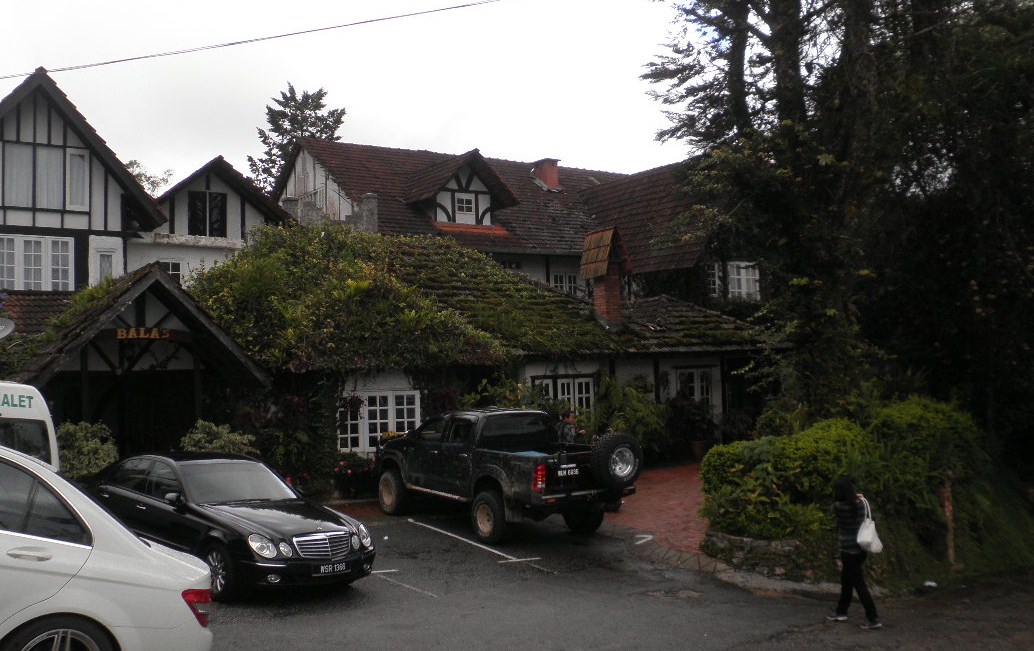
That fact that we have a car now allows us a bit more freedom to explore the wonders of our adopted country. This was a long weekend and although Steve still has a lot to do to wrap up the semester, we were able to get away for an overnight excursion to the Cameron Highlands. We stayed at Bala’s Chalet which is one of the oldest colonial buildings in the Highlands. Built during the pre-war era it has been preserved in its original structure. It originally opened as a boarding school in 1934 for European expatriate children and its owner and headmistress, Miss Griffith Jones O.B.E. passed on her love for nature by preserving the school’s surroundings in its natural habitat.

It’s present owner, a local gentleman, bought the property after the school closed down and turned it into a guesthouse and has carefully preserved the original Tudor concept. The peace and tranquillity combined with the natural surroundings in the cool Cameron Highlands climate make it a great place to escape for a weekend. The rooms are maintained in the style of the original decor and furnishings so are very quaint.

Although the hotel was quite full, the chalets are built at various levels up the side of the hill and there are multiple little nooks and crannies, balconies and little gardens to sit quietly in. Following a lovely Indian dinner, which the hotel is famous for, we had the conservatory to ourselves for the entire evening. Our friends, Peter and Joan are wonderful travel companions and we thoroughly enjoyed our time together.

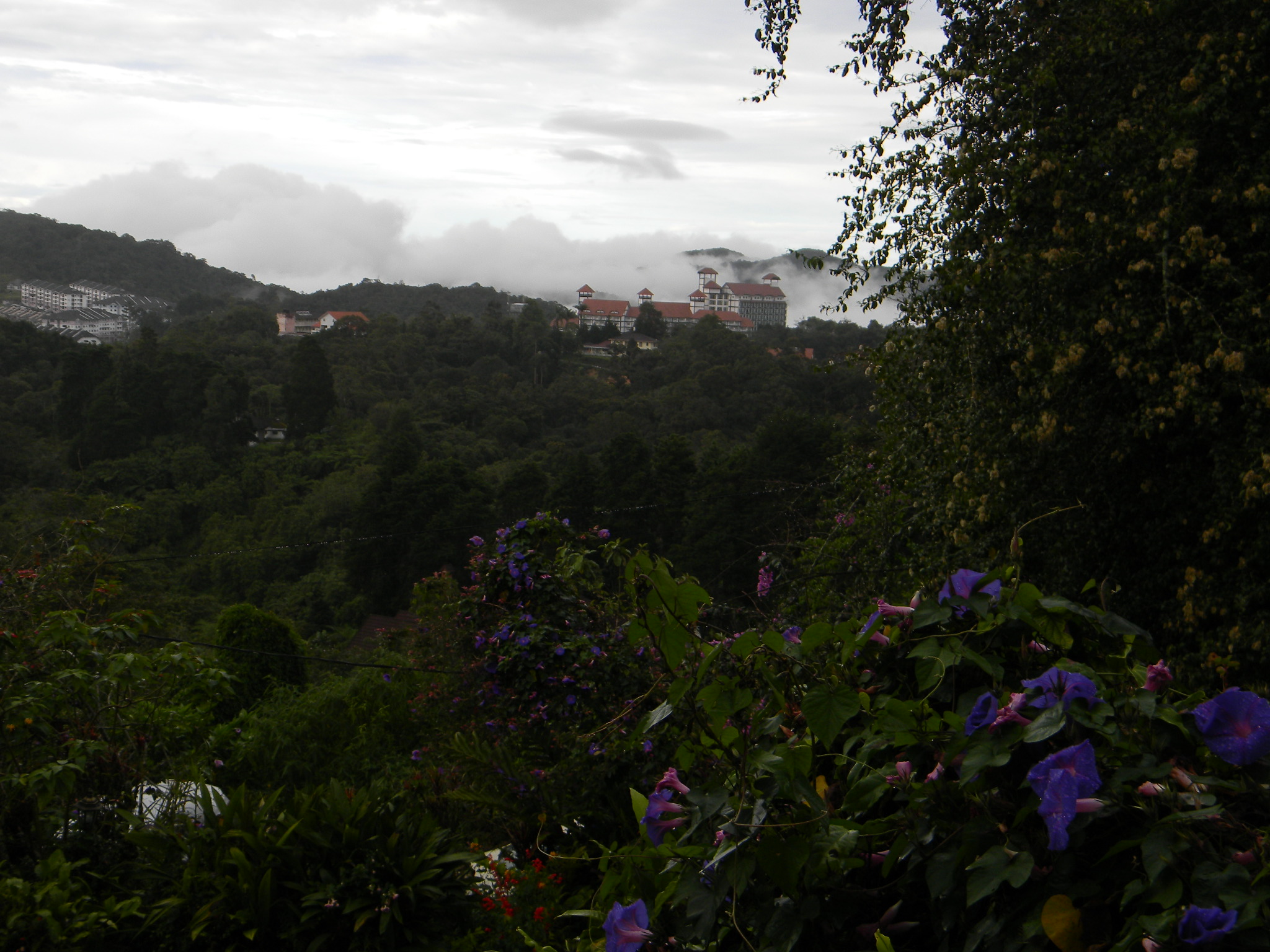
The view from our window was breathtaking and it was a marvel just to explore the gardens and the amazing flowers that grow everywhere, including on the tile roofs. Although we were only there one night, we came away feeling very refreshed and ready to face the challenges of the month ahead.

Driving in Malaysia is not for the faint hearted. Practically everybody in Kuala Lumpur has a car, so very few people walk, cycle or ride public transport. The expats who work here always get incredulous stares when we suggest a stroll to the nearest mall, or offer to walk home after an evening with friends. As a consequence the roads are absolutely packed. Combine that with a road system that looks like a cross between a plate of spaghetti and the race circuit at LeMans and you have a driving nightmare. Even the locals here will admit that drivers in KL are notoriously aggressive.

Cars don’t drive in lanes towards a common destination; they hurtle towards each other, changing lanes and directions seemingly on a whim, with no forethought that there might be other traffic in the lane they have just decide to move into. And the speed! I am a fairly fast driver, as my many tickets and family anecdotes will attest, but to travel at 170 klics through heavy traffic is not fast driving, it is recklessness!

I was chatting to a colleague who rented a car to take some visitors to the east coast for the weekend, asking him how he liked seeing the highlands of Malaysia, and if he enjoyed the drive. “Not at all,” he replied, “we were scared out of our minds.” He recounted a horrific accident they had seen on the way; several cars completely demolished and little chance that anyone survived. He noted that the road was completely free and dry for miles in both directions, yet somehow these drivers had managed to hit each and several others. We shared ideas on the causes of this cultural phenomenon.

He suggested that it was a function of their culture and religion. The screws are turned pretty tight in this Muslim country with not much room for individual expression or freedom. All Malays are Muslim by legal fiat on the day of their birth and the only practical way to leave their faith is to leave the country. Their faith allows them few diversions or escapes, so he saw their excessive and erratic behavior on the road as a kind of “acting out” that their religion does not allow through alcohol, dance or nightclubbing. Another teacher thought they used their faith as a kind of ‘magic talisman’ to keep them from personal injury, and so felt immune to consequences as long as their karma was intact. He also suggested that the recent acquisition of wealth in a country that was not used to being able to afford a car might have something to do with it. Western countries that have had motor vehicles for a hundred years treat them as less of a novelty and more of a responsibility.

Another colleague suggested that it was the frustration of having to drive on such congested streets all the time that led drivers to go flat out the moment they saw a bare stretch of road. Another colleague thought it was the lack of driver education in a country where a 500 ringgit bribe could get you a driving license with no questions asked. Still another thought it had to do with a sense of community responsibility. In a culture where family is sacrosanct, those outside the family have little value. He thought this might translate into homicidal behavior behind the wheel.

This last one does not explain why parents are often seen hurtling down the road at breakneck speeds with their child standing in their lap with their tiny hands on the steering wheel. Perhaps it has to do with the inability to predict outcomes, something I see all the time. A man will stop his car on the side of the road and leave the traffic side door wide open. City planners will build three levels of flyover rather than plan out in advance how to manage the traffic at that intersection. Renovations are being conducted on our condo using the “trial and error” method. In a culture that has stressed rote learning and memorization from infancy, the cognitive skills involved in predicting outcomes of current behaviours are simply not taught or practiced. The fact that this shows up in their driving is not surprising. However, all of this cognitive speculation is of no avail if you are caught in a pack of semi-homicidal drivers all careening down the highway under the influence of their own personal demons without a thought for the consequences. Then it is simply terrifying!

I have said it before and I will say it again that one of the most precious gifts that God has given to the Carter family was delivered twenty five years ago today when my brother Randy, married Sylvia.

Congratulations on this milestone in your lives, your hard work and persistance and commitment to God, each other and your family that has kept you on this path even through the rough times. Thank you both so much for your support and encouragement to us over the years and especially while we have been overseas.

We look forward to seeing what God has in store for you both and for Jesse, Jenelle and Jeremy in the years ahead.

Clarity in thought and expression is such a rarity that one is inclined to be astonished when it is encountered. Unfortunately there are so few classes of people among whom it can be found. Atheists are notoriously obsessed with the painfully obvious, so what they write is either boring or obnoxious; Hindus and Moslems are obsessed with exalted expressions of the obscure and obtuse, so many words and so little of any value; Catholics are obsessed with endless speculations of the symbolically arcane: fascinating but often beside the point. Which is why if you want clarity you need to seek out the ruthlessly logical writings of Dietrich Bonheoffer or C.S. Lewis. However, a notable and worthy exception is C.K. Chesterton, the delightfully acerbic Catholic writer and contemporary of H.G. Wells, Bertrand Russell and G.B. Shaw, all of whom he skewers on the end of his pointed and germane wit for their fatuous philosophical meanderings through the issues of early twentieth century thought. One of those issues was Eugenics, which all three of these three famous Fabians espoused as the saving principle of modernity.

Eugenics was the wayward child of Social Darwinism, and enthusiasts like Wells, Russell and Shaw proposed that by genetic engineering humanity would be perfected. Under their guidance Britain was well on the way to formalizing these principles through the force of law – such as the ‘feeble-minded law,’ known officially as the Mental Deficiency Act of 1913, drafted in part by then Home Secretary, Winston Churchill, “In order to realize the opportunities for racial betterment, and to secure the social and moral improvement which will inevitably ensue.” In the United States in Buck v. Bell, (274 U.S. 200, 1927), the United States Supreme Court upheld a statute instituting compulsory sterilization of the unfit, including the mentally retarded, “for the protection and health of the state.”

One of the first acts of the new German Reich in 1933 was to pass a Eugenic Sterilisation Law, ordering doctors to sterilise anyone suspected of suffering from hereditary diseases. “We want to prevent the poisoning of the entire bloodstream of the race” to quote Goering’s legal assistant. By 1939 some 250,000 ‘degenerates’ had been forcibly sterilised, over half of whom were diagnosed as ‘feebleminded.’ The Nazi regime took what it regarded as the logical next step in 1939, when it decreed euthanasia for all severely disabled or mentally ill people in German asylums. Any Jew in these asylums automatically qualified, irrespective of degree of handicap, and about 70,000 people were murdered. Essayist Russell Sparkes notes that, “it can thus be said, without exaggeration, that eugenics was one policy which paved the way for the ‘Final Solution’ of European Jewry.” Chesterton labelled the ‘progressive’ eugenists of his day ‘anarchists,’ and thought that they were dangerously deluded and that following them would lead to a dangerously unstable world. It turns out that Chesterton was absolutely right, but 60 million people had to die before the world realized how right he was.

Taking a leaf from Chesterton, I would have to say that what is happening on Wall Street today is unfettered anarchy, and its notions are likewise dangerously deluded. I don’t mean what is happening on the street itself. On the contrary, I find the actions of the protesters perfectly rational. They have no meaningful employment and are blamed for being unemployed; they have no resources, yet pay a burden in taxes which is quite disproportionate to their income; they have no hope or future and are protesting against those whom they feel, with some justification, have stolen it from them. Nor are they anarchists who oppose them with batons and tear gas. The police are merely carrying out the orders given to them by those who pay their wages. If they did not do so they would lose their jobs, or at least their chances for promotion. Their behaviour is perfectly rational as well. There are undoubtedly some bullies among the police. You cannot have a form of employment that includes the lawful right to carry guns and physically manhandle criminals without attracting those who enjoy that kind of license to abuse others. But they cannot be called anarchists, since they operate within a certain framework that permits a tolerable amount of abuse.

No, the anarchists are those who inhabit the offices on Wall Street: the bankers and investors who wear Armani suits and drive luxurious vehicles. They are the true anarchists. Why so? Because they fit the definition. An anarchist is one who has no clear notion of what he is doing, has no goal or agenda other than simply to destroy what exists. He does not oppose any specific thing or group, he opposes everything and everybody. He is not a rebel, since a rebel wants to overthrow the existing order and establish a new order based on new principles. The anarchist wants to overthrown all order and establish nothing in its place. Within that absence of structure and authority the anarchist deludes himself into thinking that he will be totally free to act according to his own selfish desires with no one to hold him accountable for anything that he does. He is Chaos incarnate.

That is who we find in the offices of Wall Street. That is what defines the Koch brothers, who will raise and spend nearly a billion dollars to defeat Obama and the Democrats in the coming American election. They and their ilk are not seeking to defend the American principles of entrepreneurship. They are not seeking to redefine regulations regarding the expansion of capitalism. They want all of that swept away. They want a world where there are no limits on their accumulation of wealth; they want to remove all fiscal restraints, including reasonable taxation, which paves the roads their Mercedes and Beemers drive; they want to remove all fiscal regulations, which prevent the systematic abuse of financial instruments; they want to remove the restraint of government in its entirety, or at least bring it to a grinding, immovable halt thereby destroying the social contract and even the foundations of American society itself. By so doing they will destroy the very goose which has laid for them a trillion golden eggs with their corporate logos stamped all over them. At which point they will depart with their billions to more favourable climes to destroy another country in their wake. They are destructive, dangerous economic anarchists, and there is no end to their delusional greed.

All of this I in a measure understand. In my youth I spent four dissolute years probing the seedy underbelly of Western society, and never saw the bottom of self-indulgent, anarchistic evil. It does not surprise me to find it on Wall Street or Main Street. It is the calling card of the Enemy of Mankind, the very stench of his sulphurous armpit (Decency forbids me to say worse). What surprises me; what alarms and dismays me is the number of Christians who ought to know their scripture better than they do aligning themselves with the destructive insanity that motivates Wall Street and its toxic greed. Have you not read the scripture that says, “It is easier for a camel to pass through the eye of a needle than for a rich man to enter the kingdom of heaven?” (Matt. 19:24). Have you not read “Let the brother of low degree rejoice in that he is exalted: but the rich in that he is made low: because as the flower of the grass he shall pass away. For the sun is no sooner risen with a burning heat, but it withers the grass…so also shall the rich man fade away in his ways” (James 1:9-11); or that “whatsoever my eyes desired I kept not from them, I withheld not my heart from any joy; for my heart rejoiced in all my labour, and this was the portion of my labour. Then I looked on all the works that my hands had wrought, and on the labour that I had laboured to do: and behold, all was vanity and vexation of spirit, and there was no profit under the sun” (Ecc. 1:10-11).

For those that will dispute with me on textual interpretation, I do not defend these verses, though they speak plainly enough to me. So consider instead the narrative of Christ: how as Creator of the universe He came to earth as a lowly, impoverished baby, helpless and despised; how at His death he owned nothing but His tunic; how He gave the riches of heaven away for free for those who asked; who identified with the prostitutes, Galileans, fishermen and tax collectors of His time. If Christ walked the streets of New York today it would be as the hands and feet of compassion and charity to those who live on the street, asking only that they be given a chance to earn a decent living for their families. He would not be drinking champagne with the residents of the banks and investment houses; He would be driving them, like the money-changers of old, out of the temple. How is it possible for you to have missed this fundamental point of scripture and side with such anarchist agents of destruction?

Forgive me if I have overstepped the bounds of decorum here, for I do not wish to offend those whom I love. Perhaps I have steeped my reason for too long in the intoxicating waters of Chesterton and Lewis. I do not have their insight and wisdom, nor the fearless tenor of their prose. But mark my words; for although I am no prophet I have studied and seen much in my sixty plus years. If those anarchists who inhabit the towers of Wall Street cannot be reigned in, America will not survive the devastation that their destruction of the economy will bring. The Dust Bowl of the Dirty Thirties will seem as a summer holiday in the ruin of America they intend. Have nothing to do with their evil deeds. Rather condemn them as ungodly anarchists seeking nothing but their own selfish, satanic greed, and do not worship the Golden Calf they exalt as their god.

For an opposing view, kindly see http://jonandnic.wordpress.com/2011/10/27/occupy-your-job/
In his 2012 Budget Speech, Malaysian Prime Minister Najib designated next year as National Innovation Year and allocated RM100 million for several strategic initiatives. This announcement raises one underlying issue – does Malaysia offer a nurturing environment for innovators? An examination of Steve Job’s life highlights several factors that contributed to his innovative successes but militate against nurturing a Malaysian wannabe.

First are laidback parents. Obsessed with ensuring their children’s education, many Malaysian parents are unlikely to allow their offspring to drop out of university or to study arcane subjects. In 1972, Jobs enrolled in Reed College in Portland, Oregon but left after one semester because he didn’t see the value of depleting the savings of his adoptive working-class parents on tuition fees. However, the biological son of a Syrian father and an American mother continued attending classes that interested him, including one in calligraphy. “If I had never dropped in on that single [calligraphy] course in college, the [Macintosh] would have never had multiple typefaces or proportionately spaced fonts,” Jobs told an interviewer.

Second is Malaysia’s corporate set-up. Would a college dropout habitually garbed in faded blue jeans and sneakers like Jobs be considered a “fit and proper” person to become a CEO of a public listed company? Even in the US, Jobs’ unconventional behaviour contributed to setbacks in his career. Partly because new computer models like Lisa failed and early Macintosh sales were disappointing, Apple directors stripped Jobs of his operational role. Jobs offered another reason for his ouster. “I don’t wear the right kind of pants to run this company,” Jobs told some Apple employees before leaving in 1985 the company he had co-founded with Steven Wozniak. Eleven years later, failure to develop the next-generation operating systems prompted Apple’s then CEO Gilbert Amelio to acquire Job’s NeXT for US$430 million (RM1.36 billion) and to invite the latter to return as an adviser. In July 1997, Jobs organised a board coup that ousted Amelio. He was later named Apple’s interim CEO, prompting jokes that Jobs was the iCEO. Could such a sequence of events happen in Malaysia?

Third is Malaysian society which venerates both success and conformism. Getting fired from Apple, however, inspired Jobs’ subsequent burst of innovation. “I didn’t see it then, but it turned out that getting fired from Apple was the best thing that could have ever happened to me. The heaviness of being successful was replaced by the lightness of being a beginner again less sure about everything. It freed me to enter one of the most creative periods of my life,” Jobs said in his commencement speech to Stanford University in 2005. In 1986, Jobs bought Pixar, a computer graphics studio, for US$10 million (RM31.7 million). Successful computer-animated films like Toy Story and A Bug’s Life enabled Pixar to be sold to Disney for US$7.4 billion (RM23.5 billion) in stock in a deal that made Jobs a billionaire. On his return to Apple, Jobs rolled out a string of innovative products – iMac, iPod, iPhone and iPad – that were mega successes as well as game changers in the personal computers, music and mobile telecommunications industries.

In Malaysia, whenever an individual espouses an unconventional view of an historical event, expresses a different opinion on the role of the monarchy or composes a song that adopts a satirical attitude towards the national anthem, many are quick to suggest the individual should be charged for criminal defamation, prosecuted for sedition or stripped of his citizenship. But innovators like Steve Jobs are rebels, not conformists. In an interview, Jobs singled out taking a drug like LSD as one of the most important things he had done in his life. When Jobs assembled a group of young, talented engineers in his Macintosh team, he called them “pirates” while the rest of the company was nicknamed “the Navy”. Jobs realised only those who dare to defy societal norms and break perceptions of what is do-able will be truly innovative.

In his Stanford commencement address, Jobs said a 1960s counterculture book titled The Whole Earth Catalog which deeply influenced him as a young man ends with this phrase “Stay hungry, stay foolish”. “I have always wished that for myself,” he added. Would parents, corporate chieftains and political leaders in this country allow such individuals to flourish? An environment that cherishes its non-conformists – rather than government support and the millions of dollars in funding – is the key to ensuring Malaysia will one day produce its own Steven Jobs.

Posted in the Malaysian daily The Sun 17 October 2011  by Tan Siok Choo

« Previous PageNext Page »