Ministry


The very talented and opinionated Mark Steyn has made himself something of a local celebrity in Canada recently by his Muslim-baiting approach to some sensitive issues, such as freedom of speech and the question of what constitutes hate-speech. Mr. Steyn may have some cultural and ethnic axes to grind in his view of Islam; he does come from a Jewish background, a group not known to be particularly fond of their religious and ethnic half-brothers. But there is no denying that Steyn has touched a chord, especially among those who feel that Muslims generally, and fundamental Muslims in particular have been responsible for more than their fair share of the world’s problems of late.

I would like to suggest that Islam is not the problem, but there is something more fundamental as a root cause of much of the world’s unhappiness. The very real and very distressing outcome of this problem manifests itself as Muslim violence in many parts of the world. But that is only one part of the problem. The rape of the planet’s resources, the degradation of the environment, the plight of the poor in Haiti, Africa and many parts of Asia, the mind-numbing commercialization of every aspect of our lives, the deterioration of our families, the exploitation of women and children as sexual objects, and the obscene accumulation of wealth by a tiny percentage of the world’s population resulting in the grinding poverty of millions all arise from the same root: a loss of awe and wonder in the majesty of an Almighty God who created the universe by simply speaking it into existence, before whom every creature on earth will one day stand in judgment.

Our view of ourselves has degraded in exact measure as we have degraded God in our thoughts, words and deeds. To the extent that we no longer see ourselves as being made in the image of a holy God, to that same extent we pour scorn our husbands and wives, children and parents, friends and relations. To the extent that we will no longer be ruled by an Almighty God, in that same measure we will not be ruled by any earthly authority, resulting in chaos and anarchy, the breakdown of functioning democracies and the rise of totalitarian regimes. To the extent that we despise God’s moral law, to that same extent do we indulge in our own financial rapaciousness, and wink at those we do likewise in our societies.

To the extent that we scorn at any notion of final judgement, to that same extent do we commit all manner interpersonal atrocities, from the genital mutilation and honour killings of girls and young women in Hindu and Muslim societies to the sodomy of boys in Catholic churches by ordained ministers. To the extent that we do not see ourselves as male and female creations of God, to that very extent does half the world force their women to be covered black canvas bags while the other half forces them to expose themselves indecently at every possible opportunity and venue.

If God walked among us, He would weep. But there’s the rub: He did walk among us, and He did weep. And we have forgotten that essential fact; we will no longer be governed by its truth and its beauty. As a result we have become truly ungovernable. So we thrash about, looking to blame each other for the mess we have made of things, when the solution lies plainly before us. We simply must return to God, before we truly lose all that our civilization has brought us. I think at some fundamental level Muslims understand this better than we in the West do. They are seeking to get right with God in the best way they know how, and they are fighting hard against all the impediments they see in their way. And there is no doubt that the West in all in crass commercialism and godless pursuit of wealth even if it means the destruction of society itself stands in the way.

This is not to say that Islam is right. Clearly as a committed Christian I think they are misguided in some very basic fundamentals, such as the need for forgiveness. To imagine that forgiveness from a holy God is possible by any human action, no matter how well motivated or intended is a notion that either thinks too highly of man or too lowly of God. Jesus said the benchmark for entrance into heaven is “perfection” (Matthew 5:48). The Buddhists seem to understand this better than anyone, including Christians. They teach that our debt of wrong deeds, karma, is so great that it will take us many lifetimes to pay off even the smallest amount. What both faiths seem to recognize at some level and yet what they both lack is a Saviour. Only God can pay the debt we owe. That is why He came to earth. That is why He died.

The West used to know this. They no longer do. That is why the West is in decline. Look at history. God does not favour nations that do not uphold His name. Islam for all its faults is at least trying to recover that ground. Buddhists in Cambodia and Myanmar are beginning to recognize their social responsibility. These faiths are not our enemies; they are our natural allies in the struggle against all that is vile in human nature. So long as Mark Steyn and others counsel the West to fear Muslims, then all the greedy forces of the West will use this fear to maintain their grip on society and drive it further along the road towards its own destruction.

The Hebrew prophets when describing the reason for the destruction of their own people would simply say “There is no fear of God before their eyes.” That is the problem with the present age and the reason for all the woes that have befallen this truly wicked time. Seen in this light the Hindus, the Buddhists and even Islam is not the enemy of mankind; rather it is our own perverse and self-destructive lack of holy fear of all all-righteous and all-powerful God who will one day judge us for how we treat those whom He has made – male and female – in His own image.
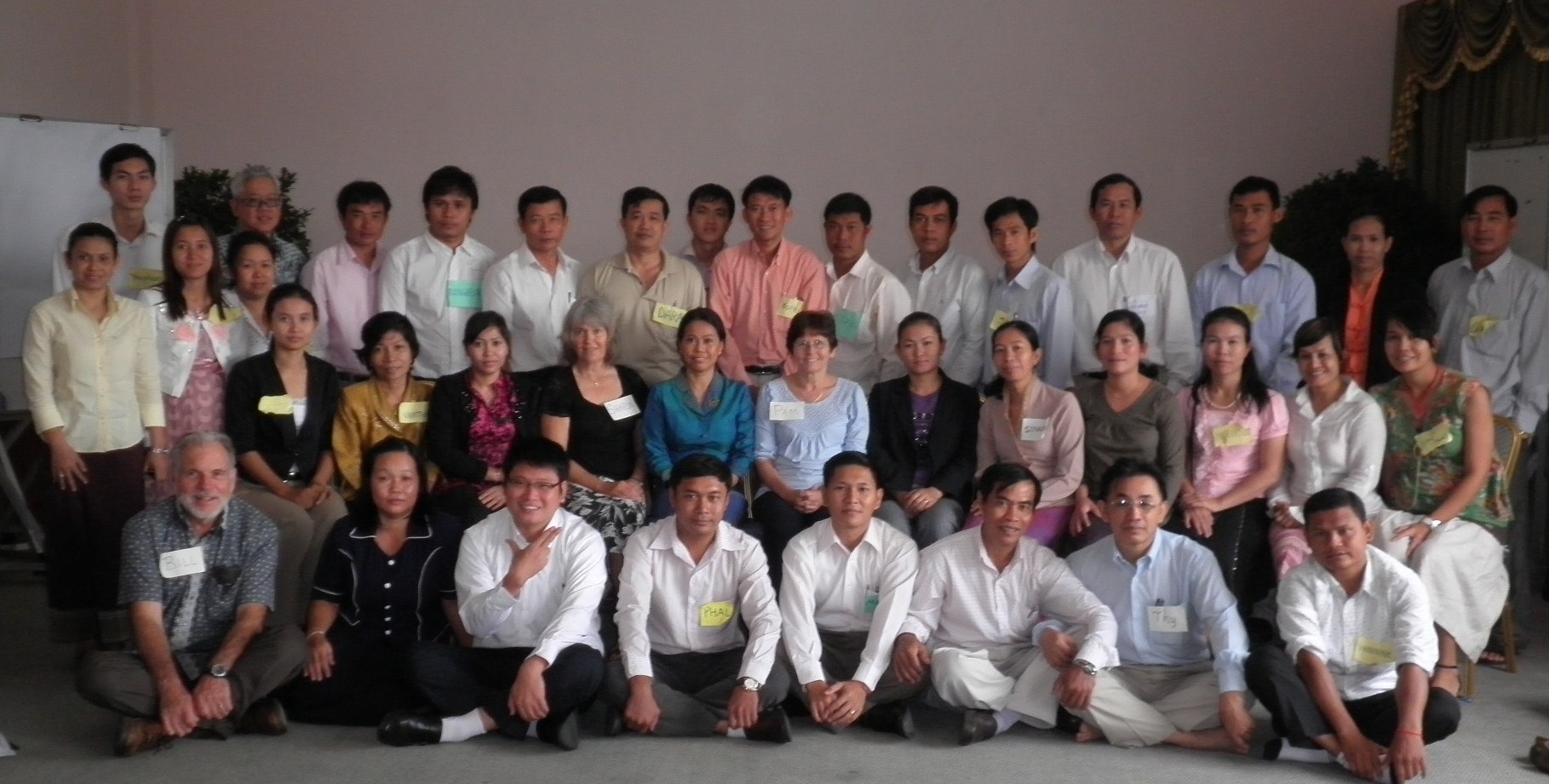


The Moral Values workshop that we spent so much time praying and planning for is now over and it is impossible for me to put my feelings into words. We started out the week getting to know a lovely group of very well educated and committed Cambodians. Their hope was that their minds would be opened up to the impact that moral values have on the health of individuals, families and their country.

Throughout the week we used the illustrations of a dying “Tree of Despair” with evil roots and a flourishing “Tree of Hope” with roots of strong moral values. We stressed the need to dig out these sick roots and plant strong roots of right living and good moral values. Initially their concerns were all about the corruption, poverty, loss of family and cultural values, and their inability to address the despair that they and their families live with. With each new lesson, we saw the excitement grow and the vocabulary change. Rapidly they went from describing the family as a rigid structure with room for nothing but meeting physical needs to an understanding that the home needs to be a place where children learn about love, kindness, respect, forgiveness, faithfulness, responsibility and can develop a strong sense of self and the ability to resist temptation.

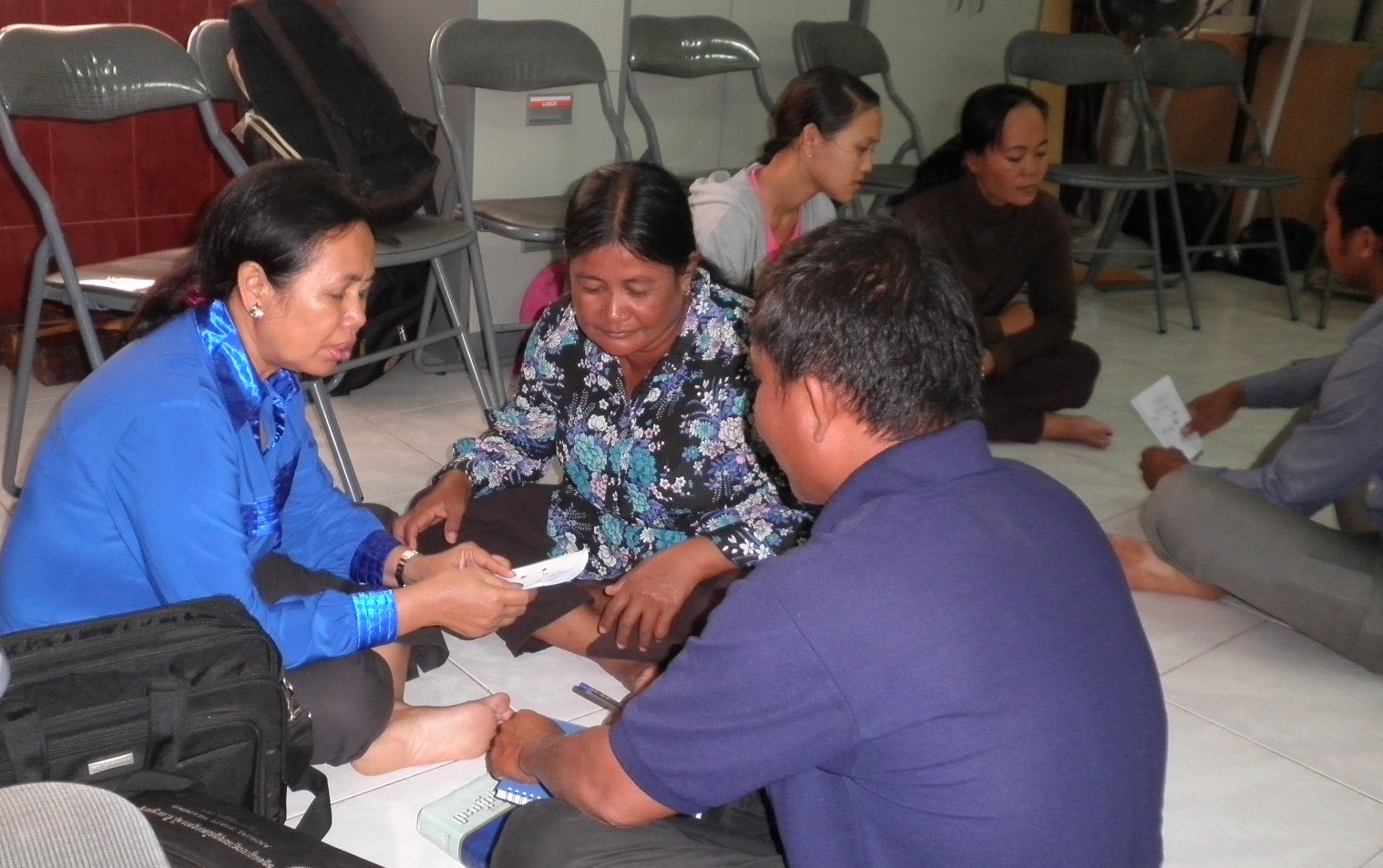
Another recurring theme was the process of character development: knowing what is good, desiring what is good, and practicing the good until finally it becomes a habit. Each lesson began with a role play or story, which everyone loved, followed by a set of questions designed to draw out the principles of the lesson. Joseph was such a big hit that Bill had to revise a lesson so that he could finish the story the following day. Small group discussions were then used to bring out the desired understanding and the learners really enjoyed this participatory approach and the respect for their own knowledge.

They told us that these words were not new to them. They had heard them all before, but just had no idea what they meant or how to apply them. Some of the concepts really challenged the way the Cambodian society functions. In one session we used the story of the woman caught in adultery and created a real stir when we suggested that the man involved may have in some way been at fault. The concept that children are entitled to be respected by adults was also pretty new. At the end of each session the participants wrote a personal application in a journal- one thing that they intended to change in their own life or family.

During the wrap up session the Executive Director challenged the staff to apply this to their own lives, begin to spread it to others in the workplace and integrate these lessons into the training for Volunteers and Peer Educators. With over 750 staff and 20,000 volunteers that is a huge task, but Dr. Vathiny said “we can do this now because we have a Tree of Hope”. One of her final comments was that Christianity is very rational and makes a lot of sense. Our prayer is that she and many others will continue to search for this hope. Thank you so much for your prayers for us this week. It has been an amazing journey.


Day Three was another incredible day; almost overwhelming at times. These are amazing people, but it is unbelievable the gaps in their culture and their understanding of things. They seem to be happy to be exploring new ideas even though every new topic gets deeper and raises more questions in their minds.  With each lesson it is evident that they are learning so much and it is so fun to  see their joy when a new concept becomes clear.

We are getting to the site by 7:30 and not getting back to my room until almost 9 each night so it is exhausting. My first facilitation went really well and I have my second tomorrow. Please continue to pray; teaching is not something that comes naturally to me.  The hotel is a lovely building but the air quality is very poor with a strong smell of mold and everyone is getting sick.  Bill had to cash it in by noon as he had a very high temperature.

I had a meeting a 6:45 this morning with Bernard – the guy from Holland who is responsible for our funding for the proposal that I have been frantically working on for months. He mentioned quite causally that the money for the project has in fact been approved and is available. He was a little surprised to hear that that was news to us.

TWR Cary is upgrading their server and I can’t access my twr mail, which is frustrating!  This did shorten my day somewhat as I was unable to finalize a meeting for this evening.  I am just now watching the miners being rescued in Chile, and it is awesome.

“If you want to go in the darkness, you have to be the light.”
Simon Brown (age almost 3)


There is no doubt that Cambodia is a country of darkness.  You only have to walk by the seedy snooker halls and darkened Karaoke parlours or see the beautiful young girls all dressed up and waiting in front of the restaurants to get a glimpse of just how dark it is. This is a darkness we long to go into and we long to be the light.

There are probably very few who have worked harder to change this reality then Dr. Vathiny.  As Executive Director of the Reproductive Health Association of Cambodia (RHAC) she has created an organization that reaches into the heart of villages through a network of volunteers where this is often the only health care available.  Their network of Peer Educators among the youth, factory workers, fishermen and even sex workers are highly regarded by the people they teach.

The lessons and resources they have created are excellent but even they realize that the behavioural change they are looking for is not happening and that people are deeply in need of moral and spiritual help that RHAC can’t provide.  This week our consultation group will share with them twenty six lessons and a teaching strategy aimed at encouraging oral learners to explore their own understanding and make good life decisions.  Our hope is that the leadership of this organization will understand how the lack of moral values and spiritual darkness negatively impacts the physical health of Cambodians and the health of the society in general.

We spent most of the morning laying the ground work for the week with discussions on the difference between relief and development and the need for a holistic approach to good health and the role the volunteer can play in a community.  After lunch we really began talking about moral values and examining a number of positive character traits and how they are developed.

The makeup of the group turned out to be a little different than we anticipated in that is was not mandatory attendance.  Consequently it was a group of people who were already convinced that it is absolutely essential that these changes need to be made.  All recognized pretty quickly that the change needs to start in their own hearts and that it is a bit frightening to know that they need to be role models and mentors. It is a huge responsibility to take on this challenge, but they seem to be ready to go and are just anxious to learn how to do this in Cambodia. We’ve had lots of good open discussions and I am looking forward to day two.

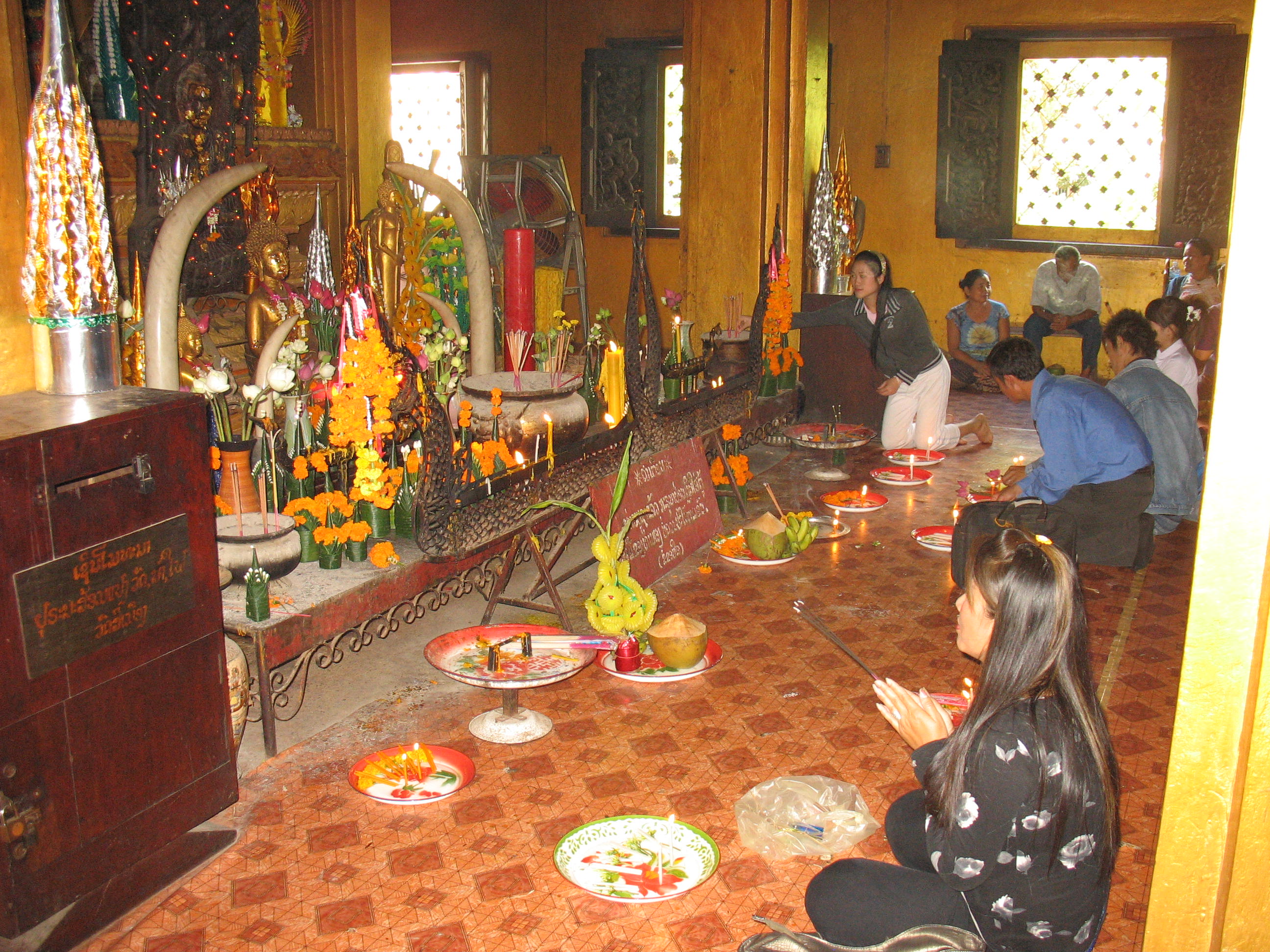
For the past two weeks the Cambodian people have been celebrating the festival of P’Chum Ben, or the festival of the dead, during which they return to their homes to fulfil their traditional obligation to appease the ghosts of their ancestors who have been roaming different pagodas in search of food offered by their living relatives. According to Buddhist beliefs, the lives that we live after death, are predicated by the actions that we took when we were living. Minor infractions would be punished with small punishments, such as being an unattractive ghost or having a small mouth. With a small mouth, it is hard to eat. Other, more severe, punishments could include being crippled or having no mouth at all.
The people visit the pagodas offering food and attempting to please the gods by fully following the pancasila, or the Five Precepts, that they repeatedly chant during the ceremonies.
 To refrain from destroying living creatures
 To refrain from taking that which is not given
 To refrain from sexual misconduct
 To refrain from incorrect speech
 To refrain from intoxicating drinks and drugs that lead to carelessness
In theory, Cambodians believe they will have a peaceful and harmonious society if they can only follow the Five Buddhist Precepts that are the basis of the rule of law. However, the number of educated monks in Cambodia is small; many were murdered by the Khmer Rouge, which ruled the country from 1975-1979.The regime destroyed Buddhist institutions and tried to erase the religion from the Khmer consciousness.

Today, while most Khmer consider themselves to be Theravada Buddhist, religion still plays only a small role in most people’s lives. As a result, most of society lives with little understanding of moral values, individual worth and dignity, compassion and responsibility. The Five Precepts teach people that their suffering is a result of failure to keep a moral standard that is impossible to meet and all they can do is learn to live with their lot. It is a society in which little hope is offered and peace is very unlikely.

Post-traumatic stress disorder is a mental health disease that arises from a severe reaction to unprocessed trauma. Among Cambodian immigrants living in the United States, where such statistics are available, it is estimated 62% of Cambodians suffer from PTSD and 51% suffer from depression. It can be assumed that the rates for Cambodia, where such statistics are not available, are equally high, if not higher. After all, in Cambodia there is the daily reminder of their trauma in shattered buildings and lives all around them.

Time alone does not heal all grief and pain. Trauma can be re-experienced many times throughout one’s life. The brain has many ways to protect us from immediate psychological and physical damage such as dissociation, avoidance and numbing, which can help us to cope with an unbearable moment of grief and pain in the short term. But if we do not deal with that damage it can lead to unhealthy long-term effects.

Many Cambodians who lived through the Pol Pot years did not have the chance to deal with their trauma. They repeatedly had to face life shattering events, and even today many continue to face new and equally damaging experiences. Without a safe place to integrate their feelings of fear and pain and without support from people who were not traumatized, these Cambodians do not have an opportunity to heal.

In Cambodian society, daily life remains full of triggers. Every frightening personal or social situation may wake the “sleeping dogs” of trauma. This could be the unstable political situation, the insensitive statements of Cambodian leaders, or personal experiences related to corruption, land grabbing, landmines, rape, domestic violence, unprofessional and unjust courts and many more societal problems. As long as life in Cambodia continues to lack real security and reliability, every single moment can trigger memories of old traumatic experiences and feelings.

At times a trigger such as an event or person or sensation reminds a person of some aspect of their trauma and suppressed and unhealed emotions can erupt in very problematic ways. The evidence of this is felt in anger, domestic violence, child rape and criminal activities. Many who suffer from anxiety, detachment, nightmares, addictions and even severe mental health issues like PTSD are living in a culture of silence in which there is little inner peace in the hearts of individuals, and little communication between people. This leads to strained relationships between couples and families, as well as among people in villages, and towns.

During my visits to Cambodia and in my reading and conversations, fear – usually due to a lack of information, knowledge and understanding – is one of the most evident symptoms I see as the result of a generation of war.

The Cambodian people are desperately struggling to get back ownership and control of their lives in the midst of the poverty and destruction created by years of foreign and civil wars, find new skills to cope with the trauma, and reorganize their lives in a healthier ways. The sheer magnitude of the task of physical survival has prevented the development of the skills needed to deal with damaged self esteem, destructive behaviour, hopelessness and a lack of trust.

Individuals and families often do not understand that trauma can lead to outbursts of anger, depression, and panic or sudden grief, or that traumatized people may be more suspicious and afraid and have a tendency to withdraw from society. Often those who suffer from these symptoms are viewed as abnormal or even mentally ill and there is little sympathy or compassion for their plight.

Without counsel or insight into their grief, anger and depression, and with nowhere to turn for help, many seek relief in the abuse of alcohol, drugs, sex and violence. Many young Cambodian women were raised in child labour or refugee camps with little healthy parental influence and are ill-prepared to face the responsibilities of marriage and motherhood.

What is needed is some basic knowledge about these pressing issues. If help were available, many Cambodians would seek the help they desperately need. Armed with support and insight into the trauma they have been through, they will come to realize that their feelings are normal and justified and begin the road to recovery for themselves and their family.


We are in Cambodia on a working holiday this week. Pam’s working and I’m on holiday. I honestly can’t remember the last time I was in Phnom Penh, but it was over a year ago, and there have been some changes. For starters the place is a lot cleaner. There is a lot of new building, and the reconstruction of the riverfront is now complete, and it looks very nice. We had a nice lunch at the FCC (Foreign Correspondence Club) down by the water and took a stroll in the late afternoon just to enjoy the view.

But they still have tuk-tuks, and it still costs no more than two American dollars to go anywhere in town. We love tuks, and not just because they are cheap. We love them because they are open all around and they don’t go too fast so you can take in what is going on around you. And you can’t take ten steps in this city without being asked if you want a tuk. Okay, that can get annoying, that is true. But we walk miles in KL looking for cabs, so the convenience is pretty nice.

Pam booked us a room at the Billabong, a nice little hotel in the heart of the city with a pool and a tiny clean room for 35 dollars. It was here that we met Lewis and Kristen Burke, a nice missionary couple from Tennesee who have been running an orphanage in Kampot in the south of Cambodia for nine years. We had a good talk about the perils of importing Western missionary ideology into the midst of Asian poverty. They have had their share of Asian families trying to sell their children to the orphanage or denying parentage – basically orphaning their own child – to get them into American hands.

It is not the worse thing that happens to children in this country, but it is part of the problem. Pam will be meeting with part of the team she is working with while we are here. But for the next couple of days we are going to get some rest and relaxation in Sihanoukville, on the coast.

A week in Cambodia is exhausting and totally thrilling at the same time and I love it.  I love watching life on the streets, riding around in tuk-tuks, spending time with my Khmer friends and every aspect of the work that I do there.  Something about being in Phnom Penh just puts all of my petty little problems in the right perspective.  I was tempted this week to complain about the hard beds at the hotel until I realized that a number of the participants in the training were actually sleeping on the classroom floor as they didn’t have the money to stay in a hotel.

My main reason for being there this week was to assist to provide a couple of days of training to the staff at Cambodia Global Action, one of our partner organizations there.  With  thirty two participants all eager to learn the material and the teaching method, we had some very interesting discussions and lots of fun.  All of the participants were CHE trainers so were very keen to glean new information and just to have a forum where they were free to discuss issues and concerns that are not often talked about in this culture.  CHE lessons are designed for use in oral cultures so are very visual and participatory as each lesson is introduced through a role play or story

After a brief review of some HIV/AIDS materials from earlier training we moved into some great lessons on Addictions, Worldview and Broken Relationships, Choosing Your Friends Wisely, Youth Love and Lies, Discovering the Roots of Despair and Hope, Marital Faithfulness, Consequences of Sex Outside of Marriage, Making a Marriage Work. Translation is always a challenge but thanks to a couple of TWR staff who joined in the training, we were able to manage quite nicely.

Thursday was spent making some more contacts with potential partners in a new program and searching out Khmer resources for our TWR teams and their projects. Yet one more suitcase of vitamins was greatly appreciated by the Children’s outreach mininstry.

I even had the opportunity for a couple of first time experiences like eating cockles, which actually taste OK when served in a cinnamon sauce.  I just had trouble getting the picture of the “cockle carts” out of my head.   The tiny, little birds served with their heads and feet intact actually tasted just like chicken and I was happy to learn they were quails as somehow I was thinking pigeon.  It was quite startling to see how quickly the streets of downtown Phnom Penh can be transformed into rapidly flowing rivers when a monsoon rainfall hits.  I ended up wading back to my hotel in knee deep water with waves that reached thigh level when a vehicle passed by.

So why would I need encouragement? Why would I think that what I am doing is unimportant? Well don’t you ever get depressed? Don’t you ever get down on yourself? I’m 61. There are days that I don’t feel it, and there are days that every day of those 61 years weighs a ton. My feet ache, I’m overloaded with work, no one has said a kind word to me in weeks, my father-in-law passed away recently after suffering dreadfully and my wife is often away on ministry in Cambodia.

But this is where being a Christian comes in. No, not because it gives me great reserves of spiritual wisdom to face any trial. Rather it is because we serve a God who is personal, who is intimately connected with our lives, who listens to our prayers, even the ones we don’t have the courage or presence of mind to pray. He is the One who helps me, sometimes in very personal ways.

Shortly before the three week summer break I was considering not going to the yearly Prom. Pam had been back in Canada for several weeks nursing her father, and I just didn’t feel much like celebrating. I was musing this over when I went down to the pool and was greeted by some colleagues who urged me to attend. I went, reluctantly, but had half a mind to leave after dinner. In fact I was sitting in a chair in the lobby when a young man came up and said “You’re Mr. Wise, aren’t you?” I have never taught this lad or even seen him about, so I was surprised when he said that he was not in the CPU program, but had heard about me from mutual friends. “Your wife is a missionary to Cambodia, I hear.”

Now he really had my attention. I asked him how he knew that and he said that he was a frequent visitor on our website, whose address I make known to every student I teach. Word of mouth does the rest. He was a young Christian, just three years in the faith, from a nominally Buddhist family. He attended DUMC where we worship, although in such a large church it is not surprising that I had never seen him there. He wanted to know about short term mission work, and I encouraged him to get involved. It was that encouragement that he was seeking and that prompted his talking to me.

But it was his encouragement to me that was the more meaningful. I hadn’t realized the impact that I was having through this blog on students I had never met; nor the reputation that I was gathering in the school. Surely my ministry is larger than I knew and more important than I realized. This personal God that cares for us as a loving father would saw my distress and sought to comfort and encourage me by reminding me of this larger ministry by bringing this young man over to introduce himself and ask me for guidance.

I praise and thank the Lord that meets our needs in such an immediate and personal way, and I encourage you, where you are, to look to Him for such leading in your life. He doesn’t come barging in demanding our attention, uprooting our lives and ordering us about. But if you pay attention to the small details of your life, if you look for Him to answer your prayers and meet your needs – whatever they are – you will find Him, for that is His promise in His word:

“For I know the plans that I have for you,” declares the Lord, “plans not for evil, but for good; to give you a future and a hope. Then you will call upon Me, and I will listen to you. You will seek Me and find Me, when you search for Me with all of your heart.” (Jeremiah 29:11-13)

« Previous PageNext Page »