Ministry


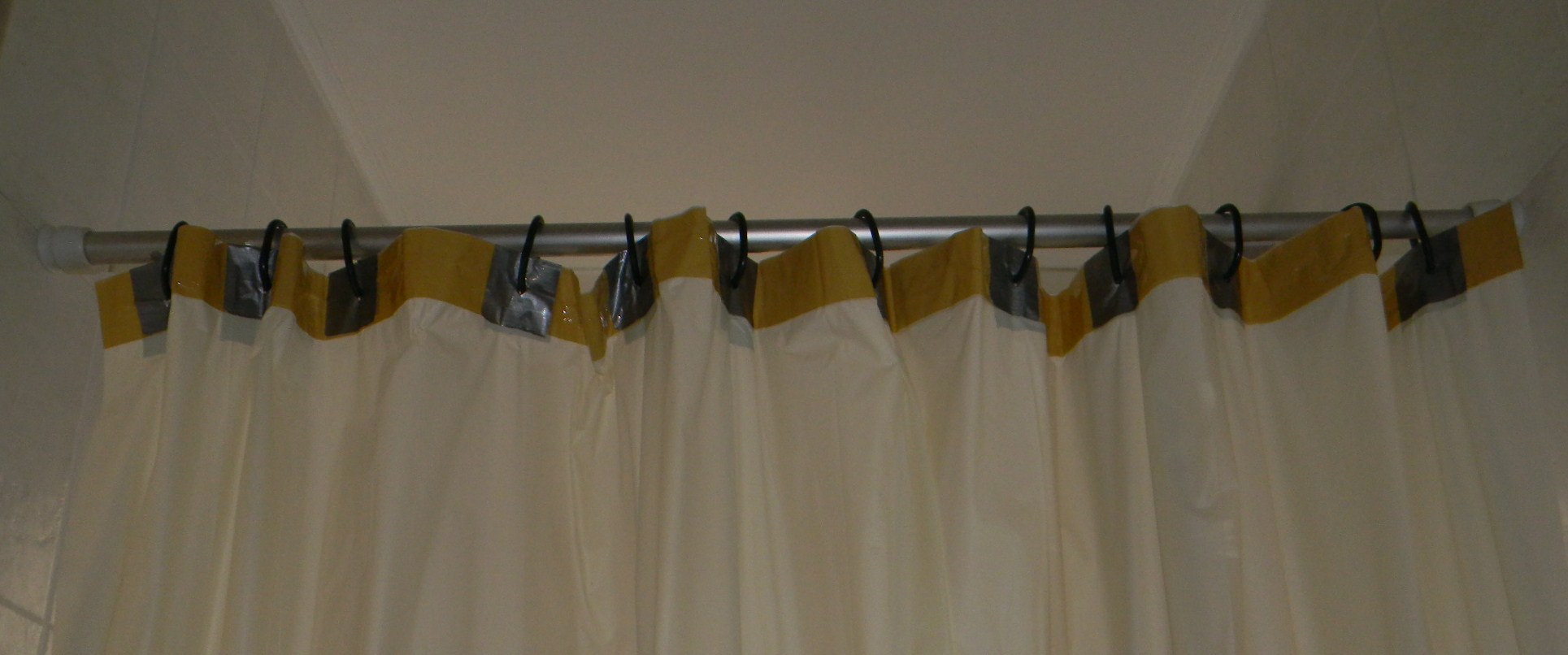
This is my shower curtain. ‘Is that packing tape across the top?’ you ask. Yes it is. ‘Is that duct tape reinforcing the shower ring holes?’ Yes it is. ‘Are you at the end of a 35 year career in teaching that would have seen you making in excess of eighty-five thousand a year had you stayed in Canada?’ Yes I am. ‘So what’s with the ratty shower curtain? You could afford to buy as many shower curtains as you could possibly use.’ Yes, but…. And thereby hangs a tale.

The tale begins, as many of my tales do, with my father. My father was a modeller. I suppose for many of you that means that he glued things together from little kits. Perhaps there might have been a kit or two in the mix, but Dad mostly built from scratch. He built boats by buying strips of wood that he would labouriously shape into hulls and decks; he built train layouts that were authentic down the finest detail, all by hand, from the ground up; he built model racing cars by having a business contacts mold synthetic rubber tyres that were the envy of the club we belonged to; the frames he built himself. That was the kind of modeller my Dad was. And beyond all this physical building, he built into me an understanding that things have value because of the time and love that a caring individual poured into them. Other kids on the block had Dads who bought them things; I pitied them. My Dad built me things, and although he never said as much – for he was a man of few words – he taught me the true value of things.

In the Sixties an entire generation eschewed the possession of things. We wanted to own nothing. We aspired to be like Thoreau on Walden Pond who saw possessions as an encumbrance. We valued relationships and sought spiritual enlightenment. We rejoiced at the oil crisis of the early 70s, for that meant that we would all to learn to do with less, and that would be a good thing. Many of us, myself included, found validation and even salvation in religious convictions, especially those that taught the intrinsic value of humankind, and cautioned against the accumulation of worldly wealth. When I married and began to raise a family, I put many of these principles into practice. We bought older houses and fixed them up, rather than buying new ones. We drove cars that were ten and fifteen years old, and kept them repaired and roadworthy long after their best-before date. We packed lunches when we travelled and ate out infrequently.

When our kids entered their teenage years, we relented for a spell, bought a new house, leased a new van, and did our best not to be an embarrassment or a stumbling block to our culturally sensitive children. But as soon as that brief period was over we went back to an older house and well-worn car and once again divested ourselves of our possessions. When this opportunity to serve God overseas came up, we didn’t balk at the thought of the things we would leave behind, for after a lifetime of eliminating possessions all that we really cared to keep – our photos, our books, and our memorabilia – could fit into a four by four storage box on Wonderland Road. Which brings us to the shower curtain.

Shower curtains have a purpose. They keep the water from the shower from getting the rest of the bathroom wet. And they provide a modicum of privacy. But they have a weakness. Because they are made of relatively thin plastic, the ring holes often tear. Should you replace the shower curtain when this happens? I think not. It is a quick and easy fix to repair the weakness and get many more months of use out of it. Is this minimal expense? Yes, of course it is, but it is also minimal inconvenience to repair it and save both the money and the cost of recycling the shower curtain. While I write this my good wife is with needle and thread altering a pair of shorts that she ‘inherited’ from another. To my mind the difference between repairing and replacing – which clearly can be extended beyond shower curtains and shorts to cars and houses and many other things – is a principle that needs to be more widely practiced.

That principle is best enunciated by the Lausanne Covenant; a statement that I have just recently been made aware of although I have followed it my entire life. It states, “Those of us who live in affluent circumstances accept our duty to develop a simple life-style in order to contribute more generously to both relief and evangelism.” That’s it; simple enough, isn’t it? But what a change it would make to our Western view of wealth if more Christian would adopt it. Perhaps in a world gone mad for things, it would be an effective way to witness of what a change Christ can make in a life. Pam and I haven’t repaired rather than replaced, borrowed rather than bought, divested rather than accumulated, just so we could live in Malaysia in our retirement years. We have done this in order that we might serve those who are less fortunate than us, and show to them the love of God for them in their need. May that God – who choose to come to earth as a helpless baby of an impoverished family of a despised race – meet your deepest human need this Christmas. And may He teach you the true value of things.
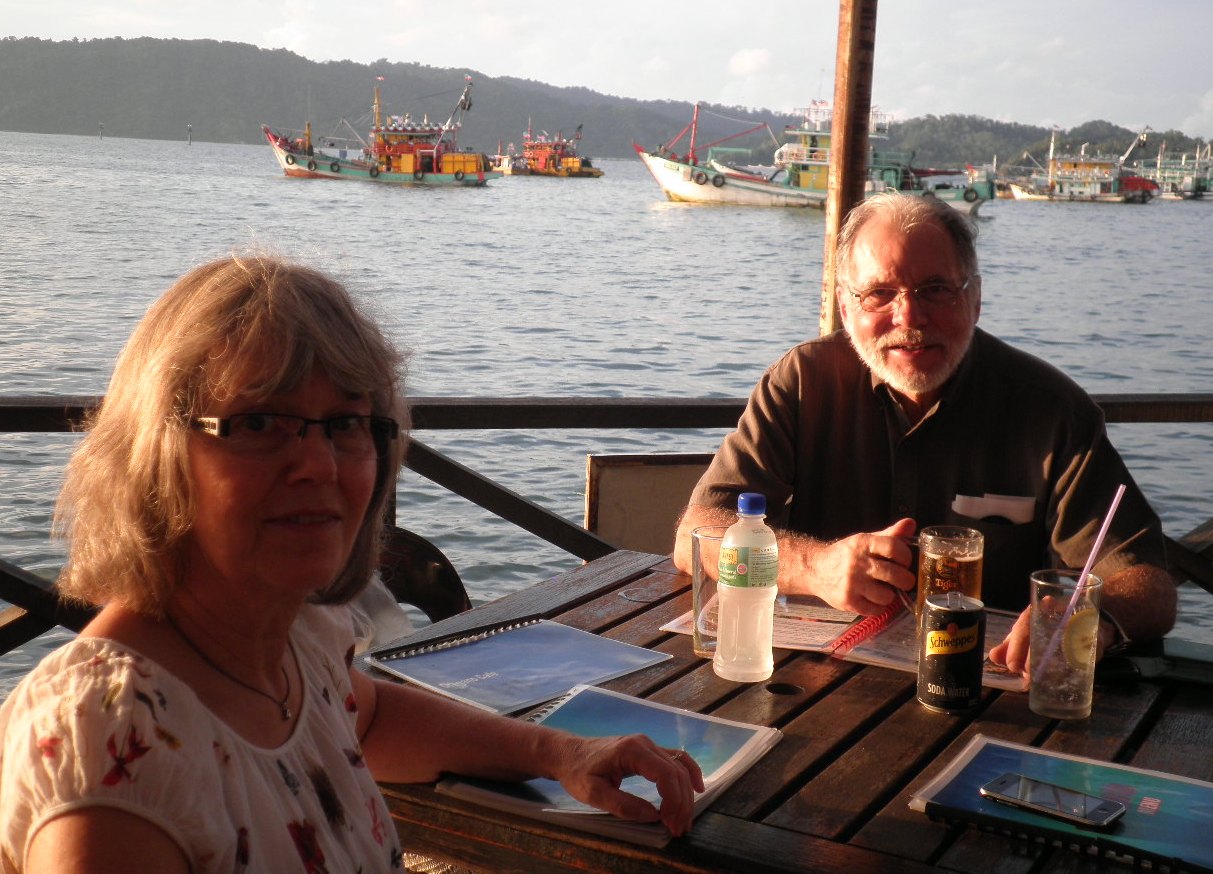
People visit Sabah, West Malaysia to see the 4,000 meter peak of Mount Kinabalu, the turtles, orangutan and proboscis monkeys and the beautiful off shore islands. I got to see the mountain in the distance, but the rest of Sabah will need to wait for later as this was pretty much a working visit on behalf of TWR. I met up with my friends and ministry partners, Bill and Sharon and enjoyed a three day stay at a quiet little hotel on the coast where we spent many hours planning out some joint activities for the next few months.

My partners have been in Canada with some pressing family emergencies the past few months, and this was our first chance for us to get together. We chose Sabah in the hopes of establishing some future partnerships for projects there. We explored the possibility of collaboration with several couples who are currently working in Sabah, knowing that this work can take years to grow to anything meaningful. However, Bill, Sharon and I did decide that in January we will proceed with the next week of training in Cambodia with our Cambodian partner, RHAC, and this will be followed quickly by the annual CHE Working Group meetings in Manila.

On Saturday we went out for an early morning walk on the beach and discovered that at low tide we could walk over on a sandbar and check out the next island. This is undoubtedly a beautiful part of the world which I look forward to exploring some time but I have to admit that the clouds of mosquitoes constantly swarming around me was a little off-putting. Dengue fever is not something I want to explore! We followed this up with a twenty minute, hair raising trip in a packed, mini-van that got us into the capital city of Kota Kinabalu. Our first impression was of a rather boring concrete sprawl of squat office towers and utilitarian shops. But closer to the ocean there is quite a lovely waterfront where you can take advantage of a good variety of restaurants.

As always I was happy to get back to our little condo in Kuala Lumpur. Steve still has some tidying up of the term to do: marks to be approved and graduation details to be worked out. But there is no doubt that the pace of our lives is going to be slowing down a bit for the next couple of weeks, and we are both looking forward to spending some time together to prepare for Christmas, our fifth in Malaysia!

Located about 45 minutes drive north of Siem Reap, Rohal is home for about 250 families who are mostly dependent on the rice harvests for their living. TWR has been broadcasting into this area for a number of years and has many regular listeners of Happy Children’s Garden, It’s Yours, Women of Hope, Stories from the Potter, The Word Today and Through the Bible.

When finances are available, the TWR Cambodia team attempts to make monthly visits to the commune to have fellowship with the listeners and teach some practical health and moral values lessons. Today, I was able to join them and to meet with a lovely group of people. We travelled with Tie Henge, a young Pastor’s son who leads this cell group church of very dedicated Christians. This little church has a village Pastor who is learning to lead the work.

While the TWR ladies taught a lesson on family planning to the adults, Kimsong lead the youth in a discussion on critical thinking. He used a lesson that Steve developed, using the hand to demonstrate the steps necessary to ensure they make the best life decisions. The little kids were only too happy to do an impromptu concert of the songs that they love to sing. With the lessons done and some noodles to munch on, an elderly gentleman got out his “tror sao”, a traditional sort of two stringed violin. A lady brought out a hymn book for some time of singing and chatting and laughter, all favourite pass times for Cambodians.

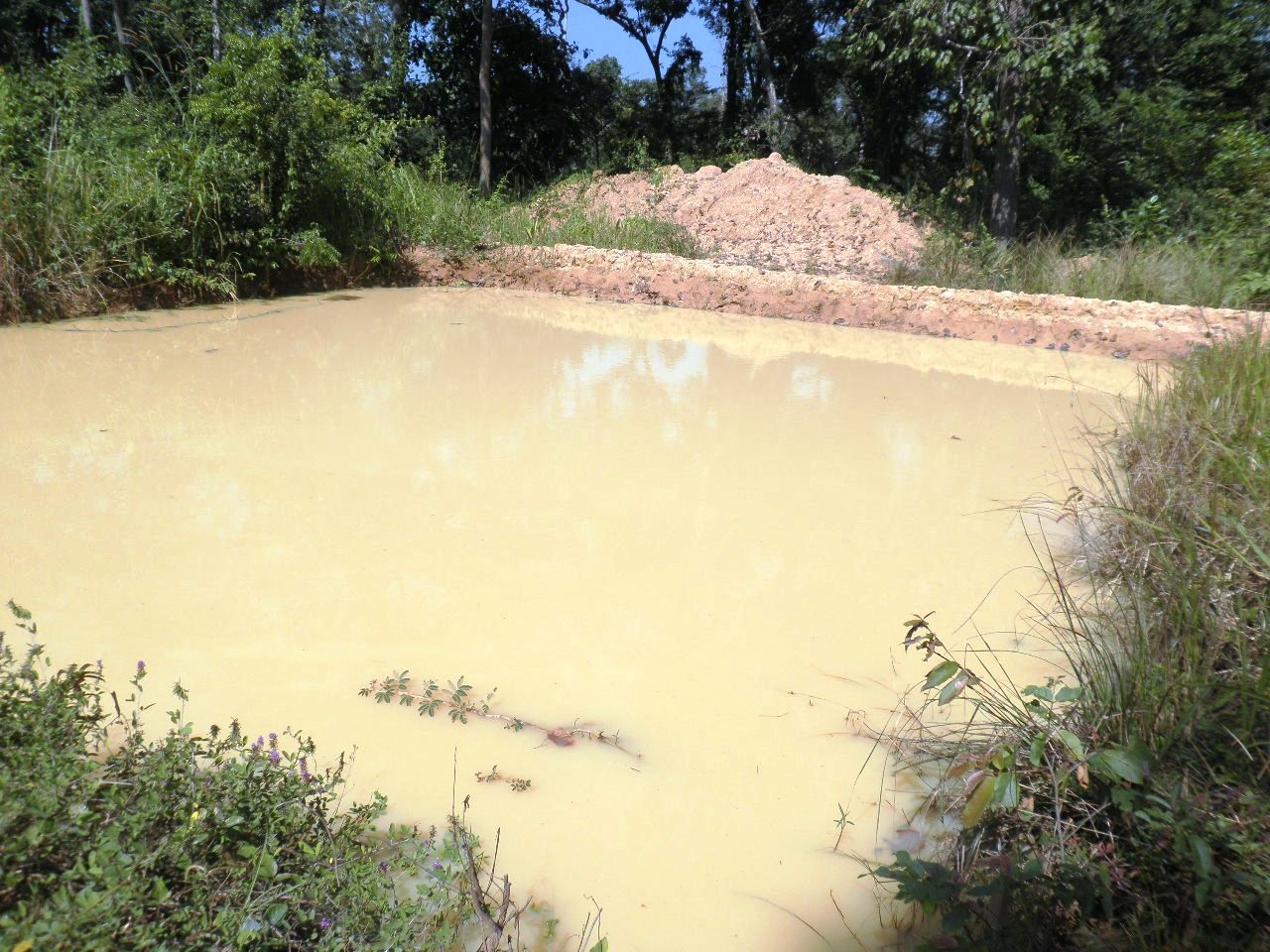
It was all very much like a regular cell group back home except for the incredible challenges these people live with every day. The village is very poor, cows and chickens roam between the groups sitting on the ground, the only source of water is a contaminated pond, the children are not in school because there is no teacher available and health care is totally absent.

It is still difficult for me to understand how so many people are able to rejoice in God’s goodness and express such faith and gratitude in His provision, in the face of the reality of their everyday struggles. These are our brothers and sisters in Christ, a challenge to my own attitude and the people that we are looking to serve through our project in Cambodia and it is a joy to have met them.


The beauty of the surroundings of Batu in East Java, Indonesia, where I have been this last week, was matched only by the sweet and gracious Indonesians that I met there.  It was such a privilege to attend the South East Asia Leadership (SEAL) meetings at which the leadership for this region was officially transferred into the capable hands of Freddy, my new ‘boss’ who has led an amazing TWR team in Indonesia for many years.  Andrew, will spend the next few months looking at the work in South Asia to establish a plan for his leadership of that region.

I always enjoy the opportunity to hear each of the country leaders present the work that their individual teams have accomplished over the past year.  These are very small teams with limited resources who face obstacles of poverty, communication, limitations in transportation and health systems, geographical barriers and religious and government restrictions; yet the extent of their outreach is awesome.  It is certainly not for financial gain or personal glory that they labour so hard in such difficult conditions, but the recognition of lives changed forever which is the fuel that keeps them going in spite of all the challenges.

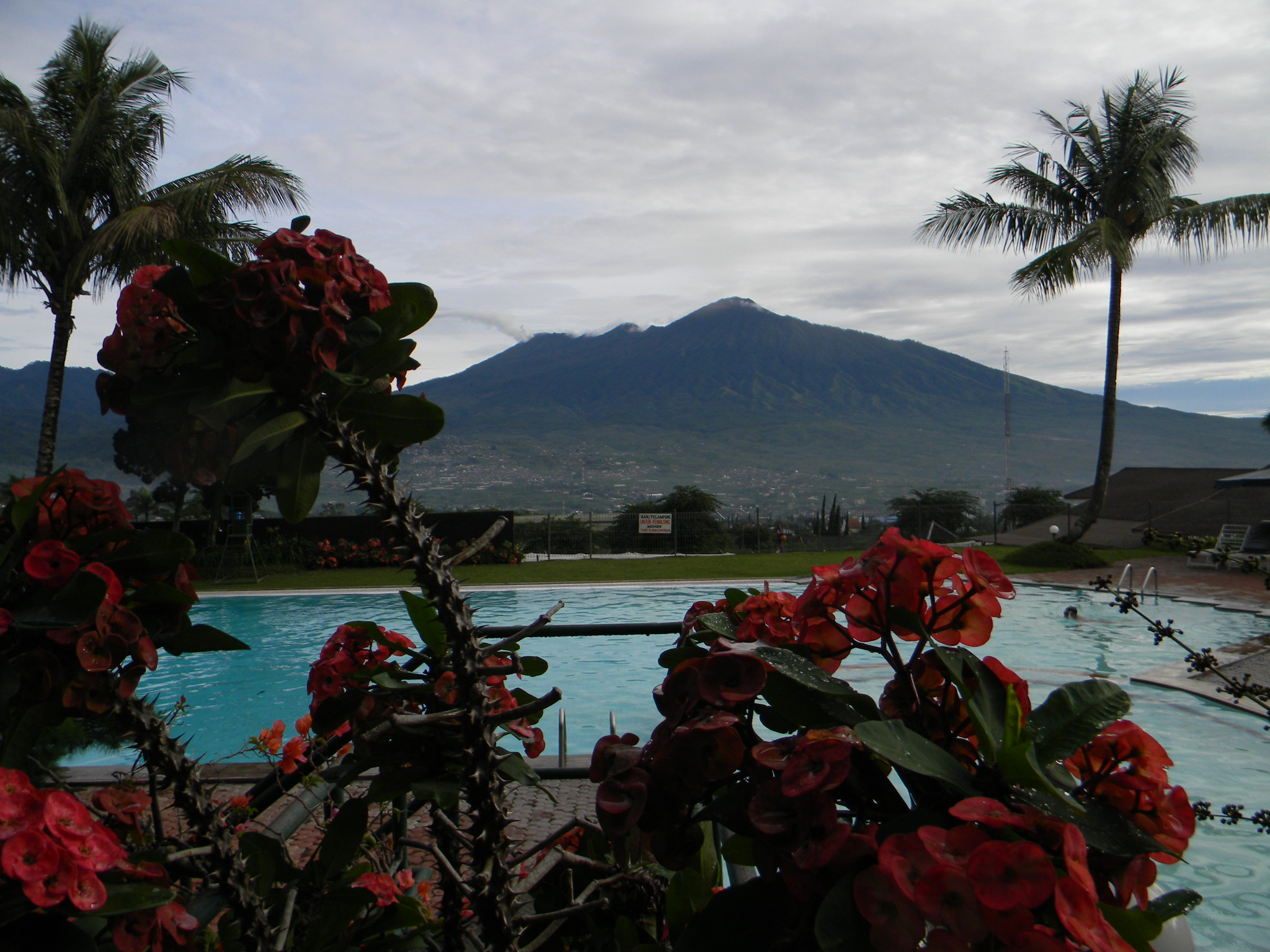
The hotel where we stayed was perched on the side of a mountain overlooking lovely scenery and the temperature was refreshingly cool after the steamy heat of Malaysia.  It is the rainy season in this part of the world, so we drove up the mountain in a torrential downpour against a river of water flowing down the road carrying with it all sorts of debris.  Due to the rain and fog we were unable to see any scenery the first night but I awoke at five the following morning to bright sunshine and a gorgeous view of the clouds drifting in front of the mountain.

With two full days of meetings we had no opportunity to explore the area but saw enough to know we need to go back and learn much more about Indonesia.  On the way back to the airport in Surabaya, we did get a quick tour of the city and a trip over to Madura Island to check out the batik market.  The Javanese food is spicy and delicious and I ate way more than my fair share this week.

The discussions were rewarding and engaging, and there is practically no end to the work that lies ahead. But we did have some time for leisure and even wrapped up the conference with a rousing table tennis tournament. After losing badly to some very serious contenders, I learned that table tennis is taken very seriously in these parts. But the comraderie and competetion also helped to build morale and team spirit among colleagues who don’t often get to meet and encourage one another. I look forward to working with both Freddy and Andrew as they begin their new roles and I undertake new challenges for the coming year. I promise I will keep you posted.

The pace at which I live is about to get crazy again and I hope I am not getting too old to keep it up. I took a very quick trip to Singapore this past week, leaving at 5:45 on Thursday morning and returning at 7:00 p.m. on Friday. I went directly to the office from the airport. Fortunately I have the art of packing lightly down to a science: one small flight bag. I had a wonderful time catching up on the work of the team there who a doing a marvelous job with few resources. I had a chance to renew some familiar acquaintances, meet some of the new staff and do some planning for the future, including a trip to Batu in Indonesia.

After work I made a quick trip to check into my hotel, which turned out to be quite modest, but in a very convenient part of town, and then took a pleasant walk to Clarke’s Quay to meet up with my friends and co-workers Dr Su Min and Dr Sing Yu. You cannot tell from their names, as is usual in Chinese culture, but they are a married couple; both retired doctors. They treated me to a wonderful dinner at a Chinese restaurant, authentic, and extemely complex, not at all like the ones in Canada. I had Peking Duck for the first time which was definitely an eating experience.  


First, the entire duck was presented to us for viewing and approval and then whisked away. Shortly thereafter, the skin was served, sliced very thinly, wrapped in steamed pancakes accompanied by spring onions and a sweet bean sauce. Yummy! Then the waiter asked how we would like the remainder prepared, as there are several choices at this point. We then chose to have the remainder chopped and served as a spicy, garlic-y stir fry. With accompanying vegetables it really was surprisingly lovely, not to mention, costly! Thankfully my hosts insisted on treating me to the meal.

Friday, I was back at the office for a meeting with our Canadian friend and co-worker, McDaniel, and got caught up on their news and plans. The happy circumstance of it being another friend Eddie’s birthday provided a good opportunity to fellowship over lunch at a local Japanese restaurant. More food! So much for that diet! It was a great surprise to see my dear friend Mel – whose wedding to a Mexican-American pastor  was one of those happy/sad occassions where you think that you are losing a friend – walk in and announce that she will be returning to Singapore for a year and take up her previous position with Media Resource Group! I have missed working with her since she married and went off to the States two years ago.

I hopped the incredibly efficient Singapore transit to the airport with plans in place to join the SE Asia team for two days of planning meetings in early November. By the time I boarded the plane I was rejoicing in the privilege of serving in this work but also burdened by a number of areas of concern for others. Bill and Sharon – who are our key facilitators for the Cambodia training scheduled in November – are dealing with the fact that Sharon’s dad is gravely ill in Canada so will probably need to head home, depriving the teaching team of their most valuable facilitators. We are also concerned with the fact that while the news has been focused on Thailand’s problems, Cambodia is still struggling with severe flooding resulting in a loss of much of the rice crop and the livelihood of many of our listeners there. We have also heard some of the details of the severe consequences some of our friends in Malaysia are dealing with as a result of their faith commitment. I cannot go into more detail on a public forum like this, but I would ask for you prayers for them, as they are facing life-changing persecution.

This is a time of major transition for the Asia team headquartered in Singapore who face many decisions as they seek to establish a new leadership structure. We would appreciate your prayer for these situations, knowing full well that God is in control and that His work will go forward and it is our privilege to be a part of it. I will be very busy during the entire month of November in travel to both Cambodia and Indonesia, and ask also for your prayers for Steve and I as we manage our marriage commitments in the light of all that the Lord calls us to do for Him.

There is no doubt in my mind that the older I get, the less adaptable I become. As wonderful as the time at home was, with so many wonderful times, it did mean there was a huge re-adjustment that had to take place to get back into our life here. After six weeks, I am finally beginning to feel caught up once again. While Steve scrambled to ensure his students were not negatively impacted by his absence, I spent the first week getting the apartment cleaned and restocked and following up on life issues here. That freed me up for a whirlwind trip to Cambodia for a week to get planning underway for the next round of training in early November.

Meanwhile, back in KL other transitions were underway. We have made it part of our ministry to welcome the new folks and do what we can to smooth their transition to Malaysia and I have felt very badly that I was away for their first two months. Steve did what he could in July and August, but it is hard to be hospitable at the end of a working day. The addition of a vehicle has helped immensely on on our return and we had a great afternoon doing some sightseeing with Peter and Joan at Putra Jaya, shopping in Bangsar Village with Shelley and taking her to church.

A Saturday pool party in Mont Kiara to celebrate Sandra H’s birthday was a great opportunity to meet some of the new people and to have some good conversations with old friends. The opening of yet another new mall very close to the school provided a great excuse to try out a new restaurant and celebrate Sid’s birthday. We have had two different groups over for dinner at our place to get to know Damon, Shannon, Leah, Dennis and Arlene. The fajitas have been a real hit.

We had a fun day-trip to a book fair with my Malaysian Bible Study friends to reconnect with their lives. Tea with Karen and Sharon now has planning underway for the staff Christmas dinner and a feeling that we are back under control. We even had a quick visit with TWR friends from Canada, Jason and Lindy and were able to show them a bit of KL. This is all good because as of next week I will be fully involved with my work with TWR and travelling extensively once again. Next week is Deepavali, the major Hindu festival of the year, and we are planning to take Sandra P. to the local Tamil area of town to take in some local Indian food. Later in the week we will steal a night away at the beach in Port Dickson before I head off to Singapore to meet with some new and reassigned staff.

None of this makes much sense to those of you who have steady jobs and a steady income, I know. I have neither and yet for all the uncertainty regarding what comes next in my life I have incredible peace. I know that for some the thought that Another is in control of all things is a scary thought. But I delight in the knowledge that there is a God in Heaven who designs my way. And although it doesn’t make much sense to me at times, I know with all my heart that He is guiding and directing me in what He wants me to do for Him. With this peace comes a great gratitude and joy for the extraordinary privilege of serving a loving God and doing what I can to help some of the hurting people of the world that He loves.

One of the key understandings of the CHE strategy is that unless the community owns a project, it will not lead to any sustained change for the community. A project owned by outsiders will almost inevitably fail once the “owners” leave the area.

Haun Kimsong is the leader of the TWR Cambodia Youth Team and he has been doing an amazing job of teaching some of the CHE lessons in villages. Here is his response to this question: Do you see how you can get more community ownership, and how communities themselves can contribute towards the developmental process?


“From my experiences, helping them to get ownership is very difficult, but from doing the CHE training we can help them to see the big picture of their own problems. We need to help them to accept what their real problems are, because many people do not understand their problems even those they are living with every day. For example, a group of youth at Sre Ampil knew that drinking alcohol is not good but they still keep on drinking, and this is a big problem for this village. We needed to train them several times until they accepted that is their own problem. Then at the next meeting they were all involved with the lesson and after the class some of them decided to stop drinking alcohol. They made their own decision to stop without pressure.
We met a 17 year old gangster in Battam Bang who came to our training. The first lesson he did not want to be involved with us; he complained and tried to disturb our class. However, after the second lesson he changed his attitude, he joined with the small group and he shared his ideas with the small group and the whole class. After our lesson about honesty he came to me and he asked me to pray for him, because he decided to accept Christ as his Saviour. He told me that he sinned against God, his parents and everyone around him. At the last day of the training we talked about forgiveness and at the end of the lesson we encouraged them to write down the names of the people that they have to forgive and this guy wrote many of his friends names. Next we asked them to write down the names of the people who they will ask for the forgiveness, and this young man also wrote many names including his brothers and sisters and his parents.
On Sunday after the training we got a call from the local pastor and she told me that some of gangsters in the village who came to the training came to the Sunday service.
To answer to your question on how we can get more community ownership: We can’t just go and meet with them and point out their problems. We have to try to help them to see the whole picture so they are able to accept that this is their real problem. If they accept that, they will involve themselves with us and begin to understand the developmental process.”

What do you think of when you hear the term ‘developing country’? Do images of unimaginable squalor come to mind, open sewers and garbage on the streets? Yes, well that is true. But there is also rapid growth and urbanization happening right across the developing world. You probably feel it back home in the West in the decline of manufacturing and service sector jobs that have gone to developing countries. The world is becoming more equitable, and that means we in the West are going to have to learn to take a smaller portion of the world’s wealth so that others might have a chance. As a Christian I’d have to say that it was long overdue.

I’d also have to say as a Christian I am very excited about another development in the world, and that is the explosive growth of the Christian church. This shot, taken with my phone camera from 100 feet back, shows a fairly typical scene at the churches in Malaysia. These are 75 new members of our church being added this morning. Every month there are 25 to thirty new baptisms, every quarter there are upwards of 75 new believers added to the rolls. With a membership of four thousand already, we are shortly going to have to go to three services.

Other churches in Malaysia are doing equally well. In fact with a Christian population is 12% and climbing, the authorities are beginning to sound alarm bells in the corridors of power. But it isn’t just Malaysia that is experiencing this kind of growth. Across the straits in Indonesia the Christian church has found their voice as well and these two predominantly Muslim countries are beginning to change for the better. China already has more evangelical Christians than the United States, and that number is going to continue to grow, despite the best efforts of the Communist government to crack down.

Nor is this growth limited to Asia. There were approximately 3 million Christians in all of Africa in 1901. In 2001 there were over 330 million. Even more alarming to Muslim authorities there, around 6 million Muslims leave Islam and become Christians every year. Their strength can be seen in the election of a Christian Prime Minister in formerly Muslim controlled Nigeria and the secession of Christian Sudan from the impoverished Muslim north.

All of this sounds a little disconcerting to Christians back home, I know. We are used to thinking of ourselves of the embattled and faithful few. It just ain’t so, folks. Christ is marching triumphant across the developing nations of the world and has even begun to make inroads into the Muslim heartland of the Middle East. It is an exciting time to be a Christian and to witness the phenomenal rise of His church in these days. Didn’t the Lord promise to “build His church”? Well He is! Halleluyah!

We are approaching the four year mark of our time in Malaysia. With approval in place for a new, two year work permit that will keep us here until at least July 2013, we have decided that we need to set aside some time for family this year.
Last week I made one final visit to Cambodia prior to my going back to Ontario for a lengthy visit that will begin with the birth of a new grandbaby and end with our daughter’s wedding, hopefully with a rendezvous in England in June. I was only in Phnom Penh for three days but I managed to use it pretty effectively. My goal was to lay the ground work for the things that need to move forward while I am away.

Wednesday morning was spent in the TWR office reviewing the new performance development plan that we have drafted and will pilot with the Cambodia team. It is a very simple format that is meant to be a working document that will move the team toward a more reflective and practical way of assessing their learning needs and developing a strategy to move them forward. A late and extended lunch with a wonderful Christian Khmer doctor ended with a plan to form a monthly discussion group that would open the door for developing a friendship and mentoring relationship with the doctors from RHAC as they work though their understanding of how spirituality and moral values impact the physical health of their patients. I then headed off from there to have a social visit over supper with Dr V and her husband.

On Thursday morning I met with Lesley who is an Irish HIV/AIDS nurse who will be helping with the next round of training. We went out to meet the TWR team and were treated to lunch by the guys in honour of Women’s Day. I was able to take Lesley to meet Dr V and some of the staff and to get a plan in place for the next training scheduled for the end of May. We also got some details in place for two visioning seminars and visits with the local government leaders in the area that we will do our pilot, that Bill and Su Min will do the beginning of April.

After dropping Lesley at the airport, I spent a lovely evening with friends from Ontario, Stephen and Beth and their director, Brian McConaghy who is the Founding Director of Ratanak International. It was good to compare notes on projects in Cambodia with those who share my passion for the people of Cambodia and I look forward to working together in the future.

Spent Friday at TWR office, flight back to KL, quick visit with Steve’s colleagues at Jalan Alor and then dinner downtown to celebrate our 33 anniversary. This week we had a TWR colleague from Singapore come to stay with us for a few days while we set up some details for a new project. Had a great visit and even got to crash an evening of an OM leadership conference and met some new KL contacts. Lots more to do to prepare for the trip home but at least we are finally free to look at some of those details.

A Reader Writes:
In Cioccolanti’s book “the last words of Buddha” he raises eye opener Buddha teachings but does not specifically identify the source of his referenced material from Buddhist literature. Have you verified the source of this particular article? this Kampee Khon reference?

My Response:
I’m no expert on comparative religions. Nor do I think that all religions except my own belong to the ‘refuse of history.’ Left to my own devices, I probably would have drifted into quasi-Taoism like so many in my generation. I liked its gentle, ephemeral nature and its whimsical approach to the divine. But revelation intervened. I had an encounter with God – there is no other way to say it – and it changed my life.

So with my early interest in Eastern religions I have done a fair bit of research, and I would ask you to consider the following:
1. Many religions have myths involving the sacrifice of God’s son to atone for sins in one form or another. It is not inconceivable that such myths were prevalent in the East before the arrival of Buddhism and have survived and been syncretised into Buddhist teachings
2. Gautama (Buddha’s birth name) is actually Persian in origin. There was briefly (two years) a Persian ruler by the name of Gautama.
3. Jewish teaching, including most of what is now the Old Testament, arrived in Persia with the Jewish exiles following their captivity and the destruction of Jerusalem about two hundred years before the birth of Buddha. Such teaching would have included the prophecy about the suffering Saviour of the world, including His wounds (cf. Psalm 22, Isaiah 53).
4. Even if Buddha’s natal family did not have Persian ties, the cross pollination of such important religious matters as the Torah contained could not have failed to be widely disseminated in cultures that were centered around their belief in the nature of the divine.

So to answer your question: no, I do not have concrete proof of the assertion, and since I do not read Khymer, am not likely to find it. However, given all that I have noted above, it does strike me as possible on a number of counts. God is not only fair, He will be seen to be fair when He reveals all to us on the Day of Judgement. Surely He has not left Himself without a witness prior to His appearing in bodily form in 30 A.D. on the streets of Jerusalem. The Torah/Old Testament is full of hints, revelations and prophecies concerning His appearing and His ministry while on earth. It seems most reasonable to me to assume that He has done likewise in other cultures and teachings, including Buddhism.

« Previous PageNext Page »