Ministry


We were up and going by three on Tuesday morning to catch a flight to Singapore for a quick visit with the TWR staff there. There is still some sorting, reassignments and much ongoing learning underway as a result of the restructuring process but a definite sense of anticipation of a very positive future. The new Directors, Daryl and Gaynelle have settled in and done a great job of building relationships with the staff. Gaynelle hosted a Ladies Tea on Wednesday which gave me a great opportunity to get to know her and to visit with the ladies. Mel is on her way back to her husband in Texas after a few months placement in Singapore so I had an opportunity to say farewell to her. She will be missed in the office but will contunue to work from home.

TWR Global has recently created a new position of Chief Personnel Officier and appointed Rick Weston to that role. Rick and Cathy were in Singapore for a few days to meet the team, and assess the impact of restructuring to understand the needs and issues of the field staff. They treated us to a lovely lunch in appreciation of the work that goes on in Singapore. I enjoyed the chance to get to know them and to chat about my continuing role with TWR. It was a pretty busy time in the office but a very important time for all involved.

Enjoyed breakfast with Su Min and Sing Yu to catch up on the progress in Cambodia and caught an early afternoon flight home in time to have a relaxed dinner with Steve. It is all good.

Last night we had dinner with our missionary friends Beth and Stephen at Lotus Blanc in Phnom Penh. They have been working in Cambodia with an organization which seeks to rescue women and young girls caught in the cycle of poverty and prostitution that forms the seedy underbelly of Cambodia’s tourist trade. You see these creeps all the time on the streets over here: fat bellied, balding Westerners leading some poor Cambodian waif down the street like a lamb to the slaughter. Every once in while the government secures a conviction against one of these sexual predators, but for every one convicted there are a hundred that get away.

The only real solution is to provide a decent income that doesn’t depend upon such desperate measures. That is what this restaurant and many other street level businesses and ministries do. Beth and Stephen are part of that process of emancipation from sexual slavery, and it was our privilege to share a meal with them and talk about things of mutual interest.

They are from our neck of the woods, Southwestern Ontario, and are of a similar age and experience to ourselves. Like us they find it difficult to find friends at home that share their interests. They are happy to talk about their neighbour’s golf scores and the game on television last night, but when the conversation turns to the needs of the unfortunate in far off places in the world, their friend’s eyes glaze over and their manner becomes distinctly chill. This is something we face every time we go home as well. Our family and close friends are understanding, but there are so many who just don’t get it and treat us like we are some kind of rare and unmentionable disease.

Pam shared with us the story of an acquaintance of hers who confessed a desire to serve the Lord in a foreign land, but felt that it was quite out of the question as she happened to like her children and grandchildren! In her mind the absence of such feelings fully explained Pam’s bizarre behavior in living halfway around the world. I am glad I was not privy to that conversation for I would have not had my wife’s grace in turning the other cheek!

Beneath the humour and the shared camaraderie, the thankfulness for email, Facebook, Skype and other forms of electronic communication, lies the heartache of being so far away from those we love. It is a situation that every missionary faces, no matter how well they are supported by those at home. Pam hides her grief as well as she can, for she knows that her happiness or lack of it weighs on me terribly. For myself? Well, I am a man, and we males compartmentalize pretty well, so I just keep those feelings buried as best I can. If I stopped to think of how much I am missing of my children’s and grandchildren’s lives, I wouldn’t be able to carry on.

In an eternity yet to come, we will share with our children and grandchildren all that we have missed. We will listen to their laughter and share in their joy and adventure. Christ will wipe away every tear, and heal every sorrow. He will affirm His call on our lives and explain patiently to those who condemn our service to Him that it was not callous disinterest in our families that brought us here, but an act of love and devotion to Him, and to a hurting world. And perhaps we will see how our own sorrowing hearts have been made more useful to Him in reaching those He loves in South-East Asia.

Pam is back in Cambodia for a series of meetings to continue to develop her community health and outreach initiative. I am simply on March Break and tagging along because Phnom Penh is such a neat city and a nice break from KL. Yes, I know, it is a strange life when one calls getting out of Kuala Lumpur a break from the routine. I do recognize the irony.

Phnom Penh continues to surprise me each time I come here, which is about once a year. Pam talks about the improvements she sees on her frequent visits, but it is hard to gauge without actually being here. There is a median divider down the middle of the main road leading from the airport into town now, eliminating the always dangerous stream of traffic that used to flow over into the oncoming lane, and there is even an overpass on the busiest intersection. This main thoroughfare is now cleaner and more ordered than many Malaysian roads. Will wonders never cease!

We are staying in a nice little guest house in a part of town known locally as NGO-land. Most of Pam’s contacts and colleagues are close by, and it will give her an opportunity to check out some venues for next year’s conference held this year in Manila. Like most hotels in town, this one is under construction; expanding to meet the demand for the increasing number of tourists who are now flooding into Cambodia from all over the world, drawn by its fascinating history and unspoiled beaches and natural beauty.

Pam’s schedule is not so tight that she and I won’t get some time together. We just recently celebrated thirty-four years of marriage and you don’t get to say that unless you take time over the years to do things that you both enjoy together. Two of those things have always been a love for the wide diversity of peoples and cultures in this world, and a desire to help those who are less fortunate than ourselves have a chance to achieve some level of personal health, safety, success and peace. Hopefully this week we will have a chance to do both of these things.

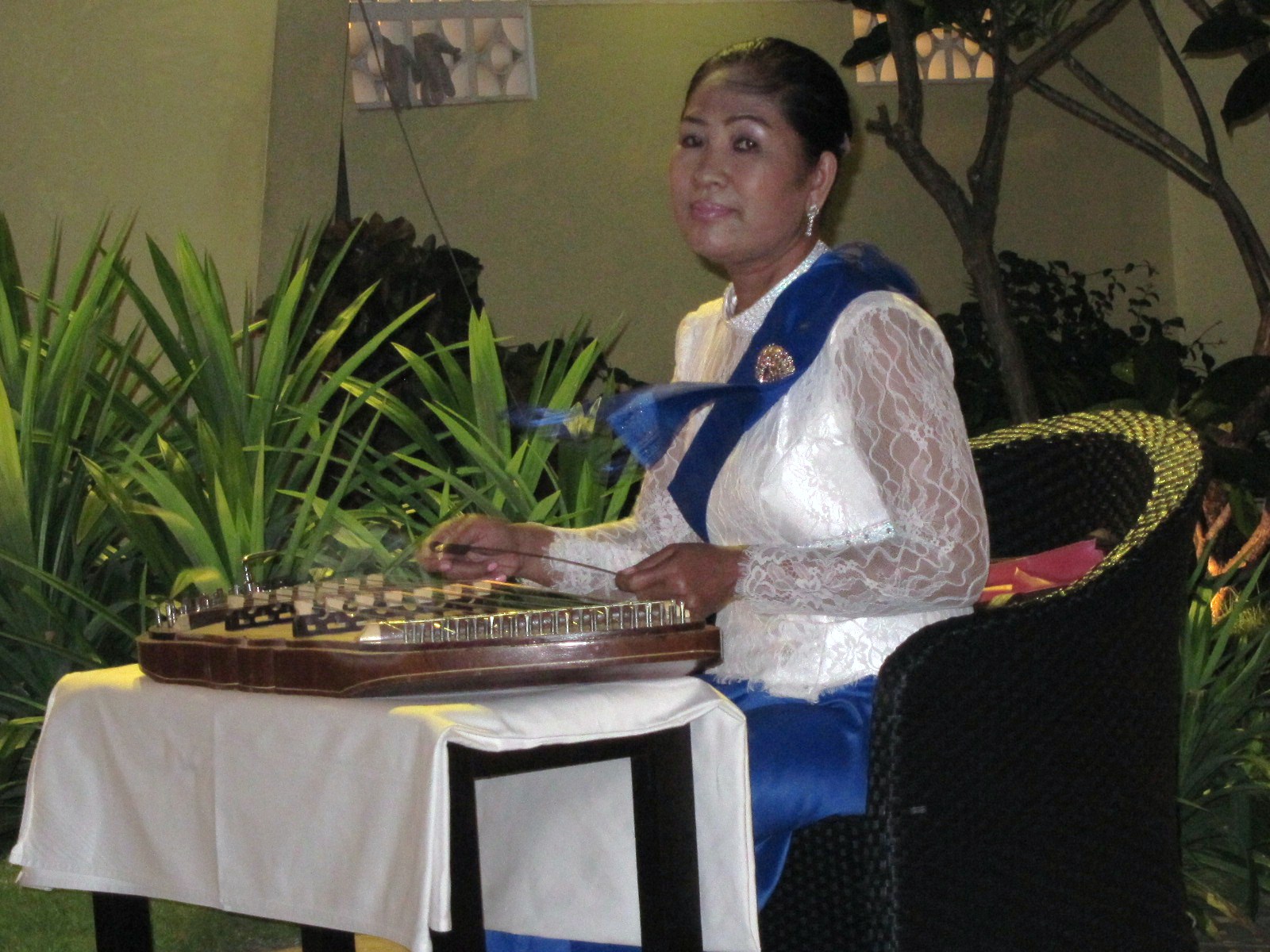
Last night we took a walk down to Sisowath Quay to a really nice restaurant overlooking the Mekong and had a very pleasant time listening to some local music while we watched the Khmer fisherman ply their ancient boats along the water. Ocean going boats can travel up the Mekong as far as Phnom Penh, a distance of 550 kilometers, using the tidal surge from the ocean to assist them. Every six hours the river changes direction, now flowing out to the sea, making this a very dangerous stretch of the river, as the deaths of nine dragon boat rowers a few years ago proved.

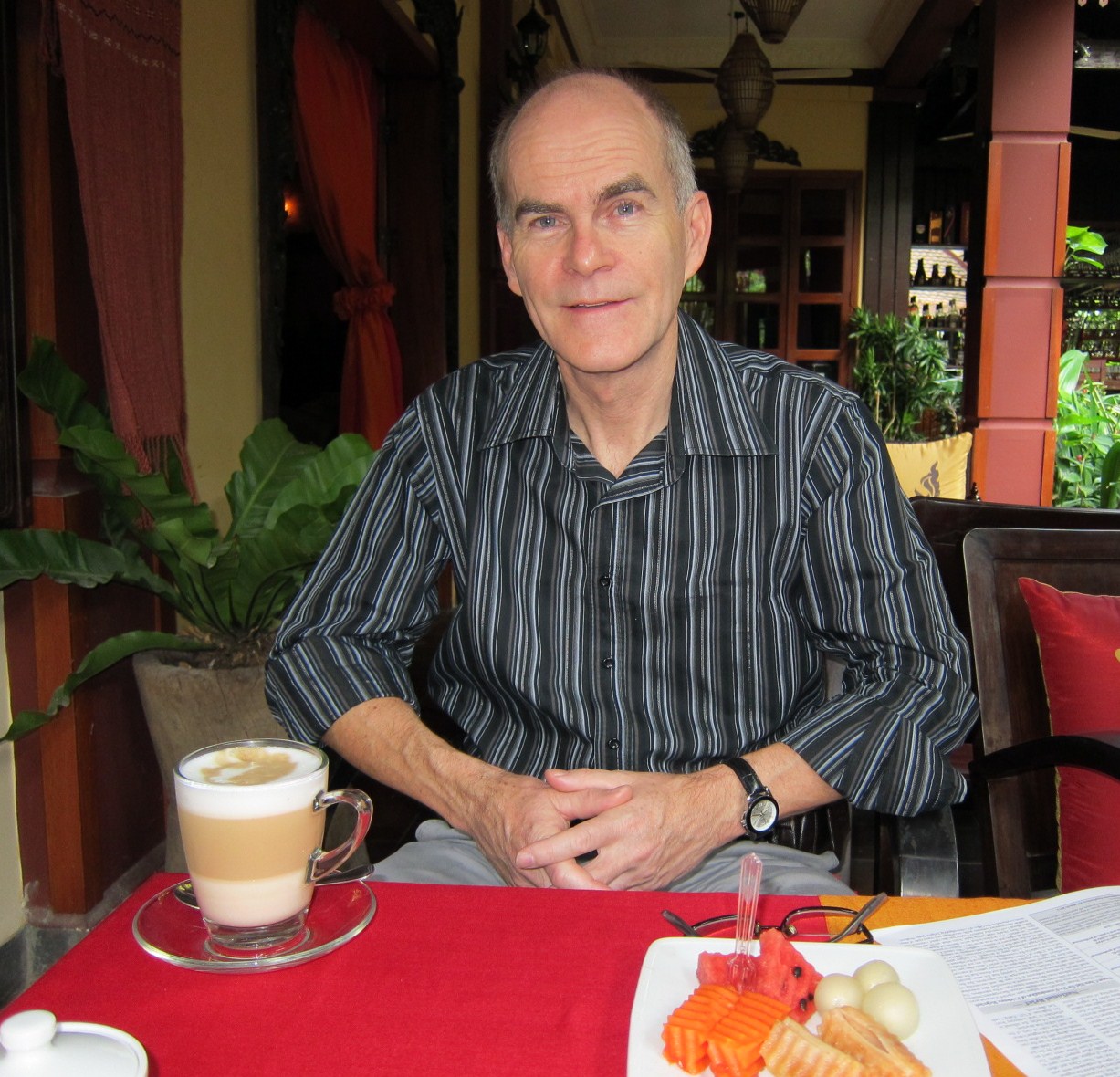
This morning after a very nice latte and fruit salad for breakfast we went out to church at a small Anglican church around the corner and heard a very sound sermon preached by the Anglican minister of the International Church in Phnom Penh, Peter Warren. We invited a young German couple and their two small children for lunch afterward and chatted about Germany, missions and their hopes for ministry in Cambodia. Tomorrow Pam will get down to work in earnest and I will do some planning for my next unit on Drama. We are both looking forward to the week.

I had the privilege of spending this past weekend in Singapore, getting caught up with old friends and new.  Marli Spieker, the Global Ministry Director and founder  of Project Hannah was there as part of a tour of several countries in the region.  We spent many fruitful hours talking about the accomplishments, hopes, dreams and prayers for the women whose lives are impacted through the broadcasts, prayer calendar, mercy ministries and the awareness of the issues that this important ministry brings.

My friend Serene, who heads up the Women’s Ministry Team in Singapore, was also able to join us for tea and discussions about future plans for the work in SE Asia.  We had a wonderfully encouraging time together and left with some research and planning to do before we meet up again in the US in May.  Please pray with me for Marli and Serene, for safety and wonderful meetings with co-workers and listeners as they travel together over the next few weeks.

The most enjoyable part of any trip to Singapore, is a visit in the home of our friends Blossom and McDaniel and some home made apple pie doesn’t hurt either.  They are currently hosting new appointees, Daryl and Gaynelle who have just arrived to assume the position of Director of the Asia Resource Center.  I was very happy for the chance to get to know them and to establish a working relationship with them.

There are always IT issues that need to be addressed so I was very grateful for the help of the IT guys  so I can finally access the global resources available on line. There are many changes in the leadership structure and the roles of some of the staff which I was able to get caught up on in the office on Monday.


With Daryl now on board, the new leadership team is complete and very much in need of prayer as they plan for the future of TWR in South and SE Asia.  Although both Andrew and Freddy have a long history in TWR, they have each taken on completely new areas of responsibility with some significant challenges ahead.

One of my colleagues at Taylor’s conducted a toy drive at Christmas. The response was overwhelming; in fact so much material was collected that even after all the good stuff had been distributed to the refugee centers that we help support, the staff room has been stocked with the overflow. Last week I bundled up all the excess items and took them off to our church’s outlet in a nearby neighbourhood. It was an unexpectedly humbling experience.

USJ, or Utama Subang Jaya, is the district right beside our own. There are some nicer homes and a good restaurant quarter, but beyond that not much to offer. However, in behind the main street and out of view of the travelling public is a seedy and rundown part of town. The condos are essentially tenement slums, overwhelmingly Muslim, and desperately poor. Washing – if such tatty rags can be considered clothes at all – hung from hundreds of balconies. On the broken asphalt dozens of children – all covered in the stifling dress that is required for religious conformity – played with sticks and deflated balls among the refuse. We don’t often get into such places in our neighbourhood, and it was a stark reminder of the daily reality for many Malaysians. It is to such people that the current government appeals when it trots out its ‘Malays First’ policy that ensures the survival of its regime in the face of the forces of accountability and modernity.

In the heart of this urban jungle is a Christian mission; the only compassionate feature in the midst of acres of squalor. Of course it dare not call itself Christian; that would be an offense to the ideologues that rule this country, so it has to adopt the simple sobriquet ‘J** Station.’ Even within this broken community itself there is opposition to the good it does. M**, who runs the mission with the self-effacing humility that is characteristic of the Asian Christian community, warned me not to park too close to the shop front to offload the donations I had brought, otherwise my car would be hit with the bottles that are routinely thrown at the vehicles that park there by residents above.

This did not keep many hands from helping me to offload my donations once I had found a safe place to park. Nor did it keep the residents who visit the shop regularly from coming out to greet me with their shy smiles of gratitude. I was embarrassed by the meager goods I had to donate in the light of such a visible abundance of need. In addition to distributing goods to the families that live in the tenement – divorced and single-parent families pay nothing, others pay a nominal fee – the mission will also pay the rent for needy families that cannot afford to do so themselves. They also pay for medical and dental treatment for the children of such families, and seek to sponsor students at better schools if one of their children show academic promise. All of this good work is paid for by the tithes and offerings of our church, a church that was recently raided by the religious police for daring to sponsor a community lunch which sought to honour those in the community who were seeking to bring relief to the poor, regardless of religious affiliation.

The ironies and injustices of this country abound. But beyond all the persecution of the entrenched elite and the arrogance and sometimes outright hostility of those who condemn all who profess a faith in the Divine, the Christian church in this country caries out a campaign of compassion to all, regardless of race or religion. Normally I shrink from even oblique contempt for my faith. To witness the perseverance and dedication of the Christians in this country, who face daily persecution in the service of the poor and needy, is a salutary exercise in humility, and one that my Westernized and overly timid soul needs to expose itself to more frequently.

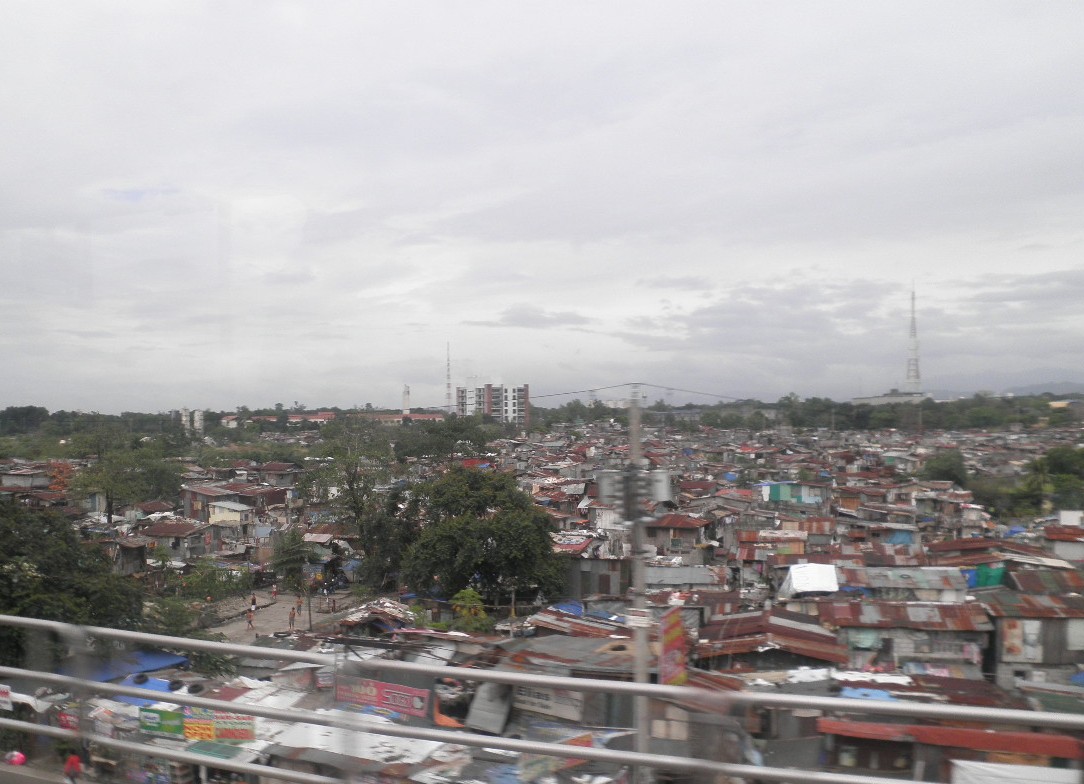
With a population of over 16 million in an area of only 38.55 square kilometers, Manila is the most densely populated city in the world. The greater urban area of Metro Manila is the fifth-most populous area in the world with an estimated population of nearly 21 million people. I feel like I rubbed shoulders with a pretty good percentage of them on the MRT this week.

According to the United Nations, the percentage of urban dwellers living in slums decreased from 47 percent to 37 percent in the developing world between 1990 and 2005. However, due to population growth, and the recent rise especially in urban populations, the number of slum dwellers is rising again. One billion people worldwide live in slums, the highest concentration of them in Asia, and the figure will likely grow to 2 billion by 2030. According to a UN-Habitat report, over 20 million people in the Philippines live in slums, and over 11 million of them live in the city of Manila.

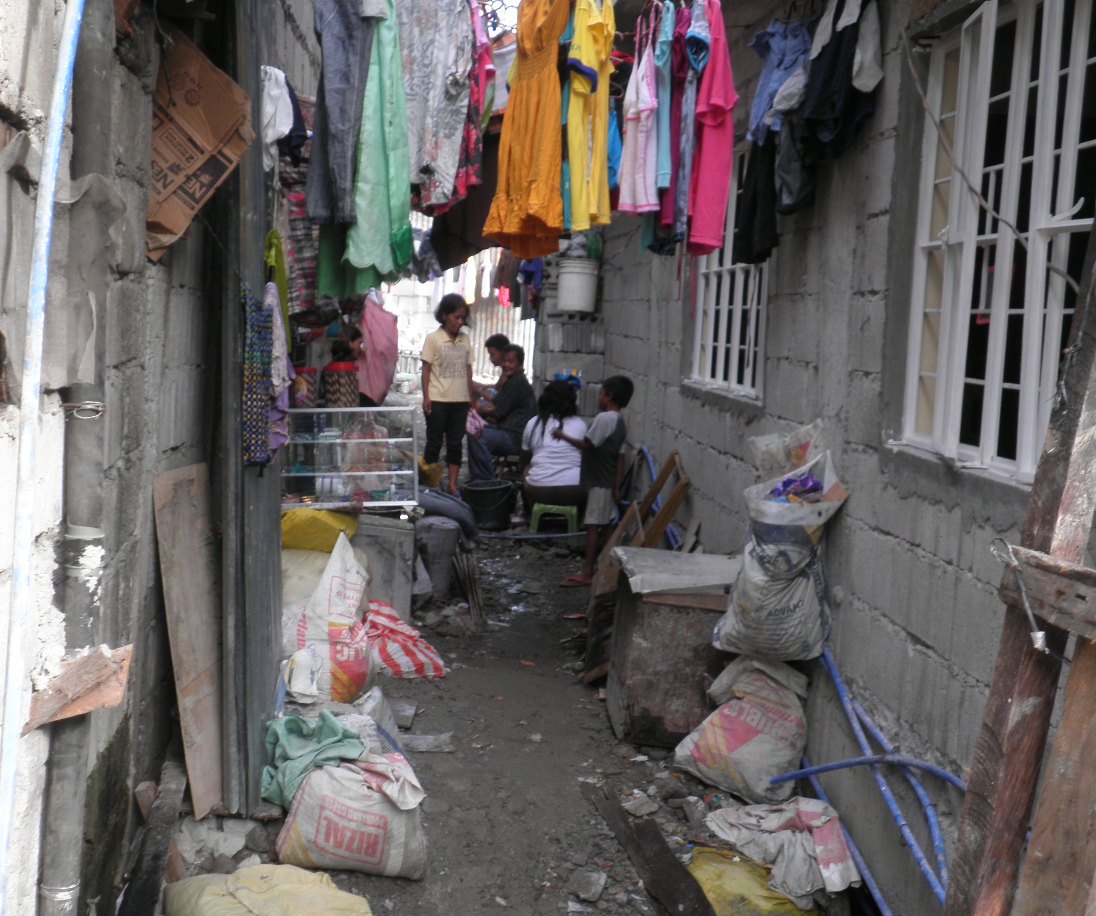
We spent two afternoons this week visiting with CHE volunteers and families in three different types of slum areas. One area was home for about 500 families who live at the base of a mountain of garbage and make their living by recycling trash from household garbage to electronics for a living, selling the occasional usable goods or stripping broken goods for parts and raw materials. They climb this man-made mountain at 4 a.m. when the city garbage trucks begin to roll in, in order to get first access to goods and food scraps. There is one source of water which is not safe for drinking, no toilets and a ditch flowing through with water that comes from the cleaning of pigs and garbage. This is gross beyond description or even comprehesion, I know, but that is the reality for millions in Manilla.

 
In another area, about 16,000 people are crowded into semi-permanent, one or two room homes stacked on top of each other in a sunken area which regularly floods with as much as five feet of water when the rains come. In the monsoon season that is a daily occurance. Families on the lowest levels simply moved in with families on the higher levels for the duration. That is life in the slums. We climbed a ladder to visit in a house with two rooms, each about 6 by 8 feet, home to a mother, her six children and newborn granddaughter. As I took this tiny baby girl from the arms of her 17 year old mom, I knew that very likely she would grow up to be the third generation of this family to live in this seemingly hopeless situation.

One of the books we were looking at in the training was City of God, City of Satan by Robert Linthicum in which he states “The urban church is not meant to be a shelter, it is meant to be a seminary! All members are to be equipped to effectively confront the structures and forces of their city” The Philippines claims to be the only Christian nation in Asia. More than 86 percent of the population is Roman Catholic, 6 percent belong to various nationalized Christian cults, and another 2 percent belong to well over 100 Protestant denominations. I couldn’t help but wonder how the church can even begin to meet the needs in their areas but I met a number of women who are doing their very best.

This week I am in the Philippines for an Urban CHE TOT1 followed by our annual South-East Asia and Pacific CHE Network Conference.

Much of my experience to date has been with the poor in rural communities but the first two days were spent examining various theories on the causes of poverty, the different types of poverty and the realities of life for the urban disadvantaged population. Unlike the rural population, urban neighbourhoods are often a complex mix of many different ethnic groups that are highly unskilled, often transient with little access to steady work. They lack green space, playgrounds, space to grow even a few vegetables and never experience the peace and beauty of nature.

They are often not from the city and hope to eventually return home, yet find themselves living in very crowded conditions, with many sharing one small space that lacks clean water and sanitation. With limited access to city services they face many health problems, have a high birth rate, and experience mental illness, drug and alcohol addictions often forcing them into a life of prostitution and crime. Inspite of all of these tremendous struggles, the poor build strong bonds as they tend to be very relational and they have many skills that enable them to survive and even thrive.

It is clear that a very different strategy is needed in order to reach out to those who are dwelling in urban slums and that is what we are here to learn.

Unlike my husband, who does this for a living, I have never claimed to be a teacher. Perhaps this is the chief reason that I love the CHE (Community Health Education) lessons. Each lesson plan has been designed to meet the needs of oral learners and to present truths using a high degree of learner participation. Each lesson begins with a problem using a simple role play or diagram, which helps the learner to understand the problem and its importance to their situation. The participants are involved in discovering the causes and solutions to the identified problem and are then encouraged to share these with their neighbours.

In the lesson on the use of alcohol, ten seeds are used to take the participants through a voting process to determine the extent of usage amongst men, women and youth.  It is fascinating to watch movement of the seeds from “bottle” to “no bottle” and  the animated discussions until they finally agree on a percentage of households that use alcohol and then the percentage of the average household income is spent.  In our target area the youth insist that 80% of their income is used for alcohol, the women felt 70% and the men 30%, so we settled on 50% for the purpose of the exercise. We then have them agree on an average household income and use this to calculate the amount of money spent annually on booze.  In our target community of 12 communes each with about 210 families, they were totally shocked to discover that more than $1.5 million dollars leaves their very poor community each year.  With eight members of the Commune Council and Women’s Committee participating in the training some good discussions ensued.

In the afternoon one of the CC leaders in the training took us to his small village where he rang the gong until a crowded gathered in the village pagoda, then he and several others practiced the lesson.  The crowd was largely women and it is the men and youth who are the heavy drinkers.  It was just awesome to see these women, for the first time with a powerful tool to prove their case and a Chief who taught it to them.  We left him there making promises that the CC would address this issue in the near future. One CC Chief had in fact been through this lesson about six months ago and he was only too delighted to share his story with everyone.  I will share that in my next post.

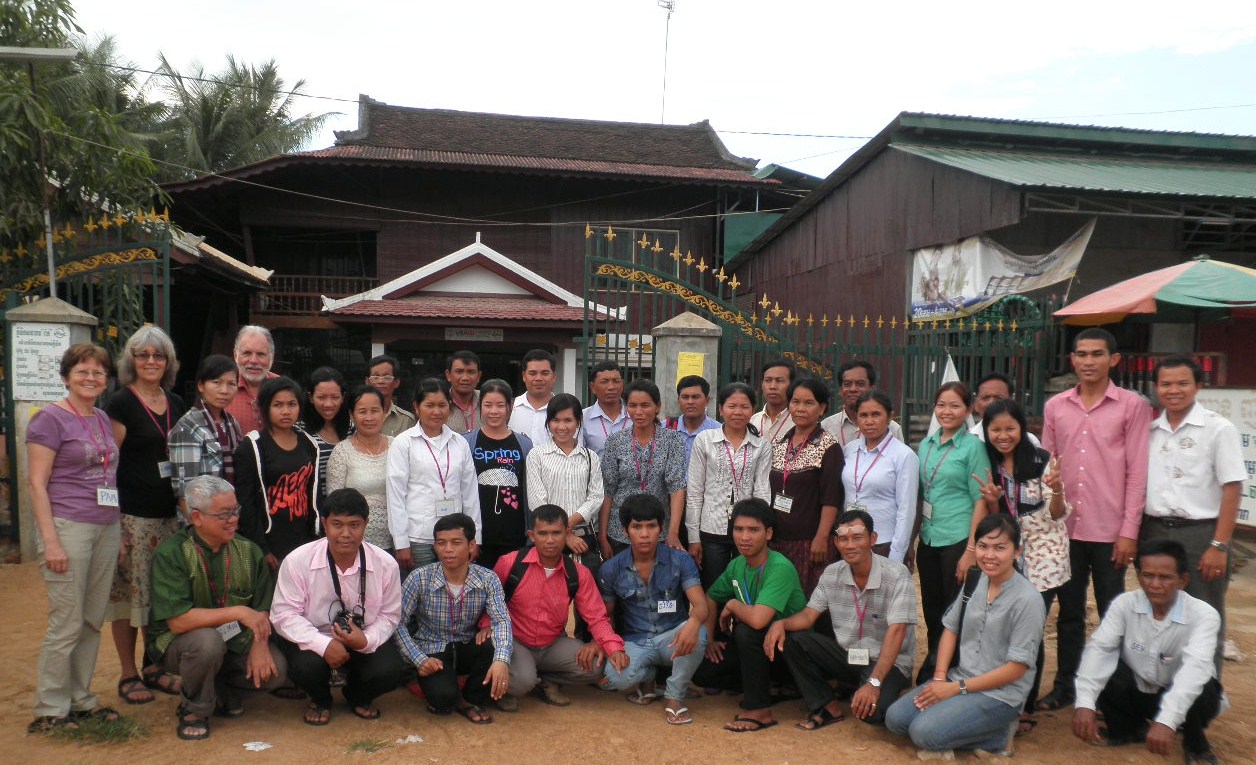
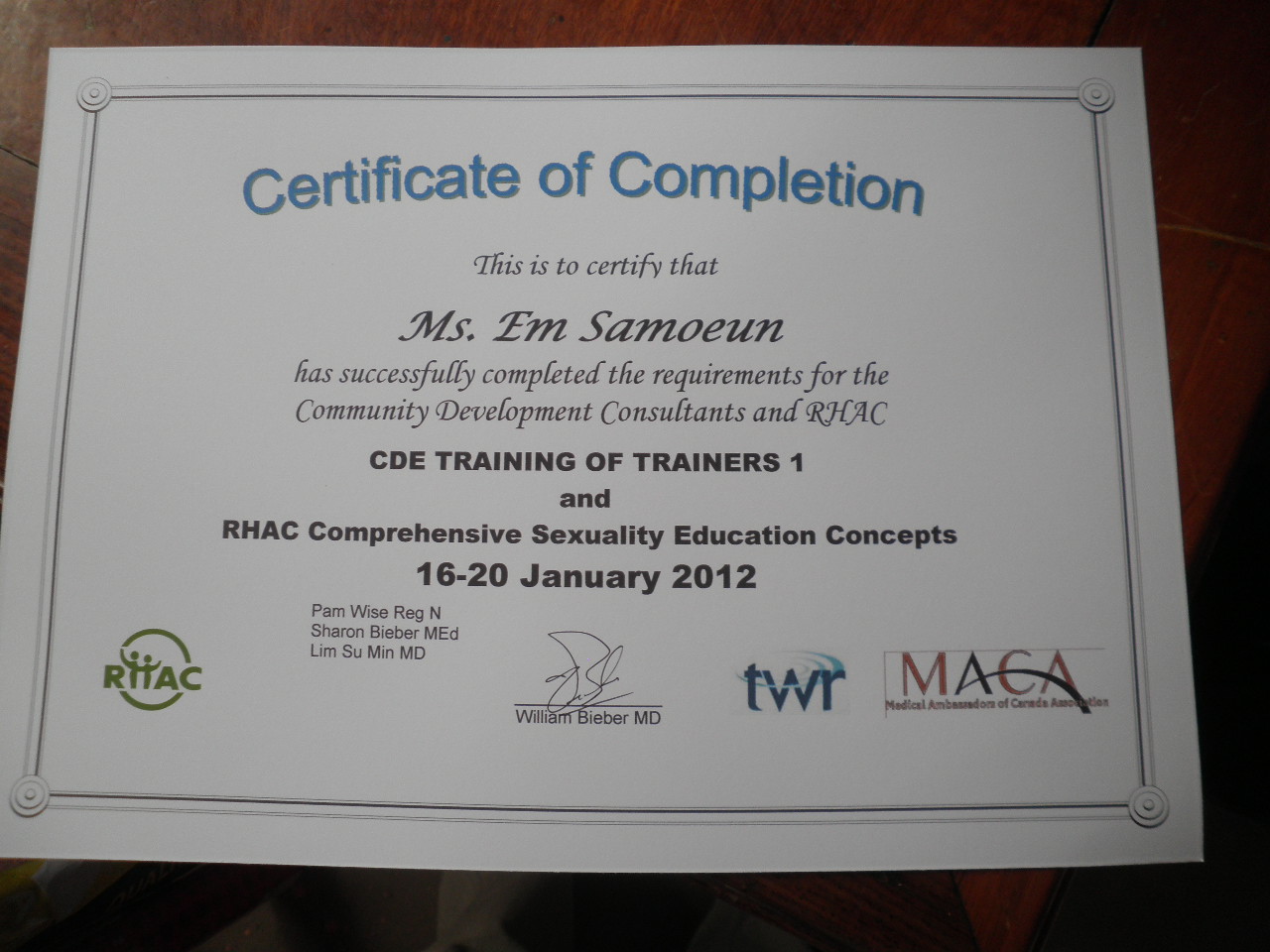
Last Sunday we made the seven hour trip north to Siem Reap, thankful for a very comfortable vehicle, fabulous driver and great company. The evening was spent settling into our hotel and making the final preparations for our first joint TOT with RHAC and TWR staff. This is a pilot project in an area just north of Siem Reap which is made up of twelve communes with about 210 families per commune. TWR staff, Kimsong, Marianne and Sangva are not only essential for translation purposes but are very effective facilitators and, of course, can do it in language of the participants.

The purpose of this training was not only to train local trainers but also to enable us to better understand the curriculum that is being taught throughout Cambodia and to demonstrate the importance of integrating solid moral values into the information they are providing. Our class consisted of ten local RHAC staff, ten Youth Peer Educators and ten members of the Pouk Commune Council and Women’s Council. The CHE lessons are designed to draw out information through role plays, demonstrations and discussions rather than simply giving out information and the participants excitedly took part in each activity.


It is most unusual, especially for the TWR guys to be part of “Comprehensive Sexuality Education Concepts” training but a joy to be allowed to teach “Self Esteem: I am Unique”, “Self Control” ,“Critical Thinking/Decision Making” and “Beliefs Have Consequences” and to reinforce such concepts as the duty and responsibility that comes along with sexual rights and the short and long term impact of decisions made related to sexuality and health.

On the fourth day we went out into one of the villages and the students facilitated three of the lessons in a pagoda with about thirty villagers, mostly women, using some of the role plays and methods they had learned. It was a real joy to see how the people so quickly grasped the concepts and the debate that followed. As the leader of the village was a student and lead some of the discussion, it was pretty cool to see the women now with some cold, hard facts demanding that the head man now teach these same lessons to the men and make the needed changes.

The almost two years of background networking and training really only begins to make sense as we see this information taught by Cambodians to local villagers in their own heart language. The lessons are incredibly powerful and in most cases this is the first time that people have the language and tools to understand, teach and discuss the day to day problems that overwhelm them.
We left very excited and tired; Bill with pneumonia, and a real sense that this project has the potential to change lives and communities. The radio broadcasts that TWR provides will continue to  reinforce these very Biblical concepts and provide contact information for individual follow-up.

I have been working in Cambodia for well over four years now, seeking to bring together an effective partnership among committed groups and individuals that help to meet the physical, emotional and spiritual needs of the people. There is no doubt that it is a wonderful thing to find a strategy that effectively addresses the needs of those whose lives you wish to impact and then to have others realize that the value of this approach and seek to join us. However, this week we are seeing firsthand the enormous challenges this creates.

It is notoriously difficult to set up appointments in advance in Cambodia. This was until just recently an overwhelmingly oral society anD emails and even text messages from foreign countries are often overlooked. So as usual I arrived on Sunday  for a two week stay, with a huge list of people we need to or want to connect with during this time and only one solid appointment.  Fortunately, $3.00 at the airport gets you a local phone card and with the use of Facebook and emails, tuk-tuks and lots of help from gracious Cambodians who will drop whatever they are doing the moment you show up at their office, it all begins to fall into place.

My co-workers Bill and Sharon are here with me and we enjoyed some time on Sunday getting caught up, debriefing on their recent trip to India and planning for the training scheduled for next week.  By Monday morning plans began to fall in to place to meet with the three key partners in the Health Project.  From there we managed to meet with three other agencies that we know are currently using the CHE strategy with a goal to reactivate a regular CHE Working Group for Cambodia. Next it will be two other organizations that we believe could be very strategic partners.

Then there are the incidental meetings or divine appointments that just happen along the way. Socheata, the wife of one of the staff from RHAC is a lecturer at a private university who saw our moral value lessons and thought that her students would benefit from them.  She has been wondering about integrating the material into her course work so invited us to come and take over her evening class. Sharon and Bill did a great job with a lesson on character development and honesty with very enthusiastic participation by the students and I am sure these young people will always remember the “big Canadian” who demonstrated servant leadership.

Sharon continues to finalize the schedule and manual for next week’s training in Siem Reap and I am frantically working on a final report that is due for funders of the initial phase of the health project. Early Sunday morning we will join up with three TWR staff for the five hour drive up to Siem Reap in the air conditioned comfort of a very fine RHAC vehicle. We will miss Su Min’s serenade with his ukelele, but he will meet us there. Steve also has just started his tenth term in Kuala Lumpur teaching ENG4U so is unable to assist this time around.

As the project continues to grow in participants and impact, it has become increasingly apparent that we need a full-time Cambodian coordinator, fluent in English and Khmer, to head up this project on a continuing basis. There are funds for such a person for at least a year, but finding someone who has all of the necessary credentials and capabilities is going to be an act of God’s grace, and nothing else. Please pray with us for this outcome. We have a made a wonderful start in our outreach to the hurting people of this country, and we very much want to see it taken to the next level.

« Previous PageNext Page »