The famous Glastonbury Festival, held every year in late June, typically attracts over 200,000 people. The festival is actually held in nearby Pilton, but Glastonbury has historic resonance in this country, and the festival has come to be known by that name.

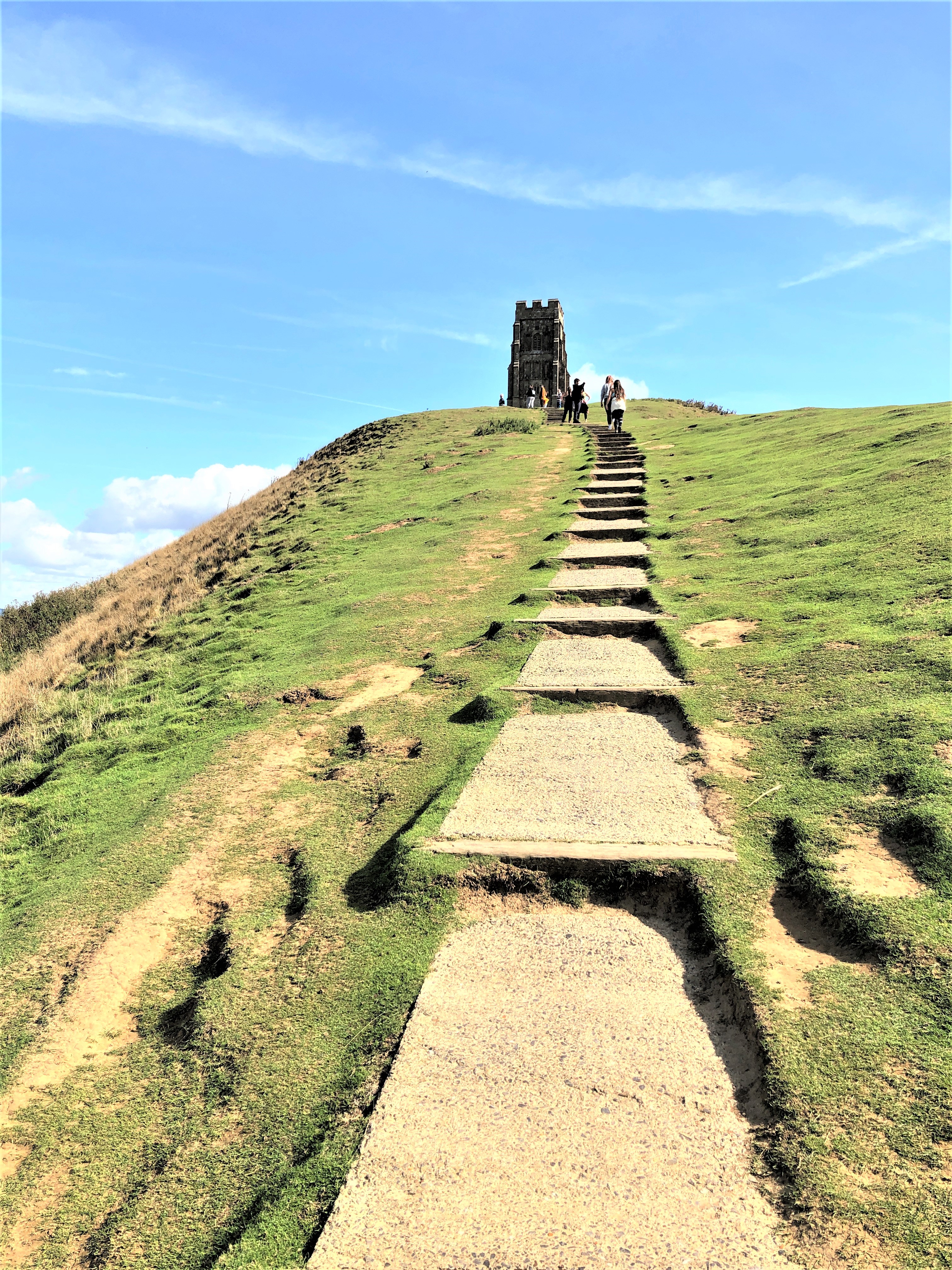
The area around Glastonbury shows evidence of human settlement as early as 4000 BC, making it one of the earliest settlements in Britain. The nearby Glastonbury Tor has been revered as the site of spiritual significance in Druid rituals since the Iron Age and is still used by modern Druids and New Age spiritualists as a place of celebration and worship. Legend places the Tor as central to the realm of King Arthur whose remains are claimed to be buried under the nearby Abbey, now fallen into ruin.

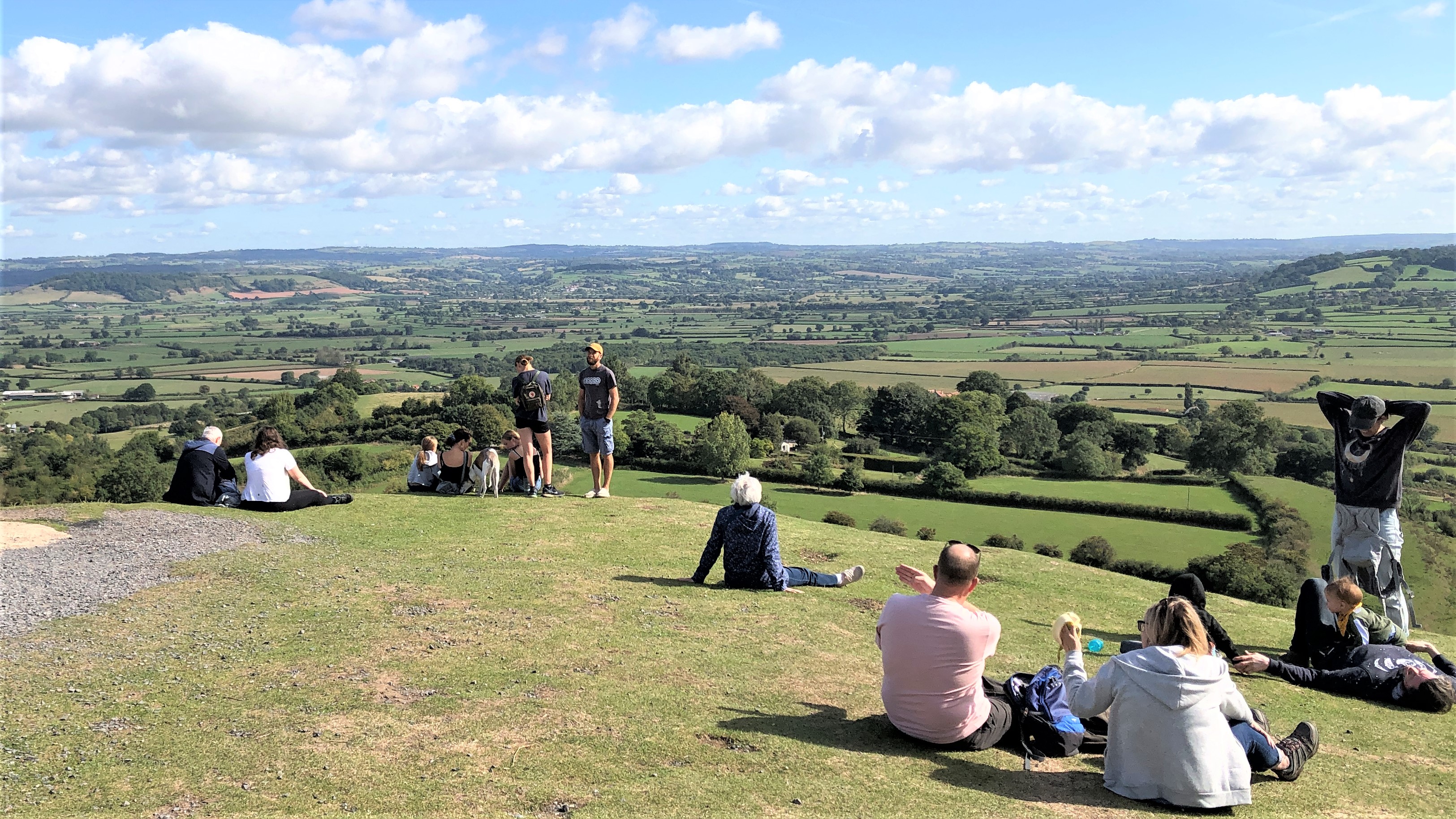
It was a stiff walk up the Tor in a brisk autumn breeze but the view at the top did not disappoint. If King Arthur has wanted a lookout for his kingdom, he could not have chosen a better spot. We were sorry we hadn’t brought a picnic, as many climbers had thought to do, but it was pleasant to rest in the sun at the top for a while and take in the view.
Afterwards we took a stroll through the ancient streets of Glastonbury itself. Glastonbury Abbey, built in the 600s, was once the most important and wealthiest in all of England, living testimony to the country-wide influence of this once thriving market town. Now the streets are lined with stores selling New Age paraphernalia and the smell of incense filled the streets.

Although such things are not exactly our cup of tea, it was pleasant to walk around in the sunshine among the crowds milling about the stores and cafes and interesting to see another part of Britain’s rich history.

September 2022
 Home Thoughts From Abroad
Leave a comment