We are constantly amazed at how easy it is to get around in this country. We are three stops on the train from Gatwick and less than an hour to Victoria Station, where we have been a number of times already. Today we decided it was time we went in the other direction and headed off from our little station in Horsham to the seaside city of Portsmouth.

Portsmouth is the most important naval port in England and still home to two thirds of England’s fleet. At the height of the British Empire it was the largest and most important port in the world. The city was extensively bombed during the Blitz of WWII, but survived multiple attacks to become the pivotal embarkation point for the D-Day landings.
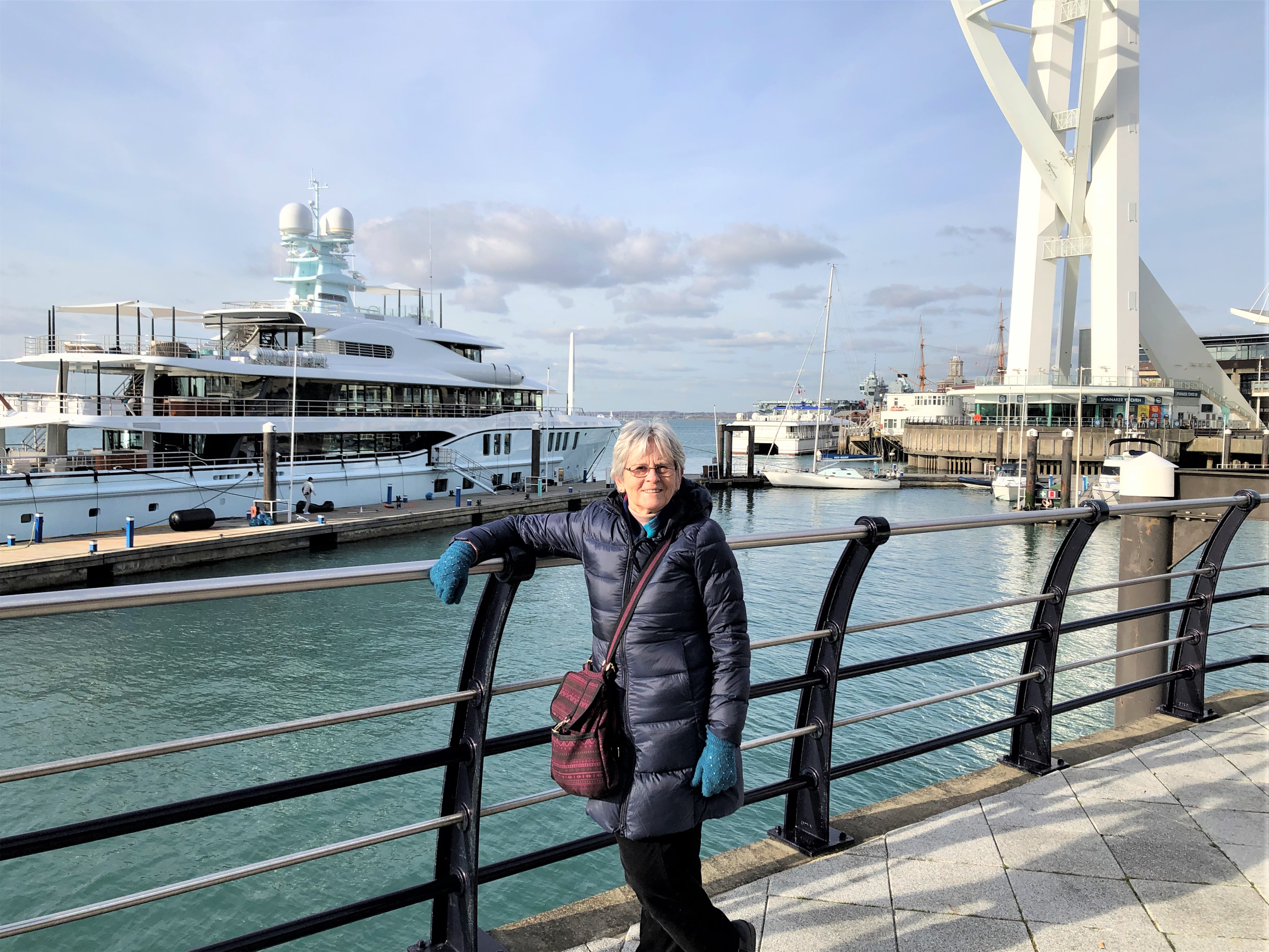
Portsmouth’s active naval base also houses the National Museum of the Royal Navy which has a collection of historic warships, including the Mary Rose, the flagship of the navy of King Henry VIII, recently salvaged and restored, and the HMS Victory, Lord Nelson’s flagship at the Battle of Trafalgar, and the world’s oldest naval ship still in commission.
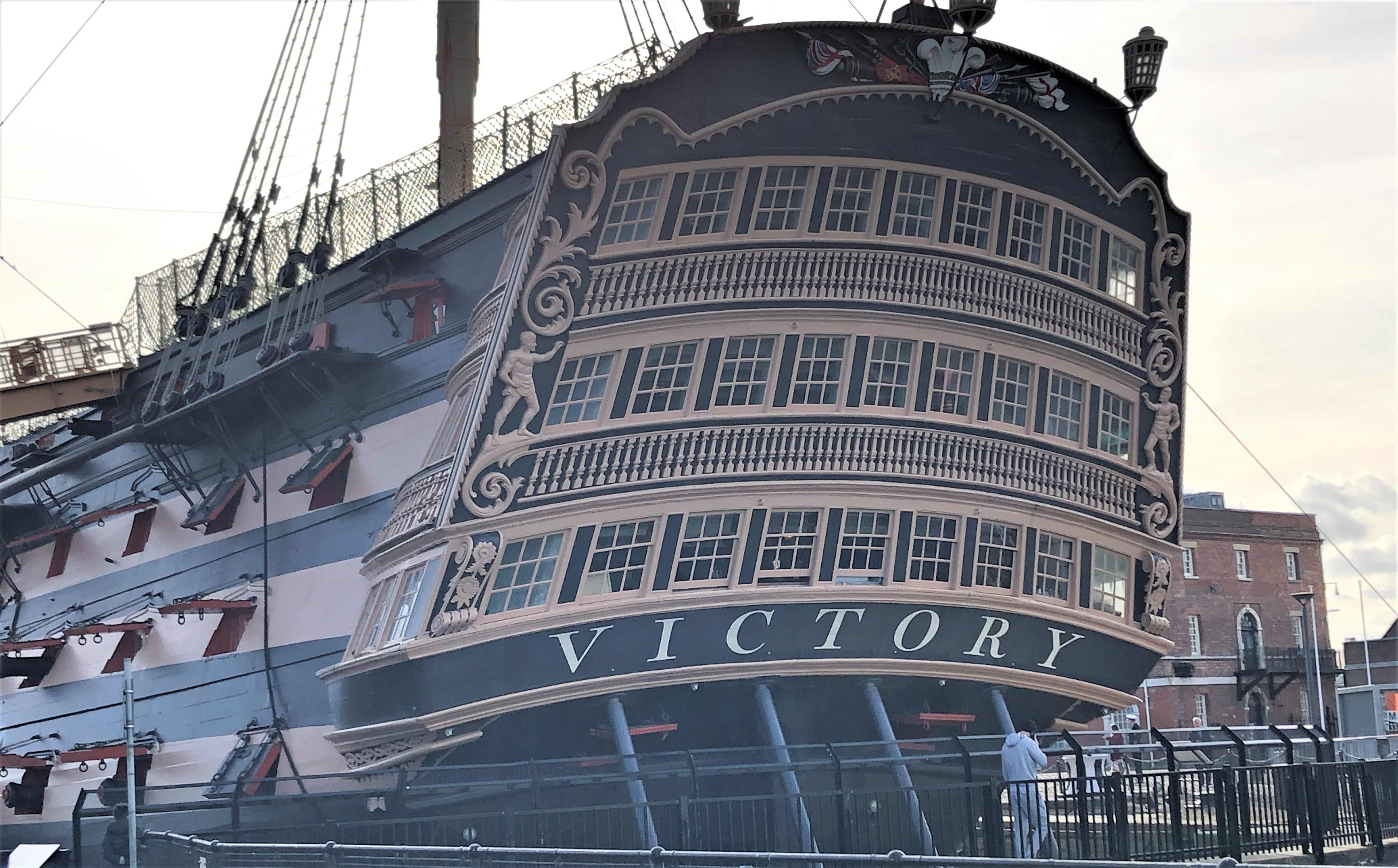
HMS Victory is a massive ship that in its day could hold 850 men on five decks along with over 100 canons of various bore including 68 pounders which Nelson would hold in abeyance until he had used smaller canon to come along broadside and then unleash a furious cannonade with these massive guns utterly destroying the French fleet at Trafalgar. The ship has been restored several times, but is due to undergo a massive ten year restoration starting in May of this year.

We also walked through town to Portsmouth Cathedral, a lovely old building with a wooden vault in honour of the city’s shipbuilding heritage. It was founded in 1180 and dedicated to St. Thomas a Beckett, archbishop of Canterbury, who had been martyred in 1170 following orders by King Henry II. There was some delay in the train going back to Horsham, but nevertheless it had a most enjoyable trip and it was great to see some of England’s naval heritage so close by.
February 2022
 Home Thoughts From Abroad
Leave a comment